
This week is all about Google moving Local Services Ads into its main ads machine, AI is getting louder in local search, and the same old weak spots keep showing up: unclear pages, messy tracking, slow follow-up, and reputation signals you do not fully control.
Local Services Ads are moving into PMax
AI Overviews are answering more local searches
Google Lead Forms may be easier for smaller advertisers to use
Meta lead quality still depends on follow-up, not just form type
A Google review-reply bug is a reminder to keep your own records
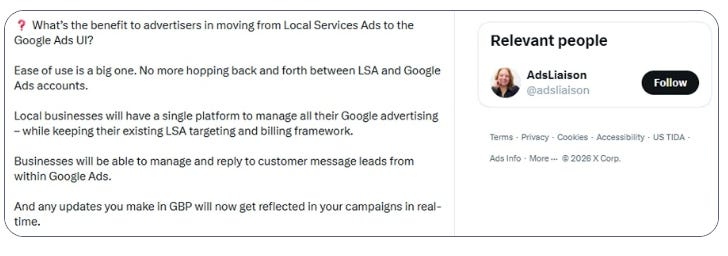
This week’s Deep Dive goes to the freshest local lead-gen change: Google Local Services Ads are moving into Performance Max pay-per-lead campaigns.
For local service businesses, this is not just a dashboard cleanup. LSAs have always been one of Google’s most direct local lead products because they sit in high-intent Search and Maps placements and charge by the lead, not the click.
WordStream’s breakdown says the standalone LSA dashboard is being sunset, current campaigns will migrate into Google Ads, and the first phase starts in August 2026 for select US home and storefront service categories.
The Real Reason This Matters:
Google is pulling one of its most local-specific ad products into the same automation stack that already runs much of paid search.
Businesses that rely on LSAs need to preserve historical reports before migration and re-check daily budgets, target CPA, profile details, and lead routing after the move.
Your Google Business Profile becomes even more connected to paid lead flow, so profile accuracy is now both an SEO and paid media issue.
Key Takeaway: Local Services Ads are not going away. They are becoming a Google Ads operations problem, which means old LSA set-it-and-forget-it habits can create reporting gaps, budget surprises, and weaker lead quality.
Action Step: If you run LSAs, export your historical reports this week, confirm GBP ownership and service categories, and make a short post-migration checklist for budget, bid strategy, lead manager, call recordings, and CRM routing.

Search Engine Journal reports that AI Overviews are now answering a large share of local searches. The practical lesson is not that local SEO is dead. It is that AI needs reliable inputs before it can confidently cite or recommend a business.
The Real Reason This Matters:
Local buyers may see an AI answer before they see your website, GBP, or review profile.
Incomplete services, thin pages, old photos, inconsistent listings, and weak reviews give AI less confidence to include you.
Multi-location brands have more ways to be misread because every location has its own facts, categories, reviews, and citations.
Key Takeaway: AI local visibility is built from the same facts customers use to trust you.
Action Step: Pick one service and one city. Search it in Google, Gemini, ChatGPT, and Perplexity, then record whether your business appears, what sources are cited, and what facts are wrong.
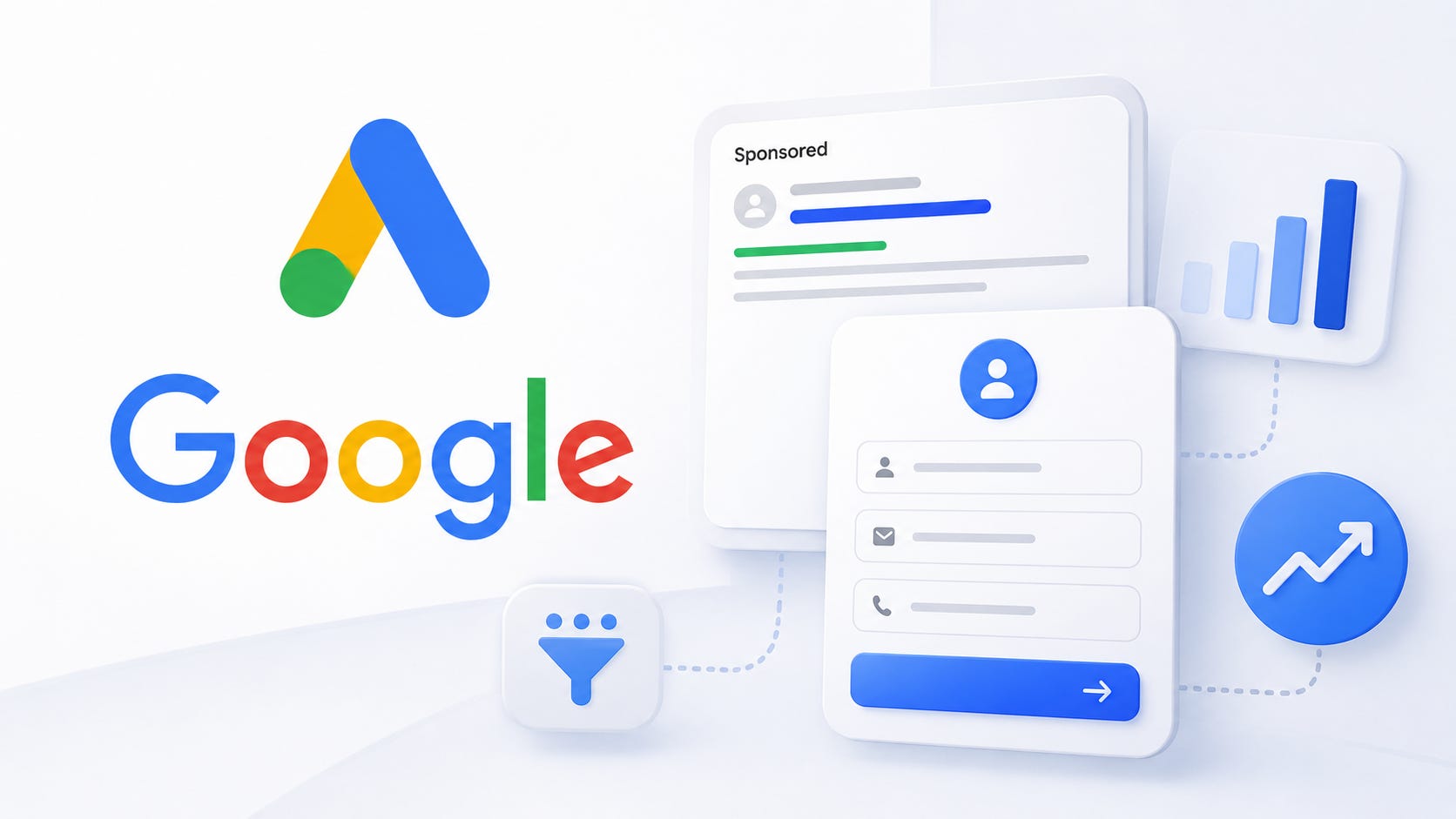
Search Engine Land found that Google’s Lead Form assets no longer show the old $50,000 spend requirement in the main help documentation. The update also adds easier delivery paths like email notifications and Zapier, while narrowing supported campaigns to Search and Performance Max.
Smaller local advertisers may get access to in-ad lead capture that used to be gated behind large lifetime spend.
Native lead forms can reduce friction, but they can also bypass the landing-page context that qualifies intent.
Lead data retention and CRM routing matter more when the lead never hits your website form.
Key Takeaway: Lower friction is useful only if the lead still reaches the right follow-up system with enough context.
Action Step: Check whether your Google Ads account can add Lead Form assets, then map exactly where the lead goes, who gets notified, and how quickly someone follows up.
Semrush's AI-search-era website marketing guide reframes website work around four layers: discoverability, clarity, authority, and trust. That is a useful checklist for local businesses because AI systems and human buyers both need the same basic proof.
AI tools do not just need pages to crawl. They need to understand who you serve, what you do, and why independent sources validate it.
Generic service copy creates ambiguity, especially in healthcare, wellness, home services, and multi-location categories.
Reviews, directories, PR mentions, and comparison pages now help shape how your business is described outside your site.
Key Takeaway: Your website is no longer just a conversion asset. It is the source file other systems use to decide whether your business is credible.
Action Step: Review your top service page and ask whether a stranger or AI tool could identify your audience, locations, proof, pricing cues, outcomes, and next step in under one minute.
Jon Loomer's lead-generation breakdown is a useful counterweight to the usual Meta Ads advice. He argues that advertisers should not assume instant forms are bad or landing pages are better. The right answer depends on lead quality, lead value, and follow-up.
Cheap leads can hide slow follow-up, weak offer clarity, bad targeting assumptions, or forms that never reach the CRM.
Adding qualification too early can starve the algorithm before you have enough volume to learn from.
Local businesses need to judge leads by booked calls, show rate, close rate, and value, not just CPL.
Key Takeaway: Lead quality is a system, not a form setting.
Action Step: Audit your last 30 Meta leads. Group the bad ones by reason: unreachable, out of service area, wrong need, low intent, duplicate, or slow follow-up.
Search Engine Roundtable reported a widespread Google local bug where business-owner review replies appeared to disappear for many users. The replies were not necessarily deleted, but visibility varied by login state and Google forum users were reporting the issue.
Review replies are part of reputation, conversion, and AI trust signals. If they vanish, your public response record looks thinner.
Teams can waste time rewriting replies or panicking if they do not verify whether it is a platform bug.
Healthcare, wellness, and service businesses should document review-response activity without exposing private customer details.
Key Takeaway: Reputation work needs its own audit trail because Google surfaces can break.
Action Step: Screenshot a few recent replied reviews, check them logged in and logged out, and keep a simple review-response log with date, reviewer name, rating, and response status.
🌶️ Spicy Take
The ads are not always the problem
A fresh r/PPC thread on tracking failures hit the uncomfortable truth: a lot of accounts blame Google, Meta, or AI when the real issue is duplicate events, missing click IDs, broken forms, slow follow-up, or leads that never reach the CRM.
The uncomfortable part is that “bad leads” often means the business never had a clean definition of a good lead. Before blaming automation, confirm the form works, the phone rings, the CRM receives the contact, the team follows up fast, and the conversion event fires once.
Run a local GEO baseline audit. Test discovery, comparison, trust, and logistics prompts in ChatGPT, Perplexity, Gemini, and Google AI Overviews before guessing what AI says about you.
Treat Reddit as an AI visibility source. SE Ranking says Reddit’s growing search footprint is showing up in AI citations too. Watch category threads before they become answer-engine evidence.
Check Google Ads Recommendations with skepticism. Missed Opportunities moved from Labs to the Recommendations tab. Review the math, but do not treat every projected lift as a mandate.
Build the measurement plan before GA4 cleanup. Define the decisions your reports should support before rebuilding events, channels, and dashboards.
Use August promos without sounding random. Seasonal offers work best when tied to a real local buying moment, not a holiday calendar stuffed into an ad.
Clean AI-sounding copy before it hurts trust. If your service pages sound templated, rewrite the proof, process, and local specifics before AI and customers lump you in with everyone else.
Watch Google’s AI clicks claim. Google says AI Search sends billions of clicks weekly. Compare that claim to your own Search Console, GA4, and call data.
Use website audits as a recurring habit. A weekly crawl of broken pages, indexability, speed, and conversion paths catches quiet lead leaks before they become a quarterly surprise.
Get Ahead of the AI Shift
If your marketing reports are full of leads but your calendar is light, the issue may be offer clarity, call handling, tracking, or local trust signals.
In 15 minutes, I will help you spot the biggest leak and the next practical fix: search visibility, ads, landing pages, calls, reviews, tracking, or offer clarity.
Thanks for reading Local Marketing Minute! This post is public so feel free to share it.
Comments
Nothing yet. Say the first thing.
Sign in to join the conversation.