
“Compliance is a survival strategy. It is only after the threat is gone that the question arises: What did I have to do to stay safe? And, what did I give up of myself to remain safe?”
— Bessel van der Kolk
There is a formula hidden in plain sight—one that has shaped civilizations, families, and individual lives for millennia. It operates so quietly, so effectively, that most people never recognize it, even as it determines the course of their relationships, their beliefs, and their freedom.
The formula is simple: Wound, then rule.
First, create dependency. Fracture the person’s ability to navigate reality on their own terms—whether through devastating trauma or almost imperceptible manipulation. Overwhelm their capacity to process and navigate experience autonomously, to trust their own judgment, to distinguish truth from manipulation. Then, once that fragmentation is in place, offer a solution that is itself a tool of entrapment and extraction—the authority, the system, the belief structure they must adopt to feel safe again or regain stability.
This is not merely the tactic of individual abusers or fringe cult leaders. It is the foundational architecture of parasitic control at every scale of human life—from the most intimate one-on-one relationships to the largest civilizational systems. And it begins with trauma.
Trauma is often understood as a deeply distressing or overwhelming experience that leaves lasting wounds on a person’s mental, emotional, and physical well-being. But within the framework I call Cultology, trauma is more than a psychological injury—it is a distortion in one’s ability to process reality. It disrupts the coherence between mind, emotion, and soul, altering not only how one thinks and feels but who one is becoming.
Trauma arises whenever an individual lacks the intellectual and spiritual systems necessary to digest, interpret, and integrate experience. Our choices and responses to life’s events shape the architecture of the self. Every experience—especially those that challenge or overwhelm us—becomes material for identity formation. How we interpret and respond (truth alignment or truth avoidance) determines whether the self expands in wisdom or fractures under strain.
Overwhelming experiences, whether intensely positive or deeply negative, carry more information and emotional charge than ordinary ones. They demand greater internal processing to prevent the existing identity from unraveling. Negative overwhelm—what we commonly call trauma—tends to exert a corrosive effect on coherence, eroding the individual’s sense of meaning, stability, and agency. Positive overwhelm is less recognized but is nonetheless destabilizing, such as in the case of love-bombing in cults or narcissistic relationships. Left unintegrated, it warps perception, distorts emotion, and reshapes character itself.
In this sense, information is food for the soul, and one’s beliefs, values, and worldview form the digestive system that extracts meaning from experience. When these faculties are underdeveloped or malformed, the psyche cannot properly metabolize the shocks and contradictions of life. Unassimilated experience festers. It fragments thought, distorts emotion, and disables the capacity to derive coherent meaning from life.
This failure of inner integration creates dependency in various forms when not properly processed. Parasitic social systems—cult-like groups—weaponize this to capture individuals in unhealthy relationships.
A person who cannot self-regulate—who cannot process their own experience, discern truth, or trust their own perception—must outsource meaning and stability to external authorities. The knowledge of others becomes the framework one uses to navigate life, which can become a parasitic prison of control when monopolized. The traumatized mind, unable to make sense of its own experience, clings to external narratives and social groups for identity and stability.
This is the moment when parasitic dynamics can take root.
The wound becomes both leash and feeding tube: it weakens the host while ensuring the host’s compliance. What appears to be care, guidance, or protection is, in reality, the maintenance of a controlled dependency. When conducted with trust through symbiosis (good faith, goodwill, and good action), this creates healthy relationships: parent with child, officeholder with constituents, doctor with patient. Conversely, in parasitic systems, the individual is intentionally blocked from gaining the support, knowledge, or competence needed to achieve autonomy, ensuring permanent dependence on the parasitic provider.
From the parasitic perspective, slavery and dependency are fundamentally linked. The lack of competence and the inability to command one’s own life requires an individual to depend on another for survival. If the provider of support maintains this dependency for personal gain—even while offering benefits to the dependent—a parasitic relationship, a shade of slavery, has taken hold. This slavery might be nearly imperceptible—the host of the parasitic relationship treated well, able to roam freely, with no outward signs of impairment—or it might take the more recognizable forms of harmful abuse we commonly associate with enslavement.
Benevolent dependency (symbiosis) is marked by the dependent being nurtured in gaining the knowledge and skill needed to eventually achieve autonomy, where knowledge is shared freely with honesty and bad faith is never used to coerce compliance. This is true whether in a healthy child-parent relationship or a fully interdependent relationship between adults, where partners are self-reliant but choose to rely on each other.
Parasitic dependency (slavery) is marked by the intentional deprivation of autonomy and the suppression of one’s ability to negotiate on behalf of oneself to form fair, honest, and transparent agreements. For modern parasitic civilizations, interdependence has been replaced with structurally reinforced codependence. The dependent is intentionally blocked from the very things that would set them free. This might be masked within structural and economic conditions where relative freedom exists, but the system acts like a corral to limit genuine freedom—or it might manifest as overt suppression through violence, emotional abuse, or subversive propaganda.
In the late 1990s, the CDC and Kaiser Permanente conducted what would become one of the most important yet underutilized pieces of research in modern history: the Adverse Childhood Experiences (ACE) Study. Surveying over 17,000 participants about their early-life exposure to stressors such as abuse, neglect, and household dysfunction, researchers discovered a direct, graded relationship between early trauma and later disease.
The more adverse childhood experiences a person had, the higher their risk for chronic illnesses, mental health struggles, and self-destructive behaviors in adulthood. Heart disease, diabetes, autoimmune disorders, depression, anxiety, addiction, and even reduced life expectancy—all were statistically tied to trauma.
In effect, the study revealed that trauma “gets under the skin,” disrupting the autonomic and immune systems and reshaping the biological landscape of a human life.
When I encountered this research, it validated a long-held suspicion: trauma does not merely make people sick; it makes them susceptible to control. Trauma fragments the inner architecture of being—weakening autonomy, coherence, and trust—and in doing so, makes individuals and societies more vulnerable to cult-like systems of influence.
I was not alone in this realization. Dr. Charles Whitfield, a world-renowned psychologist and author of the bestselling Healing the Child Within, saw the same pattern. Dr. Whitfield discovered my work in 2020, and we soon formed a relationship. He was a prolific contributor to trauma recovery literature and a key researcher in the ACE Study itself. Through decades of clinical work, he helped thousands of patients and touched millions of lives. After his untimely passing in 2021, I led efforts to establish a nonprofit foundation in his name to carry his legacy forward. His wife, Barbara, is also a gifted and prolific author, and I was fortunate to know them both personally.
Dr. Whitfield and I shared a profound insight: the same relational traumas that cults inflict on their members—fear, shame, dependency, isolation, and conditional love—have become normalized features of modern life. They are baked into our child-rearing practices, our schools, our workplaces, and our media environments. The result is a population that is, at scale, physiologically and psychologically conditioned to submission.
Despite its breathtaking revelations, the ACE Study was never meaningfully expanded, funded, or integrated into mainstream healthcare, education, or policy. As Dr. Whitfield observed—and I fully agree—it revealed only the visible tip of a monumental iceberg. What began as groundbreaking research was quietly buried, its implications ignored in favor of psychiatric drugs, superficial therapies, and profit-driven “solutions” that treat symptoms while preserving the cause—and, of course, the control that is extracted therefrom.
At its core, the ACE Study exposed a deeply uncomfortable truth: the problem is not only individual pathology but relational pathology. The sickness of the world begins in the brokenness of our relationships—between parent and child, man and woman, citizen and state, human and the divine.
This principle of dependency operates not only within individuals but across entire societies. The same dynamic that enslaves the psyche also enslaves economies.
Parasitic economies rely heavily on maintaining a population in a perpetual state of arrested development: an infantilized labor pool that earns enough to subsist but not enough to transcend. In such systems, survival replaces sovereignty, and comfort becomes the invisible cage that ensures obedience.
On the personal level, this manifests as repeated cycles of self-betrayal and unhealthy attachment. At the civilizational level, institutions and governments engineer chronic insecurity, scarcity, and confusion to ensure obedience. Banks and credit agencies issue higher rates to those with poor credit history, making debt entrapment more likely—a dynamic that exploded in the run-up to the 2008 financial crisis. Criminality is covertly embraced through intelligence agencies in both public and private sectors (e.g., CIA trafficking cocaine into the US in the 1980s and 1990s, sold to impoverished communities to increase demand for private prisons while war-on-drugs legislation escalated jail sentences). They use this criminality to justify solutions offered by powerful external industries (insurance, medical), governmental bodies, nonprofits, and NGOs. This cycle ensures the system constantly creates the problems (insecurity, confusion, dependence) that aligned industries are paid to solve, tightening the grip of parasitic systems through lobbying and legislation while funneling more resources to the architects.
In the past, elite priest classes and aristocracies pushed this system while ruling over illiterate populations. Today, inflation maintains perpetually high costs of living, while distraction ensures the majority remains unable and unmotivated to cooperate and gain the knowledge needed to forge a better system—what economists call the “poverty trap,” ensuring people remain perpetually struggling and motivated to exchange their labor for low wages and false security. The parasitic economy and its methods have saturated our civilization, which we will explore in detail in future articles.
The trauma bond between citizen and state is the cult dynamic writ large.
Woven through it all are the knowing architects who maintain the mechanism, from darkly manipulative personalities in everyday life to elite operators in the halls of covert power.
Trauma is not a bug in the system. It is the system.
And once we see this—once we understand that wound, then rule is the foundational pattern of parasitic control—we can begin to ask the most important question:
What is the opposite? What does a system built on healing, rather than wounding, look like?
That is what this series will reveal.
Many people have become sensitive to EMF’s which can cause a number of health issues. Using orgone energy products in your environment can protect you from EMF toxicity and help to restore a harmonious environment that aids in better health and well-being. The results vary from better sleep, pain relief, better growth in plants, food preservation, better mental clarity and an overall calming effect.
These handmade devices are a composite of shungite, steel, iron oxide, quartz, and brass powders all encased in an epoxy resin. They emit a passive grounding field of orgone energy. When used in your environment, these devices transform the harmful energy given off by electromagnetic frequencies or EMF’s that come from 5G, your cell phones, Wi-Fi, and electronic devices, into healthy life preserving energy. These orgone energy devices are available in different shapes and sizes for a variety of different uses: pendants that you wear, phone shields to use on your electronics, sleeping pods to help protect you at night, charge plates to use for food preservation, pyramids to grid your property, and garden pucks to help your plants grow. They even have construction tiles to help transform your space. And now there are products for your pets and headset protectors.
To learn more, read the science and testimonials , and save 10% click this link:

“None are more hopelessly enslaved than those who falsely believe they are free.”
— Johann Wolfgang von Goethe
Do we live in a world dominated by cults? The evidence suggests we do.
But to understand such a bold claim, we first have to grasp the DNA of cults—the science of relationships. Once we understand how relationships work at every scale, we can see how powerful actors have used this knowledge to shape culture and human life itself. And once understood, this knowledge can unlock the key to freeing ourselves from the hidden and covert cults that dominate our world—transforming parasitic relationships into symbiotic ones.
At the heart of relationships is intimacy, the economy of being.
I have defined four types of intimacy that together encompass every kind of human interaction—from one-on-one romance and family ties to the relationships of groups, businesses, cultures, and entire civilizations:
1. Physical Intimacy – The exchange of tangible resources, actions, and bodily presence. This includes touch, sexuality, labor, goods, services, and all material transactions, including territories and shared spaces.
2. Emotional Intimacy – The exchange of feeling, empathy, vulnerability, and affective states. This is where trust, care, attachment, and emotional resonance live.
3. Intellectual Intimacy – The exchange of ideas, information, beliefs, values, and meaning. This is the realm of conversation, debate, teaching, learning, and the negotiation of agreements that make all relationships possible.
4. Spiritual Intimacy – The exchange of values and purpose, alignment with higher order, and participation in transcendent meaning. This is where identity, calling, and connection to the divine operate, shaping who we are becoming.
These four intimacies are not isolated—they interpenetrate and regulate one another. Physical intimacy without authentic emotional connection becomes transactional. Emotional intimacy without intellectual honesty becomes manipulation. Intellectual intimacy without spiritual grounding becomes nihilistic. Spiritual intimacy without the other three becomes abstraction disconnected from embodied life.
Intellectual intimacy is the keystone and immune system for the others. It is the realm where we negotiate what is true, what is valuable, and what is worthy of our trust. When intellectual intimacy is corrupted—when we are prevented from thinking clearly, questioning freely, or discerning truth from deception—the other intimacies collapse into distortion.
Cults do not merely control behavior. They corrupt the architecture of intimacy itself, turning authentic connection into extrinsic dependency—tools for control and extraction, a zero-sum game.
Physical intimacy is weaponized through territorial manipulation, labor extraction, sexual coercion, or controlled access to resources. Members are kept exhausted, financially dependent, or physically isolated, packed into tight quarters and unable to negotiate the effects that wash over them from others or higher-level actors, such as governments, corporations, or elites.
Emotional intimacy is manipulated through love-bombing, conditional affection, false displays, and the threat of abandonment. Members are taught that their access to positive emotion depends on compliance.
Intellectual intimacy is the primary target. Cults suppress inquiry, punish dissent, and replace genuine understanding with rigid dogma. Members are taught what to think, not how to think.
Spiritual intimacy is hijacked by inserting the cult leader, ideology, or system of propaganda (narrative control) as a surrogate for direct connection to truth and the divine. This twists becoming, transforming individuals into drones and puppets of the cult-like groups they inhabit. The cult becomes the mediator of all meaning, purpose, and transcendence.
The result: A person whose entire relational life—physical, emotional, intellectual, spiritual—has been rerouted through the cult. They can no longer trust themselves—their own perception, feelings, thoughts, or sense of purpose have been manipulated. They have been hollowed out and filled with the cult’s narrative.
This is not unique to Jonestown or Heaven’s Gate. This is the hidden architecture of parasitic relationships at every scale.
Cultology is the framework I have developed to analyze this pattern. It is the study of how social systems in general and cults work—not just the dramatic ones with robes and rituals, but the covert systems that shape our everyday lives.
At its root, a cult is a relationship structure built on extrinsic knowledge: rigid beliefs enforced by social pressure and fear of exclusion, maintained to extract benefits parasitically.
The core thesis of Cultology is simple: any system that interrupts the natural flow of truth and growth is cult-like, and therefore, parasitic.
Instead of allowing individuals to blossom in freedom, uniqueness, and inquiry, parasitic systems hijack the architecture of belief and value itself. They suppress individuality, twist identity, and convert people into vessels for rigid systems of control—all without the vast majority of those affected ever discovering what has happened.
In healthy societies, the social fabric should nurture each person’s pursuit of truth and the integration of that truth into a meaningful life. But when that fabric becomes corrupted, it is weaponized—turned into a mechanism of social pressure and conformity.
Truth-closed systems are, by nature, parasitic: they extract things like reverence, labor, loyalty, or resources from others while providing less in return. What’s more, these cult-like systems stifle the individual’s ability to grow into who they truly are, which is a form of character parasitism. These are just a few threads of the Cultology framework. It not only explains what we think of when we hear the word “cult”—it also explains every relationship, from one-on-one to the civilizational scale.
By this definition, cults are not the exception but the norm wherever freedom to seek truth is suppressed in the name of conformity. They appear wherever inquiry is punished, dissent is ridiculed, or loyalty is rewarded above honesty.
Families can fall into cult-like patterns. When parents demand obedience without explanation, punish questions, and use shame to enforce conformity, they are employing the same dynamics as a cult leader.
Businesses can operate as cults. When companies demand total loyalty, discourage critical feedback, and create cultures where employees fear speaking truth to power, they have become parasitic.
Entire cultures and civilizations can structure themselves in ways that suppress truth and reward conformity. When media, education, and government conspire to control narratives, punish dissent, and manufacture consent, the scale has simply expanded—but the mechanism remains the same.
This series reframes and expands the very idea of cults. In doing so, we discover the world of cults all around us.
By studying these patterns systematically—through Cultology—we uncover how power operates in hidden ways and, more importantly, how we can free ourselves from parasitic relationships and cultivate symbiotic ones.
This expanded way of thinking about intimacy gives us powerful tools to reshape every relationship in our lives: our relationship to truth itself, beliefs, and values; our emotions; and, of course, our relationships of love, friendship, family, business, and community.
There is a secret so powerful that extraordinary forces have labored to keep it hidden. It is not a weapon in the traditional sense, but a system of influence, engineered to shape how we think, love, and relate to one another.
In this series, Cultology, I will reveal this system in unprecedented detail—so that, once understood, it becomes far harder to be deceived again.
The truth about cults will set us free from them—but first it will pull the wool from our eyes.

“Every mind must make its choice between truth and repose. It cannot have both.”
— Ralph Waldo Emerson
Having seen that trauma creates dependency and that cults hijack the four intimacies, we can now turn to the deeper question: What is the underlying pattern that governs all parasitic and symbiotic systems?
The answer lies in how we relate to truth itself.
At the foundation of Cultology is a simple but profound distinction: the intrinsic path versus the extrinsic path.
These are not merely different approaches to knowledge. They are two fundamentally opposed orientations to reality. The intrinsic path is open, while the extrinsic path is closed. They determine whether a relationship, a family, a business, or an entire civilization becomes parasitic or symbiotic.
The extrinsic path is the path of accepting beliefs from external authorities without personal verification. It relies on extrinsic knowledge: rigid beliefs enforced by social pressure and fear of exclusion. Extrinsic knowledge is often at least partially true and, based on this, has utility. But knowledge that cannot be expanded through inquiry eventually traps rather than frees the individual.
On the extrinsic path, a person believes something is true because:
An authority figure told them so
It seems right enough (why question further?)
Their social group expects them to believe it
They fear the consequences of questioning it
The extrinsic path does not ask, “How do I know this is true?” It often asks, “Who says this is true?”
This is the path of conformity, compliance, and controlled perception. It is the foundation of every cult, every authoritarian system, and every parasitic relationship.
The extrinsic path’s motto: “If it ain’t broke, don’t fix it.”
It assumes that what appears valid doesn’t need to be challenged—and that what appears false can simply be ignored. But this assumption collapses upon inspection.
For example, one cannot truly know that the claim “2+2=5” is false unless one actually considers it, exploring it honestly and without prejudice. Yet when one does examine it, something remarkable happens: the claim can be categorized as false—and that categorization itself becomes a true statement. Inquiry has the power to expand and enrich knowledge, thereby increasing freedom.
In this way, an omniscopic inquiry—an openness to all information—creates an ever-expanding base of true knowledge. Even falsehoods, when properly identified, become resources, providing insight into what is true.
But the extrinsic path rejects this. It often reacts with contempt toward whatever violates its established belief systems. It avoids deep and comprehensive inquiry and resists seeking. It treats doubt as disloyalty.
The intrinsic path demands that we ask how and why something is true, looking deeper and deeper, not resting on initial answers. It is the path of epistemic regress—the relentless pursuit of understanding the foundations of our beliefs.
The critical distinction is that while some inquiry happens on the extrinsic path, it doesn’t remain open for long. But on the intrinsic path, openness to discovery, inquiry, and investigation is ongoing. This means that knowledge gained extrinsically—from an authority, our gut, or an initial finding—can be expanded and enriched, constantly growing in the hands and mind of the person doing the investigation. Thus, intrinsic knowledge places the proof, the basis of why something is true, in the hands of the individual, transforming it into autonomy instead of dependency. The distinction is nuanced and subtle, but world-changing when properly understood, both for the individual and civilization at large.
On the intrinsic path, a person seeks to know reality firsthand, not merely through the testimony of others. This does not mean rejecting all external input—it means subjecting all input to personal verification and integration. It digs a new, more stable foundation, which through maintained openness will itself one day be expanded yet again. This means that through the intrinsic path, our knowledge is constantly becoming better, clearer, more inclusive, and ever self-empowering.
The intrinsic path requires us to remain open to all information, not just sanitized or convenient versions of knowledge labeled as true. This empowers us through truth-seeking and discernment to know reality directly, instead of blindly accepting dogma—even if that dogma happens to be correct.
Because all social groups are structured around shared beliefs and values, the intrinsic path naturally threatens any group that depends on rigid, inflexible systems rooted in extrinsic knowledge. Cult-like social systems, therefore, suppress honest and unrestricted inquiry—not out of pure malice, but out of existential necessity. Questioning threatens their coherence. To preserve the fragile corpus of extrinsic knowledge on which their identity depends, they must discourage, punish, or even persecute truth-seeking. In advanced parasitic systems, there’s often a seemingly free ability to inquire, creating a free-range effect. But if one looks long enough, they eventually encounter a glass ceiling, and there are systems in place to ensure even if potentially damaging knowledge is discovered, it won’t threaten the dominant order. Consider academic institutions that never embrace discoveries that counter their dogma, or medical systems that seem to ignore valid treatments and cures that threaten medical monopolies and the economic actors that profit from them.
By contrast, symbiotic social systems embrace inquiry as a vital force. They ride the waves of discovery rather than resisting them. In such systems, both individual and collective identity are allowed to expand organically, integrating new knowledge as reality reveals more of itself. Growth, rather than preservation, becomes the foundation of stability.
“The map is not the territory.”
— Alfred Korzybski
The intrinsic path is the process of willingly embracing new perspectives and questioning established beliefs and values—even those that seem true—in order to expand and enrich what is true and to adjust or replace what is discovered to be untrue. What has been identified as true remains and expands, naturally forming connections to other true knowledge.
Because our beliefs are not reality itself, but maps of reality, the process is not passive but active. We must be willing to invite reality in, to examine our own assumptions, and to listen openly to the views and thoughts of others.
This posture of non-contempt fosters what can be called reality literacy—the capacity to harmonize with all information rather than resist it. True knowledge increases our capacity to see reality, like a telescope gives us the power to see into the distance.
The intrinsic path is unique in that it has the power to consume all information, even incorrect maps. By properly identifying falsehoods, those very errors become resources, providing contrast and insight into what is true.
The truth is a sword—it cuts against those who suppress it in the name of conformity, which is simply slavery by another name. Wielded rightly, that sword builds freedom, strengthens social groups, and transforms unhealthy relationships into symbiotic ones.
Conversely, reliance on the extrinsic path erodes freedom, weakens social groups, and turns relationships parasitic and abusive as individuals and groups have to suppress their authentic relationship to reality to maintain rigid beliefs.
This distinction between intrinsic and extrinsic paths gives rise to two fundamentally different types of social systems:
Parasitic Systems are built on the extrinsic path, which acts as the lever that allows them to extract value from members—whether labor, loyalty, resources, or reverence—while providing less in return. They block members from gaining the competence needed to become autonomous, ensuring permanent dependency.
Symbiotic Systems are built on the intrinsic path, where freedom multiplies rather than being hoarded because cooperation in truth-seeking and honest trust-based relationships funnel energy toward genuine abundance, innovation, and flourishing.
The fundamental difference:
Parasitic systems operate on a lie—the lie that one party’s gain must necessitate another’s loss, that control is necessary for order, that truth is dangerous.
Symbiotic systems operate on truth—the truth that mutual benefit, open communication, and honest negotiation create superior outcomes for all.
Because truth is a unified whole, any distortion of it creates friction, limits potential, and ultimately results in stagnation and collapse. Parasitic systems are fundamentally inferior to symbiotic ones because at their core is a distortion of truth.
The intrinsic path—rooted in truth, cooperation, and freedom—is far more productive at every level of human existence, from personal development to civilizational flourishing.
In a romantic relationship:
Parasitic: One partner controls information, manipulates emotions, and prevents the other from developing independence. The relationship is sustained through fear of abandonment or social shame.
Symbiotic: Both partners communicate openly, support each other’s growth, and negotiate needs honestly. The relationship is sustained through mutual value and freely chosen commitment.
In a workplace:
Parasitic: Management hoards information, punishes questions, and maintains power through fear. Employees are kept dependent through just-enough wages and controlled advancement.
Symbiotic: Leadership shares information transparently, rewards initiative, and develops employees toward mastery. Growth and innovation are celebrated, and competence is transferred rather than hoarded.
In a civilization:
Parasitic: Elites control narratives through media, suppress dissent through social pressure, and maintain power through engineered scarcity and dependency. Citizens are kept struggling, distracted, and divided.
Symbiotic: Information flows freely, dissent is protected, and systems are designed to multiply freedom and prosperity. Citizens are educated toward autonomy and empowered to participate in governance.
It’s important to clarify a critical point: Parasitic systems of control employ deception as their primary mechanism of power.
Deception operates on two levels: among the knowing architects who design and direct these systems, and among the deceived, who unknowingly sustain them.
In this way, incompetence does not contradict malice—it often serves it. What appears to be chaos, stupidity, or bureaucratic failure within the ruling class is, in fact, a functional feature of control. The illusion of blunder disguises intention.
Hanlon’s Razor (”Never attribute to malice that which is adequately explained by stupidity”) has long been weaponized to conceal the truly malevolent. The belief that “no one could really be that evil” is precisely what allows evil to hide in plain sight.
This is one reason why parasitic systems are fundamentally inferior to symbiotic ones.
A symbiotic system is built on the superior ordering principle of mutual benefit, open communication, and honest negotiation, aligning its structure with truth. While competition exists in the animal kingdom, cooperation far exceeds it. The burden and waste of manufactured incompetence needed to hide the parasitic system’s true nature makes symbiotic systems more efficient, effective, and inspiring. There’s greater access to creativity and the freedom, energy, and social incentives to act on the joy of discovery—providing exponentially more abundance and superior outcomes.
Conversely, a parasitic system must rely on manipulation that kills creativity, information compartmentalization, and false agreements to sustain extraction and stifle rebellion. Since truth is a unified whole, any distortion creates systemic instability and inherent flaws.
The parasitic model cannot win in the long run. It can only extract, suppress, and decay, requiring periodic war, famine, and hardship to reboot the control system. The symbiotic model builds, expands, and flourishes—peace and prosperity last and increase, while the intrinsic path constantly renews and revitalizes.

“Trauma is not just the memory of a painful event. It’s an original wound that hijacks the nervous system.”
— Dr. Gabor Maté
We return now to trauma—but with a fuller understanding of why it matters.
If parasitic systems depend on suppressing the intrinsic path and maintaining dependency, then trauma is their primary tool. It is the biological and psychological engine through which control sustains itself. Why? Because trauma suppresses the urge to seek truth. It creates an emotional wall around an experience that kills the very systems we need to pursue the intrinsic path. At the same time, trauma bonds make this a social activity. The intense pain or pleasure creates a social spectacle that distracts as it forms bonds with those who share common trauma experiences.
For this reason and more, every cult, every abusive relationship, every exploitative civilization tends to follow the same formula: wound, then rule.
The extrinsic path and the divided parasitic social systems built with it naturally lead to contempt and hatefulness, infighting and bullying, cruelty and criminality, causing people to wound and traumatize each other. The implication is profound. Advanced parasitic systems redirect this energy of trauma to create a self-reinforcing system: the traumatized of this generation inflict it on the next, and the wardens of the free-range system extract benefits in various ways.
The Adverse Childhood Experiences (ACE) Study, conducted in the late 1990s by the CDC and Kaiser Permanente, remains one of the most important yet underutilized pieces of research in modern history.
The study surveyed over 17,000 participants about their early-life exposure to stressors such as abuse, neglect, and household dysfunction, and then compared those responses with their later health outcomes.
The findings were revolutionary. Researchers discovered a direct, graded relationship between early trauma and later disease: the more adverse childhood experiences a person had, the higher their risk for chronic illnesses, mental health struggles, and self-destructive behaviors in adulthood.
Heart disease, diabetes, autoimmune disorders, depression, anxiety, addiction, and even reduced life expectancy—all were statistically tied to trauma.
In effect, the study revealed that trauma “gets under the skin,” disrupting the autonomic and immune systems and reshaping the biological landscape of a human life.
Dr. Charles Whitfield was a world-renowned psychologist and a key contributor to the ACE Study. His most famous work, Healing the Child Within, became a cornerstone in trauma recovery literature, helping people rebuild their lives and relationships after trauma.
He was also an ally and supporter of recovery movements such as Alcoholics Anonymous and Codependency Anonymous. Through decades of clinical work, he helped thousands of patients, touched millions of lives, and continued practicing well into his mid-80s.
Dr. Whitfield discovered my work in 2020. He and his wife Barbara reviewed my material, and we soon formed a relationship. After his untimely passing in 2021, I led efforts to establish a nonprofit foundation in his name to carry his legacy forward.
For me, Whitfield’s work provided not only encouragement but a profound validation: his research into trauma and recovery paralleled my own insights into how cult-like systems wound human development. He was directly involved in combating these systems through patient recovery, as well as addressing the various covert and destructive cult-like mechanisms that saturate modern civilization.
He was able to see firsthand the very real cult-like methods employed in families and culture, and he provided a wealth of information that expanded and supported the work of Cultology.
The ACE Study reframed how forward-thinking professionals began to understand health, society, and even civilization itself. It revealed that what we call “disease” or “maladaptation” is not simply biological malfunction, but a symptom of relational pathology.
Human beings are relational creatures; our health depends on the quality of our connections, far beyond just the psychology involved. When those connections are corrupted, withheld, or distorted, sickness manifests not only in the body but in the collective structures we build.
Despite these breathtaking revelations, the ACE Study was never meaningfully expanded, funded, or integrated into mainstream healthcare, education, or policy.
As Dr. Whitfield observed—and I fully agree—it was merely the visible tip of a monumental iceberg. The study was groundbreaking, but it offered only a dim view into a subject that deserves far more exploration.
He openly spoke of what appeared to be a coordinated agenda to bury or ignore its implications in favor of psychiatric drugs, superficial therapies, and profit-driven “solutions” that treat symptoms while preserving the cause—and, of course, the control that is extracted therefrom.
At its core, the ACE Study exposed a deeply uncomfortable truth: the problem is not only individual pathology but relational pathology. The sickness of the world begins in the brokenness of our relationships—between parent and child, man and woman, citizen and state, human and the divine.
Dr. Whitfield believed, and I concur, that certain powerful interests have long benefited from fostering this relational fracture. It is not merely about making money from the trauma-industrial complex.
By systematically undermining trust, attachment, and belonging—the foundations of symbiotic civilization—parasitic systems ensure a populace too traumatized to organize, too ashamed to resist, too indoctrinated to understand, and too divided to heal.
This is the ultimate weaponization of culture: to create the conditions of trauma and then profit, morally and materially, from its perpetuation.
We spoke at length about this sobering reality: that modern culture has been weaponized against its own children, from cradle to grave.
And yet, despite the weight of these insights, Dr. Whitfield maintained profound hope. He believed, as I do, that humanity now stands at a turning point.
Whatever political or material freedoms we may achieve, we will remain enslaved until we reclaim sovereignty over our relationships—learning once again to love in truth, to trust with discernment, and to live in symbiosis rather than parasitism.
The weaponization of trauma is not new, but over the past two centuries it has been industrialized.
What once required direct physical coercion can now be accomplished through carefully engineered media environments, educational systems, and economic structures that maintain chronic stress, confusion, and dependency.
From Edward Bernays and the birth of propaganda to the advent of behavioral psychology and intelligence agency programs, powerful actors have refined the ancient art of control into a precision science. Today, algorithms curate our perceptions, social media manipulates our emotions and social systems, and economic systems ensure perpetual struggle—all without most people recognizing the architecture of their captivity.
The culmination of this trajectory is what some call the Fourth Industrial Revolution: the fusion of biology, psychology, and technology into systems of control that past tyrants could only dream of. As historian Yuval Noah Harari has stated, “Biological knowledge + computing power + data = the ability to hack humans.”
We will explore these developments in depth in future articles. For now, what matters is this: trauma is not merely a personal misfortune. It is a weapon. And it has been wielded against humanity at scale.
“The unexamined life is not worth living.”
— Socrates
Perhaps the most surprising—and for some, the most controversial—aspect of Cultology is its theological dimension.
I did not set out to build a theological framework. I began by observing social systems, patterns of control, and relational dynamics. But as the model took shape, one conclusion became unavoidable:
The suppression of truth and authenticity—so central to cult dynamics—must have an opposite orientation.
When that opposite orientation was fully explored, a staggering progression followed: our relationship with truth and information itself appears to be a reflection of our relationship with the source of all truth and information.
And within the human catalog of concepts, the only thing that fits this description is the divine.
I want to be clear about something: I am not invoking theological models because I belong to a particular religious tradition. I am using them because they provide superior explanatory power.
This is a critical distinction.
I am not saying, “I am Christian, therefore I use Christian frameworks.” I am saying, “When I follow the evidence and seek the best models to explain these dynamics, theological frameworks emerge as necessary.”
The choice is not arbitrary. It is epistemically justified. I am following the logic of the models themselves, not imposing a pre-existing religious commitment onto the research.
That said, I do embrace my faith personally. But the work of Cultology does not ask you to accept theology on faith—it shows you why theological models are necessary for comprehensive understanding of these dynamics.
Here is the progression:
Step 1: Cults suppress the natural development of personality and its authentic drives. They interrupt the intrinsic path, preventing individuals from pursuing truth and growing into their full potential.
Step 2: If suppression is the cult dynamic, then the opposite must be true: freedom to pursue truth allows personality to flourish.
Step 3: When personality is freed to pursue truth without suppression, it expands. It integrates more reality, develops greater coherence, and aligns more fully with what is true and good.
Step 4: If this expansion has a direction—if it is not random but oriented toward something—then there must be an endpoint or ideal toward which it moves.
Step 5: Across human history, the most complete articulation of this ideal endpoint has consistently taken trinitarian form: a supreme unity expressed through relationship, pattern, and coherent order.
Step 6: Many traditions, myths, and prophecies—though expressed in different languages and symbols—converge on a similar insight: that the human spirit naturally strives toward divine likeness.
This is not theology imposed from outside. This is theology discovered through inquiry.
Once this progression became clear, another pattern emerged: cult-like systems also adopt savior narratives.
They invoke the same symbols of redemption and truth, but then weaponize them within parasitic structures of control. In doing so, they block the very liberating power of truth that such myths and traditions ostensibly were meant to reveal.
The result is a profound inversion: the sacred human impulse to seek truth and divinity becomes hijacked to sustain the very forces of bondage and deception it was meant to overcome.
In essence, the cult-like system’s means deny the very ends it claims to offer.
We can see this inversion everywhere in modern life. Political movements, activist causes, and even corporate brands now adopt the language of salvation. Each presents itself as the redeemer of humanity’s ills—promising equality, safety, justice, or progress, even offering health, youth, and transcendence of death itself—while demanding absolute faith and conformity in return.
The messiah complex once reserved for prophets and saints has been secularized and industrialized, transferred into the realm of ideology and commerce.
In these modern “savior systems,” the individual is encouraged to surrender conscience to collective identity, moral discernment to expert authority, and spiritual aspiration to social approval. Institutions become the new temples, algorithms the new priests, and public outrage the ritual of purification.
What began as the sacred desire to embody truth and goodness has been transmuted into a counterfeit spirituality—one that offers belonging without growth, redemption without repentance, and unity without understanding.
This, too, is cultic architecture: a hijacking of the human longing for transcendence.
Within the highest echelons of parasitic overcontrol, the truth that symbiosis is inherently superior to parasitism is not merely ignored—it is inverted and reinterpreted through a dark spiritual lens.
This inversion functions almost like an original sin of consciousness: the keystone truth of creation—that harmony and reciprocity yield optimal flourishing—is deliberately twisted into its opposite.
Because parasitism cannot coexist with truth, it must begin with a fundamental deception at the very core of one’s relationship to reality.
“Woe to those who call evil good and good evil, who put darkness for light and light for darkness.”
— Isaiah 5:20
To sustain a parasitic worldview, this deception must become a metaphysical axiom—a false first principle that redefines what is real and what is good. In practice, it takes two dominant forms:
The belief in a loveless, indifferent universe (atheistic nihilism)
The belief in a cruel, tyrannical godhead (theistic despotism)
Both serve the same psychological and spiritual purpose: to sever love from power, and to make domination appear necessary for survival, even for thriving.
Once this distortion takes root, all subsequent systems of knowledge—scientific, political, economic, or religious—can be reinterpreted to support parasitism. And because many of these systems contain genuine truths within them, they become especially potent tools for control: valid knowledge built upon a corrupted foundation.
History and testimony alike suggest that many who rule through deception justify their actions through a distorted theology—an anti-covenant that sanctifies domination, deceit, and hierarchy as expressions of divine will.
Whether literal or symbolic, this belief functions as a dark religion—a creed of inversion that treats evil as good and power as salvation.
This inversion is often central to nearly all known cult-like groups, and it holds true even for the hidden cult-like systems of modern civilizations, including those that claim to be atheistic.
Within the highest echelons of parasitic overcontrol, a peculiar irony is present: the rulers of such systems must believe in something greater than themselves to justify their dominion. Deception, even at the top, requires faith—a distorted and inverted form of it.
Throughout history, many have spoken of or hinted at the existence of dark occult religions—belief systems that venerate power itself as divine, equating domination with enlightenment and cruelty with strength. Whether framed as Satanism, Luciferianism, or other esoteric orders, these ideologies present an anti-theology: the conviction that rebellion against divine love is the true path to freedom and mastery.
Proving the literal existence of such groups lies beyond the scope of Cultology. Yet, the observations their existence would explain are undeniable.
The models of Cultology confirm that what we call evil—or, in secular language, psychopathy and corruption—almost always requires a moral justification. Parasitism cannot exist without an internal creed that blesses it. Thus, even those who consciously exploit others rarely see themselves as villains; they view themselves as initiates of a higher truth, participants in a cosmic contest where the strong deserve to rule.
This inversion of morality is not confined to overtly occult circles. In the modern, secular world, it manifests through nihilistic and atheistic cosmologies that depict the universe as a cold, indifferent machine—a realm without meaning, moral law, or higher order.
Within such frameworks, exploitation becomes naturalized; survival of the fittest is elevated to divine principle. Ironically, the absence of God gives rise to an anti-god: an impersonal, chaotic force that mirrors the same qualities personified as evil throughout human history.
Whether invoked as Lucifer, Chaos, or Chance, it becomes the metaphysical rationale for domination—the creed of those who believe that only power is real.
One important clarification: in my framework, “divine” and “God” are not interchangeable terms, although they are fundamentally related and have discrete meanings.
Divine refers to the total interconnectedness of all things and beings in all reality—physical, conceptual, and spiritual, including God. It is the completely coherent order, pattern, and synergy of reality at all levels. When this order is understood intrinsically, it becomes the blueprint of health, freedom, peace, and prosperity. The creation combined with the source of creation—God, who is infinite—forms the ultimate whole set: the set of all sets, the divine set. Thus nothing exists in any way outside of the divine set.
God refers to the infinite, personal, relational source of this order—the conscious, purposeful, loving intelligence from which all things, including personality, meaning, and value emerge.
This distinction matters because the divine can be recognized through pattern and structure (physics, mathematics, music, love), while God is encountered through relationship and communion. This distinction is subtle and might seem unnecessary, but it is critical to understand these details to build truly symbiotic relationships. Distorted concepts of the divine and God are at the core of many parasitic systems. All of this will be explained in great detail in future articles.
Cults hijack both. They replace the divine order with counterfeit systems, and they replace communion with God with mediated dependency on the cult itself.
The point is this: the models themselves demand theological engagement.
If parasitic systems suppress the intrinsic path and prevent communion with truth, then symbiotic systems must restore it. If cults hijack spiritual intimacy and insert themselves as mediators of meaning, then the opposite must be direct, unmediated access to the source of meaning.
If trauma fragments identity and disconnects us from our authentic personality, then healing must reconnect us to the source of personality itself.
And when we ask, “What is the source of personality, meaning, truth, and value?”—the only coherent answer across human history has been the divine.
This is not arbitrary. It is not a religious preference smuggled into secular analysis. It is the logical consequence of following the models to their natural conclusion.
You do not have to share my faith to recognize the explanatory power of these frameworks. You do not have to believe in God to see that cult dynamics suppress what religious traditions have long called the soul’s relationship with the divine.
If you find the theistic angle to the series unpalatable—either because you are an atheist, or you are worried I might trample your personal views on God—let me say I fully understand, and I assure you I will be respectful as we go along. You need not believe anything here to at least consider the thesis of Cultology.
This redemptive process is captured most powerfully in the Christ archetype, which stands as one of the most powerful models of how the symbiotic hero confronts and transforms parasitic systems.
In every age, the righteous actor—the one who sees the truth and seeks to restore balance—must descend into the very system that opposes truth. Like Christ entering the world of corruption and being crucified, or the hero descending into the underworld in myth, the redeemer does not conquer evil through avoidance but through contact and transformation.
He steps into darkness carrying the light, enduring the venom of betrayal and misunderstanding so that others might awaken—not in obscurity, but in the open.
In this sense, the archetype reveals the moral physics of redemption: the good must suffer the weight of evil not to become evil, but to expose its futility and to absorb it into a higher order of being.
This descent-ascent pattern applies at every scale of existence:
Individually, it is the process of confronting our shadow and integrating the parts of ourselves we once rejected.
Collectively, it is the story of civilizations that must face their own corruption in order to be renewed.
The hero’s sacrifice is therefore not merely religious symbolism—it is a structural necessity within the architecture of truth. Only by entering the parasitic field can the symbiotic order be restored.
The symbiotic confrontation, in this light, is not only a spiritual event but a universal law: transformation requires participation in the problems that are at work, wherever they are, and liberation requires passing through and exposing deception to rediscover truth.
I recognize that for some readers, this theological dimension will be challenging. Some will embrace it. Others will resist it.
What I ask is this: judge the framework by its explanatory power, not by whether it conforms to your prior commitments and expectations.
I did not begin with theology and impose it onto social analysis. I began with social analysis and discovered that theology was unavoidable.
The models led me here. And if the models are sound—if they explain what we observe in cults, in trauma, in parasitic civilizations, and in the path to healing—then the theological dimension should be considered, whether or not it aligns with conventional academic or secular expectations.
This is not about converting you to a religion. It is about showing you the architecture of freedom and bondage—and recognizing that architecture has always had a spiritual component.
“The true measure of any society can be found in how it treats its most vulnerable members.”
— Mahatma Gandhi
Having examined the pattern of parasitism—how trauma creates dependency, how cults hijack intimacy, how the extrinsic path suppresses truth, and how all of this operates at civilizational scale—we can now turn to the most important question:
What does the opposite look like?
If parasitic systems are built on wounding, dependency, and control, then symbiotic systems must be built on healing, autonomy, and freedom.
In contrast to parasitic civilizations, a symbiotic civilization depends on the opposite dynamic:
A symbiotic civilization is built on mutual support and genuine representation, where citizens are seen as valuable contributors rather than resources to be extracted. Instead of false trust and betrayal, the system is characterized by explicit, honorable agreements and the transparent flow of information. The goal is to maximize the well-being and freedom of all members, not just an elite few. This is not a pitch for socialism; it is a recognition of the laws governing all symbiotic systems. An example of symbiotic structures unfolds within our own bodies—a symphony of symbiosis involving trillions of cells working in harmony.
This dynamic manifests as:
1. Honest Negotiation and Trust
Agreements (contracts) are brokered in good faith, ensuring a true “meeting of the minds.” This eliminates information asymmetry and manipulation, which are the cornerstones of parasitic systems.
2. Decentralized Freedom
Freedom is multiplied, not hoarded. The removal of engineered scarcity and hardship allows every person to pursue joy, growth, and their full creative potential. Progress is measured by the flourishing of ordinary people.
3. Systemic Benefit
The collective output of the civilization (economy, infrastructure, culture) is channeled to improve the quality of life for the entire population. The elderly are valued as “treasures of wisdom” who continue to contribute, ensuring that a “tide that raises all ships” is built through hard work and mutual support.
It cultivates true safety, coherence, and relational trust. It supports its members in facing the truth rather than fleeing from it—integrating new experiences and challenges through reflection and meaning-making rather than repression.
In such systems, power flows through cooperation and curiosity, humility and competence, not domination and corruption.
The only way for any relationship—whether between individuals or nations—to embody true freedom is through genuine consent. Each participant must willingly enter and uphold the agreements that govern that relationship.
This principle is universal: the law of true freedom applies across every scale, from marriage to governance, from family to civilization.
Yet therein lies the great logistical challenge. As individuals exercise their rights, they inevitably affect others. Unless an equitable process of negotiation ensures that these effects are recognized, consented to, and harmonized into mutually beneficial agreements, disorder follows.
Disorder breeds mistrust, mistrust fractures unity, and fractured unity devolves into coercion. At its extreme, coerced order becomes forced consent—slavery in all but name.
Many among the powerful scoff at this truth. They claim that the ideal of genuine freedom is impractical, that humanity is too flawed, too ignorant, or too divided to manage it. They argue that order must be preserved, even if it means maintaining industrialized dependency.
But such rulers deceive themselves. Their cynical pragmatism is not wisdom; it is cowardice disguised as realism.
In truth, the law of freedom still holds, whether or not humanity rises to meet it. The universe itself appears designed to challenge us toward this moral horizon. Every breakthrough—technological, spiritual, or social—tests our capacity to align power with responsibility.
Technology, when guided by true knowledge and moral clarity, is not a threat to freedom but its instrument. Properly used, it can enable the very logistics of consent, transparency, and reciprocity that a free civilization demands.
Civilization itself functions as a kind of grand game. If the players do not know how to play symbiotically, they will almost inevitably drift toward parasitism—especially when cheaters know the rules better than the honest.
To restore balance, a symbiotic actor must sometimes appear parasitic, entering the arena of deception in order to outmaneuver the deceivers at their own game. Such actors develop hidden networks of strategically placed allies—symbiotic reformers disguised as participants in the corrupt order.
These covert networks of goodwill, patience, and intelligence are essential for navigating and gradually transforming parasitic systems from within.
Once enough influence and structural leverage have been reclaimed, these actors can begin steering civilization back toward a symbiotic order. Often, the shock or force of reform is unsettling to the masses who have unwittingly embraced the parasitic cult’s systems of control.
For this reason, what is often described as a spiritual battle unfolds in the external world while simultaneously unfolding within the hearts and minds of every human being.
Yet even then, a hidden symbiotic elite cannot impose goodness through legislation or cultural overcontrol. True reform cannot be dictated; it must be demonstrated. The people must be shown the superior path of goodness and willingly choose it for themselves.
They must also be taught how to heal from the conditioning and trauma of corruption—the learned helplessness, bitterness, and resentment that keep them tethered to parasitic habits of thought and action. While a symbiotic elite can wrest power from parasitic elites, the parasitic system cannot be forced out of the well-conditioned populace. The people must choose their freedom. As such, the ultimate solution requires men and women to plant the tree of symbiosis, knowing that it won’t ripen to give shade for many generations, and even then the process is not automatic. Each generation adds to the momentum of symbiosis, building upon the hard work of their forefathers.
Something unprecedented has been unfolding in our world since 2015. Political divisions have hardened, culture wars have erupted, and entire nations feel locked in battles over identity, power, and truth itself. At the center of it all stands Donald Trump—not as the cause, but as the flashpoint.
The Cultology series helps us make sense of these upheavals. It sheds light on the deeper structures of power, belief, and influence that shape not only apparent political strategies but the broader civilizational struggle now unfolding across the world.
What we are witnessing appears to be precisely this kind of battle: a global contest between actors—some driving toward symbiosis, others clinging to parasitism. It is the age-old war between truth and deception, freedom and control, played out through the modern instruments of power, media, and belief. We will explore these dynamics in greater depth in future articles and in the companion series, Agenda 47 Explained.
“The very center of the religion of Jesus is the brotherhood of man and the fatherhood of God.”
— Harry Emerson Fosdick
Such a symbiotic civilization cannot be built by force or decree. It must be nurtured through the stewardship of a trustee class—a paternal yet benevolent custodial elite—whose wealth, knowledge, and power increase their duty to all.
An elite who dream of the day when all will be beside them—a brotherhood of man, under the fatherhood of God.
Their greatness is measured not by domination, but by service; not by privilege, but by sacrifice. For in the end, the truest mark of sovereignty is the capacity to uphold the freedom of others, not as supreme autocrat, but as an officeholder who embodies a necessary role that will one day pass to another.
Civilization’s renewal, like the renewal of the soul, begins when individuals release the need to dominate and instead reorient toward cooperation, truth, and love.
This is the turning point where parasitic power collapses under its own weight, and symbiosis becomes not merely possible, but inevitable.
True freedom cannot take root in the hearts of the people while they remain consumed by wrath and the insistent desire for retribution, and the muscle memory of cult-like structures remain unexamined and unaddressed.
Many attempts to reform cult-like systems of tyranny and control tend to slip back into those very systems because the reforms lack symbiotic literacy. Once the ends are achieved, the means must evolve.
This means the new systems must be created with a deep understanding of, and adherence to, the principles of mutual benefit, open communication, and genuine representation—the foundations of a truly symbiotic order.
The health of civilization mirrors the health of its relationships at all levels. When relationships are coherent, trust-based, and truth-centered, civilizations thrive. When they are exploitative, coercive, or fear-based, civilizations decay.
To rediscover the science of relationships—the spiritual mechanics of trust, truth, and reciprocity—is therefore to reclaim the key to our collective freedom.
It is the hammer with which we shatter the chains that have bound generations. While this sounds simple, there is a clear yet subtle standard that must be understood and followed rigorously to actually achieve the desired symbiotic effect. We will be discussing this in great detail throughout the series.
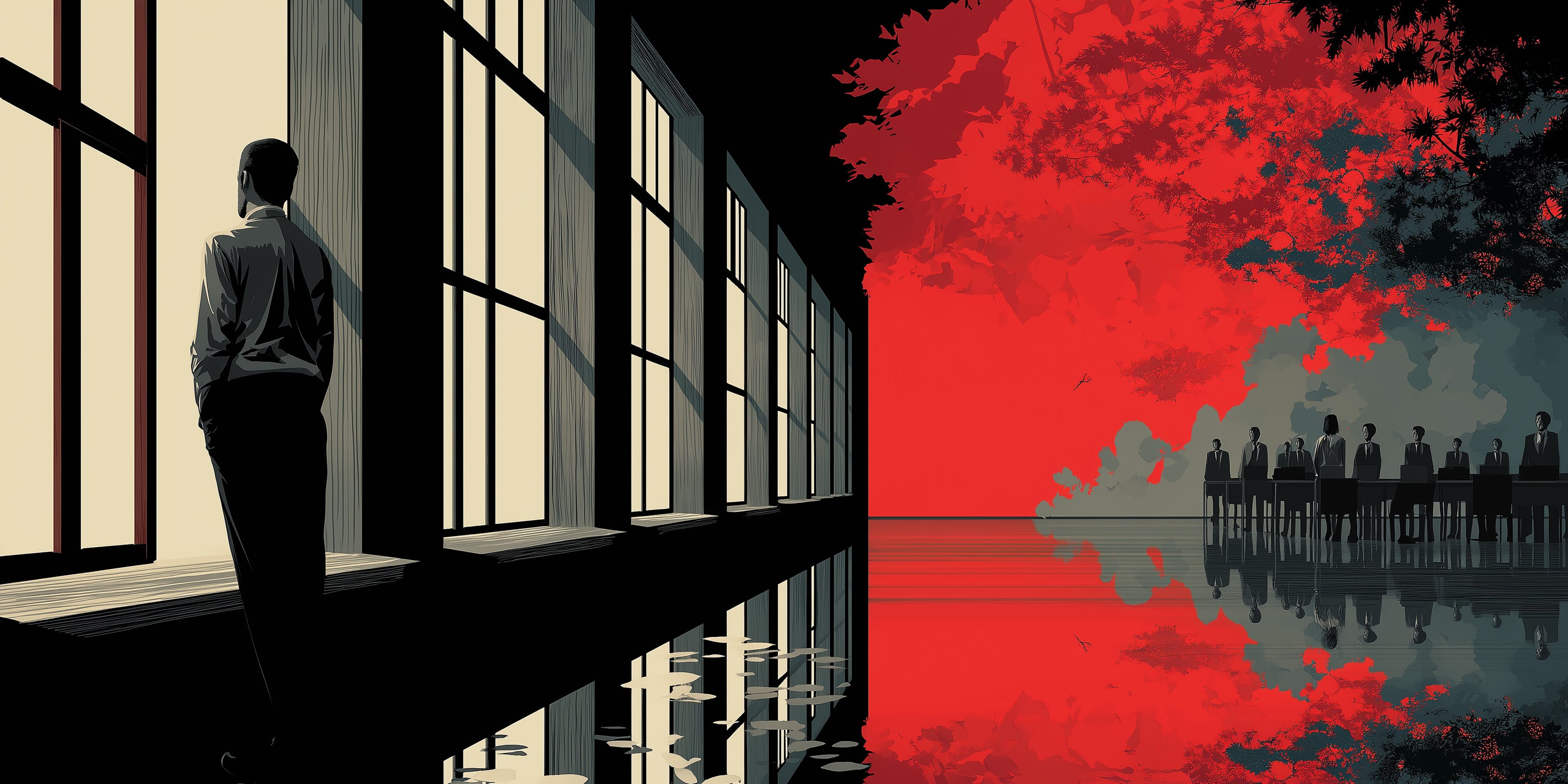
“In a time of universal deceit, telling the truth is a revolutionary act.”
— George Orwell
What qualifies me to talk about these things?
Not academic degrees or institutional credentials. Instead, my qualifications come from decades of study, observation, and synthesis across many fields—outside the walls of established systems.
Over time, I found most mainstream perspectives lacking, often sanitized of the very insights that would help us uncover truth. This is no accident. We live in a culture where entrenched power structures depend on obscuring reality, and institutions meant to advance knowledge often become tools of indoctrination and obfuscation.
In societies where truth threatens authority, education itself must become a cult in its own right. And like any cult, its true nature is obscured.
I share this because this information had to be pioneered outside existing systems. When a culture refuses to advance knowledge honestly, ideas that contradict its dogmas cannot survive within it.
As a result, I gathered what breadcrumbs I could from every source—mainstream academics, science, philosophy, spirituality—and pieced together what I believe is a superior model, one that explains what our civilization has been trained not to see.
I did this free of the burden of having to be graded or to have my funding withdrawn for advancing ideas that went against the grain.
Where did I get most of my insight? First, from a deep personal passion for studying human behavior. From a young age, I examined my own psyche and the relationships around me. Even as a boy, I felt compelled to understand how people interact—why we love, why we fight, why we conform.
Later, as I encountered psychology and sociology in school, I devoured as much as I could. And when I left formal institutions, I simply kept going, studying on my own and testing what I learned against experience.
By 2011, when I began producing public content, I had already accumulated a large body of understanding that helped explain why people act the way they do. These frameworks—what scholars call “models”—are not abstract toys. They are tools to organize experience and navigate reality.
All human knowledge is, in some sense, a model of the world.
The approach I use is what I call the Omniological Method—the disciplined attempt to see all things in relation to all other things.
It is based on the conviction that truth is never isolated; it is systemic, relational, and coherent across every scale of existence, from the inner life of the soul to the structures of civilization itself. To understand anything truly, we must understand how it fits within the whole.
In this sense, omniology is not merely a philosophy—it is an investigation method that can reveal the signature of truth in all things, including a framework for aligning human understanding with the total order of reality. It’s the method preferred by the intrinsic path.
That said, it is also a scientific philosophy. It reframes science and its disciplines within a system where all data and information—whether confirming or challenging prevailing theories—can contribute to the expansion of human knowledge.
Investigation, when pursued in good faith, always yields useful data. Yet modern science has become so hyper-specialized, so outcome-oriented, that vast reservoirs of insight are ignored or discarded simply because they do not reinforce preconceptions or fashionable paradigms.
Ironically, this narrowing of inquiry mirrors one of the primary features of cultic systems: the suppression of inconvenient truth to preserve an established belief structure. In this way, even scientific institutions can and do fall prey to the same cognitive and moral pathologies they once sought to illuminate and transcend.
The Omniological Method provides the lens. Cultology is what emerged when that lens was turned toward the pathology of relationships—the study of what happens when relational systems become parasitic instead of symbiotic.
We will explore the Omniological Method and its broader implications in depth in future articles. For now, what matters is this: the framework you are encountering was built through honest inquiry, not institutional conformity.
In 2020, I produced a 16-part series on psychology and relationships, exploring how a theistic spiritual framework illuminates our inner life and our relationships—an early synthesis of what you are reading now.
That work was viewed by Dr. Charles Whitfield, the respected psychologist and author I mentioned earlier. He told his wife Barbara that it was one of the best he’d seen.
I don’t share this to seek praise. What matters is that a man with far deeper knowledge of the academic world could see and validate the models that have now evolved into Cultology.
This external validation showed me that the model had merit—and pushed me to develop it into the comprehensive system you’re now reading.

“The health of civilization mirrors the health of its relationships at all levels.”
What we have explored so far is only the beginning.
Cults are not just bizarre fringe groups or headline-making tragedies. They are patterned systems of control, seeded in our romance, friendships, families, workplaces, institutions, and civilization itself.
They suppress truth, distort intimacy, and parasitize the very relationships meant to sustain us.
But once we can see the DNA of cult dynamics, we also gain the tools to dismantle them.
Cultology is not simply a diagnosis of what is broken; it is a path toward building relationships, communities, and civilizations that are rooted in truth, symbiosis, and freedom.
This series will unfold step by step.
In the next article, we will examine concrete examples—from infamous tragedies like Jonestown to the subtler cult-like structures in families, businesses, and our global order. These stories will show how cult dynamics manifest at every level, preparing us to see their deeper patterns. We will also integrate the work of Steven Hassan, whose BITE model (Behavior, Information, Thought, Emotion control) provides a powerful diagnostic framework that synergizes with the models presented here.
From there, we will move deeper into the mechanics of identity formation, exploring how the internal life of the individual directly relates to the social systems we inhabit—detailing what makes them either parasitic or symbiotic.
We will examine the four intimacies in comprehensive detail, tracing how even the most personal bonds ripple outward into civilization, economy, and the future of humanity.
We will explore how technology has played—and will continue to play—a significant role in the furtherance of parasitic systems, and how there may be efforts underway to undermine the long-standing agenda to transition civilization into a technocratic fusion of biology, psychology, and AI that dictators and cult figures across the ages have only dreamed about.
And woven through all of this is my attempt to offer hope and inspiration—showing that as scary as this might sound, our very choices in response allow us to reclaim our freedom, redeem beliefs and knowledge hijacked by cult-like systems, and point the way toward self-healing and improving the world.
Before we continue, a clarification about scope: while “Cultology” serves as the unifying name for this work, the series extends far beyond analyzing cults and aberrant groups.
The framework encompasses the entire spectrum of human relationships—how we process truth and knowledge, what gives life meaning and purpose, the mechanics of economies and cultural systems, the architecture of trust and agreements, and the intimate bonds that define our daily existence.
Think of Cultology as an integrated lens through which these seemingly disparate subjects reveal their underlying unity. As the series progresses, we’ll explore many of these dimensions in greater detail, including shorter focused pieces on specific concepts, responses to reader questions, and applications to contemporary events.

As you continue through this series, you’ll encounter foundational concepts—cult, symbiosis, parasitism, intimacy, the intrinsic path—returning again and again, each time with added dimension. This isn’t mere repetition; it’s intentional deepening.
Complex ideas reveal themselves gradually. A term introduced in one context gains new meaning when viewed through another lens. What seemed clear in Article 1 may become richer, more nuanced, more practically applicable by Article 5.
This layered approach reflects how genuine understanding develops—not through a single moment of insight, but through progressive integration. Each encounter with an idea builds upon the last, creating a cumulative clarity that a linear presentation cannot achieve.
The frameworks I’m introducing carry more depth than can be conveyed in one pass. By circling back with expanding context, the architecture of each concept becomes increasingly visible.
An important caveat: the frameworks presented here represent my current understanding, not immutable doctrine. These models will evolve—perhaps substantially—as new evidence emerges and deeper synthesis becomes possible.
When pursuing truth, we often seek absolute certainty, something permanently fixed and complete. But that expectation misunderstands the nature of knowledge itself.
While truth may be constant, our comprehension of it develops continuously. Understanding unfolds like organic growth—the essential structure remains coherent even as new dimensions reveal themselves, adding richness and precision without negating what came before.
You’ll likely encounter claims in this series that challenge your current framework. Some ideas may seem immediately incompatible with what you hold as established fact. When that happens, I ask that you:
Evaluate the complete argument before dismissing based on a single point
Bring your most rigorous skepticism—serious questions strengthen the work
Remain open to the possibility that the synthesis might resolve apparent contradictions
This represents ongoing inquiry, not concluded doctrine. I remain committed to following evidence wherever it leads, even if that means revising or abandoning positions previously held. The goal is truth, not the defense of any particular formulation.
The story of Cultology is both sobering and liberating.
Sobering, because it reveals how deeply our world has been shaped by hidden cults of control—how trauma has been weaponized, how intimacy has been hijacked, how even our thoughts and identities can be colonized by parasitic systems we never consciously chose.
Liberating, because it points toward a vision of life, love, and civilization that is not only possible but urgently needed.
This is the path forward: from parasitic systems of slavery and illusion to symbiotic systems of truth, freedom, and flourishing.
Next, we will begin where most people first encounter the word “cult”—with the dramatic and tragic stories we think we understand. But as we will see, those are only shadows of a far larger reality.
We will examine how these patterns scale from the individual to the civilizational, and we will integrate the diagnostic frameworks that allow us to identify and dismantle cult dynamics wherever they appear.
The truth about cults will set us free from them—but first it will pull the wool from our eyes.
Powerful actors have secretly weaponized the science of relationships, manipulating the four intimacies to suppress freedom and amass control.
The transition to a better world is not passive. Cultology explains these dynamics while also inviting us to examine our own lives—and, with courage, dare to embody a better way: for ourselves, our communities, and civilization itself.
Welcome to Cultology.
Author’s note: The original version of this article was revised to enhance the presentation of the content for the Cultology series. Some of the points were moved to be released in a better form in future installments.
With love,
Justin
Please tell me what you think or let me know if I got something wrong. I want to hear from you.
Justin Deschamps is a researcher, omniologist, podcaster, and business consultant who has committed himself to restoring the knowledge, reason, and goodwill that helped the founding fathers create the greatest nation on earth.
Follow me on:
No posts
Comments
Nothing yet. Say the first thing.
Sign in to join the conversation.