

A tribute to investigative journalist Danny Casolaro — who followed the Octopus to Martinsburg in 1991, and did not come back alive. We will keep following and publishing in Danny's honor.
In October 2025, four federal district judges simultaneously recused themselves from a single civil RICO case in the District of Utah.
Not one. Not two. Four.
Judges Jill N. Parrish, Dale A. Kimball, David Barlow, and Tena Campbell — all stepping away from Halvorsen et al. v. Cox et al. (Case No. 2:2025-cv-00909), a case alleging that Utah Governor Spencer Cox and Chief Justice Matthew Durrant orchestrated a criminal enterprise to manipulate the state’s election laws.
Legal analysts describe this as a statistical anomaly without documented modern precedent at the U.S. district court level. They are being diplomatic. A simultaneous four-judge recusal is not a coincidence dressed up in procedural clothing. It is a fire drill where every exit leads to the same window.
Full disclosure: I am a named Pro se plaintiff in that case — listed among the Class 3 Unaffiliated Voter plaintiffs.
I call it what it is: a confession embedded in a convoluted docket.
A judge does not recuse from a RICO case unless she has read the complaint and recognized her own reflection in it. Four judges reading the same complaint and drawing the same conclusion on the same day is not coincidence. It is institutional self-preservation — the bureaucratic equivalent of hitting the fire alarm on the way out the door.
The case was dismissed on February 17, 2026. Three plaintiffs — Wickizer, Newby, and Inman — had been separated from the main proceeding before dismissal and are now contesting a demand for attorney fees and costs. Even though, like Rosa Parks of old, we’ve been told by Utah’s Failed Justice System to, “Go to the back of the bus, sit down, shut up, and take your medicine,” that proceeding remains active.

Four district court judges in panic fleeing. One RICO case. Zero explanations.

Danny’s Photorealistic Image
In 1991, a fearless, forward thinking, freelance investigative journalist Danny Casolaro told his friends he had finally cracked it — the network he had spent years documenting, the one he called the “Octopus.”
An interlocking system of intelligence agencies, politicians, organized crime, and stolen technology. One hand feeding the next. Tentacles everywhere you looked, and nowhere you could prove. A creature that swam through institutions the way a river swims through a canyon — not despite the rock, but because of it.
He went to Martinsburg, West Virginia, to meet a source who was going to hand him the final piece.
He was found dead in a hotel bathtub. Wrists slashed twelve times. Notes and files: gone.
The House Judiciary Committee reviewed the case and concluded that “as long as the possibility exists that Danny Casolaro died as a result of his investigation into the INSLAW matter, it is imperative that further investigation be conducted.”
Congress, having declared further investigation imperative, thereafter declined to conduct it. Some imperatives are more imperative than others. The resolution sat on a shelf and gathered the particular kind of dust that settles on things no one intends to disturb.
My name is Wayne L. Wickizer. I am 89 years old. Former FBI Special Agent — graduate of the FBI’s Command School of Advanced Criminology. Retired Major, U.S. Army Special Forces, Green Beret, Special Operations Intelligence Officer. Former Special Agent, Utah Attorney General’s Office. Service-connected disabled veteran. Credentialed investigative journalist and member of the Society of Professional Journalists.
I have spent nearly five decades documenting and confronting the network that Danny Casolaro did not survive.
The difference between Danny and me is simple: I am still alive and at my desk working away daily. Of course, as decades of awareness dictates, I’m always working with one eye casually open a bit and sometimes wondering if I’m gonna’ get “whacked” by Danny’s Octopus. But … I don’t look under the bed for the boogey man so all must still be well.
Danny went to Martinsburg. I ended up with a filing cabinet full of evidence and a Substack. Make of that geography what you will.
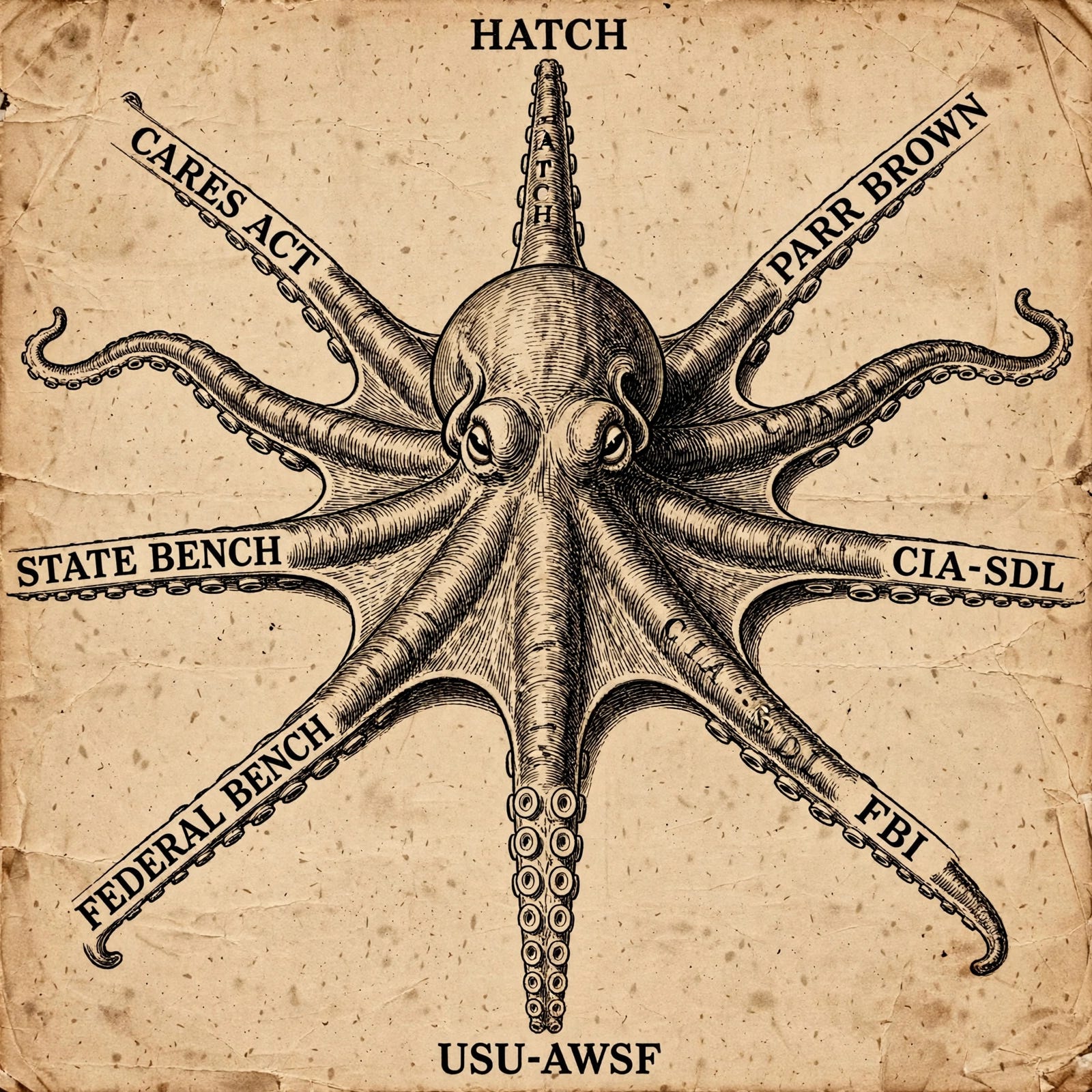
Danny Casolaro’s Octopus ran on PROMIS — a stolen software system that gave intelligence agencies the ability to track anyone, anywhere, through any legal system. Two separate federal courts found that the Department of Justice had acquired it “through trickery, fraud and deceit.”
Utah’s Octopus runs on the same template. Different technology. Identical method. The only things that changed between 1991 and 2017 are the ZIP codes and the dollar amounts.
Before we go farther, one orientation: GeoMetWatch Corporation built the technology. Alan Hall’s company, Tempus Global Data, was the defendant accused of misappropriating it. Their litigation — Case No. 1:14-cv-00060-JNP, District of Utah — is the mechanism this investigation documents.
What matters is where the technology went, and who was minding the courthouse while it traveled there.
GeoMetWatch Corporation’s STORM sensor was a geostationary hyperspectral atmospheric sounder — a commercial instrument designed to deliver continuous, high-resolution atmospheric temperature and water vapor readings to U.S. weather forecasting infrastructure. Weather data of that category, a category of data the U.S. Department of Commerce values at $31.5 billion a year to American households — separate from Geo-Met-Watch's own $12 billion litigation claim.
STORM was developed commercially, then destroyed by litigation — like a ship that is deliberately run aground so its cargo can be salvaged by those who set the course. That same sensing category underpins both civilian weather prediction and military early-warning systems. SDL, which absorbed the STORM program’s institutional home, holds active contracts with the U.S. Missile Defense Agency.
As an aside, I know a little bit about “Flying the Weather” after having spent about 3,000 hours from 1958-61 in U.S. Air Weather Service WB-50 modified bomber aircraft. Our missions over North Asia and all the Western Pacific were routinely to monitor the weather and also to find, track, and penetrate typhoons. But on relatively rare but most memorable occasions we were “ordered” to fly the highly secret (at the time but not now) missions to climb into the upper atmosphere over North Asia, sample, collect, and report Soviet nuclear radioactive fallout. As a result of such exposure, I am currently on the government’s Ionizing Radiation Registry for those who have been so exposed.
YES! I have been in sync with the weather that is significant to the criticality and importance of this report. I, perhaps more so than any of the other players you will read about hereafter, know the power of the weather, the importance of the anticipation of it, and the potential of our control over it. Vice President Lyndon B. Johnson said it publicly and on record in a 1962 commencement address at Southwest Texas State University: "He who controls the weather controls the world."
In 2011, Senator Orrin Hatch formally endorsed GeoMetWatch — the plaintiff — in a public congressional statement praising USU’s role in the project. The endorsement is in the complaint record. Four years later, judges carrying Hatch’s personal recommendation were presiding over the federal case that destroyed the same company.
The question every careful reader will ask: why would Hatch’s judges rule against a company Hatch had publicly blessed?
Hatch endorsed the inventor. Hatch’s judges presided when the invention was taken. The technology left the startup that built it and entered Utah State University’s Space Dynamics Laboratory — a federally funded research center holding active U.S. Missile Defense Agency contracts. The point to keep firmly in mind is that, “Endorsed by Senator Orrin Hatch” was like a referee’s signal to Parrish and Warner to begin the game. When the star players are playing on both sides of the field what matters most is not the win or loss but the ultimate outcome.
The man who then formalized his role as SDL’s Director of Analytics in July 2017 — four months before the November 2017 sealing of Hall’s summary judgment motion — was Matt Berrett, former Assistant Director of the Central Intelligence Agency. His CIA service ended in June 2017. His SDL appointment began in July 2017. One month between Langley and Logan. The transfer is documented: USU Center for Anticipatory Intelligence Leadership records, Crunchbase, LinkedIn. Four months after Berrett’s arrival, the courthouse that bears Hatch’s name sealed the dispositive motion that eliminated GeoMetWatch’s primary damages theories — behind a one-sentence order, in secret, with no findings. A junction switch thrown at night, with no one watching the track.
The documented record does not require speculation about whose interests the litigation served. It answers the question.
Hatch endorsed the victim. Hatch’s judges administered the outcome. Hatch’s name is on the building where it happened.
Step by step. Beat for beat. The INSLAW/PROMIS template, applied in the Mountain West, administered from a courthouse named after the man whose fingerprints are on every appointment that made it possible.
Danny Casolaro was investigating the original. He ended up in a bathtub in Martinsburg.
I ended up with a filing cabinet full of evidence and a hot Substack report ready to deliver right now.
Case No. 1:14-cv-00060-JNP. GeoMetWatch Corporation v. Hall et al. District of Utah. You can pull it on PACER in under ten minutes.
Here is what you will find if you “stop, look, and listen to your head and heart.”
April 10, 2017 — Entry #483: Two pending motions are abruptly pulled from Magistrate Judge Paul M. Warner’s referral docket. The notation reads: “Judge Parrish will handle these motions.” A sua sponte reclamation of control — which means a unilateral reclamation of control — no motion filed, no party asked, no explanation given. In three decades of proximity to the practice of law and intimately personal investigative work, I have seen judges manage cases. This is not case management.
April 10–13, 2017 — Entry #485: Does not exist. Entry #484 is dated April 10. Entry #486 is dated April 13. In between, a docket number is simply absent from the public record. Three days. One number. Gone. A docket number is not like a hotel room number the Mafia hides and leaves unnumbered so the feds can’t find it. Federal docket integrity is the foundation of the public’s right of access to judicial proceedings — a right grounded in both the First Amendment and centuries of common law. A missing entry without explanation isn’t a paperwork irregularity. It is, on its face, a breach of that foundation. Courts do not typically misplace their place in a numbered sequence. The sequence is the record.
April 21, 2017 — Entry #488: Judge Parrish then grants competing motions filed by both parties seeking relief from her own prior certification order to the Utah Supreme Court. She then issues a revised certification order (Entry #489) redirecting the sovereign immunity questions. A judge who issues her own unprompted order, then revises it after both sides object — without a hearing, without explanation, without a word on the record — is not adjudicating. She is “panic” managing. When plaintiff and defendant agree on nothing else but agree that the judge got it wrong, and the judge quickly fixes it in the dark, that is not judicial correction. That is judicial concealment. “When in worry, when in doubt, run in circles, scream and shout!”
May 17, 2017 — Entry #500: This one stops you cold. The Hall/Tempus defendants — represented by attorney David Tufts — file a document with the following title: “NOTICE of Regarding Wayne L. Wickizer’s Assertion of a Conflict of Interest.”
I was a former FBI Special Agent and a credentialed investigative journalist. Twenty-two days earlier — on April 25, 2017 — I had personally flown to and filed formal ethics complaints naming both Parrish and her Magistrate Paul Warner with the United States Court of Appeals for the Tenth Circuit in Denver, signed under penalty of perjury. I was neither a party nor an attorney. I was an outside observer who had identified a structural conflict of interest rooted in Senator Hatch’s endorsement of both the plaintiff company and the presiding judges, and I put it on the record.
The 10th Circuit acknowledged receipt of those complaints on May 1, 2017. The Hall/Tempus defendants filed Entry #500 sixteen days later — by name, in the federal docket, responding to my ethics assertion. That is not a routine filing.
Defense counsel went after the man with the ethics complaint (me) before the court could be asked to investigate it. That tells you something about what they expected would happen if the complaint was not first discredited.
Those complaints were dismissed on August 4, 2017 — without investigation. That outcome is unremarkable by design: documented research shows more than 99 percent of all federal judicial conduct complaints are dismissed — the majority by chief judges without further review. The dismissal proves nothing. The filing is in the record. It cannot be unfiled.
May 18, 2017 — Entry #501: The day after Entry #500, more motions are pulled from Magistrate Warner’s referral. The pattern repeats: “Motions No Longer Referred… Judge Parrish will handle.”
June 27, 2017 — Entry #511: Again. Same formula. “Judge Parrish will handle.”
July 2017: Matt Berrett — who retired from the CIA as an Assistant Director, with his CIA service ending June 2017 — formally assumes the role of Director of Analytics at Utah State University’s Space Dynamics Laboratory. SDL had been an institutional partner in the STORM program from the litigation’s inception. Berrett’s move from Langley to Logan is direct and documented: CIA ended June 2017, SDL began July 2017. One month. No gap worth calling a gap.
November 2, 2017 — Entry #522: Judge Parrish grants an ex parte motion (ex parte: one side only, without notice to the opposing party) to seal a matter filed by Hall and Tempus. The sealing order — the legal instrument authorizing the burial of a dispositive motion in a case involving $31.5 billion in contested technology — reads in its entirety: “good cause appearing.” Three words.
The “rub” here is that the Tenth Circuit requires “particularized findings.” Three words is not particularized. Three words is a haiku with delusions of legal authority. No attached document. No findings. No specificity. Filed ex parte — without notice to the opposing party. The sealed materials become Entry #524. Entry #524 does not appear as a labeled public entry in the docket — no accessible document, no docket text, no description. It exists in the record only as a reference number cited in at least ten subsequent filings, each calling it “524 SEALED MOTION for Summary Judgment.” The motion is confirmed to exist. Its contents are confirmed to be locked from public view. The pattern does not require interpretation — it announces itself.
Motion after motion pulled from the magistrate’s docket by the same hand, with the same three words: Judge Parrish will handle. No explanation. No motion requesting it. No hearing. Just a steady, quiet consolidation of control over every significant decision in the case — like a river that redirects itself incrementally, so no single shift seems worth noting until the valley has changed shape entirely.
Then, as a former CIA Assistant Director formalizes his move from CIA to SDL — an institution embedded in the STORM program since its inception — the final act: an ex parte sealing order — filed in secret, granted in secret, justified by three words, good cause appearing, with no findings, no specificity, and no attached document. The summary judgment motion it buried — the most consequential filing in the case — does not appear in the public docket as sealed. It does not appear at all. Pulled. Handled. Sealed. Gone. That is not a litigation record. That is a recipe for cooking the books.
A note on what “sealed” and “absent” mean in federal court — because they are not the same thing, and the difference matters.
When a federal court seals a document, it typically still appears in the public docket as a placeholder — a notation that something exists, even if it cannot be read. Entry #524 does not appear. There is no placeholder. A summary judgment motion with exhibits — one of the most legally significant documents in civil litigation, the type courts have repeatedly held carries a strong presumption of public access — was not sealed from view. It was removed from view. Those are different acts with different implications. (Nixon v. Warner Commc’ns, 435 U.S. 589 (1978); Colony Ins. Co. v. Burke, 698 F.3d 1222 (10th Cir. 2012).)
Entry #485 is in a different category still. It was not sealed after filing. It was not restricted. It simply does not exist in the sequence — no placeholder, no notation, no reference. Between April 10 and April 13, 2017, one docket number is missing from a federal civil case. A ghost where a number should be.
Entry #485 is an erasure. Entry #524 is a vault. Both are by design. The erasure leaves nothing to find. The vault leaves nothing to read. Together, they describe an administration of justice that could not survive full public view.
Are you seeing any parallels yet between the capture of Inslaw technology that Danny Casolaro reported and the CIA’s presence in the foregoing dust up?
One more dimension of this case has never received public attention: the attorneys.
More than two dozen lawyers scrambled to file appearances in Case 1:14-cv-00060-JNP across its five-year life. Four separate substitutions of counsel occurred on the defense side — lawyers cycling in and out with the precision of a relay race. Utah State University, as a state institution, brought the resources of the state legal apparatus to bear on a private startup.
What resulted was a feeding frenzy of billable hours by insider attorneys and law firms whose professional networks overlapped, in ways both obvious and documented, with the same institutional ecosystem that produced the Hatch-endorsed bench presiding over the case.
Before we get into the guts of the feeding frenzy by outside counsel, let’s sneak a peek at what was really going on inside the inner sanctums of the sacred halls.
There is a moment in the April 29, 2016 hearing transcript of GeoMetWatch Corporation v. Hall et al. — Case No. 1:14-cv-00060, District of Utah — that stops a careful reader cold. It is not buried in footnotes or hidden in a sealed exhibit. It is sitting in open court, on page 70 of the certified transcript, spoken by the presiding magistrate judge into the federal record for anyone with a PACER account to find.
United States Magistrate Judge Paul M. Warner looked out at the assembled lawyers — plaintiff’s counsel on one side, three defense teams on the other — and said this:
“I don’t like your case because it creates work for me. But I think as a group of lawyers you’re pretty good lawyers and I like — I like you people.”
He liked them. All of them. Both sides. In a twelve-billion-dollar trade secret theft case. On the record. His big boy pants had just fallen to his knees — and he didn’t notice.
That sentence alone would be remarkable. What surrounds it in the same transcript is something else entirely.
The hearing had barely begun when Judge Warner made his first disclosure. District Judge Jill N. Parrish — the Article III judge assigned to review Warner’s rulings — came up in conversation. Warner explained the relationship without apparent concern:
“I call her Jill because she used to work for me.”
Parrish was Warner’s former subordinate. He was now the magistrate whose rulings she would review. He mentioned it the way you mention the weather.
But Warner was not finished. Later in the same hearing, asked about the durability of one of his rulings on appeal to Parrish, he offered this:
“After Judge Parrish appropriately sustains my ruling. It may be wishful. It may be hopeful.”
A sitting magistrate judge, predicting out loud that his former subordinate would rule in his favor — and calling it wishful and hopeful, as though he were reading tea leaves rather than telegraphing a relationship. He then promised the room he would write Judge Parrish “a road map” of his reasoning so she could follow it. The road map, by his own account, would be ready “probably by the end of the week.”
The supervisor was going to guide his former employee through her review of his own work. On the record. In open court. Without blinking.
Later in the same hearing — page 96 of the transcript — Warner made a second disclosure, this one even more casual than the first. The Utah Attorney General’s office was present in the courtroom that day. Not as observers. As active counsel of record, defending state defendants Robert Behunin, Curtis Roberts, and Utah State University Research Foundation d/b/a Space Dynamics Laboratory. Three Assistant Attorneys General from AG Sean Reyes’s office were at the table.
Warner mentioned, as an aside, that he had worked in that same office. As a supervisor.
He did not pause. He did not invite objection. He did not treat it as a disclosure requiring any formal response. He said it the way you say that you once lived in a neighborhood — and kept going.
A former supervisory attorney in the Utah Attorney General’s office was presiding over a case in which the Utah Attorney General’s office was actively litigating on one side. He told the courtroom. Then he moved on.
This is the sentence that ties the room together.
Also on the record — also in the same hearing — Warner stated that he “often doesn’t pay much attention to what the district judges tell me to do.”
Set that against everything else in the transcript: the former subordinate he was predicting would sustain him, the road map he was writing to guide her ruling, the “wishful and hopeful” investment in her outcome. Warner told the courtroom he ignores district judges as a general matter — and then demonstrated, in the same proceeding, that this particular district judge was the exception. Not because she outranked him. Because she used to work for him.
One more entry for the record. In the same hearing, Warner accepted plaintiff’s counsel’s recitation of the facts and issues so completely that his subsequent written order — Docket No. 129 — adopted that recitation verbatim. Plaintiff’s counsel had, in practical effect, written the magistrate’s order.
Warner then ruled for the defendants on the motions that mattered.
Cozy with plaintiff’s counsel. Guiding his former subordinate on the bench above him. Former supervisor of the office litigating before him. Burdened by the case. Fond of the lawyers.
The transcript is Case No. 1:14-cv-00060-JNP-PMW, Document 994, filed September 27, 2019. The hearing was April 29, 2016. The court reporter was Patti Walker, CSR-RPR-CP. The certification is dated May 12, 2016. It is available on PACER to anyone who wishes to read what a federal magistrate judge says when he thinks the consequences are someone else’s problem.
GeoMetWatch was being financially suffocated by the conduct it was suing over. Every motion, every deposition, every discovery dispute added to the meter running against a company whose capital was already hemorrhaging. Extended litigation is not a neutral event. For the firms billing it, it is a revenue stream. For the company bleeding through it, it is a planned and programmed execution by installment.
His name is Chris Anderson, of the Salt Lake City firm Durham Jones & Pinegar. He was GeoMetWatch’s own lawyer from January 2011. In September 2013 — before the federal complaint was even filed — Anderson joined Durham Jones & Pinegar. Within weeks, he began representing Alan Hall in the same matter, without disclosing that conflict to GMW. A conflict-waiver process ran through November 12 and 18, 2013. GMW gave its written consent.
Read that sentence again. GeoMetWatch gave its consent to dual representation while its business was being dismantled by the man its own lawyer also represented. The record does not indicate whether anyone explained, in plain English, that the company was being asked to bless an arrangement that structurally compromised the person it was paying to protect it. In surgery, this is called operating on the wrong patient. In law, it is called a conflict of interest. Here, it was called a waiver.
The Utah Court of Appeals addressed it in 2026 (2026 UT App 93, GeoMetWatch Corp. v. Durham Jones & Pinegar, P.C.), finding that Durham Jones “owed a duty to GMW and likely violated it” through the dual representation — but affirmed summary judgment against GMW because the federal litigation’s issue preclusion finding blocked recovery on causation. The ethical breach is judicially acknowledged. The remedy died in the same courthouse that administered the underlying case. The court that destroyed GMW’s business produced the finding that then destroyed GMW’s malpractice claim. If you designed a system to guarantee impunity, you would design it to look exactly like this.
A company can be destroyed in the courtroom. It can also be set up for destruction in the intake meeting.
That is the docket of a case that was administered, not adjudicated.
Every date above is verifiable. Every entry number is retrievable on PACER. Entry #485 and Entry #524 are not the same kind of problem. Entry #485 is gone without a trace. No seal stamp. No restriction flag. No explanation. One number, no entry. Entry #524 is a different creature: ten subsequent docket entries each cite it by name — “524 SEALED MOTION for Summary Judgment.” You can prove it exists. You cannot read it. One is an erasure. The other is a vault. Both are by design.
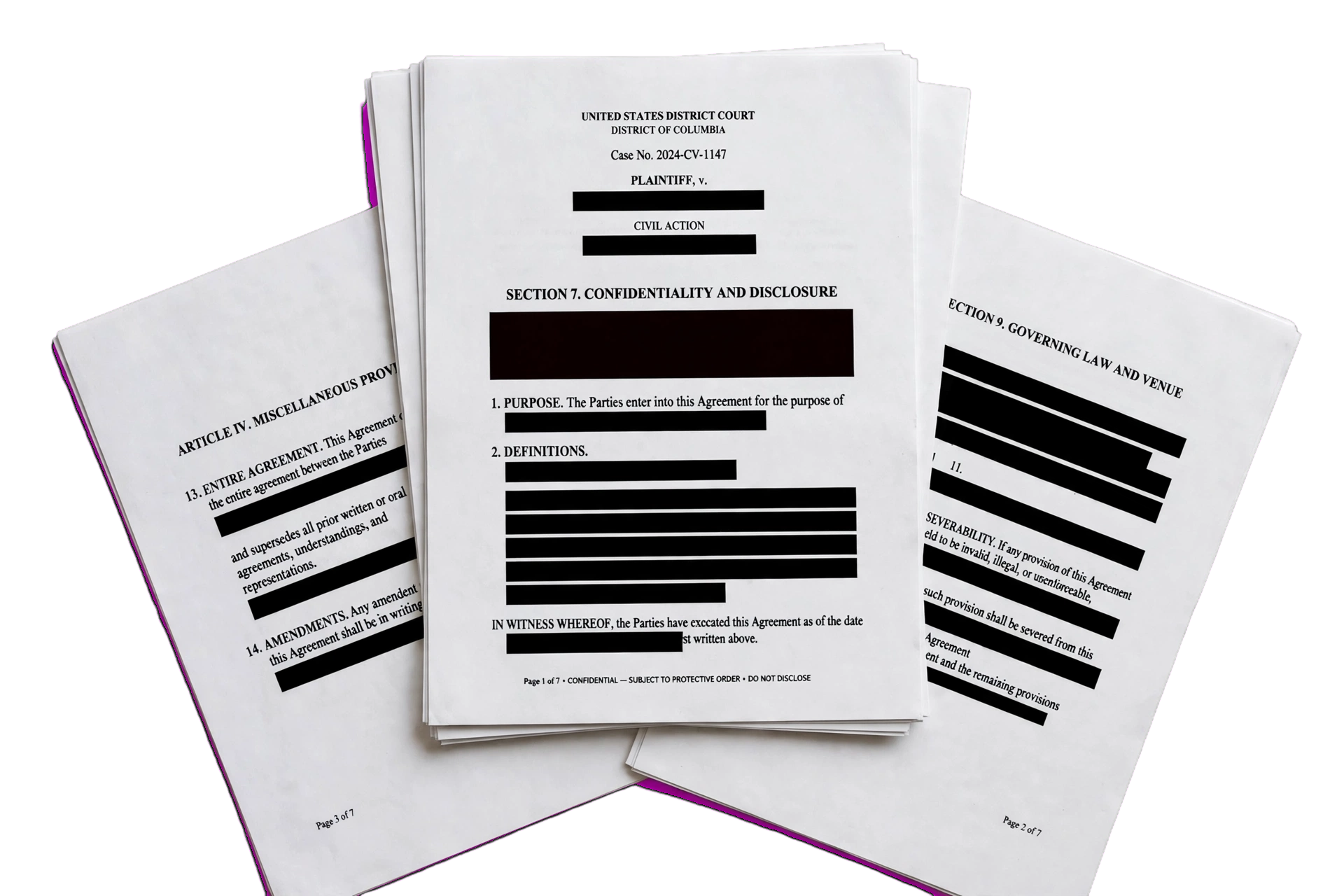
$2.6 million in pharmaceutical contributions. A Senate Finance Committee report sealed for eight years under his chairmanship. Nine of fifteen Utah federal judges carrying Hatch endorsements. His name is on the building where suppression was administered.
So again you see right here and in all, “Endorsed by Senator Orrin Hatch” was like a referee’s signal to begin the game.
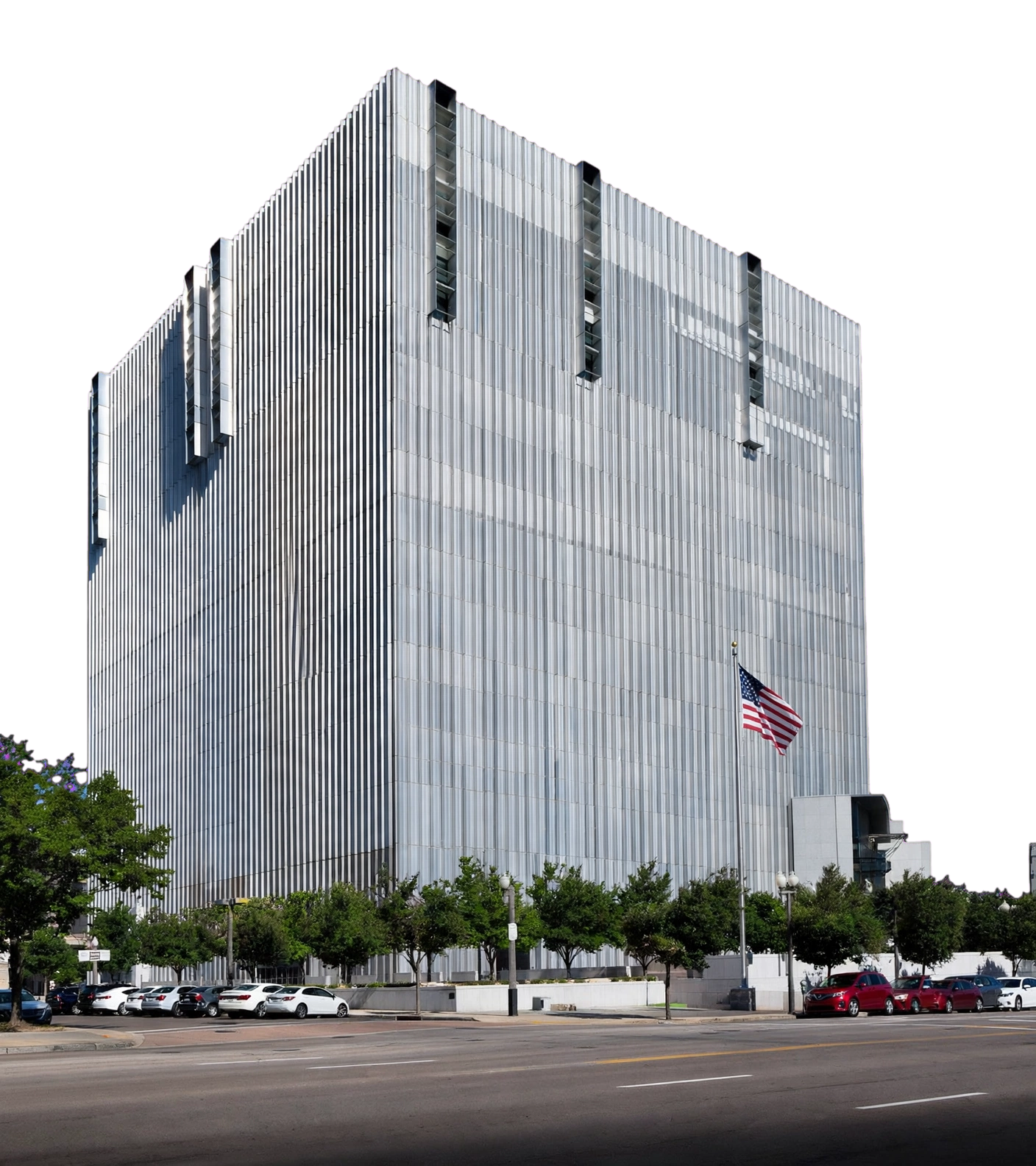
In Utah, Orrin Hatch is eulogized. Monuments now bear his name. Tributes bloated the newspapers. He is spoken of in the hushed, reverent past tense of a statesman — the kind of past tense reserved for men whose reputations have been professionally maintained like lawns: regularly mowed, never permitted to grow into anything that would reveal what lies beneath.
For a couple of brief examples, Senator Orrin Hatch received $2.6 million from pharmaceutical companies across his Senate career, per OpenSecrets. He then co-authored legislation that gutted DEA enforcement of opioid distribution — legislation so consequential that the Senate Finance Committee launched a formal investigation. A joint Washington Post and CBS 60 Minutes investigation (October 15, 2017) documented that DEA immediate suspension orders against opioid distributors collapsed in the aftermath: from 65 orders in 2011, to 8 in 2016, to 0 in 2017. Former DEA diversion control chief Joseph Rannazzisi stated: “The drug industry, the manufacturers, the distributors, the chains — they have an influence over Congress that has never been seen before.” Independent campaign finance data (FollowTheMoney.org) shows $345,260 of Hatch’s pharmaceutical contributions concentrated in the three-year window surrounding that legislation’s passage. That investigation produced a report.
Paul D. Thacker — a former Senate Finance Committee investigator and subsequent investigative journalist — confirmed the report’s existence and sealed status to Business Insider. The committee’s bipartisan leadership — both the Republican chair and the Democratic ranking member — inherited it and left it buried. Bipartisan silence about a report documenting an opioid crisis that has killed hundreds of thousands of Americans is not neutrality. It is a choice. Two parties, one sealed shelf. Some things transcend partisan difference.
I say the transcendence should be all about Apple Pie, and the health, welfare, and moral fiber of a Nation of Moms, Dads, and Children — NOT politics.
At the time of the Tempus Global Data litigation, nine of Utah’s fifteen federal district judges held Orrin Hatch endorsements. The judge who presided over Tempus — Jill N. Parrish — was nominated by President Obama following Orrin Hatch’s personal recommendation. Hatch memorialized that endorsement in a formal Senate press release dated May 21, 2015: “She is a brilliant legal mind with an unquestionable track record. I look forward to having Judge Parrish serving our District as a federal judge.”
Oh “brilliant” is she? Warner didn’t seem to say so.
As senior Utah Senator from 1977 to 2019 — the longest-serving Republican senator in U.S. history at the time — Hatch held effective veto power over every Utah federal judicial nomination through the Senate’s blue-slip convention. The convention is not a law. It does not appear in the Constitution. It is simply an institutional understanding: a senator’s approval is required before a nominee from his state advances. For forty-two years, that understanding gave Orrin Hatch a quiet, deniable, absolute power over who sat on the bench in Utah. Nine of fifteen judges is not a statistic. It is an architecture. (Source: FJC Biographical Directory of Article III Federal Judges.)
The Senator who publicly blessed GeoMetWatch in 2011 also publicly championed the judge who would preside over GeoMetWatch’s destruction four years later.
She is one of the four judges who just recused from the RICO case.
On October 1, 2025, she was elevated to Chief U.S. District Judge for the District of Utah. Twenty days later, she recused herself from the RICO case. She now runs the courthouse named after the man whose network she just declined to adjudicate. The promotion and the recusal arrived in the same month. You are invited to consider that timing at your leisure.
Rasputin was beloved by the Romanovs until the moment he wasn’t. The name Machiavelli described the Prince who survives not by force, but by being impossible to accuse credibly until it is too late. The most dangerous power broker is never the obvious villain. Hatch is that figure — the one whose corruption is administered behind a face the community has already decided to revere. The face on the building. The name in the tributes. The Senator who packed the bench and sat on the report and endorsed the company his judges would destroy. The man who was in every room and left no fingerprints — except on the nominations, and the legislation, and the fundraising record, and the sealed report, and the building.
Utah has spent decades building that monument. This investigation is the audit and the exposé of it.
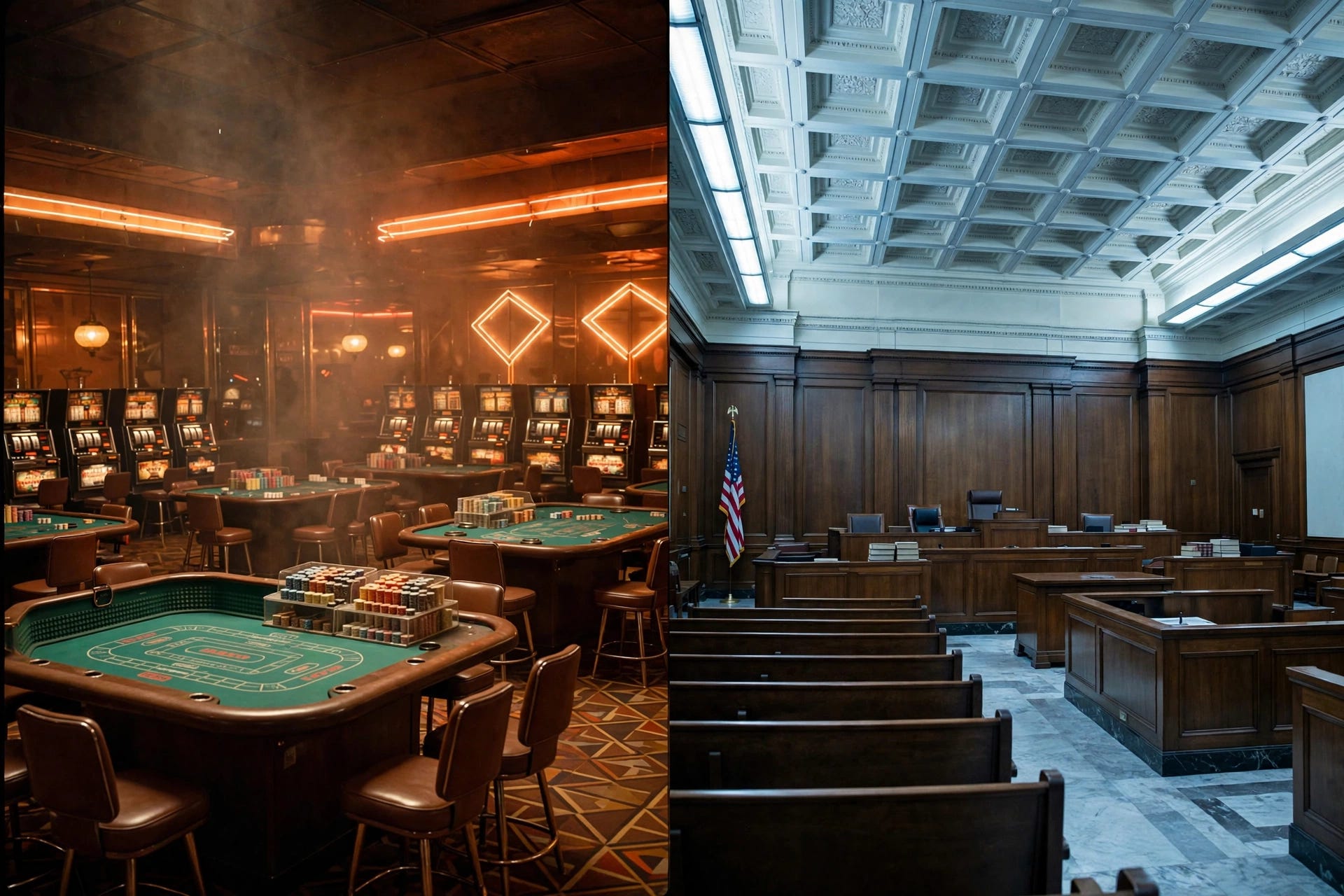
From Las Vegas, 1978, to Salt Lake City, 2025. The money changed hands. The method didn’t.
In September 1978, a mob bookkeeper’s financial diary landed in my hands.
Nineteen handwritten pages. $28 million in casino skimming — Stardust, Aladdin, Fremont, Frontier, Thunderbird, Tropicana, and others. Teamster payoffs. The Watergate Gang. And a January 5, 1973 entry annotated simply: “for the Hoffa problem.”
As damning as a loaded weapon and about as easy to ignore. Authenticated by four independent experts, including William F. Roemer Jr. — the most decorated FBI Special Agent in Bureau history. When Bill Roemer says a document is genuine, it is not a matter for further debate. It was not debated. It was suppressed. Our preview of Part 2 tells of how I in person briefed Hatch about the ledger and what he did and didn’t do.
The FBI dispatched two agents to suppress it and debate with me in another hearing during 1979. They worked to debunk it. They failed. The case died anyway — not because the evidence was weak, but because weak evidence is not the only way a case dies. Sometimes a case dies because the people who would have to prosecute it are the people it would implicate. The Bureau’s failure to discredit the Ledger is preserved. The Bureau’s decision to close the case regardless is preserved. The distance between those two facts is where the story still lives.
The Las Vegas Ledger is in my “constructive” control. The chain-of-custody log, signed September 20, 1978, is preserved. The authentication record is preserved.
Uniquely, I was commended for my FBI work by both Director J. Edgar Hoover and muckraking columnist Jack Anderson — two men who loathed each other with a passion that would make modern Washington blush. Getting both of them to say your name approvingly is like getting a standing ovation from the prosecution and the defense in the same trial. I have outlived both of them. I have outlived the Senate’s most powerful patron of judicial capture. I have outlived the journalist who tried to tell the Octopus story before me.
I am still publishing and daring.

No spin can un-file a record.
The question is no longer whether the pattern exists. It does, in exhaustive and irrefutable detail, assembled by a career intelligence and criminal investigator across nearly fifty years of contemporaneous, documented work. The kind of work that cannot be dismissed as the grievance of a disappointed litigant — because it was being assembled before the litigation existed, and it will be assembled long after the courts have issued their last order.
The question is whether a court exists that can hear it without being named in it.
Four judges just answered that question about themselves.
One of them got promoted.
The courthouse still bears Hatch’s name.
An investigative archive — court filings, ethics complaints, financial trail documentation — lives at Justice4All.blog.
The ongoing investigation is published at Justice4Eternity (Substack) — justice4eternity.substack.com.
The evidence memorandum wherein data in this report is cited, linked, and disclosed is found HERE.
If you are a reporter, a congressional staffer, an attorney, or a citizen who believes the law should apply to all who we’ve named: I am available.
Wayne L. Wickizer
Former FBI Special Agent | Retired Major, U.S. Army Special Forces/ Member, Society of Professional Journalists / Email … master@utahwtp.com & wwickizer@gmail.com / Phone 385 239 8326 De Oppresso Liber. (To free the oppressed)
The Las Vegas Ledger described above was not only a mob accounting diary. It was the opening chapter of a fifty-year story that connects organized crime money to a United States Senator who publicly defended the world’s most corrupt bank on the Senate floor — using a speech drafted by the bank’s own lawyers. A Senator who personally telephoned the bank’s president to arrange a $10 million loan for a friend and campaign contributor. A Senator who pressured senior Justice Department officials to protect that bank from prosecution. A senator who was subsequently investigated by federal law enforcement — with no charges brought.
The CIA’s off-books financial institution. The bank that funded covert arms operations, laundered drug money, and distributed intelligence technology across three continents outside any congressional oversight. The bank that Danny Casolaro identified as a central node in the Octopus network he was documenting when he went to Martinsburg and died.
I briefed Utah’s federal delegation on the Las Vegas Ledger. Orrin Hatch was in the room listening intently when I did.
He beat feet. Hightailed for D.C. to do damage control.
The next installment tells you where and why he ran, who he surely must have called, and why his name belongs in the same sentence as the network that Danny Casolaro did not survive documenting.
Part Two hits hungry pages as soon as time and energy permits. Subscribe at justice4eternity.substack.com so you don’t miss it. If you do more than subscribe and also donate (even a small amount), we may qualify for Substack’s Defender program which will help increase the size of our defense team from two “Pro ses” to build more “Pro-fessional” power to defend and restore The Rule of Law and Good Governance.
No posts
Comments
Nothing yet. Say the first thing.
Sign in to join the conversation.