
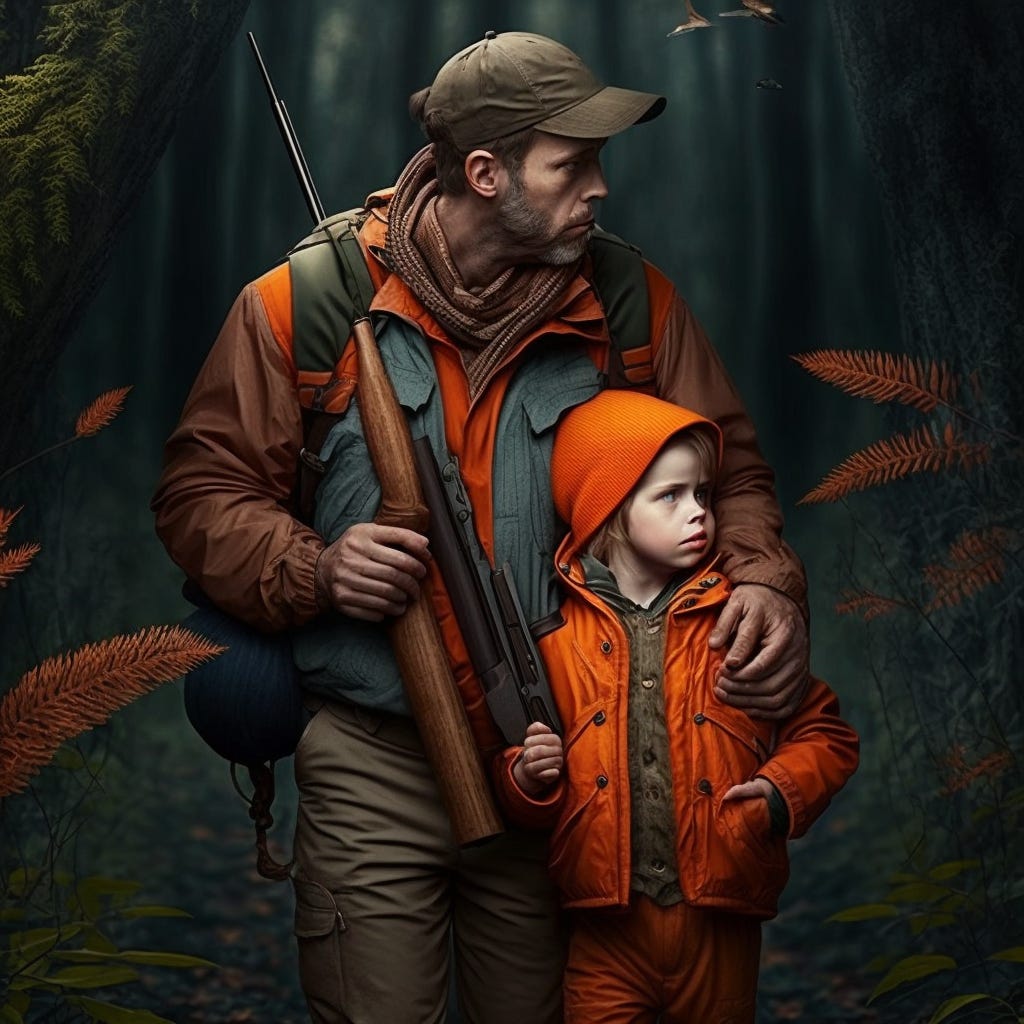
One of the best things you can do for your kids is to introduce them to hunting at an early age. I will never forget the time I spent helping my dad prep in the off-season, talking to him about different hunts, and him driving me to the hunter’s safety course when I was a young kid. But nothing compares to the time I spent with him in the woods. I make sure to keep my kids as involved in it as I can. From shooting the bow in the backyard, to sighting in new rifles, and prepping for the upcoming season. They’ve “helped” me track and gut a deer on more than one occasion, and even been there while I processed a deer in the back of the cabin. Doing all of this helps build their confidence as they develop into their own hunter and go afield on their own.
The problem with kids and big game hunting, however, is that it is a big undertaking and time commitment. Having your four year old sit in a cold blind for 5+ hours is not the most fun activity for you or the kid. Keeping them content and happy is key, but unless a deer walks by in the first hour, they will likely get bored fast.
A way that I have found best to get your kids in the field as early as possible is to bring them small game hunting, specifically squirrel hunting. If you’ve ever been deer hunting, you know that there are plenty of squirrels in the woods and they have no problem making themselves known only a few minutes after settling into your spot. You will have more opportunities to see and kill animals, and this will keep your kids more engaged. They can even help you spot them without too much risk. Small game animals, especially squirrels, are less cautious in the woods and less likely to spook at sounds caused by a restless kid. There are also less regulations on them and have higher bag limits. There is no need to explain that you let a doe pass because you didn’t have a doe tag, or a 3-point buck walk by because there is an antler restriction. If you see a squirrel, you shoot it, and you can keep shooting them until you reach your bag limit for the day, which is usually around half-a-dozen.
Like all hobbies, there is an upfront cost in getting the necessities for the activity, and hunting is no different. Sure, you don’t need the latest and greatest, but there are a few things that you must have to get out there. The good thing about small game hunting is that cost is significantly lower than big game hunting, which lowers the stakes quite a bit. This is especially important when bringing your kids along, since you don’t feel like you’ve wasted a few hundred, or thousand, dollars when the kids get bored or cranky. In fact, most of the stuff you need you probably already have at home. The need for full camo is not as high as it is for deer hunting, so you can get away with wearing comfortable clothing you probably have laying around the house. The only investment you really need is a .22 caliber rifle, which I recommend, or a 12 gauge shotgun, both of which can be purchased for only a few hundred dollars.
Additionally, the license to hunt small game is very cheap and usually included on your standard license purchase. There is no need to buy additional tags to hunt small game, which can add up to a hefty sum.
As I mentioned, involving your kids in all of the steps and processes of the hunt is key in making the experience worthwhile for them. This includes cleaning, processing and ultimately cooking the animal. With small game hunting, the cleaning and processing part is much less overwhelming than big game. You aren’t cutting a 200lb animal open, with 50 lbs or organs and blood falling out of it. This can be much for a young kid who has never experienced that in their life. While I do think it is important for your kids to understand the process and where their food comes from, it might be a turnoff to throw them into that their first time out there. The smaller animals allow for a quicker and cleaner processing time, and one that you can even get your kids involved in as they get a little older. When the time finally comes to cook the food, there are countless delicious recipes for small game animals like squirrels, rabbits, pheasant, and many others. There is something extra special about enjoying a meal with your kids who helped you prep, hunt, process and cook the animal from start to finish.
While all of the above reasons are excellent arguments for bringing your kids small game hunting, in my opinion, the biggest reason to include them is because they will be able to have first hand experience hunting much sooner with squirrels and rabbits than they would other big game species. As your kids grow older, they will be able to take more responsibility with a small game hunt, and ultimately get them hunting themselves quicker.
If you are a big game hunter, you know that there is a good amount of time spent in the off-season scouting and prepping the area that you will be hunting in the fall. With small game hunting, there is no need to do this. In fact, it is actually a waste of time to do this in the off-season, give the abundance of small game and their less predictive behaviors. Sure, understanding where the thick brush is holding up rabbits and where squirrels are burying their buts could be helpful, but there isn’t a need to know this before walking into the woods.
When in the woods, there is less work after the kill than a big game hunt. Not many scrawny pre-teens would be able to drag a small doe out of the woods, never mind a big buck. But picking up a squirrel they shot off a tree branch is no problem. They would have no problem bringing a full bag limit back to the house after a few hours in the woods alone. Skinning and cleaning out the animals is a much smaller undertaking than gutting out a deer, and would allow them to accomplish this 100% on their own. I am a big believer in growing your kid’s independence, and for them to own the full process from start to finish is a great way to build their confidence.
The reason I recommend squirrel hunting with a .22 rifle is because this is likely the first gun most kids will shoot given it is incredibly easy to hand and has little to no kickback. Kids are able to start shooting with this much sooner than they would a deer gun, and as they are able to hunt these small animals themselves, they will have much more confidence using the gun they learned with. Again, building their confidence is super important as they get older.
For younger hunters looking to just get out there, small game hunting provides the most opportunity to be in the field. There are more places for them to hunt, less restrictions on where they can hunt, and more animals to hunt. By providing the opportunity for young hunters to spend time in the field, they are able to hone in their skills, build confidence, and gain experience at a younger age than if they had started with deer hunting.
No posts
Comments
Nothing yet. Say the first thing.
Sign in to join the conversation.