
Today we will explore a topic that many readers have shown great interest in: the archetype, symbol, and myth of the Hero. In Man and His Symbols, this subject is discussed by the American Jungian physician and psychoanalyst Joseph Lewis Henderson (also known as “the Shaman of Elko”). His contribution was reviewed by Jung.
So the following quotations belong to this psychoanalyst who, although his relationship with Carl Gustav Jung evolved from disciple and teacher, analyst and patient, and finally to that of distinguished professional collaborators, deserves great recognition in his own right for his profound work on symbols, rituals, and the belief systems of Native American peoples. As we will see, his work is truly fascinating.
Dr. Henderson begins with the following words:
The hero myth is the most common and best known myth in the world. We find it in the classical mythology of Greece and Rome, in the Middle Ages, in the Far East, and among contemporary primitive tribes. It also appears in our dreams. It has an obvious dramatic appeal and a less obvious, but nevertheless profound, psychological importance. Hero myths vary greatly in detail, but the more closely one examines them, the more one sees that they are very similar in structure. In other words, they have a universal pattern even though they were developed by groups or individuals without any direct cultural contact with one another, for instance African tribes, North American Indians, Greeks, and Peruvian Incas. Again and again one hears a story that tells of the miraculous but humble birth of a hero, his early proof of superhuman strength, his rapid rise to prominence or power, his triumphant struggles against the forces of evil, his fall through the sin of pride (hubris), and his betrayal or “heroic” sacrifice that ends in his death.
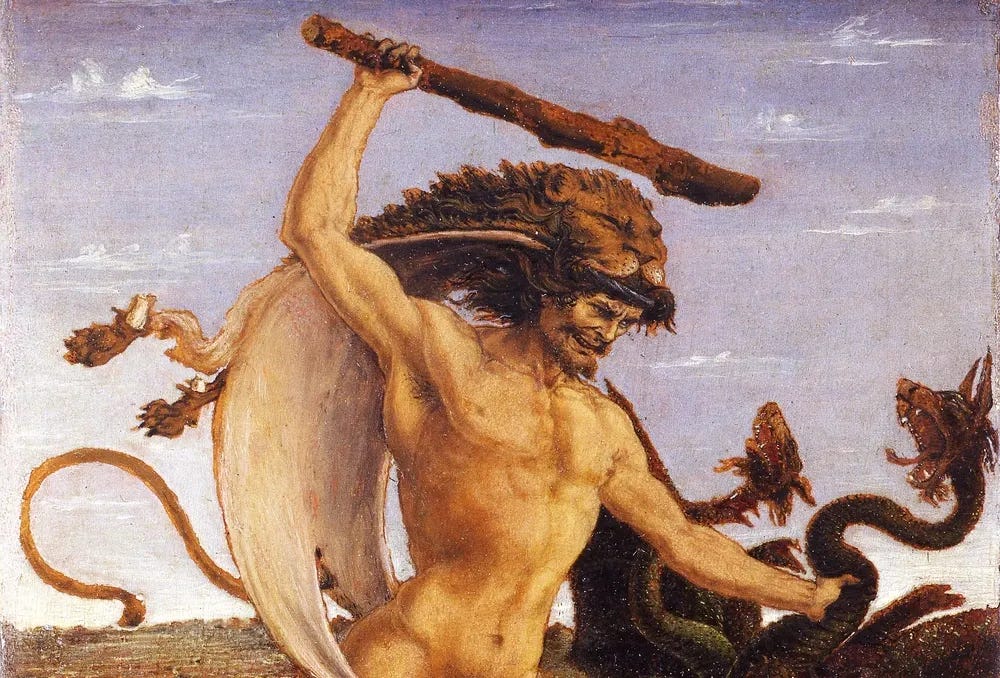
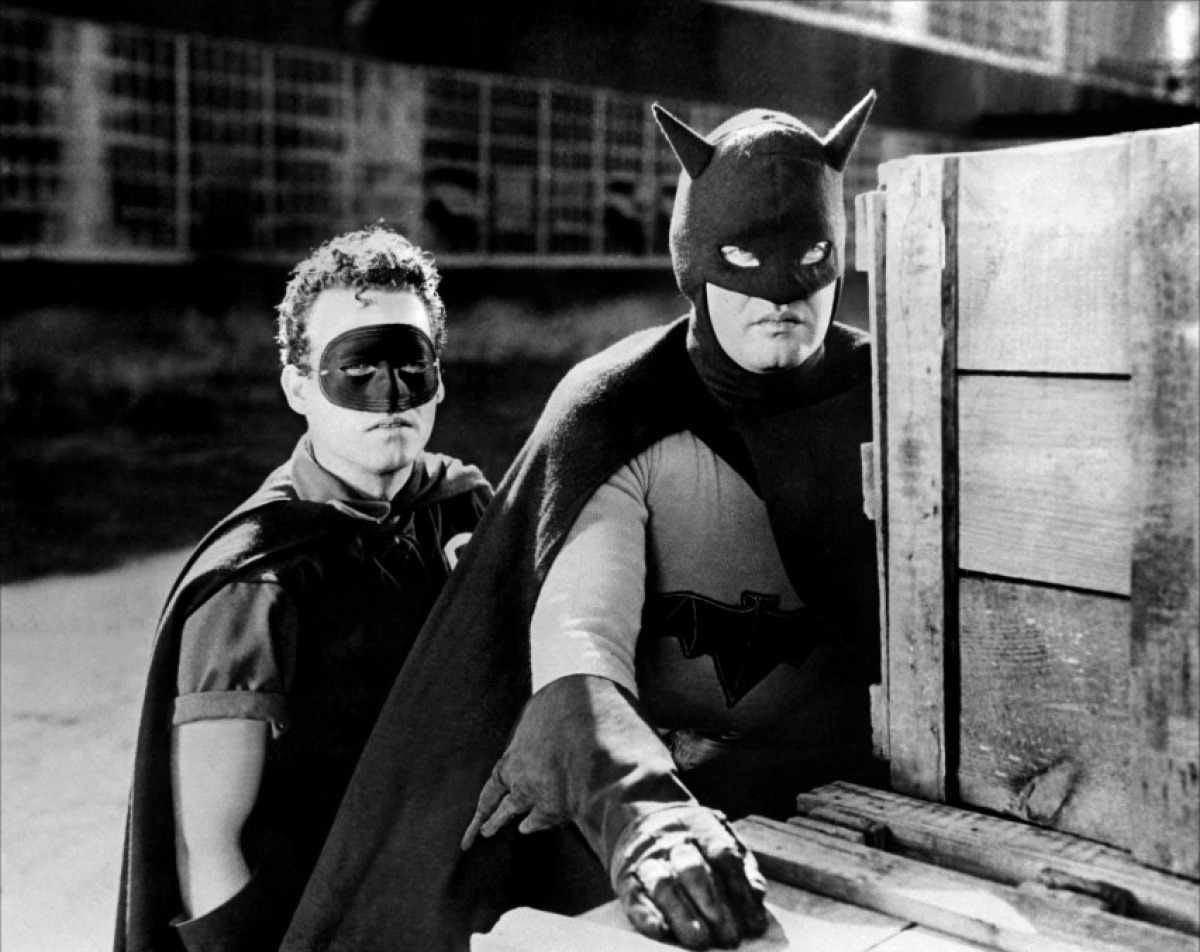
Like all archetypes, the hero is a figure that appears in virtually every religion and culture in the world. Henderson points this out before explaining what this element really is and what it means for our psyche. Some of the most famous heroes in ancient mythology include Heracles, Achilles (both Greek), Gilgamesh (Mesopotamian), Hua Mulan (Chinese), and Hunahpu and Xbalanque (Mayan). Although there are countless other heroes, we can also highlight modern classics from film such as Batman and those from the Marvel universe: Iron Man, Spider-Man, Captain America, Thor, the Hulk, Wolverine, and many others. Even though they may not resemble a symbol in themselves, they are all representations of the hero archetype.
As we can see, this is a symbol that appears in virtually every myth, culture, and religion, although it takes many different forms. More importantly, it also appears in our own dreams. This confirms that it is an element of our psyche that arises from the unconscious rather than being a simple invention of any individual. That does not mean, for example, that Batman was created by the unconscious. Rather, it means that the archetypes inspire and motivate such creations, while the artist’s genius gives them their unique expression.
Henderson does not mention this in the previous quotation, but the hero archetype can also be projected onto real people such as the founding figures of our nations, outstanding scientists, athletes, and other individuals we admire. They all serve as excellent vessels onto which many of us project this archetype. Henderson’s work, however, focuses on studying the hero through Indigenous symbols because they provide an especially rich expression of this myth. I also believe this approach is extremely valuable because Indigenous symbols express these archetypal patterns more spontaneously and with far less interference from our own culture, as we will see.
Later, Dr. Henderson explains:
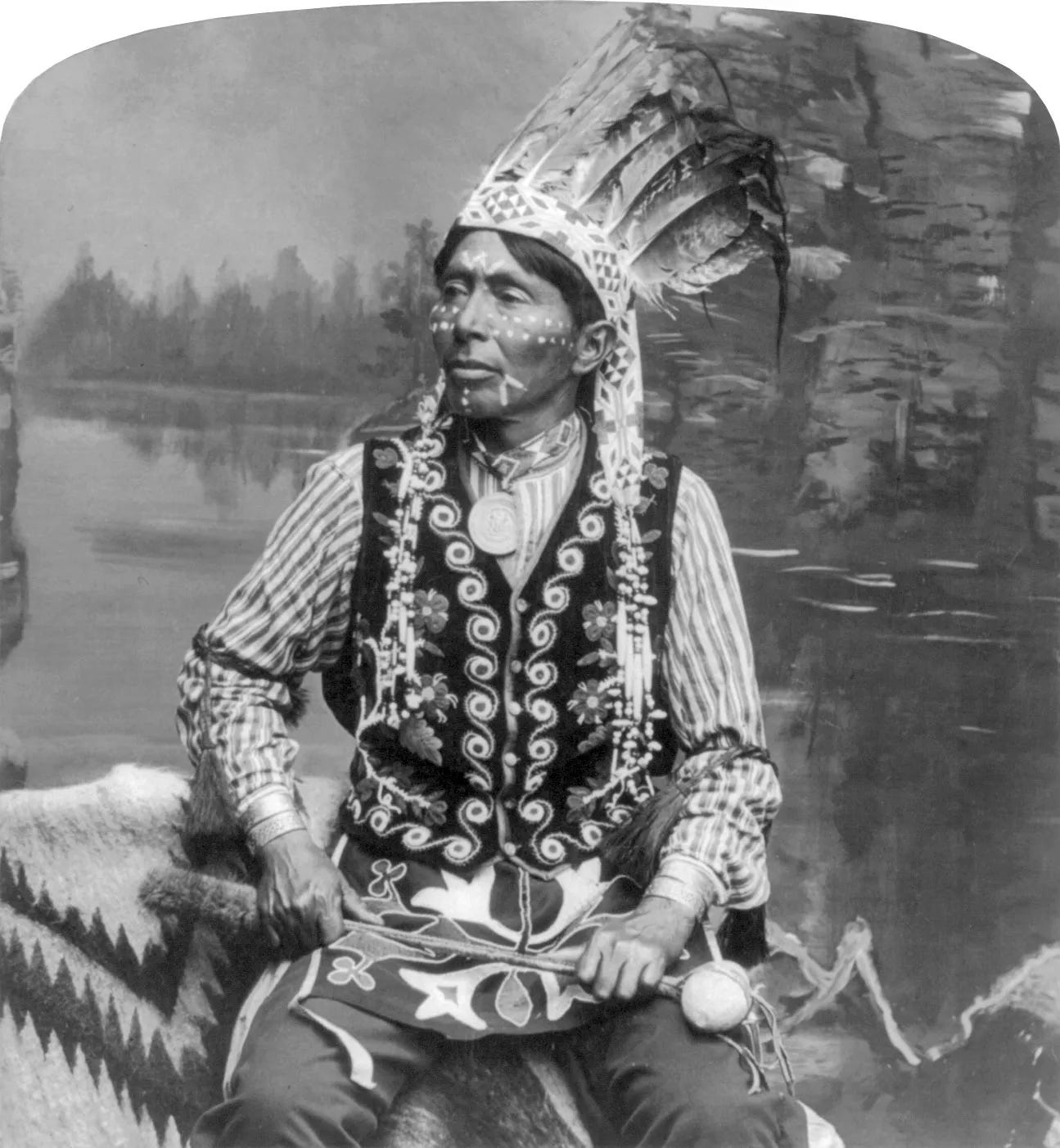
I have chosen this example from the obscure North American Winnebago tribe because it clearly presents four distinct stages in the evolution of the hero. In these stories, published by Dr. Paul Radin in 1948 under the title Hero Cycles of the Winnebago, we can see the definite progression from the most primitive concept of the hero to the most sophisticated.
This is fascinating because the spirituality of the Winnebago, the Native American people of the Siouan language family originally from the Great Lakes region, possesses a remarkably rich mythology. We will now see why I say this.
The American psychoanalyst says:
I shall later explain in greater detail why I believe this pattern has psychological significance both for the individual, who strives to discover and affirm his own personality, and for an entire society, which has a similar need to establish its collective identity. But another important feature of the hero myth provides us with a clue. In many of these stories, the hero’s initial weakness is balanced by the appearance of strong “tutelary” figures, or guardians, who enable him to perform the superhuman tasks that he could never accomplish unaided. Among the Greek heroes, Theseus had Poseidon, the god of the sea, as his deity. Perseus had Athena. Achilles had Chiron, the wise centaur, as his tutor.
We should also keep in mind what he says later:
These godlike figures are, in fact, symbolic representatives of the total psyche, the greater and more comprehensive identity that provides the strength lacking to the personal ego.
Joseph Henderson begins by saying that the hero “has psychological significance for the individual who seeks to discover and affirm his own personality,” and also for societies that have “a corresponding need to establish a collective identity.” These are precisely the situations in which we see the appearance of this figure. It emerges both in the individual who is discovering and realizing himself and in the society that is defining and shaping its own identity. We can clearly see this in civilizations with a strongly defined sense of identity, such as ancient Greece and its rich tapestry of hero myths.
Moreover, in these myths, the hero is accompanied by a “tutelary” figure, usually a god, who acts as a protector and grants the hero the ability to accomplish superhuman feats despite being human. For Henderson, these gods who accompany the hero represent our psychological reality. I would say they represent different facets of it. In other words, they symbolize “the greater identity,” not as something with which we define ourselves, but as that which resonates most deeply within us. Thus, psychic wholeness becomes the greatest source of strength and motivation in the process of self-realization.
Jung had already written in Symbols of Transformation:
“The most beautiful of all symbols of the libido is the human figure, conceived as a demon or a hero. Here the symbol is not an abstract allegory but a genuine and living personification of the psychic energy that drives man toward the light of consciousness.”
Here we can say that Jung’s description is even more direct, since he literally states that the hero is “a living personification” of the psychic energy that drives our movement toward consciousness. We have already seen this in the Twelve Labors of Heracles, whose symbolism points to the complex and still largely mysterious process of becoming conscious. I would like to explore the symbolism of the Twelve Labors of Heracles in a future article or perhaps even in an audio guide. If the series of articles I plan to publish about the hero receives enough support, I will definitely consider it.
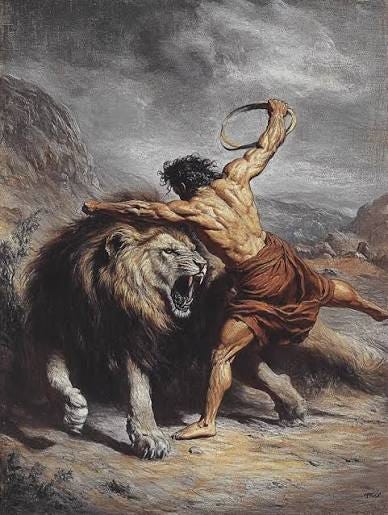
Dr. Henderson also says:
The essential function of the hero myth is to develop the individual’s ego consciousness, his awareness of his own strengths and weaknesses, in a manner that will equip him for the difficult tasks with which life confronts him. Once the individual has passed the initial test and can enter the mature stage of life, the hero myth loses its importance. The hero’s symbolic death becomes, so to speak, the achievement of maturity.
Thus, the hero as myth, that is, as a foundational story within a society, seeks to strengthen both the individual and the community by helping them adapt to life through the development of consciousness. Once the individual reaches psychological maturity, the myth loses its central role, not because it ceases to matter, but because it is no longer needed. Its purpose, the expansion of consciousness, has already been fulfilled.
The hero’s sacrifice and death appear not only in different myths but also in religious traditions. In Christianity, the examples are more subtle, since Christ also embodies the figure of the hero, although in a very different way from the heroes found in other religions. He too is sacrificed for the sake of bringing the process of becoming conscious, or individuation, to its fulfillment.
Another important quotation from Symbols of Transformation by the psychoanalyst Carl Jung is the following:
“The hero is a hero precisely because he sees and confronts the resistance to the libido with courage... They are, in fact, personifications of the libido struggling to free itself from the suffocating embrace of primordial inertia.”
Here we once again encounter the idea that the hero personifies the libido seeking to be transformed. In other words, he dramatically represents a psychic energy striving to transform itself in the direction of consciousness, leaving behind its autonomous and primitive nature. This could easily be misunderstood as separation or suppression, but it is actually the transformation of that same energy into a higher state.
Advertising note: If you truly wish to learn how to work with your unconscious, I invite you to study the powerful technique of active imagination (practiced by Carl Jung) under the guidance of the renowned Jungian psychoanalyst Dr. Ken James. You will learn to transform your soul through profound dialogues with your unconscious, archetypes, and dreams. Click here for more information.
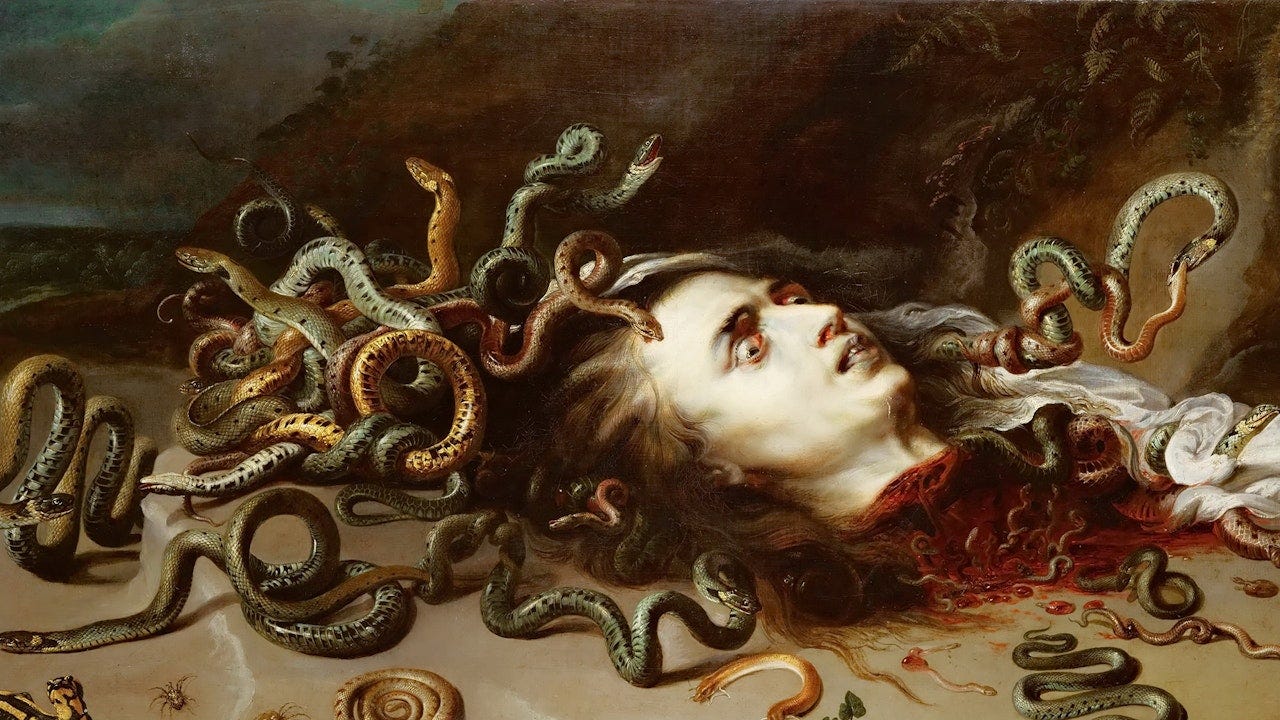
Taking Jung’s previous quotation into account, we can infer that the hero’s enemies represent “primordial inertia,” that is, the force that keeps us rooted in our primitive instincts. This is the symbolic meaning behind the terrifying monsters and villains the hero must confront. However, that explanation alone remains incomplete.
Henderson later offers a clearer explanation:
Yet the ego is in conflict with the shadow, in what Dr. Jung called “the battle for deliverance.” In man’s struggle to achieve consciousness, this conflict is expressed by the battle between the archetypal hero and the cosmic powers of evil personified by dragons and other monsters. In the development of individual consciousness, the Hero figure represents the symbolic means by which the emerging ego overcomes the inertia of the unconscious mind and liberates mature man from a regressive longing to return to the blissful state of infancy in a world dominated by his mother.
I greatly appreciate this quotation because it explains several ideas that many people struggle to understand, even though they are essential to the process of psychological transformation.
The first is that there is “a battle for deliverance” in which our consciousness strives to attain understanding and reach the light. In other words, we seek to recognize, understand, and become aware of the function and meaning of those aspects of the Self, or psychic wholeness, that continue to operate within us from the shadows. At the same time, however, there is also a powerful tendency to avoid becoming conscious and to remain exactly as we are because staying in the darkness feels safe. There is, therefore, a natural inertia that resists transformation.
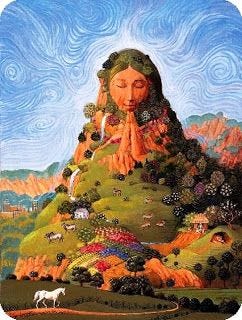
The ego must not only struggle against the darkness of the unconscious, but it must also free itself from the mother. This does not symbolize our literal mother, but rather the unconscious desire to avoid the struggle and refuse the responsibility that comes with psychological development. This is the state of childhood, governed by the mother, not in a literal sense, but as a condition of psychological immaturity in which we remain sustained only by those instinctive forces that preserve our physical and mental existence. That is precisely why it is primitive.
Let us conclude with the following words from Dr. Henderson:
Generally speaking, in mythology the Hero wins his battle against the monster. (I shall have more to say about this later.) But there are other hero myths in which the hero retreats before the monster. A familiar example is Jonah and the whale, where the hero is swallowed by a sea monster that carries him on a night journey from west to east, symbolizing the supposed passage of the sun from its setting to its rising at dawn. The Hero enters the darkness, which represents a kind of death. I have encountered this motif in dreams reported to me during my own clinical practice.
The best-known version of the hero myth is the one in which the hero defeats terrifying monsters and villains, and often rescues the princess or discovers a hidden treasure. Psychologically, the monster may represent whatever threatens or obstructs the development of ego consciousness: fear, unconscious contents, instinctual drives, complexes, dependency, chaos, and so on. The hero triumphs because the ego succeeds in confronting that force and differentiating itself from it.
The hero does not always emerge victorious, however. Sometimes he is overcome because there are psychic forces too vast for the ego to master directly. These forces are transformative by nature. They temporarily overwhelm consciousness in order to transform it, which literally means that they dominate the ego for a time until it can adapt to them. This is the meaning of Jonah being swallowed by the whale, and also of those dreams in which something swallows us and its interior is shrouded in darkness.
I would love to continue developing this subject because I find it deeply fascinating, but it is also an extensive one. In the next articles we will explore the different stages of the Hero, and after that we will examine the Hero’s Journey and its psychological meaning. We will also see whether there is room to interpret the Twelve Labors of Heracles. That will depend on how much interest this series receives from the Jungian Alchemist community.
Remember: I’ve committed myself to deeply studying all of Jung’s work and also to freely sharing what I learn, so my content will always be free. But if you’d like to support my project, I’d gladly accept a coffee:
*Giving a restack and a like to this article also contribute enormously to my work.
I also recommend that you read my following publications:
Source of the quotations: Joseph Lewis Henderson, Man and His Symbols.
No posts
Comments
Nothing yet. Say the first thing.
Sign in to join the conversation.