
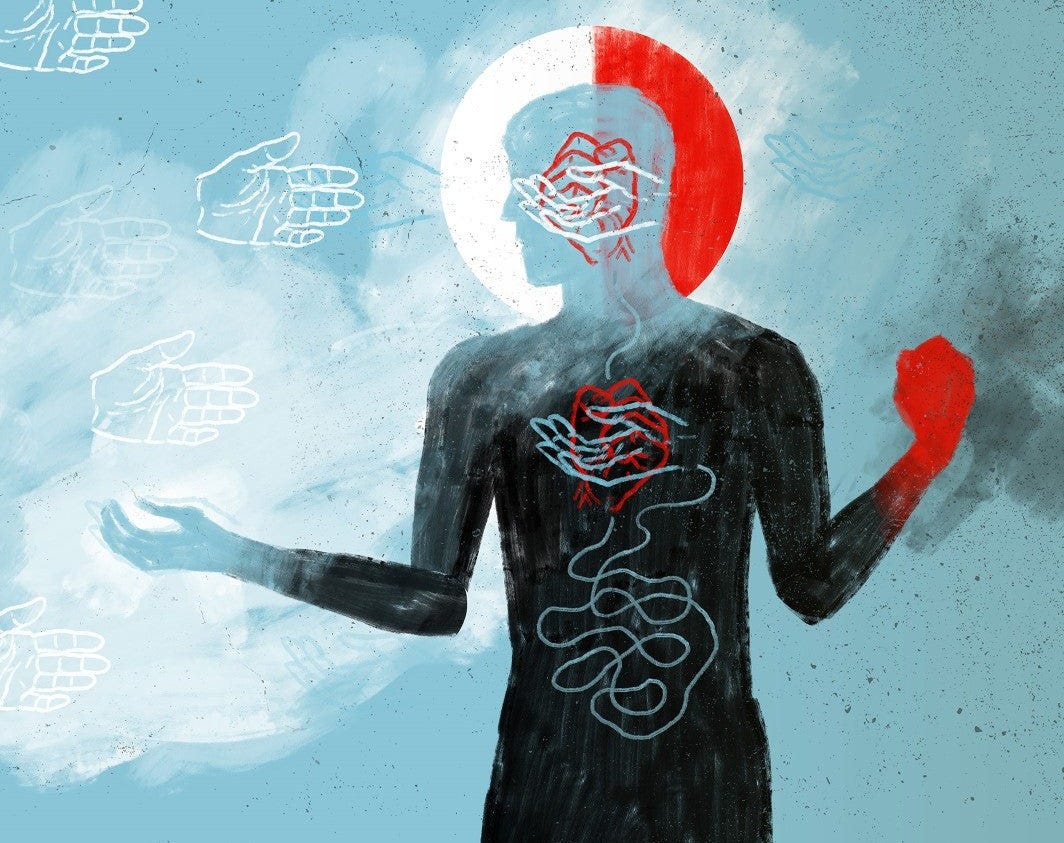
Today we reach the most central point of Jungian psychology, which represents the central axis of Jungian psychology and the most important archetype of all: the process of individuation, which our psyche begins to develop from birth and unfolds throughout our lives. To study and understand this complex process, we will do so alongside Carl Jung and the section written by his collaborator and analyst Marie-Louise Von Franz in the book Man and His Symbols.
Von Franz says:
By observing a large number of people and studying their dreams (she estimated that she had interpreted at least 80,000 dreams), Jung discovered not only that all dreams are meaningful to the dreamer’s life to varying degrees, but also that they are all part of a great web of psychological factors. He also found that, taken as a whole, they seem to follow a certain order or pattern. Jung calls this pattern the “process of individuation.”
Jung’s relationship with dreams began at an early age, since dreams had a profound impact on him as a child. One of the most striking dreams occurred when he was 4 years old, when he dreamed that he was in a meadow and found a hole in the ground. He went down a stone staircase until he reached a kind of underground chamber. There he saw a golden throne and, above it, a being resembling the trunk of a tree with a single eye. Years later, in his youth, Freud’s work on dreams introduced him to that fascinating world.
The fact is that Jung did not simply limit himself to studying what each dream meant, but developed an advanced understanding of the subject that allowed him to arrive at the topic of individuation. Several aspects of dreams gradually revealed to him that there was a complex process behind them.
First, by analyzing a series of dreams, he realized that dreams move from one subject to another. Jung studied these shifts between dream narratives rather than only each individual dream, discovering that they followed a particular sequence. He also found analogies with myths and religious symbols, as well as with alchemy. Thus, he came to understand that dreams were part of the same web that constitutes a psychic process he called individuation.
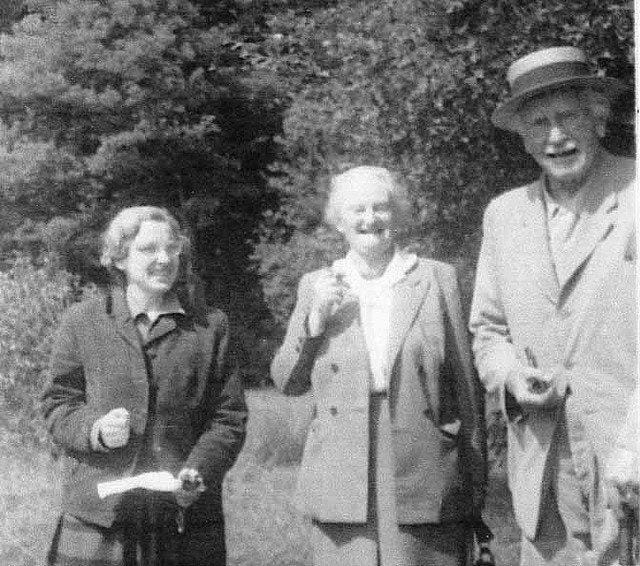
In his work Two Essays on Analytical Psychology, Carl Jung says about the process of individuation:
“Individuation means becoming an individual and, insofar as by individuality we understand our innermost, ultimate and unique way of being, becoming one’s own self.”
We must understand that although we belong to a species with a profound and complex nature, such as humanity, we are unique individuals and, according to the previous words, that is what this process means. The goal of the process is precisely to ensure that the individual reaches that individuality, where they are no longer merely a specimen of their species.
Von Franz, for her part, describes how this process takes place:
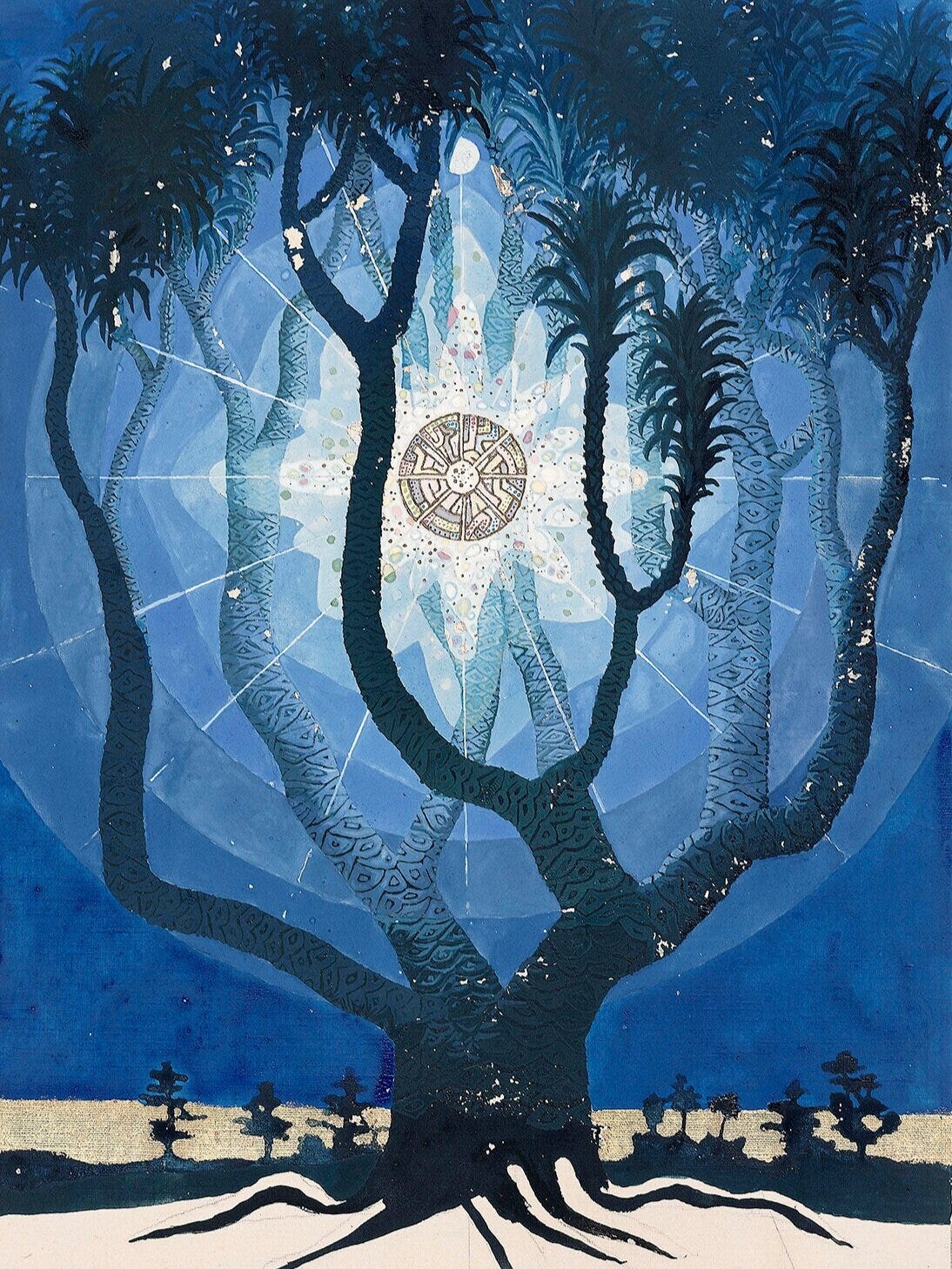
Gradually a broader and more mature personality emerges, and little by little it becomes effective and even visible to others. The fact that we frequently speak of “arrested development” shows that we assume that such a process of development and maturation is possible in all individuals. Since psychic development cannot be carried out through a conscious effort of willpower, but occurs involuntarily and naturally, in dreams it is frequently symbolized by the tree, whose slow, powerful and involuntary development represents a definite model.
Gradually, our personality develops through dreams in the direction of our individuality. It is a process that takes place in all individuals, and this is evident because our personality changes throughout life, and we can observe the same thing in others, although some parts of them and of ourselves remain the same.
Von Franz says that psychological development does not take place through a conscious effort of willpower, not because we consciously cannot interfere with it, since in fact we are always doing so, for better or worse. Rather, it is because this process is already naturally configured within our psyche. It grows slowly and imperceptibly to great heights, which is why the psyche uses the image of the tree to describe this process (older readers of this blog will remember our series of articles on the philosophical tree).
Marie Louise Von Franz says later:
The organizing center from which the regulating effect emanates seems to be a kind of “nuclear atom” of our psychic system. We might also call it the inventor, organizer, and source of dream images. Jung called this center the “self” and described it as the totality of the psyche, to distinguish it from the ego, which constitutes only a small part of the totality of the psyche.
We can see the self as the configuration of the totality already operating within us from the beginning of our lives. The analyst describes it as a center because the process of individuation and all the elements and phenomena that accompany it would emerge from there. It fulfills different roles since it would be the creator of images as well as their organizer. We can say that every psychological process, thought, intuition, feeling, and perception aligns with the goal of the self.
It is at the same time the totality of the psyche, since all its components, the ego, instincts, archetypes, and the phenomena that accompany them would form part of this center. In this way, it is distinguished from the ego, while the ego is also stripped of its status as the center of the psyche. However, the ego would continue to form part of that totality that transcends it.
It is worth noting that despite these explanations, Carl Jung and Von Franz considered the self to be an entity that cannot be fully grasped when it comes to studying and understanding it, which is why their explanation was far from definitive. Rather, on different occasions they emphasized how most things concerning this center remained an enigma, and how the self could even form part of a similar structure encompassing an entire society.

Carl Gustav Jung says in the book Psychology and Alchemy:
“The self is both the center and the circumference that encompasses both the conscious and the unconscious. It is the center of this totality, just as the ego is the center of consciousness.”
In general, the self is symbolized by a mandala or what in primitive cultures was a magic circle. This circular form of the self symbolizes perfect balance because it has no fissures, no beginning or end, which denotes continuity and infinity in the mental structure. Circles were magical and healing insofar as they symbolized totality already completed and evoked psychic balance.
Later, Von Franz says:
The “self” may be defined as an inner guiding factor that is distinct from the conscious personality and can be apprehended only through investigating our own dreams. These demonstrate that the “self” is the regulating center that provides a constant expansion and maturation of the personality. But this greater aspect, closer to the totality of the psyche, first appears as a mere innate possibility. It may emerge very weakly or may develop with relative completeness throughout life. How far it develops depends on whether or not the ego is willing to listen to the message of the “self.”
The psychoanalyst defines the self as an inner guiding factor distinct from the conscious personality because of its balancing quality. Dreams, as we explained in previous articles, generally seek to balance consciousness and therefore compensate for any psychic imbalance, as though they were an inner guide. The goal of the self is to form the circle (to balance the totality of the psyche that constitutes it), which is why, if we observe and analyze dreams, we can see the balance and the direction they are taking.
In this way, the self provides the constant maturation of the personality, balancing, uniting, and guiding consciousness toward the humanity in which it dwells, while enriching itself through that humanity without losing its uniqueness. This is important for uniqueness, because personality is narrow to the extent that we are unconscious, since the elements of our unconscious possess us. The more conscious we become, the more the unconscious loses its possessive quality, our personality expands, and the freer and more authentic we become.
The conscious personality is the most valuable quality for each of us. Therefore, individuation is the highest goal of the human being as an individual, although this goal often remains unconscious and projected onto the ambitious achievements we pursue. In religions, individuation is symbolized by the attainment of immortality, paradise, the coming of Christ, the achievement of a diamond body, etc.
However, for this psychological development to take place, our ego must be willing to listen to the message of the self because transformation occurs through the union of the unconscious with consciousness. This precisely means becoming conscious, contemplating the nature we embody and how it operates within us. Therefore, individuation does not take place in every human being. Psychological development may not occur, it may remain incomplete, or it may be carried out fully.
Advertising note: If you truly wish to learn how to work with your unconscious, I invite you to study the powerful technique of active imagination (practiced by Carl Jung) under the guidance of the renowned Jungian psychoanalyst Dr. Ken James. You will learn to transform your soul through profound dialogues with your unconscious, archetypes, and dreams. Click here for more information.
Von Franz says:
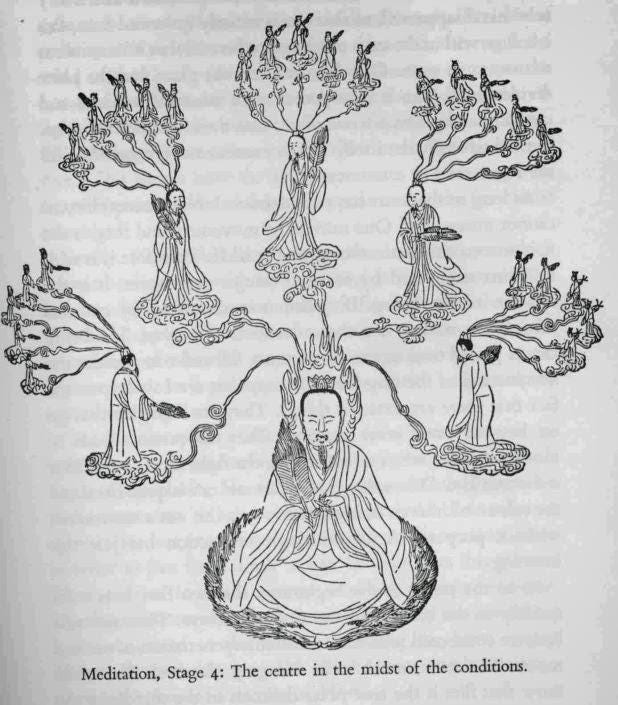
We insist: the realization of the uniqueness of the individual man is the goal of the individuation process.
That is, consciousness must unite with the unconscious, or we must come to know all those unconscious elements operating within us and assimilate them. The process remains largely enigmatic, but at least we know this: the more conscious we become, the further this process advances. In this way, consciousness is gradually liberated, our personality expands, and we become increasingly free according to our humanity*.
The analyst emphasizes later:
The simple fact of fulfilling our destiny is the greatest human achievement, and our utilitarian ideas must give way to the demands of our unconscious psyche.
In order to carry out the process of individuation, we must consciously surrender to the power of the unconscious, instead of thinking about what we should do or what is generally considered right or what usually happens. We only have to listen in order to know what the inner totality, the self, wants us to do here and now in a particular situation.
These words are moralizing on the part of the analyst, as they remind us how complex what resonates most deeply with us can be, what we are inwardly destined to become. Therefore, fulfilling that destiny has great merit, and we should acknowledge it in ourselves without falling into inflation.
Utilitarian ideas are those focused on the practical usefulness, functionality, and efficiency of our mind (in this case), in favor of reason and logic or what we believe to be right or wrong. However, that is not the goal of the psyche. In fact, it is much more transcendent. We must not let such ideas dictate our thinking if what we want is to achieve individuation, if we want to form the circle.
The individual must consciously surrender to the power of the unconscious insofar as they must accept its vastness and how small the ego is in comparison with how deep, vast, and encompassing the unconscious is. For the analyst, the most important thing is that we listen and grasp what the totality is constantly asking of us. For this is how we can gradually integrate it.
It is not asking for blind and total submission, but rather for an acknowledgment of that dimension which not only passes through us, but also contains everything the ego needs for itself.
Precisely, the totality is speaking to us all the time through dreams, thoughts, ideas, perceptions, and emotions, so if we listen to it attentively, we can see where it wants to go and understand it. For this, it is important to have psychological and spiritual practices that help us in this task. Therefore, we are preparing a book that we will publish very soon with very specific spiritual practices in this regard.
In the midst of everything we have said, we can see that the process of individuation is not easy, but it is supremely optimistic because every process has a reason behind it. Every feeling, thought, feeling, intuition, whether good or bad, seeks to lead us toward something. That something is authenticity, the point where all the pieces fit together and everything conspires toward it.
Let us highlight the following words by Jung from his work Aion and his reflection with which we conclude the article (we will return to this archetype later).
“Psychic totality, which is the union of opposites, can only be achieved through the integration of unconscious contents into consciousness.”
Individuation is the joining of opposites because the psyche is composed of a multitude of elements that oppose one another: thoughts and emotions, perceptions and intuitions, impulses toward elevation and animal impulses, conscious and unconscious. This entire multitude gradually comes together as consciousness becomes able to integrate all of them despite their oppositions. As it does so, it gradually individuates.
We do not individuate as long as these contents remain unknown, operating within and possessing a narrow consciousness, with a limited range of action and less will. In the end, only what we know can set us free.
Remember: I’ve committed myself to deeply studying all of Jung’s work and also to freely sharing what I learn, so my content will always be free. But if you’d like to support my project, I’d gladly accept a coffee:
*Giving a restack and a like to this article also contribute enormously to my work.
I also recommend that you read my following publications:
Source of the quotations: Marie-Louise Von Franz, Man and His Symbols.
No posts
Comments
Nothing yet. Say the first thing.
Sign in to join the conversation.