
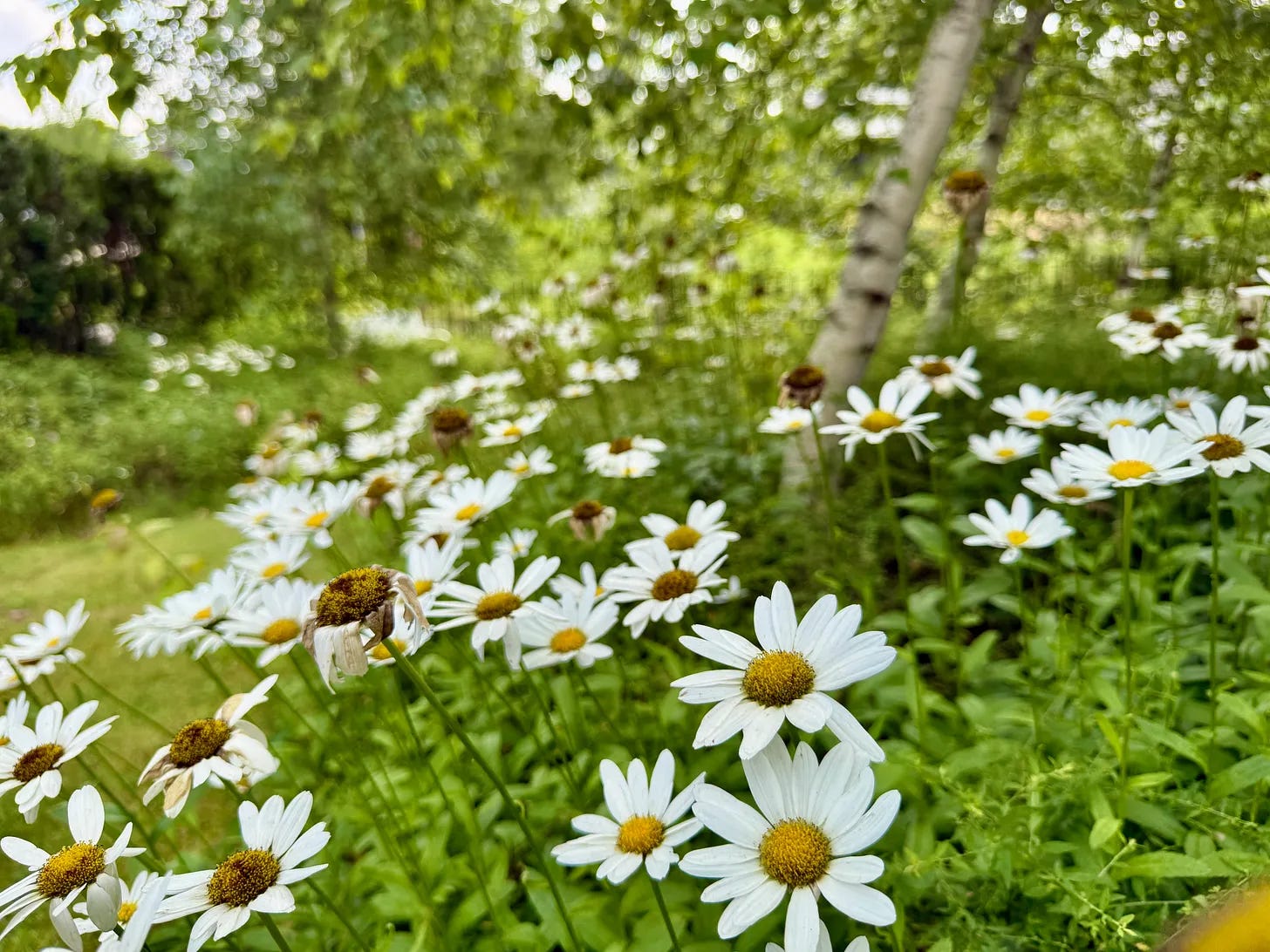
“Where innocent bright-eyed daisies are, with blades of grass between,
Each daisy stands up like a star out of a sky of green.”
🌿 Christina Rossetti
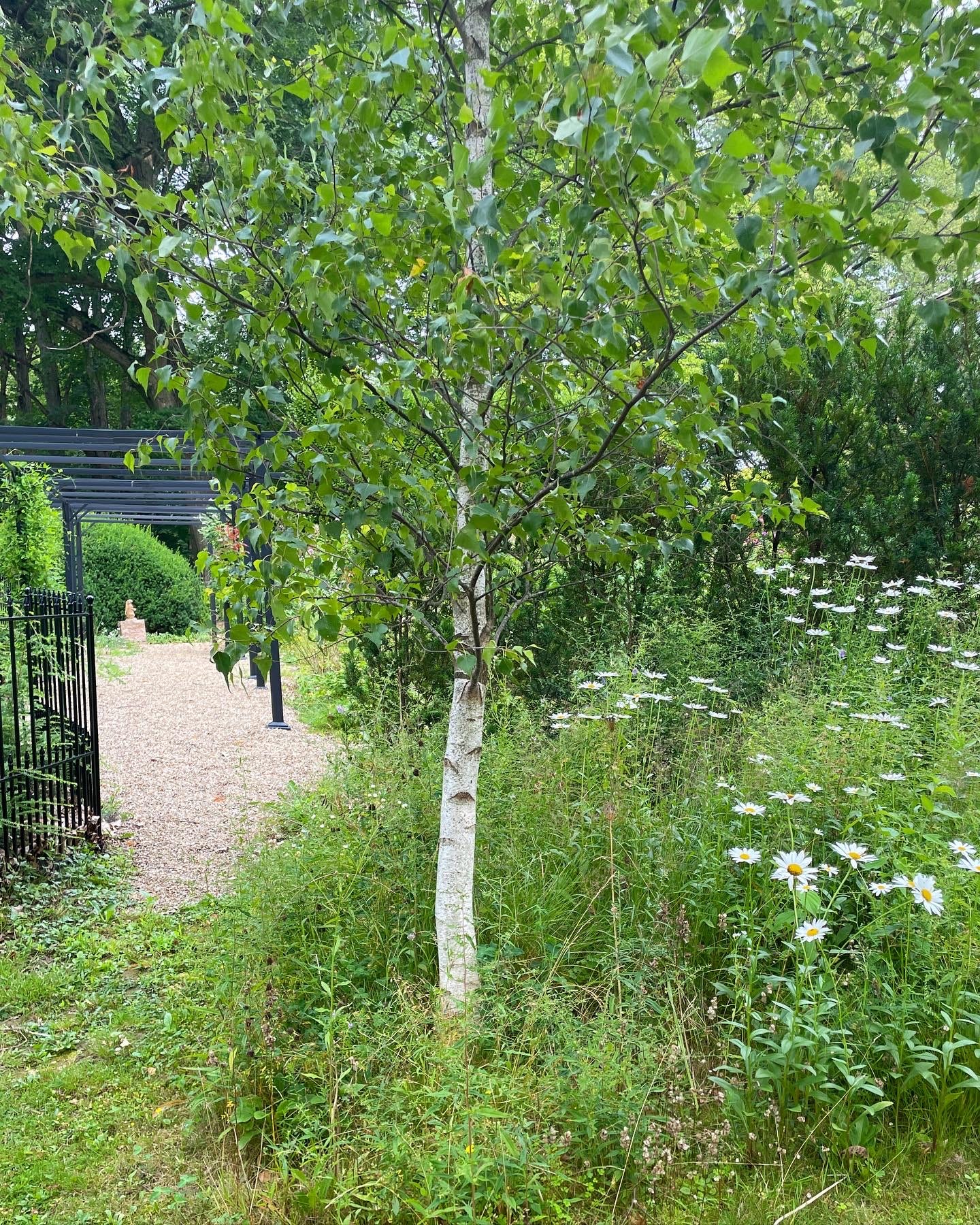
Out of all of our garden spaces, the Birch Walk at Havenwood is the easiest to replicate. Easy, but daring all the same.
This how-to post is inspired by my Birch Walk meadow garden in which I used our turf as mulch and planted perennial plants and bulbs straight into the grass.
Today I am going to walk you through how you might make your own perennial meadow garden by planting directly into your lawn. All that you need an unused portion of lawn, a space near the edge of the property where you hardly ever go.
This is your chance to turn that unused space into a real garden retreat!
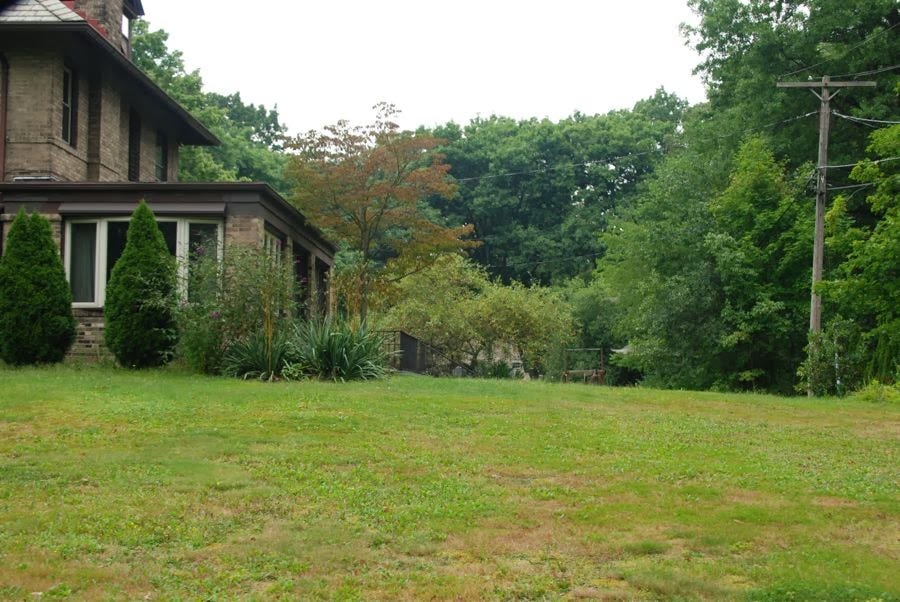
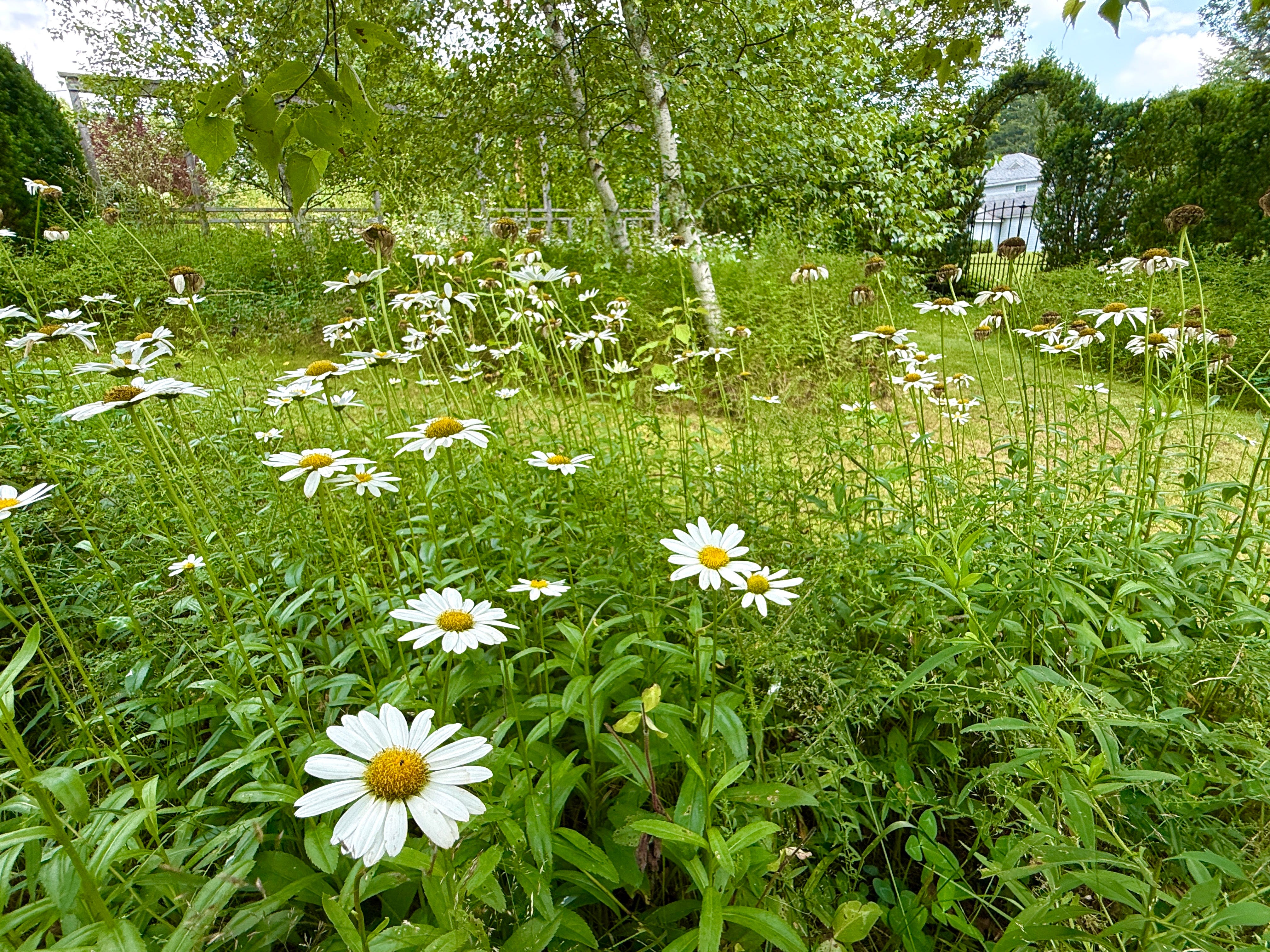
A hedge is helpful, but not required.
In smaller spaces in towns and cities, a hedge helps give this wild garden a bit more formality and structure that will let everyone know that you are moving ahead with intention. A hedge is a “sign of care” which can be very helpful. There is a wildness to this sort of planting that may startle some neighbors, but when there is a hedge around it they can see where it ends.
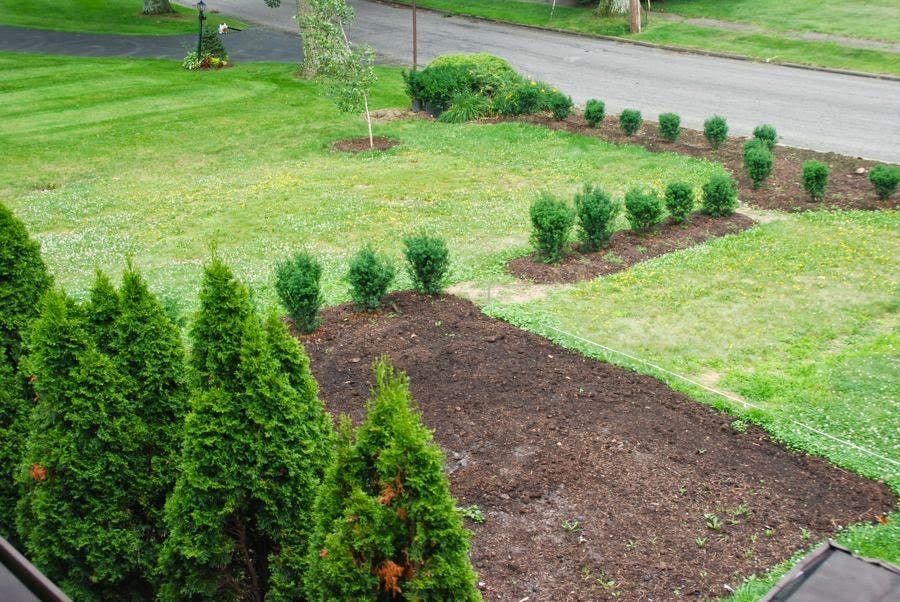
One thing that is different about this perennial meadow method compared to an annual meadow is that we can plant directly into the turf:
No need to dig out the grass or spray with Round-up.
Not need to buy a load of mulch to smother, or wait on leaves to decompose.
There is also no wait at all! Just start planting. (More details on that below.)
The first step is to chose where the mown path will go through your new meadow. This you can decide by walking through your space dozens of times and thinking about how it will connect to the rest of your garden.
Where do you tend to walk?
Where do you need to walk to?
Is there a nice view that you would like to see from the path, or maybe a view you would like to conceal by steering people away from it?
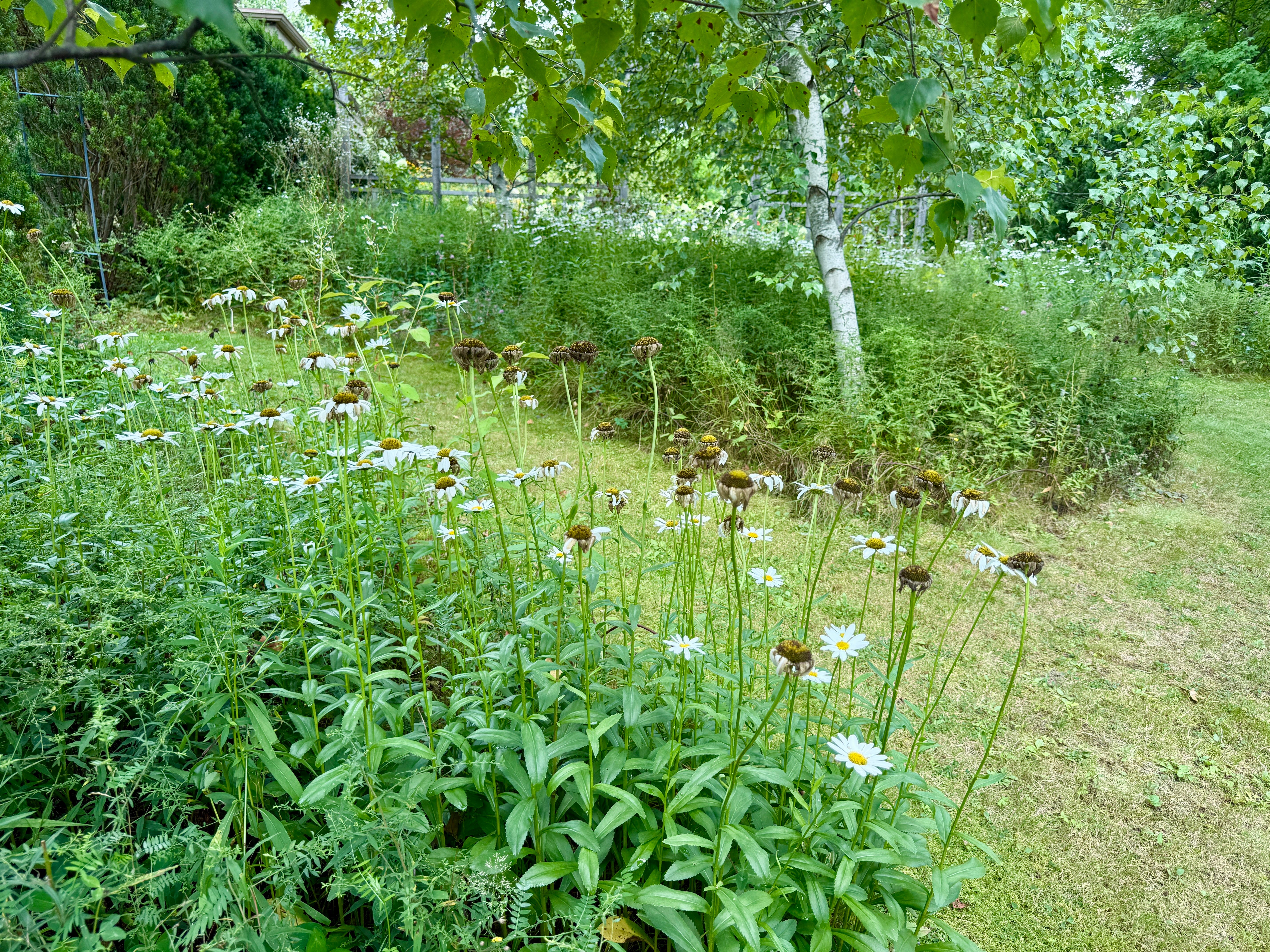
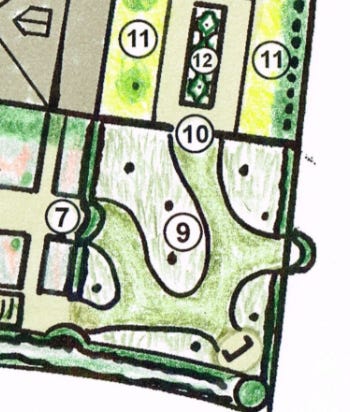
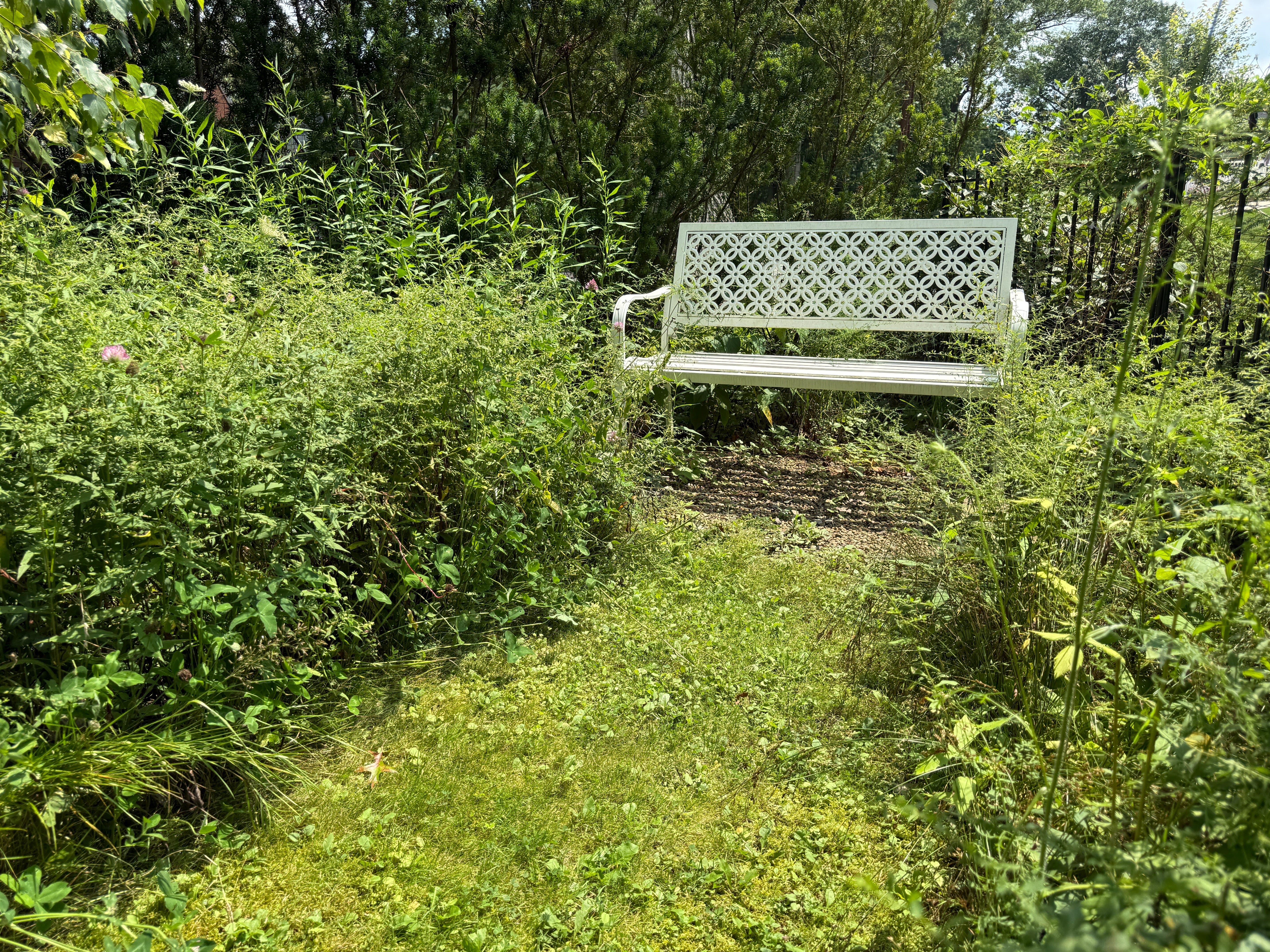
In order to really enjoy your meadow, you will want to place seating at the end of a path but still in the center of it all. It is at four foot height where you can really appreciate all the is going on in a meadow, as you are at eye height with the bees and slightly out of the way of the birds who will also love this garden.
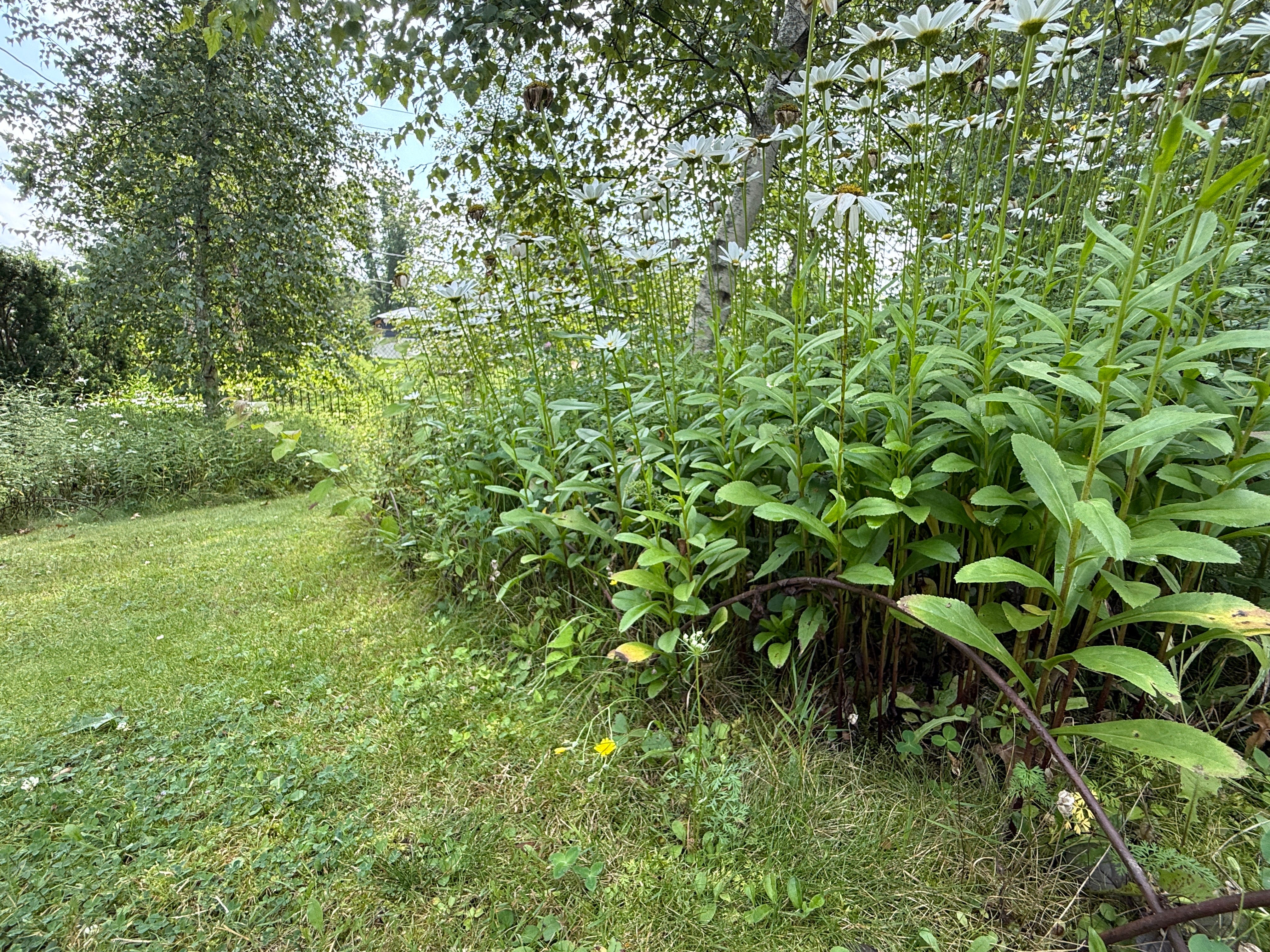
I have found that it is helpful to have some sort of edging that protects your spring bulbs being stepped on, acts as a mowing guide, and that you can easily remove for the autumn cut. For the first few years we used Cornus and Willow whips pushed into the ground. These are a rooting risk, but they looked lovely.
When they wore out, we moved to three-foot-long, 1/4 inch steel rods that you can get at a hardware store. These are bent into a rainbow shape and then placed around the edge of the meadow borders.
Comments
Nothing yet. Say the first thing.
Sign in to join the conversation.