
This month’s Lens 2 Lens I’m happy to have chatted with Youssef Youssef of Heart, Mind and Camera. I really enjoyed this topic I hope you get something out of it too.
Youssef: I’ve been thinking lately about how photography, and having a creative outlet in general, contributes to my life. I feel like both my photography and writing have become important outlets that contribute to my well being in the same way as sports would. I hear many people talk about the importance of sports for physical and mental well being but not so much for creative outlets. I’m curious to hear how photography adds to your life outside of photography, or how you view photography’s place in your life.
Juliette: For me photography is the thread in everything I do. I’ve been with it as a musician and writer first, so the camera became almost like another instrument, but using a silent language that was open to interpretation. The more I grow as a photographer, the more I begin to understand that it asks of me something different— to treat it with deeper presence rather than just snapping on autopilot or thinking too far ahead about how I think the photo “should” be.
Your sports analogy is interesting though. Sports almost feel like how I used to shoot street. With street photography, for years I was chasing the finish line. Now, my creative work elicits something different. I seem to want to be present and release expectations at the same time.
What made you notice photography was contributing to your wellbeing specifically? Was there a specific moment or did it creep up on you?
Youssef: It’s one of those random life realizations that seem to happen spontaneously. I feel like there was a before and after: a before when I felt a need to let out ideas and emotions and an inability to do so, and an after where I know I have a channel to let those out. I think writing and photography helped create a space I know I can use to express myself.
With the sports analogy, I wasn’t thinking about the idea of the finish line or competition, although it is interesting as an example of how we shouldn’t think about art. I prefer your idea of releasing expectations. I was referring to the idea of the saying “a sound mind in a sound body”. It’s a common belief that sports are not only good for your physical health, but also your mind. And I find it surprising that the same kind of thinking doesn’t exist around arts. I suppose the saying would be more awkward: a sound mind in a sound body with a creative outlet.
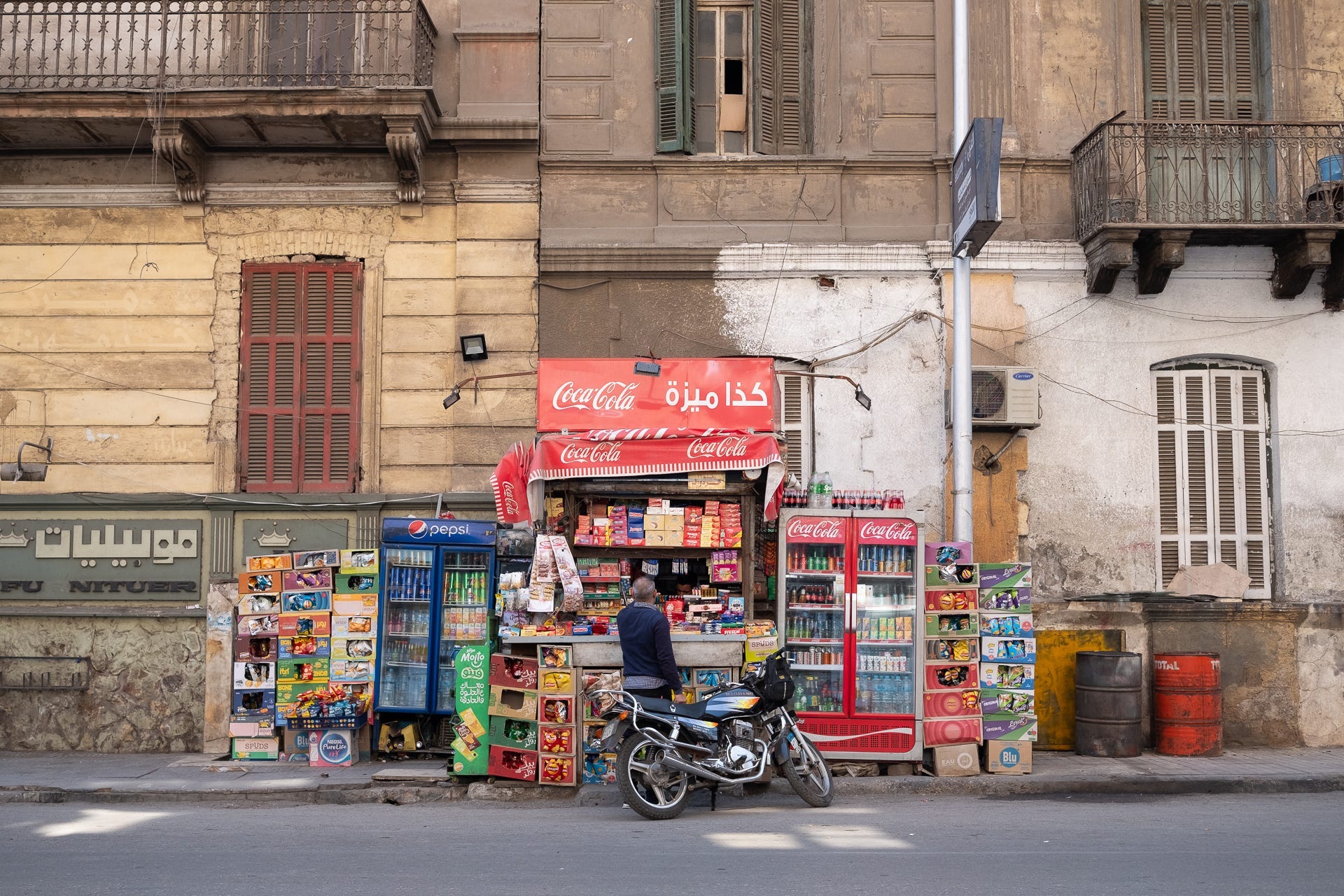
I can also relate to this desire to preserve history. A few months ago, I noticed that I photograph differently in Cairo (where I am from) compared to Barcelona (where I live): in Cairo I am more concerned with documenting the city and noticing how it changes with time. My urge is more towards preserving what exists. In Barcelona, I’m more focused on form and what I find to be visually appealing.
Juliette: The Cairo versus Barcelona observation is fascinating to me: how our relationship to a place determines what we photograph. In Cairo you’re an insider documenting change and preserving, while in Barcelona you’re discovering. I do something similar when I visit Colombia, where my mother was from. Shooting there becomes almost archival in a way it isn’t at home.
When you look at your Cairo images versus your Barcelona images can you actually see a difference technically, or is it more of a felt experience while shooting?
Youssef: I think there is a difference in the images themselves, likely as a result of the felt experience while shooting.
There’s an article in Aperture magazine from 1957 titled Some Methods For Experiencing Photographs written by Minor White and Walter Chappell. They define four groups of photographs: documentary, pictorial, informational, and equivalent. The first two are the ones that I think apply to my images of Cairo and Barcelona.
The documentary photographs are meant to transport you to a different place or time, and the content is the main concern. The images are about the place, the characters in it, or an event.
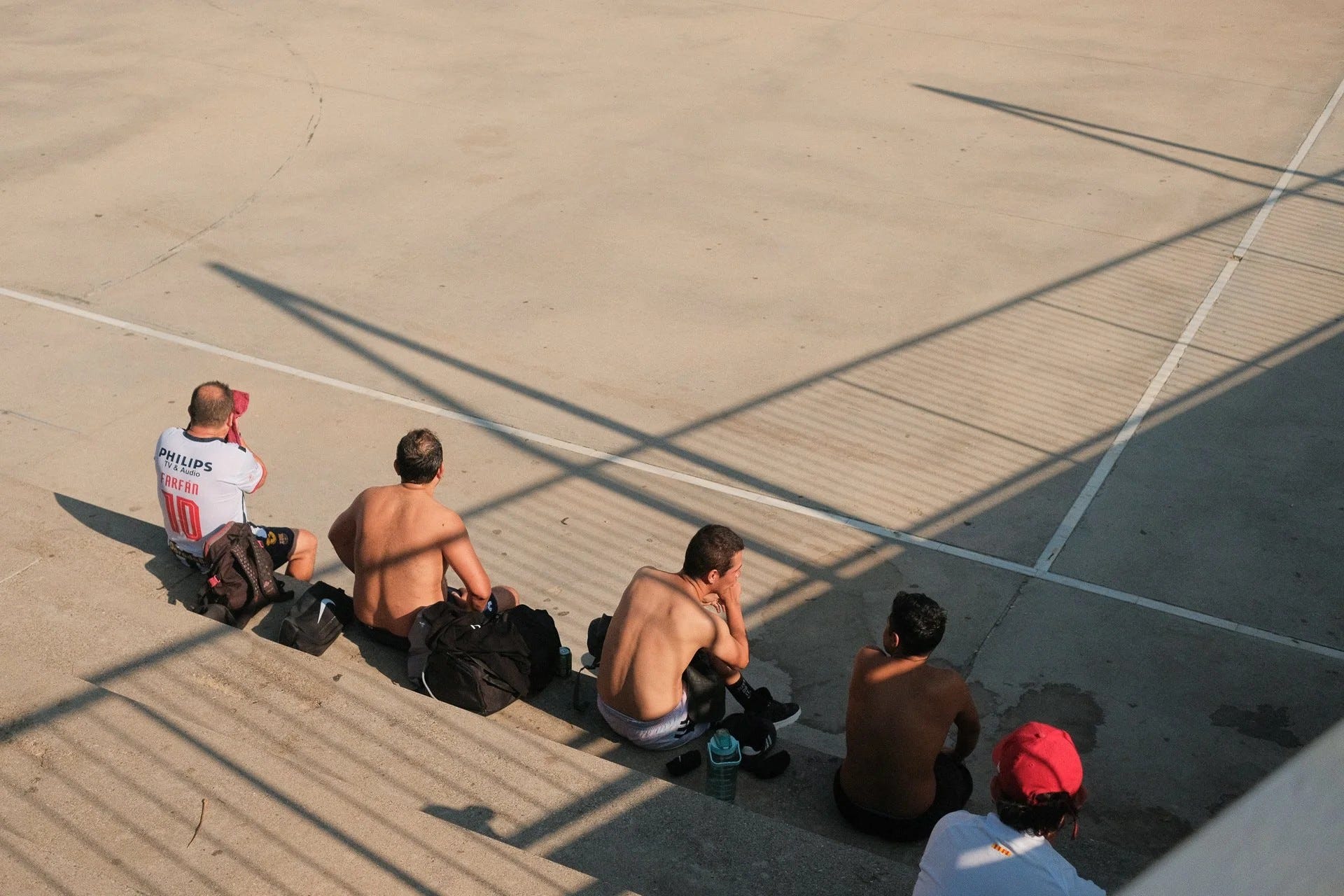
The pictorial photographs are less concerned with the content itself and more with the form: how different elements are organized visually and what that looks like aesthetically.
My Cairo images tend to fall in the documentary group while my Barcelona ones are more pictorial. Of course nothing is that black and white, nothing falls neatly into well organized buckets all the time. I didn’t set out to photograph each of those places that way either. It’s more something that happened intuitively and that I noticed in retrospect, and connected to those groups.
I think the reason is that I’ve seen Cairo change quickly and in many ways and wish I had more street photos from the past. So when I am on a photo walk, I’m trying to avoid having that same feeling in the future. It’s the desire to preserve history that you mentioned before.
In Barcelona, I tend to gravitate towards what I find visually pleasing and I often photograph more abstractly. Sometimes I think about photographing Cairo in that way as well but I don’t I’ve managed yet.
How’s your experience at home versus Colombia?
Juliette: The Minor White and Chappell framework is new to me and I find it clarifying — especially because I recognize my work in it.
My mother was my bridge to Colombia, and since she died, I visit less. But when I do, the camera becomes almost entirely documentary. At home I have more distance from subjects. I can afford to be pictorial. I notice form and shadows and let things be boring. When I travel, there’s the pressure of time, preservation, etc.
I have to interrupt this conversation to comment that I only just now found your post, How to Become an Artist and found it perfect in that it brought me full circle to your opening question: how photography adds to my life outside of photography. As I reading, I kept thinking — for the artist, there is no outside. Heart, mind and camera are inexorably linked. The question almost disappears.
And then I found this, which I think you say better than I can:
‘Since I started paying more attention to my photography and writing, I’ve felt more connected to myself, to the places I photograph, and to life in general.’
I feel that 100%! I’ve written many times about claiming that “artist” title and why it’s important, but the actual path of loving the process and being more connected to it through presence is actually what motivates me lately. It feels like a natural evolution. It feels like my personal life grew along with it. What about you?
Youssef: I like your framing of life outside of photography: “for the artist, there is no outside”. It’s true, all these sides of life feed into each other. I think I previously had this misconception about art being something done “on the side” as if you could turn it on and off at specific moments. In my experience, it’s a more holistic process. And the influence happens in both ways: you create art influenced by where you are in life, and your art also helps you grow.
One of my messages from the post you mention, that was not so explicit, was on that second part: we can all benefit and grow from making art.
Juliette: All so very well said and what a perfect closing! Thank you Youssef. It’s been a wonderful conversation!
Subscribe to Youssef’s Substack
Thanks for reading The Additional f-Stop! This post is public so feel free to share it.
If you’re an emerging or seasoned artist in any genre and you’re interested in participating in Lens 2 Lens conversations with me, send me a message to put you on the schedule. Availability starts January of 2027.
Comments
Nothing yet. Say the first thing.
Sign in to join the conversation.