

NEWPORT BEACH, Calif. — Six years after Newport Beach psychologist, domestic violence advocate, and Wings for Justice founder Wendi Miller was murdered on April 20, 2019, the warnings she delivered during her final weeks are finding new echoes in an unlikely place: the growing movement of Jeffrey Epstein survivors demanding institutional accountability.
As survivors across the country speak publicly about decades of not being believed or protected, Miller’s own survivor story and advocacy — and the way her final days were portrayed after her death in Oxygen’s true crime series “The Real Murders of Orange County” — deserve renewed examination. That conversation takes on additional significance following this publication’s reporting that Orange County family law Judge Ami Sheth Sagel previously represented Jeffrey Epstein, a connection that went undisclosed during her 2026 judicial campaign and remains undisclosed now that she sits as a family court judge.
[READ: DOJ’s Epstein Files Confirm Orange County Family Law Judge Was One of Jeffrey Epstein’s Attorneys]
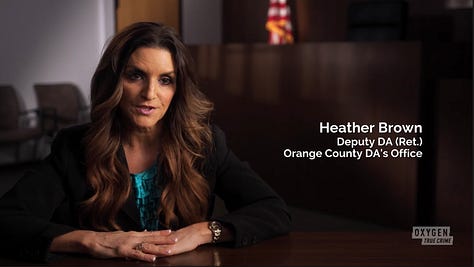

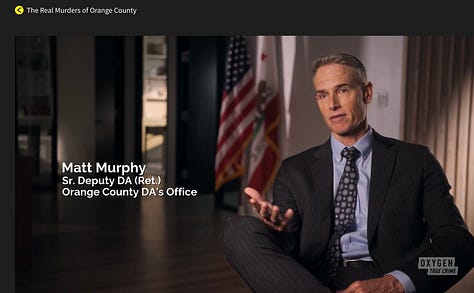
The Real Murders of Orange County: Wrong Place, Wrong Time, which aired on June 9, 2023, is the only national television treatment of Miller’s murder. A re-watch of that episode invites renewed scrutiny this reporter believes is overdue..
The episode’s account of Miller’s final night, April 19, 2019, centers on the fact that she went out to a well-known Laguna Beach bar. Paired with commentary from Newport Beach Police and Orange County District Attorney’s Office personnel, that framing may leave viewers with an impression that reflects a broader criticism voiced by victims, advocates, and researchers this reporter consulted with: that media attention is directed toward a woman’s personal choices in the hours before a crime — in Wendi’s case, a night out with friends — rather than toward the work she was doing or the risks she had already identified. One law enforcement figure in the episode states flatly that “we had no idea who this woman was,” while another downplays the area’s crime risk entirely.
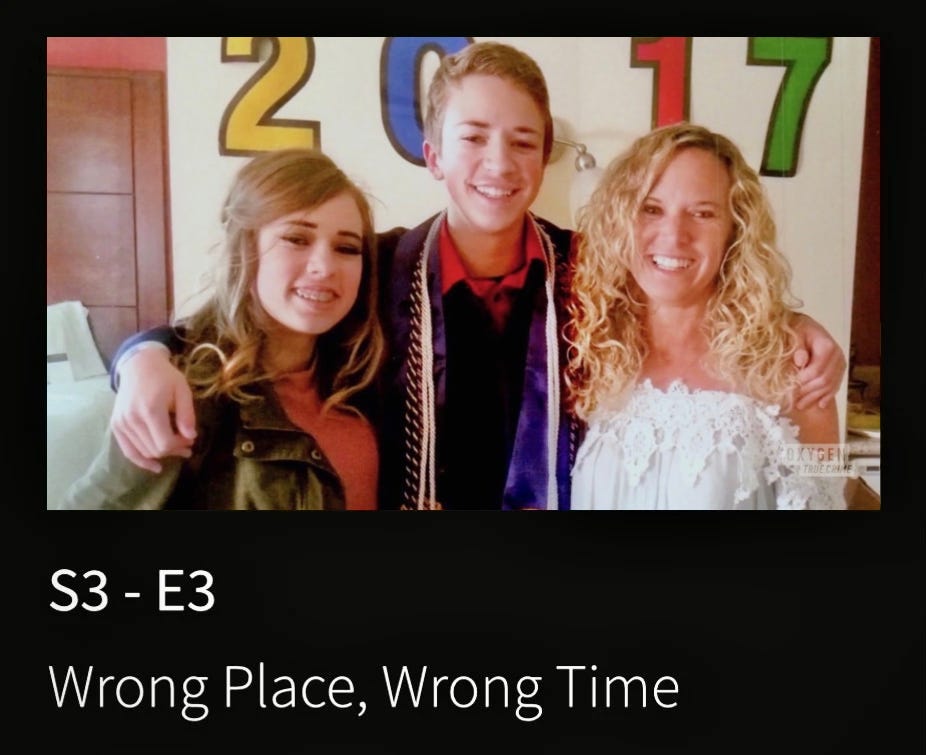
By contrast, a first-person account from a fellow advocate who met with Miller the night before her death describes something far less salacious: a planned evening with friends that included line dancing at a well-known local venue, following hours the two women had spent together planning how to expand their advocacy work — on top of the high-profile UCI conference just weeks before.
Just weeks prior, on April 5, 2019, Wings for Justice hosted a Conference and Advocacy Training at the University of California, Irvine School of Law titled “The Medical and Legal Need to Protect Survivors and Children in Family Court.” The event was a major milestone, drawing attendees from across the country and featuring prominent voices in the fight for reform, including Jane Stoever — wife of U.S. Rep. Dave Min — and author Lundy Bancroft.
In the weeks following the UCI event, Miller sat before a camera and issued one of the most powerful indictments of the American family court system ever recorded, citing the now-infamous statistic that over 58,000 children are removed from protective parents and placed with known abusers every year. She was murdered in the early hours of April 20, 2019, and found later, on Easter Sunday.

Nowhere in the Oxygen episode is Miller’s advocacy or survivor story mentioned. Wings for Justice is not named — the national nonprofit whose stated mission was to “educate, advocate and provide resources to protective parents to help them defend their children’s constitutional rights in the family court system,” and to build “a network of experts and training advocates in the field of Domestic Violence, Coercive Control, Post-Separation Abuse and Legal Abuse Syndrome.”
The national movement she had ignited is not named. And, according to multiple people close to Miller, neither is the office she was in the process of opening inside the Lamoreaux Justice Center — Orange County’s family, juvenile, and domestic violence courthouse — in the weeks before she was killed. That office was intended to be the first physical step toward Miller’s stated goal of placing a survivor advocate in every courthouse in the nation.
Six years later, the silence that surrounded Miller’s advocacy is being broken by a different group of survivors — in a different fight, but pushing against the same institutional instinct to look away.

Over the past year, Jeffrey Epstein survivors have moved from private testimony to public advocacy at a scale rarely seen.
In April 2026, friends and family gathered in Washington, D.C. to mark one year since Virginia Giuffre’s death and to press for continued accountability.
In May 2026, survivors traveled to Albany to deliver what organizers described as the first public testimony by Epstein victims before any U.S. legislative body.
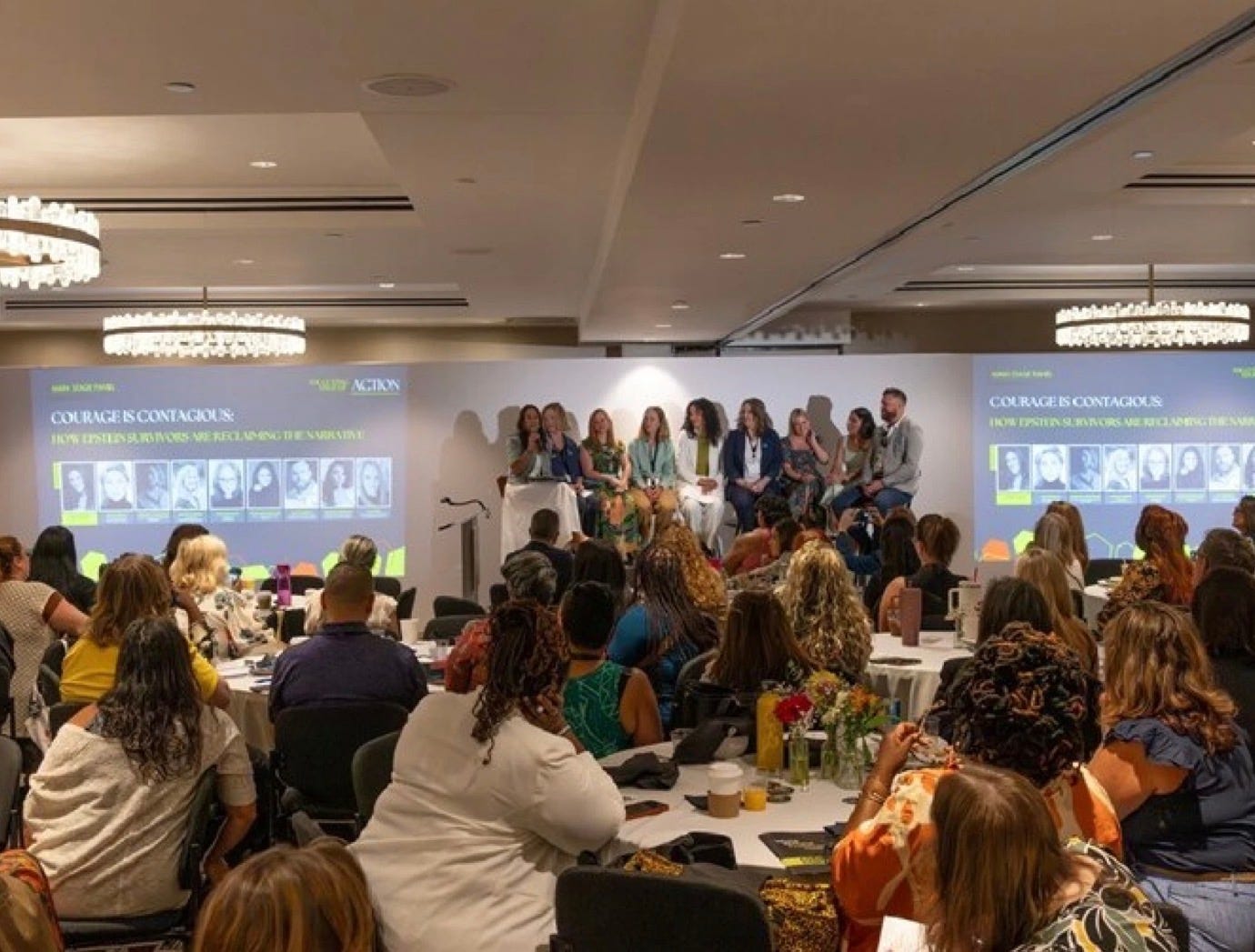
In June 2026, survivors including Dani Bensky appeared on a panel titled “Courage is Contagious: How Epstein Survivors Are Reclaiming the Narrative” at the World Without Exploitation conference — deliberately framing their advocacy as part of a wider pattern of institutional failure, not an isolated case.
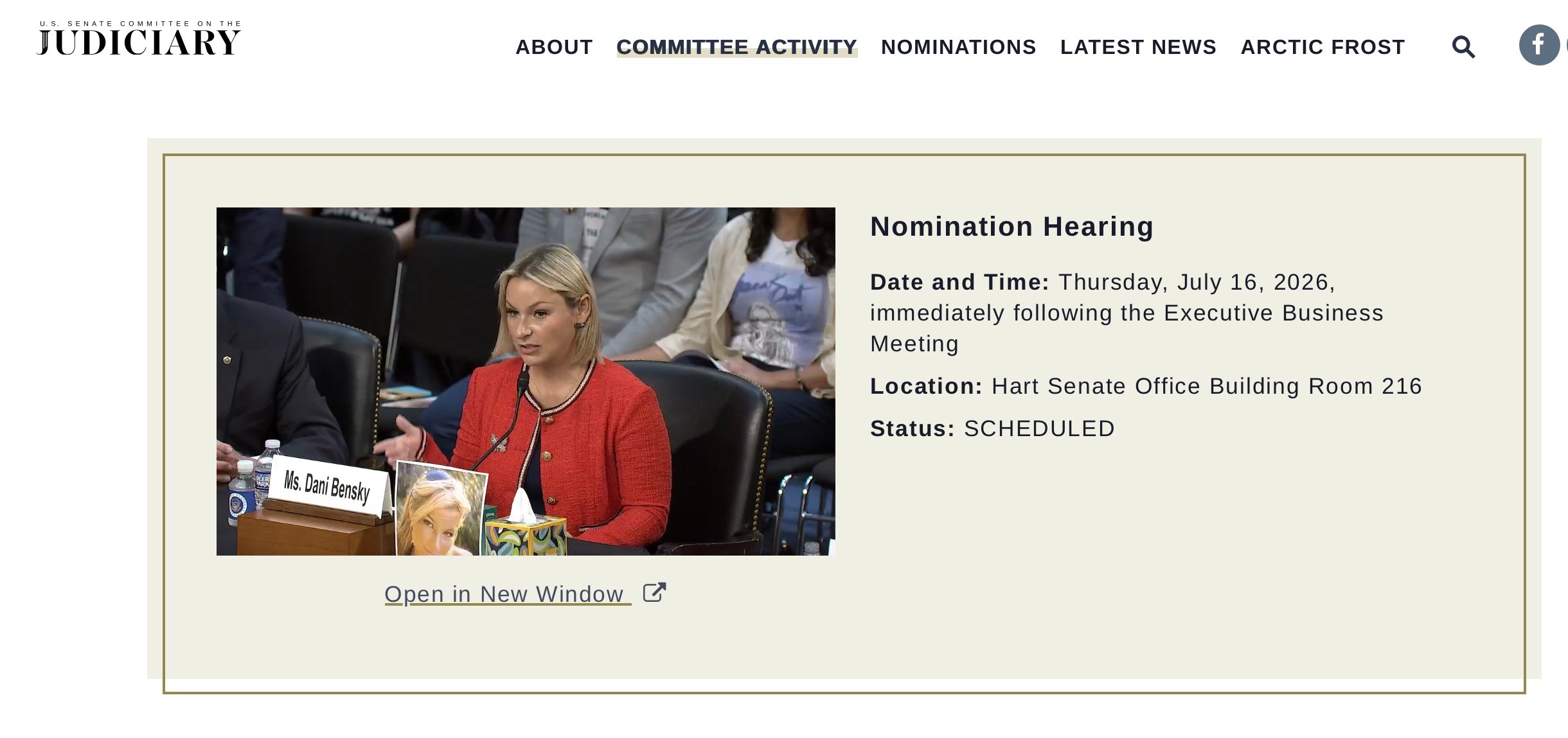
And this month, on July 16, Dani Bensky, a survivor of child sexual abuse by convicted sex offender Jeffrey Epstein, spoke before Congress about decades spent trying to be heard, believed, and to seek justice — and how survivors were further victimized, betrayed, and placed in danger, and continue to be treated poorly.
“We may look like grown adults when you see us now, but we were children, young girls at the time of our abuse,” Bensky said. “These are the photos of when our innocence, dreams and lives were stolen.”
What united each appearance was not simply a demand for accountability from Jeffrey Epstein’s enablers, but a broader argument: that institutions — including law enforcement, prosecutors, schools, and government agencies — too often failed to protect children while dismissing or minimizing those who tried to report abuse.
That framing — that this high-profile case is a doorway into a much larger, systemic problem — is precisely what Wendi Miller argued in her final recorded interviews about family court. She didn’t just want justice for her own children; she wanted structural change: an advocate in every courthouse in the country.
Miller argued that children moved through disconnected systems in which courts, child welfare agencies, law enforcement, therapists, and prosecutors frequently operated in isolation. The success of inter-agency child exploitation initiatives such as Tim Tebow and INTERCEPT ‘s task force illustrates what coordinated responses can look like when protecting children becomes the shared mission.
That same coordination gap is the throughline connecting Joan Meier’s peer-reviewed research on abuse allegations in custody litigation, UN Special Rapporteur Reem Alsalem’s 2023 report on violence against women and children in family law, and the UK’s Right to Equality “Scratching the Surface” judgment analysis — three independent bodies of research, on three continents, all documenting the same institutional failure to track outcomes for the children and women courts and agencies are supposed to protect.
The comparison is not between the crimes themselves. Jeffrey Epstein’s abuse involved child rape and sex trafficking. Wendi Miller’s work centered on family court, child abuse, and domestic violence. The common thread is the institutional response described by survivors across both movements. In legislative hearings, public conferences, and survivor testimony, the same themes appear repeatedly:
• Victims disclosed abuse and weren’t believed by the people with power to act, or were dismissed.
• Retaliation followed against the person who spoke up — professionally, legally, socially.
• No mechanism existed to track what happened to the victim afterward.
• Coverage centered on the victim’s choices or character, erasing the perpetrator, the systemic failure, and her own advocacy from the story.
• Immunity, procedural protections, or simple lack of oversight shielded the people who failed to act.
Survivors in both movements are making the same point in different rooms: the silence victims experienced was never really about the case. It was about who benefits from the story ending there.
Six years after Wendi Miller’s death, survivors from family court, child sexual abuse, domestic violence, intimate partner violence, and human trafficking cases are increasingly making the same argument in different forums: protecting children requires more than individual prosecutions. It requires institutions willing to believe victims, coordinate across agencies, and examine their own failures with the same scrutiny applied to offenders.
Whether that message finally produces meaningful reform remains an open question. What is no longer in doubt is that survivors are refusing to let their stories — or Wendi Miller’s — fade quietly from public view.
Six years on, the space Miller was trying to build still sits empty. No advocate and no agency has stepped in to open the kind of on-site survivor office inside the Lamoreaux Justice Center that Miller was in the process of launching — not even UCI Law’s own Initiative to End Family Violence, whose director, Jane Stoever, appeared alongside Miller just weeks before her death warning that family law without domestic violence expertise misses “a lot of key facts.”
If INTERCEPT’s inter-agency model can coordinate federal, state, and local resources to rescue victims of child abuse, child rape, and sex trafficking, family courts have no excuse for the same coordination failure Miller spent her career trying to fix. That’s the policy conversation this reporting will keep pushing toward.
This ongoing series on the California family and probate court and CPS corruption crisis—and the broader nationwide family court crisis—aims to bring national attention to systemic failures and to advocate for meaningful reform and accountability.
This article is investigative reporting intended for public-information and public-interest purposes only. It does not constitute legal advice, and nothing herein should be relied upon as a substitute for consultation with a licensed attorney or qualified legal professional. References to laws, court proceedings, or legal processes are presented for journalistic and informational purposes.
The time for action is now. Lawmakers, the media, and the public must act together to demand justice, accountability, and protection for families and children.
Are you committed to protecting America’s children and restoring integrity to our legal system?
Contact your legislative representatives. Speak out. Reach out to media outlets. And vote.
Find your state and federal legislative representatives HERE.
Find out what your legislators are doing on a weekly basis HERE.
Whistleblowers and victims of family court, CPS, probate court, IDEA/ADA or foster care corruption anywhere in the U.S.—please contact this reporter at juliea005@proton.me or rjh.investigative.reports@gmail.com.
Together, we can ignite a national movement and create lasting change.
Julie M. Anderson-Holburn is a California-based investigative journalist reporting on criminal and family court corruption, judicial abuse, domestic violence, child abuse and systemic failures. Her work is published on NewsBreak, Substack, and The Family Court Circus, and has been featured by the Center for Judicial Excellence and National Safe Parents. Julie believes that exposing the truth is the first step toward meaningful reform.
This article was made possible by the support of readers like you. Thank you.
Related coverage:
DOJ’s Epstein Files Confirm Orange County Family Law Judge Was One of Jeffrey Epstein’s Attorneys
American Bar: Stop Using ‘Parental Alienation’ to Override Abuse
Update: Winans Case Advances to Trial Phase, Defendant Remains in Custody Without Bail
Update: Estranged Husband Charged in Nicole Winans’ Murder Remains in Custody Without Bail
California: People v. Shane Winans— A Domestic Violence Tragedy and the Murder of Nicole Winans
California: Mother Murdered in San Joaquin County, Tragedy Highlights Family Court Failures
From Orange County to Texas: Two Courtrooms, Two Outcomes in the Bill Hutchinson Cases
After Months of Hearings Into Family Court Failures, Arizona Enacts Alec and Lydia Act
UPDATE: Six Orange County Family Court Judges Respond to Recall Petitions
BREAKING: Six Orange County Family Court Judges Served With Recall Petitions
FOR IMMEDIATE RELEASE — Rally and Court Watchers Requested for Nov. 7 in Orange County, Calif.
FOR IMMEDIATE RELEASE—COURT WATCHERS REQUESTED FOR OCT. 20 GISELLE SMIEL CASE IN LOS ANGELES
Orange County DA’s Office: Jury Awards $3M Over Culture of Malice and Retaliation Against Women
Leanne fled the country to escape domestic abuse. Now she could face jail.
The Victims of Jessica St. Clair, Parents and Children Share Their Trauma, Part Two
Whistleblowers Reveal Corruption in Orange County Family Courts and Beyond
Orange County DA’s Office Hostile to Women: Unprotected OC Women Suffer Under Spitzer’s Retaliation
Orange County Protest to Spotlight Family, Probate and Juvenile Court Failures, Sept. 17
Orange County Parents Speak Out Against Family Court and CPS in Nationwide Protest
Retaliation in Hackensack: Dr. Bandy X. Lee, Bruce Fein Confront Family Court Over First Amendment
Arizona’s Final Committee Hearing on Family Court Failures and the National Reform It Demands
Octo-Mom’s Former Attorney Sued: Client Alleges Collusion and Rigged Custody Case
Exclusive: OC Custody Evaluator Under Investigation After Molestation Case; BBS Ignored Complaints
Exclusive: Unveiling the legal battle in Orange County that no one else dares to report
No posts
Comments
Nothing yet. Say the first thing.
Sign in to join the conversation.