
I want to start with a question, because every piece I have written so far has been about something that happened to me - a vision, a dream, a prophecy, a door that opened in Canterbury. This piece is about something quieter. It is about what was already inside me before any of that arrived.
The question is: who is Julie?
And the way I have come to answer it, the way I think anyone can answer it, for themselves, is to start with the name.
There is something I should say at the outset. I have no middle name. Most people have two or three names; I have one. Just Julie. When I was young I felt that the absence itself meant something, though I could not have told you what. I noted it the way a child notes things she does not yet understand. I have come to think of it now as the first instruction: there is nothing between who I am called and who I am. No buffer. No second option. Just the one syllable, doing its work alone.
I was almost not Julie.
My mother had wanted to call me Sonja. My father wanted Julie. He won, and the reason matters. He had been raised, after his mother died when he was eight, by his older sister. Her name was Julie. She was the one who fed him, who kept him alive, who got him through the years when there was no one else. When his first daughter was born on the other side of the world, in a country he had reached by jumping ship at fifteen and accepting a plane ticket on a whim, he gave her the name of the woman who had raised him.
So my name is not decorative. It is grief, survival and gratitude compressed into three syllables. It was chosen by a man who had lost almost everything and was naming his daughter for the one person who had stayed.
I did not know any of that growing up. I knew I was named for my aunt. I did not comprehend what the name had cost to give.
I only began to look at the name itself, at what Julie meant, etymologically, much later, during a year I spent walking the YoSoy Path with Matias de Stefano. Matias teaches that names are codes, seeds of consciousness planted at the exact moment to germinate at the precise time. So I looked mine up.
Julie. Youthful. Devoted to Jupiter. The sky father.
Jupiter is one of two planets at the base of the Yod in my chart, the configuration sometimes called the Finger of God, the one I have written about elsewhere. The name pointed at the chart. The chart pointed back at the name. I had been devoted to Jupiter on the page before I had ever heard of an astrological chart.
There is more. When I began to learn galactic astrology, the work of placing asteroids in the natal chart and reading them as soul memory, I found that asteroid 89 Julia, sits at 9.14° Taurus in my chart, conjunct my Part of Fortune at 11.6° Taurus. The name was not only carried by my aunt and chosen by my father. It was written into the sky on the day I was born, sitting on the point that traditional astrology calls where joy is found.
The name was a code three times over. Carried in the family. Encoded in the etymology. Placed in the chart.
If you want to begin reading yourself, start here. Look at your name. Who were you named for, and why. What does the name mean in the language it came from. And if you have a chart, look at whether there is an asteroid of your name, and if it sits anywhere meaningful in your wheel.
The name is the first layer. The second is where the name came from.
My surname was Pavlíček. The line traces back, through records my brother has spent years gathering, to one Ondrej Pavlíček, born on the 22nd of November 1635 in a village called Blízkov. My mother’s line - Bambula - goes back to Jiri Bambula, born on the 21st of March 1647. Both families lived for nearly four centuries inside the same tight cluster of villages in the Vysočina region of Bohemia: Měřín, Stáj, Arnolec, Nadějov, Zhoř. My brother told me that somehow, across all those generations in such a small area, the two lines avoided intermarriage. The lineage held its integrity.
I sat with those dates for a long time when he sent them to me.
Because the Vysočina region of Bohemia, in the early 17th century, is not just any soil. It is the soil where the Rosicrucian manuscripts first circulated - Fama Fraternitatis, Confessio Fraternitatis, The Chymical Wedding of Christian Rosenkreutz - published between 1614 and 1616. The Rosicrucian movement, with its Hermetic philosophy, its sacred geometry, its alchemy and its insistence on the divinity of direct experience, was forming exactly there, exactly then. My earliest traceable ancestors were alive in that region at exactly that moment.
The soil my line came from, in the century my line surfaces in the records, was the soil where those ideas were taking root. The land remembers. The bodies that walked on that land carried something. And those bodies passed on what they carried, through marriages, through children, through nearly four hundred years, until the line surfaced again in a girl born on the other side of the world in 1969, who would one day find herself drawn, without knowing why, to sacred geometry, to the esoteric, to direct experience as the only authority she trusted.
There is one more strand I want to name here, and then leave alone for now.
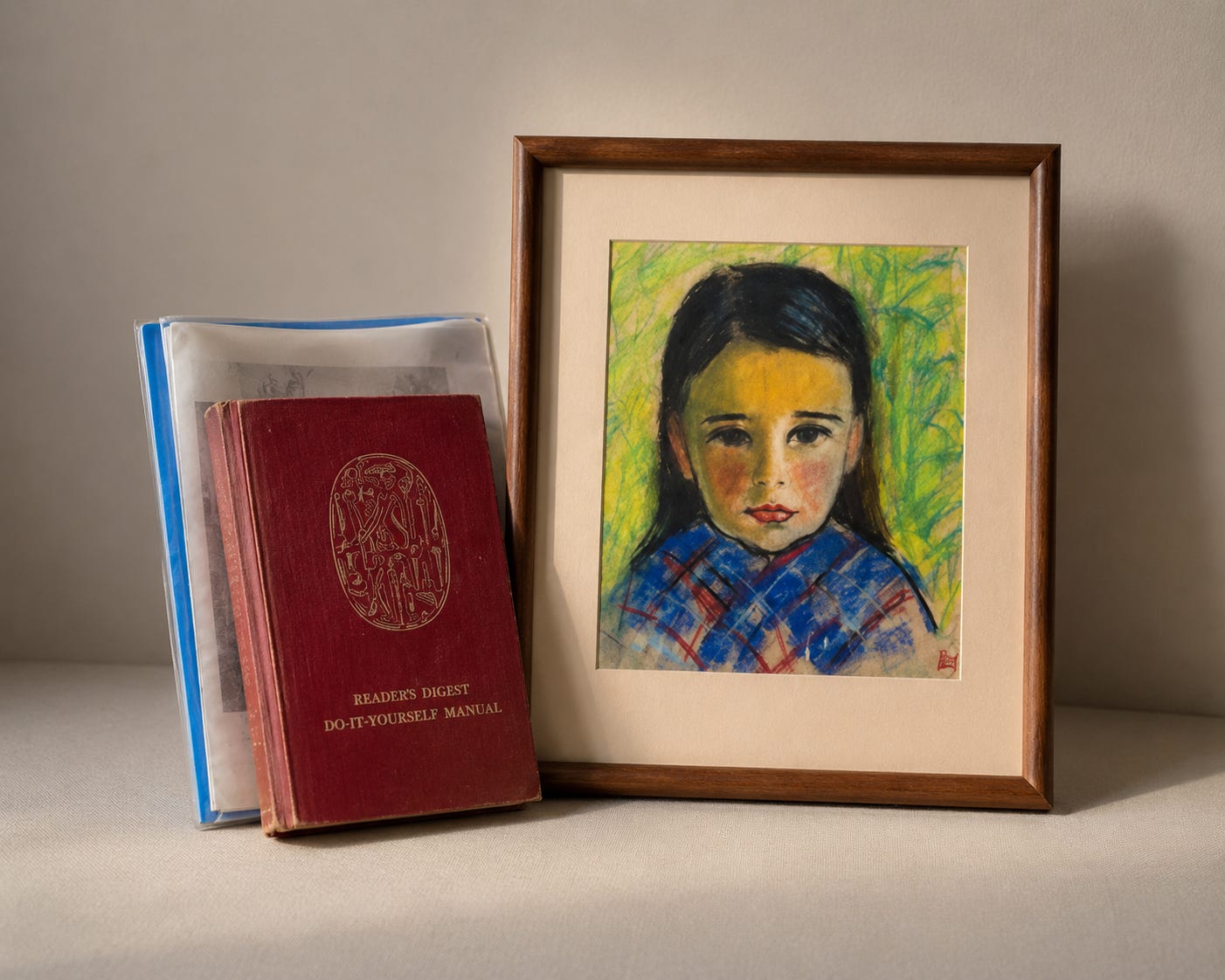
I married, decades later, into a family carrying the same inheritance through a different door. My mother-in-law Denise’s father was either a Rosicrucian himself or deeply engaged with the tradition. He taught Denise some of it, despite the lineage being designated male-only. After Denise died, I was at the house one day and there was a large skip out the front with a few books in it. I love books. I started looking through what was there. Near the top, almost like it was waiting to be found, was a manuscript — Secret Symbols of the Rosicrucians of the 16th and 17th Centuries, photocopied pages bound in electric blue with a clear plastic cover, the first two pages blank, the contents invisible until you turn past them. I recovered it. I have it now.
My children carry both threads. The Bohemian geographical lineage through me. The direct teaching lineage through their father, through their grandmother, through her father. That is its own story, for another time.
Then look at where your people came from. Not just the country on the form. The region. The century. The villages. What was happening on that soil in the years your ancestors first appear in the records..
The next layer is the soil I actually grew up on. The streets, the suburbs, the numbers, the place names, and what they meant before anyone moved in.
I was born on the 10th of April 1969 at North Shore Hospital in Sydney. My parents brought me home to a one-bedroom flat at 21 Alexander Street, Hunters Hill, the bottom flat near the carport, in a building the David family had helped my parents find. The Davids told my mother to always tell people I had been born in Hunters Hill, because Hunters Hill was prestigious. It is the kind of small instruction immigrants give each other - say it this way and they will treat you better - and my mother took it.
The flat in Hunters Hill was not where I was conceived. My parents had been living in Crown Street, Surry Hills, in a house belonging to a Greek woman who did not want children in her home. When my mother became pregnant, they had to move. So I was conceived on Crown Street and born to the bottom flat in Hunters Hill, and from there, eventually, taken up to the Blue Mountains.
I did not know any of these street names mattered until I started looking.
When I was a few years old my father began building a house. He had bought a block of land in Katoomba, in the upper Blue Mountains, and he drove up from Sydney every weekend for years to build it by hand. He worked from a Readers Digest book on house construction and a set of plans he had bought from Myer. He laid the bricks himself. He framed the roof himself. He was a Czech refugee who had been a cane cutter, a gold hunter, and a crocodile hunter, and now he was a man building a house for his wife and his daughter, weekend by weekend, with a book and a set of plans.
The street he chose is the layer worth looking at.
The family who had helped my parents find their first flat in Hunters Hill, the family my mother was told to mention by name to lend us legitimacy in a new country, was the David family. The Davids. They were the first people in Australia who took us in. The street my father chose to build on, decades later and on the other side of the city, carried their name forward. David’s son. The street was carrying the name of the family who had carried us.
There is one more layer. One of the books I read most often as a child was a Children’s Bible. I preferred the Old Testament. I read the stories of David and Solomon, the boy who killed a giant with a stone, the king who built the temple, the lineage that ran through them and into everything that came after. The House of David. I was reading those stories at the same age I was walking down the street in the house built by the man who had named his daughter for the woman who had kept him alive.
The Davids. Davidson. David. The same syllable arriving three times, in three registers - the family, the street, the book - across the same childhood.
I did not think about any of them until much later.
The streets around us were royalty.
Kings Road. Queens Road. Princes Road. Our childhood dog was named Prince. There was no Princess Street, though, and I noticed the absence the way I had noticed the missing middle name. There was a Prince on every map I lived on and the dog answered to the name, but there was no Princess. One of the books I read over and over as a child was The Silver Crown, a story about a girl named Ellen who discovers she is a queen, whose family is destroyed, and who has to go on an adventure to claim what she is. I read that book the way you read the books that are actually about you. Decades later, looking back at the maps, the absence on the street signs and the book on my shelf were doing the same work. The Princess is missing. Go and find her.
If you are doing this work, look at the streets you grew up on. Not just the suburb. The actual roads. The cross-streets. The names of the parks and the schools. Type them into an etymology dictionary. You may be surprised by how much was sitting on the signs, waiting.
Katoomba itself is a Gundungurra word. The Gundungurra people are the traditional custodians of the upper Blue Mountains, and the name they gave to the area means, roughly, shining falling waters, or water tumbling over a hill. Katoomba is not just a town. It is a ceremony ground. The waterfalls, Wentworth Falls, Katoomba Falls, the smaller ones feeding them, are part of why.
Some years after I left home, the council rezoned our block. The address stayed the same on the deeds, but the suburb changed. We were now in Leura. Leura is variously derived, some sources give it as a Gundungurra word for lava, some link it to Lyra, the lyre, the constellation. One who plays the lyre. Light. Music. Sound.
I had been born into shining falling waters. I would later be rezoned, by an administrative pen, into something connected to Lyra. Lyra is one of the star systems that Lyssa Royal Holt’s Prism of Lyra names as the origin of much of our galactic memory. I came to that book in my forties. The suburb had been there waiting.
Names are codes. Streets are codes. The land itself is a code, and the people who lived on it before you arrived left their language on it whether anyone has remembered to read it or not.
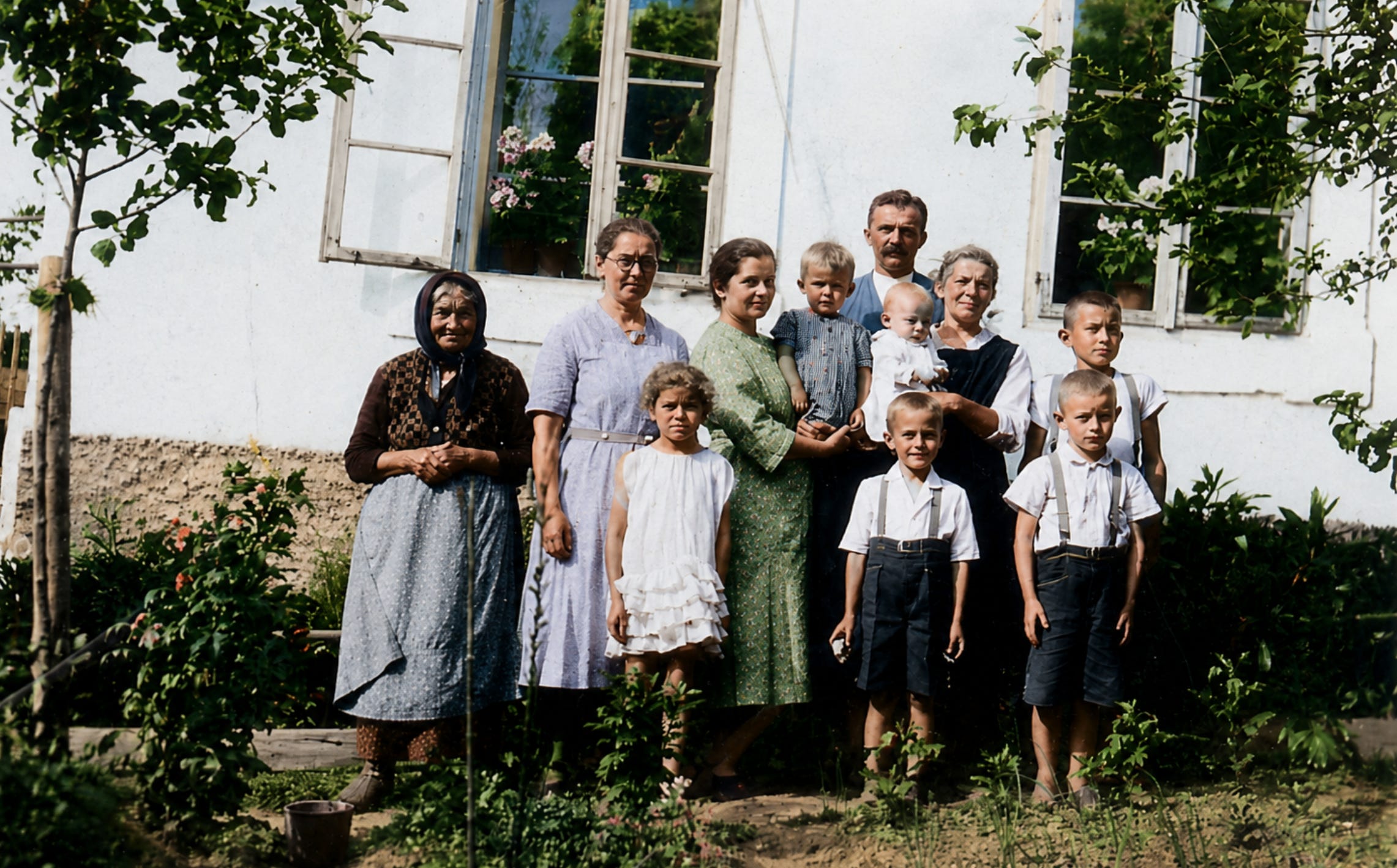
My father was born in 1935, in a small farming village in what was then Czechoslovakia, in the region around Stáj. He was seven when his mother died. His older sister Julie, who was sixteen, became the woman of the house. She fed him, kept him alive, got him through the years when there was no one else.
She died six years later. He was fourteen. He had lost his mother at seven and the sister who had become his mother at fourteen, and by then he understood that the women who held him were not promised to him.
The country slid into a communist state when he was thirteen. By the time he was a teenager, he understood that there was nothing left for him there.
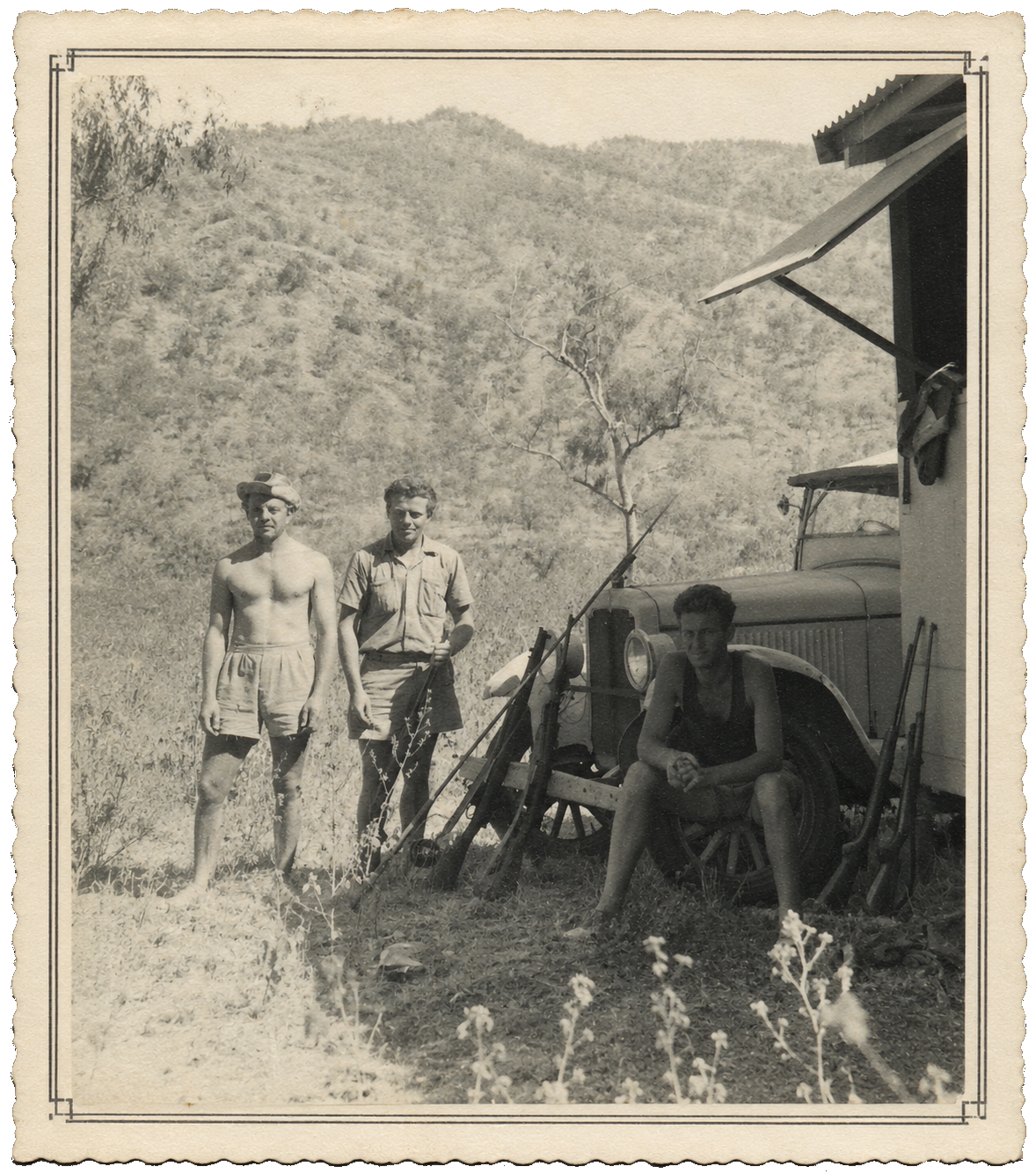
He left at fifteen. He jumped ship on the Danube and sought refugee status in what was then Yugoslavia. He tried to join the French Foreign Legion. They rejected him for being too young - he needed to be sixteen. He tried to join the American Army. They rejected him for the same reason. His friends had decided to sail to Australia. He had not planned to go. When a plane ticket was offered to him on the same destination, he took it - he thought it would be funny to arrive first and welcome them off the boat.
He was classified, by the Allied military government in Trieste, as a Displaced Person. That is the phrase that appears on his papers. Displaced Persons ID Card No 11962, issued in January 1954. Certificate of Identification as Displaced Persons (Refugee), issued in April 1954. Visa granted in May. He landed in Australia three weeks later, days ahead of his friends.
One of the books I read most as a child was called Displaced Person. I did not know, then, that it was the official classification of my own father.
He cut sugar cane in the north. He hunted for gold. He hunted crocodiles. He was a teenage Czech refugee with little English, working the most dangerous edge of a country that did not yet know him, and he came out the other side with enough money to buy a block of land in the Blue Mountains and a set of house plans from Myer.
He met my mother on a trip back to Czechoslovakia in 1967, during a brief political window when amnesty had been declared for returning refugees. They married. He returned to Australia. She followed, in 1968, alone, with no English.
I was born the following year.
He started building the house when I was small. He drove up from Sydney every weekend for years and built it with his hands, from a Readers Digest book on house construction, which I still have. He was forty when I was six, and the man I knew was already a man who had survived too much to be hurried.
That is the surface story. The encoding is underneath it.
He had learned, by fifteen, that nothing in the country he was born into could be trusted to stay. Mothers could die. Sisters who became mothers could die. Governments could turn. Churches could betray you. The only thing he could trust was his own two hands, his own judgement, and the small number of people who had proved themselves over time. That is what he passed to me. Not as a teaching — he was not a man who taught by speaking. He passed it the way fathers pass things, by being it.
He also built, underneath the house, a second house.
It was the same footprint as the one above it, walled in two and three layers of brick, with concrete everywhere. He had built the house above ground for his wife and his daughter. He had built the house below ground for the end of the world. He never said that. He did not have to. The walls said it. The man who had watched his country fall once was not going to be unprepared if it happened again.
He spent most of his days down there. He worked night shift, so the daylight hours were his. He had his tools. He had his beer-making equipment. He had a favourite step where he liked to sit. The space was open, we did not have to be invited, and one day I wandered in to find him there.
I had been going to church every Sunday with my mother, as we did every week without fail, and I had noticed for some time that he never came. I wanted to know why. I asked him.
He was sitting on his step. He had a glass of his homemade beer in his hand. His eyes were bright blue with the watery glaze they sometimes had, and he looked at me, and he told me.
He told me that during the war, in the country he had grown up in, the priests would take a confession and then pass on what they had heard to the SS. People disappeared because of it. Whole families.
You connect with God through your own heart, he said, and tapped his chest.
That is the inheritance. Not the cane fields. Not the gold. Not the crocodiles. The second house under the first one. The teaching that the source is always inside, never outside.
Look at your father. Look at what he survived, and at what he chose afterwards. The catastrophes do not pass down. The responses to them do.
My mother was born in 1943 in the same small cluster of villages my father came from. She was eight years younger than him. He had already left the country by the time she was old enough to know him. She knew of him, everyone in those villages knew of everyone, but they had not met.
When she was in her early twenties she went on a trip to Germany. While she was there she sat with a gypsy, who told her she would travel a long way from home, with a mysterious stranger, to a country far across the world.
She laughed.
She came back to Czechoslovakia and got on a bus from Jihlava to Stáj. There was a man on the bus. He was older than her, and he recognised her, although she did not recognise him. He told her who he was. He was funny. They talked the whole way to Stáj. By the time the bus stopped, the gypsy had stopped being funny.
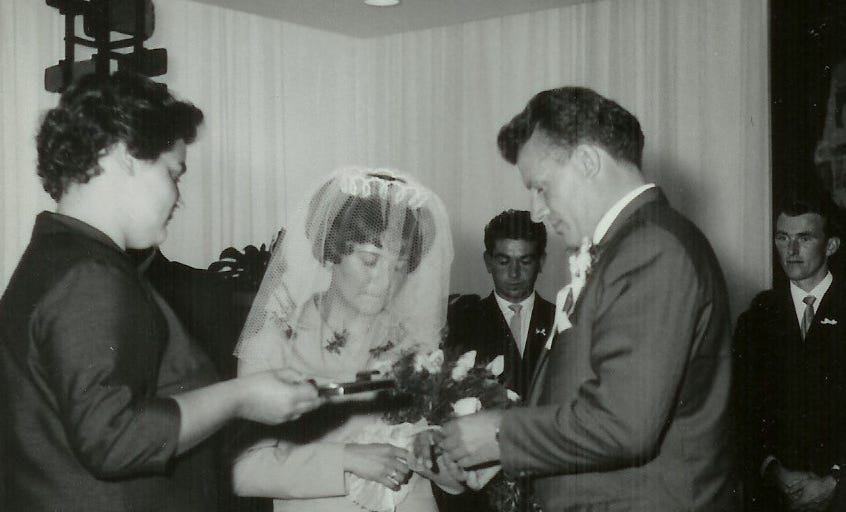
They married. He went back to Australia. She followed in 1968, jumping through every immigration hoop the new country could put in front of her, alone, with no English. She landed at Sydney airport and taught herself the language by watching I Love Lucy. A year later I was born.
That is the first inheritance. A woman who, when the world told her something improbable, eventually believed it.
The second inheritance is the lightning.
Stáj was a dairy town. When my mother was a young woman, she was walking a cow home one evening when a storm came over. She and the cow were caught in the open. Lightning struck the ground close to her. The strike threw both of them to their knees in the same instant — woman and cow, on the wet grass, neither one hurt, both of them stunned.
In the old traditions the cow is the mother. Hathor, the Egyptian goddess of motherhood, sky and nourishment, was depicted with the body of a woman and the head of a cow, or sometimes as the cow herself. My own mother, walking her cow home, was knocked to her knees beside the animal that has carried the mother archetype for thousands of years.
She was afraid of lightning for the rest of her life.
When I was a child, in the house at the top of the hill on the edge of a National Park, in an area called Yosemite, storms came hard. Storms always came hard in the mountains. She would shut all the windows. She would take the handset off the telephone. She would call us in.
I would not come.
I loved storms. I ran out into them. I danced in the rain. The lightning split the sky and I laughed at it. She stood at the back door yelling at me to come inside, and I waved at her and stayed where I was. I was a little brat.
One day a storm came that hit the house. The lightning travelled through the wiring and came out of the telephone handset — which she had already taken off its receiver, the way she always did in storms. I was about ten feet away. I saw the bolt arc out of the handset and reach for me through the air. It stopped two feet short. I was not scared. I was fascinated.
The same force. Her on her knees beside the cow. Me ten feet from a handset, watching it reach. Two generations, two postures, one charge. Whatever she had received in Stáj had not stopped in her. It had crossed an ocean. It had waited in the wiring of the house my father built. And it had come for me, and stopped, deliberately, two feet short of touching me.
She had been a conduit. I would be a conductor.
Look at your mother. Look at what frightened her, and ask whether the same thing frightens you.
I am blood type O.
In A Hypnotist’s Journey to Atlantis by Sarah Breskman Cosme, a session subject describes the original royal bloodline of Atlantis as Rh negative, and notes that the O bloodline comes from the mother of that line. Type O carries the original maternal inheritance. The other blood types entered later, the subject says, brought in by people from other places. One tradition, among many, places type O as the oldest blood, the line that goes back furthest. The line of the mother.
I sat with that when I read it. There is a thread evolving in this piece I am half-tracking. I do not yet know everything it means.
When I was young, I would often sneak into my parents’ bedroom and lie down underneath their bed. Flat on my back. I had to be aligned a certain way. I would lie like that and just breathe.
It was only later that I realised that I was lying in the yogic Corpse Pose - Shavasana - the final resting pose at the end of every yoga class. It is the pose designed for complete release of the body and the quieting of the mind.
Out of curiosity, years later, I pulled up the position of the bed on Google Maps. I was always lying in the same direction. Head pointing north. Feet pointing south. Head to the magnetic north pole of the planet.
I have recently discovered that the human brain contains magnetite. Iron-oxide nanoparticles, magnetic at the molecular level, embedded in tissue throughout the brain. Their exact role has not been fully established. They are thought to contribute to a subconscious magnetic sense, the same sense that helps birds navigate across continents and salmon return to their natal rivers. We do not consciously feel it. The body knows.
That is the deepest layer. The cells themselves, carrying their own information, doing their own work without any instruction from above. Matias de Stefano puts it like this: Your bodies are the universal library, and every day they are rewriting the books of your life. I read that line years after I had stopped sneaking into my parents’ room, and I recognised what I had been doing. I had been visiting the library.
Listen back to what your body did before anyone told it to. The body was reading itself before you knew how to.
I was fourteen. Year 9. The maths classroom was in one of the portable buildings on the edge of the school grounds, with a metal step at the door. We had just spent the lesson drawing the platonic solids, the five regular polyhedra of sacred geometry: tetrahedron, cube, octahedron, dodecahedron, icosahedron. Robert Edward Grant says that even looking at sacred geometry is activating, that the shapes function as a QR code for the subconscious. I had been drawing them for forty minutes. I did not know any of that.
The bell went. I packed up my books and walked out. I stopped on the top step.
For a moment - maybe thirty seconds - I could see the math.
Not numbers. The patterns themselves. The geometry running through everything in front of me. The trees. The grass. All of it visible at once. A butterfly flew past and the whole pattern moved with it - every line, every angle, every form around it shifting subtly as it passed. The world was not a collection of objects. It was one system, and the system was alive. I was inside the pattern and the pattern was inside me, and the boundary between the two had dissolved.
It lasted seconds. Then it closed. I walked down the step and went to my next class.
The Rosicrucian movement began in Bohemia in the early 17th century, in the same cluster of villages my line was forming in. Its central teaching was that the universe is built from sacred geometry, that mathematics, music and matter are the same pattern read at different frequencies. Four hundred years later, in a portable classroom on the other side of the world, a girl with that lineage in her cells finished drawing the platonic solids, walked outside, and saw what her ancestors had been studying.
Watch for the moment the knowing surfaces in you as you. It may last seconds. It may not return for years. The job after that is to learn how to keep looking.
I have spent the forty years since that moment on the step trying to learn how to look back.
When I was twenty-seven, a man named Colin sat across from me in a smoke shed and told me my future. I have written about that elsewhere. What I have not written, until now, is the line he gave me that has done more work in my life than any other.
History will teach you to believe.
Matias de Stefano teaches the same thing in different words. He says the past shows you where you are going.
That is who Julie is.
The next piece will move from what I was given to what I have done with it.
The patterns I write about here can be read in your own chart too. If you’d like to explore your soul map, I offer galactic astrology readings at divinehealingx.com — including an Asteroid Deep Dive that explores the soul-level threads traditional astrology often misses.
If this writing resonates and you’d like to support it, you’re welcome to do so here.
No posts
Comments
Nothing yet. Say the first thing.
Sign in to join the conversation.