
Today, part seven, is the penultimate in our limited series about the role of the shadow in finding alternatives to our inherited cultural stories. If you missed the introduction, it’s here.
New to Homecoming? Start here.
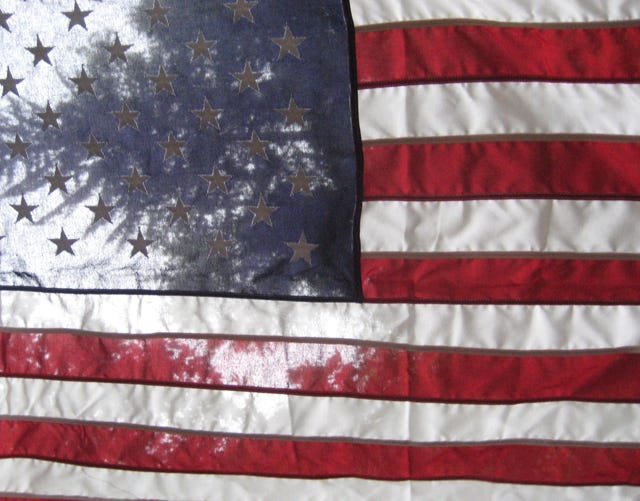
There have been no shortage of reflections on the 250th anniversary of the U.S. Declaration of Independence. Parker Palmer offered his usual thoughtful nuance.1 He wrote about the adolescence of our country and made a plea to “grow up”. One hallmark of uninitiated adolescence is self-centered black and white thinking: us and them, good and bad, for or against. Nuance and compassion take a back seat to bickering and certainty. The struggle for independence dominates.
Independence is assumed to be coded into our country’s DNA. There’s the famous founding document penned by Thomas Jefferson.2 There’s the fantasy of the frontier forged by independent-minded adventurers.3 Opponents cry “socialism!” whenever progressives seek to give Americans a modicum of safety net for education, health care, housing, or childcare. American “independence” masquerades in the lies of Horatio Alger’s bootstraps, Reagan’s “welfare queen,” and the Marlboro Man, to name but a few.
For decades, I believed independence to be the pinnacle achievement of adult maturity. We’re born dependent, we struggle through childhood to gain our independence, and with it we leave home to forge our way in the world. I carried this belief into my own adult relationships: dependence bad; independence good, mature, vital.
During a difficult period in my marriage, I learned of a third way: interdependence. When the therapist delivered that lesson, it was one of those forehead-smacking, Homer Simpson DOH! moments that rearranged everything. Thich Nhat Hanh and Robin Wall Kimmerer, among other wise teachers, have since helped me to embrace the beauty and inevitability of interdependence. Not only among humans, but between myself and the marvelous beings who, according to many indigenous creation stories,4 were here long before us. Now, it’s difficult to imagine how I ever thought independence was the highest good.
When I was a kid, my sense of patriotism toggled between daily recitation of the Pledge of Allegiance and unthinking fondness for the country of my birth. I was young and clueless during the Vietnam War, the upheavals of the ‘60s, Civil Rights, assassinations, burning cities, and the brutalities of Kent State and the ’68 Chicago Democratic convention. In the ‘70s, I was devoted to my POW bracelet, though the war was still a distant abstraction to me.5 Nixon’s resignation on a Thursday night in August 1974 was rare family-together viewing on our small black and white TV. I gleaned its import only through my parents’ outrage and anxiety.
Independence is threaded through every aspect of Americanism. The social safety net begun with the 1930s New Deal and continued in the 1960s with LBJ’s Great Society programs has been frayed by decades of ambivalence, othering, and opposition. Our immigration policies teeter on a history of xenophobia, racism, and exclusion.
This is the dark side of American patriotism. Our independence enables claims of “not me” and encourages the isolationism of “that would never happen to me.” It allows ordinary, decent people to blame asylum seekers for their plight, to spare not a moment’s thought for the desperation that drives anyone to leave their home and take a dangerous journey into the unknown. Supposedly generous Christians other and finger-point and say, “You’re not welcome here” and “Go back to your s***hole country.”
Other shadows lurk in our founding documents. Besides the Declaration of Independence, we have what was meant to be a living one: the Constitution.6 Nowhere in the Constitution are women or nature or the environment mentioned. Not once. “Law” is mentioned 36 times and “he” is used 55 times. The 27 Amendments use “law” an additional 56 times and “he” 90 (0 for “she”). In the absence of mention of half the population, women’s rights have been won through clever if contorted interpretations of amendments and some legislation. So far, environmental rights are enshrined only in legislation.
We have witnessed the precarity of this in recent Supreme Court rulings, such as the Dobbs decision abolishing abortion rights and several decisions that have now gutted 1965’s landmark Voting Rights Act (among other assaults). And still there are those with the wisdom and boldness to act on behalf of our country’s founding promises, the ideals for which the Revolution was fought. In 2019, we saw the brilliant, moving theater piece, “What the Constitution Means to Me,” that was created and performed by Heidi Shreck.7 She created it in no small part because of her love for the document, and her certainty that we the people can do better.
The Constitution may be a living document, but it can’t do the work for us. Last winter, the people of Minneapolis showed us another way. They demonstrated the compassion, imagination, and love that is the toolkit for meeting our cultural shadow. Instead of “not me,” they said “yes, me.” In the darkest, coldest days of winter, they chose to resist. With grace and bravery, they taught us how to meet the frightening foundational cracks of our country. With humility and community solidarity, they engaged in a great cultural initiation into interdependence.
I’m tempted to delve into the deepest-buried cultural shadows of our country’s founding, work that remains undone, barely begun. These are the ongoing stains of genocide, slavery, and racism. In the interest of keeping this essay from sprawling into next week, I will instead share a few resources that are teaching me lately:
Do the Work – W. Kamau Bell and Kate Schatz – interview here
Dr. Keon West’s 2025 book, The Science of Racism is excellent, engaging, and full of fascinating scientific studies. I will never again hear an opinionated pundit claim that racism being over without thinking that person is ignorant of the facts.
The On the Media episode, The Fantasy of America at 250 – interview with Princeton University Distinguished Professor Eddie Glaude, Jr., who teaches African American studies and religion.
Prof. Glaude read from a student’s essay for his class on the author James Baldwin. She wrote about Baldwin’s “notion of love across his life, given all that he saw.”
“What remains is not hope, but something just as lasting, the insistence on truth carried by love and lit by rage.”
Minneapolitans showed us that love is an essential part of our toolkit for meeting the shadow. All those shameful, disowned parts of ourselves, and of our collective culture, will defy integration unless they are met with curiosity and compassion.
In this moment, this song expresses how I feel about this country. Especially this verse:
Text within this block will maintain its original spacing when published
You say love is a temple, love a higher law
Love is a temple, love the higher law
You ask me to enter, but then you make me crawl
And I can't be holding on to what you got
When all you got is hurt
Each season, we donate 30% of paid subscriptions to a worthy environmental cause. This season, it’s Indigenous Climate Action. They envision a world with sovereign and thriving Indigenous Peoples and cultures leading climate justice for all. Track past and current recipients here.
What did you enjoy most about this essay? I’d love to hear from you. Or share it with others by restacking on Notes, via the Substack app. Thanks and keep dreaming.
Written while attended by Sally Hemings’ enslaved brother. She bore and raised at least six secret children fathered by Jefferson. He also founded the university where my two degrees are from, which was built and served by enslaved people.
They were in many cases supported by the Federal government with grants of land and money, not to mention military protection against indigenous residents of stolen land.
A friend is reading A Resistance History of the United States by Tad Stoermer. In our group chat, she shared his point that the framers of the Constitution betrayed the Revolution. The Revolution was about the right to stand up to and resist abusive power. The Constitution, on the other hand, protects property and those with power. It was written by and for while male landowners.
Comments
Nothing yet. Say the first thing.
Sign in to join the conversation.