
Before you jump into the article, I am so excited to introduce you to Polywork: The only platform that turns your skills into multiple income streams, built around how you're wired to work.
If you are looking to redesign your career and launch multiple income streams, then this is the place for you. Find out more below:
In my first year of university, I failed every computer science subject I took.
Every single one.
I desperately wanted to build software, for two reasons:
a) I’d watched Hackers one too many times and decided Angelina Jolie had the best job on earth, and
b) I wanted to follow Neo into the Matrix.
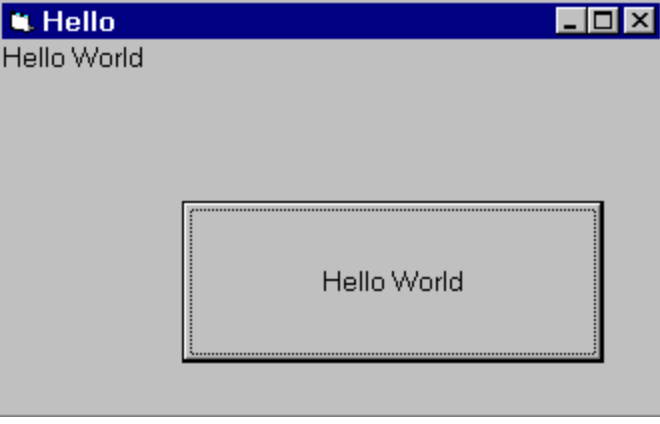
Then C++ met my very non-mathematical brain, and that was that. Hello World in Visual Basic 6 remains the pinnacle of my technical career.
When I walked away from that dream all those years ago, I was certain of one thing: building software was not for people like me.
I was wrong about that, the way I’ve turned out wrong about most of the things I was told I couldn’t, or shouldn’t, do. Twenty-odd years later, I built Polywork, the portfolio career platform I run now, and I still can’t write a line of code.
I built it by making six decisions no sensible business person would sign off on. And I’d make them all again. Here’s why…
Polywork runs on AI. That means every member costs me money in tokens every month, for as long as they’re in there. Most founders build it the other way round, a little payment from you every month. And as I scale, I know this will be the format I switch to, but for now, I wanted to attract customers who wanted to co-build this thing with me.
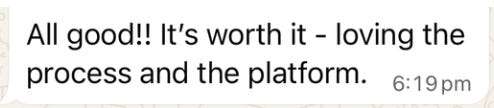
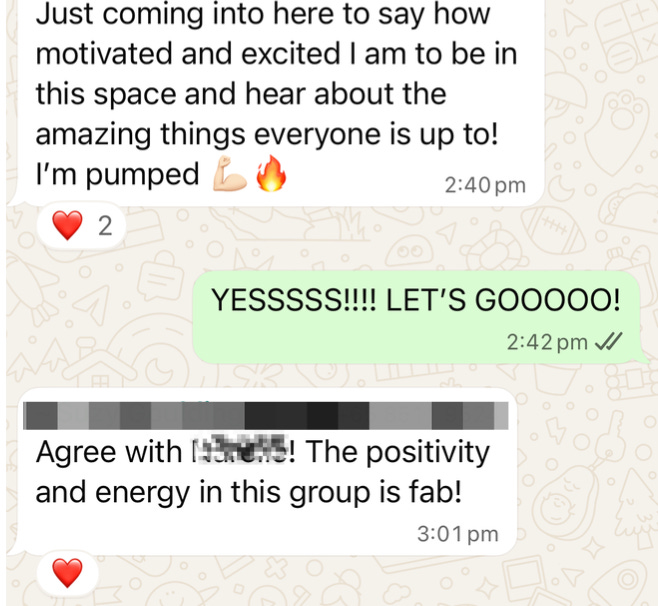
My founding members get in the mud with me, tell me what doesn’t quite work, get excited about testing the fixes and love the side-by-side building! This is the energy I wanted from my early members, and I cannot believe I have attracted these exact people!
The original plan was six months of community calls. Then a client reached out to say she’d had a few rough months but was ready to jump back in, and it reminded me that in the scheme of reinventing a career, six months in is often when you’re just getting your momentum, not when you’re finished.
So I bumped it to twelve months of community support before we’d even properly got going. Rebuilding after years in corporate is a slow burn, and cutting these women loose right as the work got good made no sense to me.
That part is my favourite stretch of the whole thing, watching the income streams finally come to life. I wasn’t about to design myself out of it!
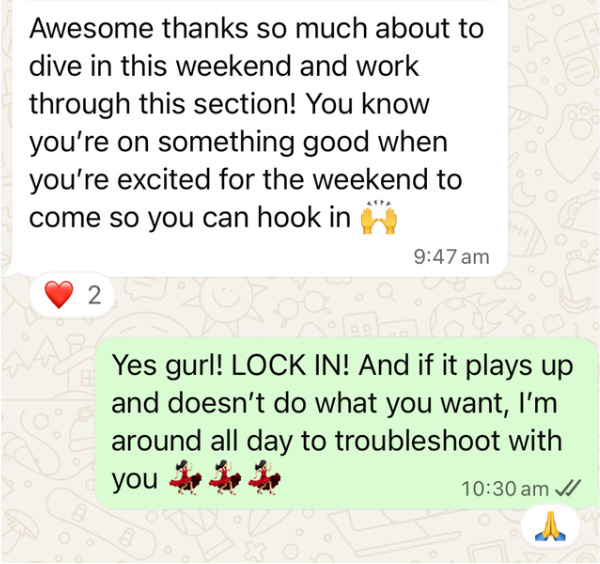
Last night it was 10:03 pm (2hrs after my bedtime), and I happened to be awake and saw a message pop up in the tech support chat. I read it and knew it would be a quick fix, but for the user it could feel like a pain in the ass. So I got out of bed, ran the fix, and she was happy!
New software is riddled with bugs, no matter how incredible a programmer you are. But the magic is watching my users in there building their portfolio careers, and when they’re in the zone, the last thing I want is a bug pulling them out of it.
So yes, I will drop everything to fix those bugs!
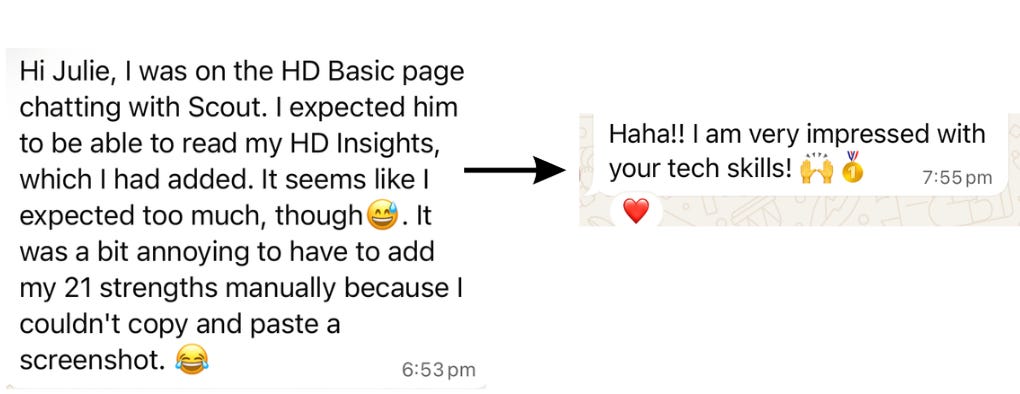
Last week I received feedback that the way we were capturing Human Design in the app was tedious. The quick fix was to tidy up what was already there. Instead, I spent the next two days getting the Human Design API and building it properly into the app, so the whole thing became a better experience rather than a patched one.
Patching it would have been faster. But small ‘good enough’ compromises stack up into a product that’s annoying to use, and these women have enough friction in their day without their software adding to it.
The first version of Polywork was a Notion workbook and a GPT I’d trained myself. That GPT was a keen thing. Maybe too keen. It would ask you a question, then another, then another, always one more thing it wanted to know before it would let you move on. The feedback from my beta testers was kind but clear: she’s great, but sometimes she’d pull you in for hours.
This stayed with me when I built this version because endless processing is exactly the trap I watch women fall into. Another assessment, another round of getting clear, and the start never quite arrives. So when I built Scout, I built her to do the opposite. She watches how much you’ve gathered, and at a certain point she tells you to stop: you have enough, go and build.
Every growth person I show her to thinks I’ve lost it. Software is meant to keep you in the room as long as possible. Scout’s job is to send you out of it, back to your actual life, the moment you’ve got what you came for!
The sensible version of this has me raising a round, hiring a couple of engineers, and waiting until I could afford to do it the proper way. Years ago I was quoted $75,000 to build something far simpler than this, so I knew what ‘proper’ costs. I didn’t have that money to spare, and I definitely did not want to go down the investor route.
So I built it myself. The woman who’d written coding off years ago as something other people did. Six months ago I didn’t know I could use a Human Design API in my own product! I learned by taking steps, working in partnership with beta testers, failing, watching YouTube videos and working with Claude Code to explain itself to me.
Anyone who actually knows how to build software will tell you that’s the wrong way to do it, and they’re right. It’s slower and lonelier and far more ridiculous than hiring people who already know. But I shipped it anyway.
Turns out building software was for someone like me after all, just a lot later than planned!
And to top it off, it is becoming one of my fastest-growing income streams in my portfolio!
PS. A quick update. Polywork is currently at 50% capacity in 2.5 weeks (I am stoked). While there’s room, you can still join as a founding member: one payment, lifetime access, the founding member deal I mentioned in the article. Once I’m full, that closes, and Polywork shifts to an ongoing monthly membership
I would love to welcome you in as a founding member.
If this landed, share it with someone who’s sitting on raw materials and doesn’t know what to do with it yet.
Comments
Nothing yet. Say the first thing.
Sign in to join the conversation.