
I will never forget some of the first words my therapist said. She told me that people end up in rooms like this when it has been too much for too long. Not too much all at once, not some singular breaking point that everyone can point to and agree upon, but too much in the slow accumulation of years. Too much holding. Too much adapting. Too much learning how to keep moving forward when something deeper inside has quietly stopped moving at all. The Twelve Steps call it something more abrasive. They call it unmanageable. That word used to feel harsh to me, like a judgment, like a failure of discipline or strength. But what I am beginning to understand now, sitting here in the middle of it, is that both of those phrases are, in their own way, gentle invitations. Not accusations. Not verdicts. Invitations to stop managing what was never meant to be managed alone. Invitations to ask for help, even when you cannot fully articulate what you need or why you need it, only that something in you knows it is time.
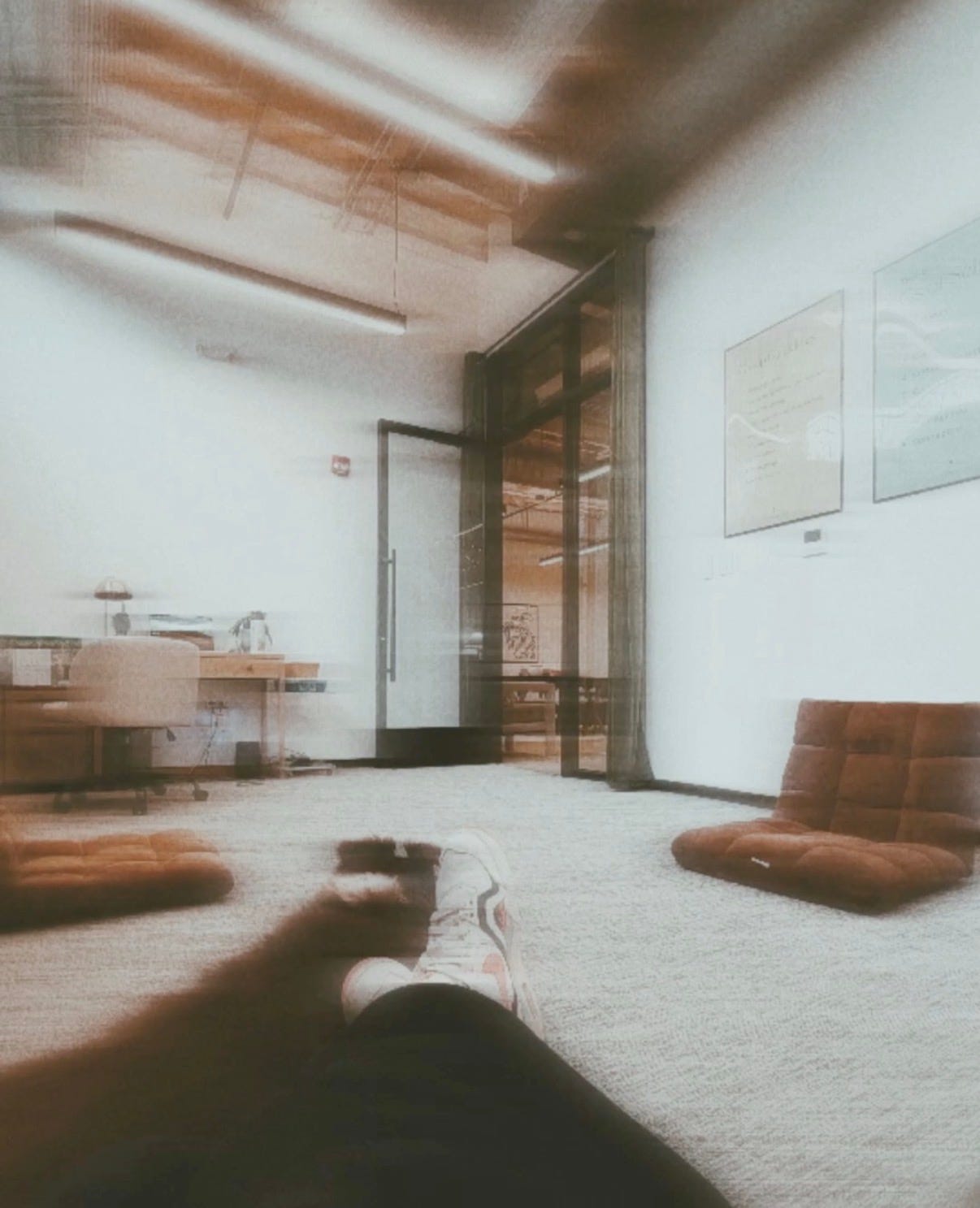
There is nothing particularly remarkable about this room. If you were to walk in without context, you might not notice it at all. Industrial ceiling, neutral carpet, chairs placed without ceremony, the ordinary quiet of a space that does not perform its importance. And yet, somehow, this room has held more truth than most of the places I have lived my life. It has become a container for something I could not access anywhere else, not because of anything inherent in its walls, but because of what is allowed to surface here. Spaces, I am learning, are not sacred because of what they are made of. They are sacred because of what is surrendered inside them. Because of the honesty that unfolds when there is finally nowhere left to perform, nowhere left to hide, nowhere left to run from yourself.
I came here believing that healing would arrive through words. Through insight. Through finally being able to explain myself into coherence. I have always trusted language. It has been one of the primary ways I have understood my life, organized my experiences, made meaning out of what otherwise felt disorienting or contradictory. But what surprises me most is how often healing arrives without language at all. It arrives through drawing stick figures. Through sitting on the floor and moving sand with my hands. Through forming scenes that make no logical sense to my conscious mind and yet feel deeply, unmistakably true somewhere beneath it. There are moments where I sit there and think, this is absurd, this cannot possibly be doing anything, and yet something in my body softens. Something shifts. Something that has been held in place for longer than I realized begins, quietly, to move.
There are moments where I do not have words, but my hands do. Moments where something surfaces that I did not consciously know was there, and yet I recognize it immediately. Not as something foreign, but as something familiar. Something that has been waiting patiently beneath the surface of a life that learned, very early on, how to keep going. How to function. How to adapt. How to stay intact no matter what was happening internally. And I am beginning to understand that these parts of me are not interruptions to healing. They are the very substance of it. They are not problems to solve. They are intelligences to listen to. They are younger versions of me who learned how to survive in ways that were brilliant and necessary and costly all at once.
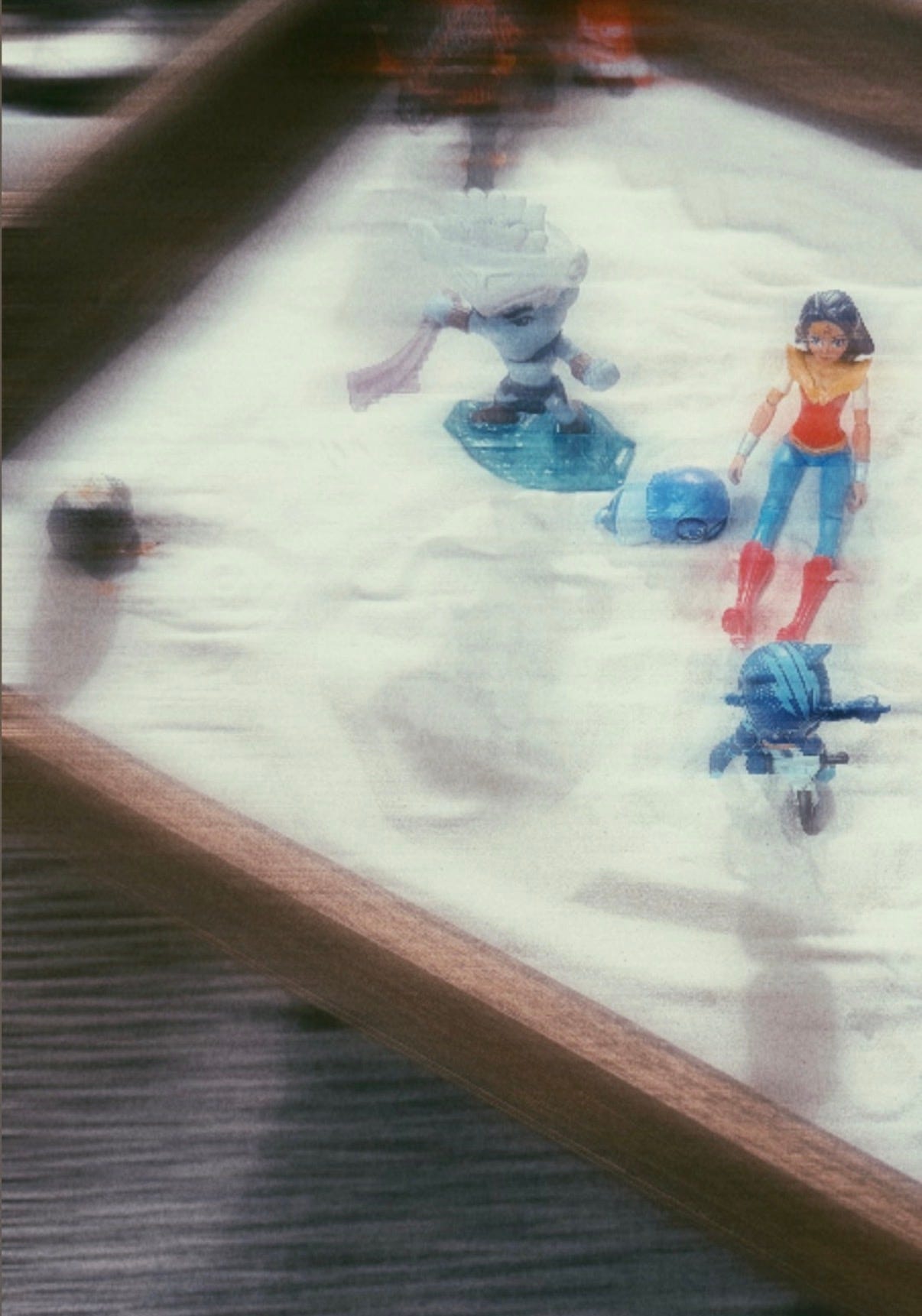
What is happening here is not the creation of someone new. It is the integration of someone who has been here all along. The adult self who has built a life and a voice and a framework, slowly turning toward the younger self who carried experiences that were never fully metabolized at the time. The nervous system that learned to anticipate. The body that learned to brace. The mind that learned to explain, to justify, to minimize, to keep everything appearing manageable even when something deeper was asking to be acknowledged. And now, piece by piece, without force, without urgency, those parts are being invited back into the present. Not to overwhelm it. Not to undo it. But to finally belong inside it.
For most of my life, I believed strength meant holding everything together. It meant not falling apart. It meant maintaining continuity, competence, forward motion. It meant being someone others could rely on, someone who could withstand, someone who could endure. And there is real strength in that. There is dignity in endurance. But there is another kind of strength that I am only now beginning to understand. The strength it takes to stop holding everything so tightly. The strength it takes to sit in uncertainty without rushing to resolve it. The strength it takes to allow pieces to surface without immediately trying to fix or organize them. The strength it takes to trust that exposure is not the same thing as destruction.
There is a quiet kind of trust forming here. Trust that when pieces are laid out honestly, they are not falling apart but falling into place. Trust that integration is not something I force into existence but something I allow to unfold. Trust that what feels like undoing is often the beginning of something more whole, more grounded, more true. I am not finished. I am not on the other side of healing, looking back at it from a distance. I am inside it. There are still pictures to draw. Still scenes forming. Still parts of myself surfacing in ways that surprise me. And somehow, that no longer feels like failure. It feels like participation. It feels like being alive inside my own life instead of managing it from a distance.
I used to think that unmanageable meant something had gone wrong. Now I see that sometimes unmanageable is simply the moment when the strategies that once protected you are no longer the ones that will carry you forward. It is not the end of strength. It is the invitation into a different kind of strength. One rooted not in control, but in integration. Not in performance, but in presence. Not in holding everything together alone, but in allowing yourself to be held while you become whole.
The pieces are not falling apart. They are finally coming back together.
No posts
Comments
Nothing yet. Say the first thing.
Sign in to join the conversation.