
Opening pages are notoriously tricky despite the number of webinars, critiques, and blog posts aimed at helping you get them just right. Think about it, you not only have a few precious pages to grab a reader, but you also have to set up the entire cause-and-effect trajectory of your novel or memoir. No pressure, right? Sheesh.
If you’re struggling with your opening pages or if you’ve gotten the dreaded feedback “I don’t think this is starting in the right place,” you’re in the right place. Read on!
A few years back, a writer came to me because she was stuck. She’d written the first 20,000 words of several different novels. Each time she got to the murky middle, she started to doubt the premise and went back to the opening to revise. And revise again. And again. Until she hated herself and the story, and shoved each one in a drawer in despair.
If you’re writing your initial draft, remember that you’re telling yourself the story. Give yourself permission to be messy, to play, to ignore plot holes and clunky sentences–you can fix those later, in revision.
If the planner in you is struggling with moving forward without at least a little bit of clarity, consider the following wisdom from Jennie Nash’s Blueprint for a Book:
“Think of the opening and closing scenes of your novel as bookends for the protagonist’s arc of change. They are intimately connected to each other—one can’t exist without the other. It’s an inhale and an exhale. A call and a response. A problem and a resolution. Tying these two scenes together is the first step in creating narrative drive.” Nash, Jennie. Blueprint for a Book: Build Your Novel from the Inside Out (p. 37).
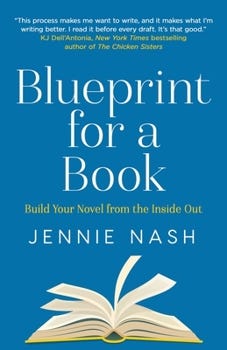
She suggests an exercise where you draft three separate sets of beginnings and endings, taking no more than two hours to do so. The beginning and ending should show, at least at a high level, the transformation journey of your main character. They should be related in some way that creates the sense of “bookends,” and the opening should reveal your character’s motivation at the beginning of that transformation journey.
So go ahead, write three different opening scenes. You don’t even have to pick your favorite, unless it’s obvious. But then move on. When you get to the end, you’ll have a much better idea of which one works.
I read a lot of opening pages in my line of work and a common mistake I see is choosing the highest stakes moment in the entire story and plonking it right onto page 1. A fiery car crash. A life-or-death literal cliffhanger scene. The divorce. The murder. The final battle.
Often, the writer will dip back in time right after this scene to show us how the character got there. While that is an effective structure for “e” shaped narratives like Cheryl Strayed’s Wild, where she famously chucks the boot she needs to survive hiking the Pacific Crest Trail off a cliff in the opening scene, Strayed got something right that many writers don’t. She chose a high-stakes moment to hook the readers, but it was not THE highest stake moment in the book.
If you start with the highest stakes moment, you have no way for stakes to build over the course of the story. And that’s a key thing that keeps readers turning pages.
Another flaw in this approach is that readers need to care about the character and want them to survive the high-stakes moment. And dropping readers straight into the explosion without at least a little orientation doesn’t give them the opportunity to care.
Choose a starting point that has tension and stakes, but from which those stakes can escalate as the character goes in pursuit of their story goal. Watching the tension and stakes escalate for a character the reader cares about makes a story unputdownable.
Writers often come to me with an opening chapter that includes all the things. World-building. Character backstory. Stakes. Action. The antagonist. The Inciting Incident. A cliff-hanger.
But instead of this creating an immersive opening to the story, it reads more like a frantic “throw in everything but the kitchen sink” checklist of everything they can think of that might make their opening compelling.
First pages are a great place to employ the adage “Less is more.” Yes, you want to immerse your reader, but often that is best achieved by going deep instead of going broad. Focus on a specific moment in time that reveals something compelling about your main character. Sprinkle in some world-building, but only a little. Allow yourself no more than one line of backstory and only if it creates a mystery. Skip the life-or-death car crash if it has no impact on the future story and is just there to grab attention.
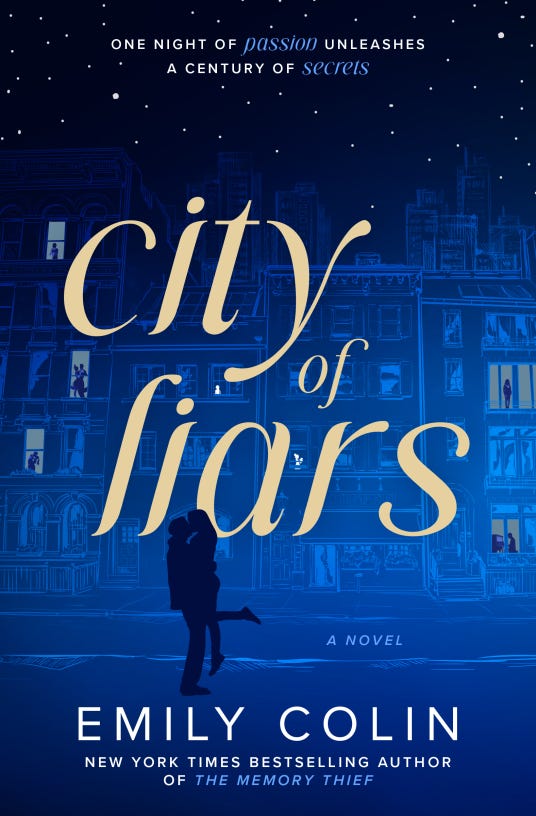
Consider the opening chapter of Emily Colin’s City of Liars. Our heroine, Liv, is on a blind date. Even though the date himself has no future role in the story (thank goodness!), this works as an opening scene because it reveals quite a few things about Liv’s character. First, that her parents, who set up the blind date, are meddlers. Second, that she has a close relationship with her spunky grandmother, who loaned her a sexy slip of a dress for the occasion. Third, that Liv has had bad luck in love in the past and is just about to give up on men entirely. Yeah, you can bet Liv is about to walk out on that blind date and right into her true love’s arms. And that’s why this opening scene works.
Yes, opening pages are vital to setting up your story. But they’ll also likely be the last thing you finalize during the revision process for all the reasons listed above. If you’ve written a complete draft, here are some additional tips to help you get those opening pages just right. If you haven’t finished your draft, though, feel free to save these tips for later. Remember, you cannot finalize your beginning until its bookend, the end, is written.
Your opening pages make a promise to the reader, both what the story’s about and that they’re in the hands of a confident storyteller. That means your opening pages need to evoke genre (a crime if you’re writing mystery, for example, an atmosphere of magic if you’re writing fantasy, or, as I mentioned above, the air of romance as our plucky heroine almost gives up right before meeting The One) in addition to introducing us to your main character and the challenges they face in an immersive scene.
If you’ve drafted your three sets of bookends and are still struggling with which one does your story justice, check out these additional resources on opening pages:
Have a prologue? Take the Prologue Test.
How to tell the difference between the hook and the inciting incident.
Six Literary Agents Share What They Look For
Where to Begin: Finding the True Start of Your Novel over on Gryphon Quill
Book coach Kerry Savage’s series, The Close Read, including the opening of The Lost Apothecary by Sarah Penner.
Still stuck on your opening pages? Consider joining the Revision Magicians! With a paid subscription, you’ll have the opportunity to join my monthly Q&A for pro help with a tricky opening scene and any other craft or business of writing questions you might have.
Comments
Nothing yet. Say the first thing.
Sign in to join the conversation.