
The brown mailbox of my grandma’s flat was mostly bills and thick newspapers, but every so often there would be an envelope with my name written by hand. Before I even looked at the return address, I already knew who it was from.
It’s one of my most precious recurring childhood memories. I remember catching a glimpse of the postwoman through the window and sprinting to the front door, waiting impatiently for that very distinctive sound: post dropping into the mailbox.
The second she left, I’d open the door and carefully gather the post, flipping through the pile in search of something meant only for me. And there it was: a thick envelope covered in my friend’s handwriting, sometimes decorated with a doodle or a sticker.
My heart would be so full.
When I was around thirteen, I got into snail mail. To this day, I have no idea where the obsession came from. Nobody in my family had penpals and none of my friends exchanged letters. Yet somehow I became completely enchanted by the idea.
Soon, letters started arriving regularly from all over the world: China, Canada, Australia, the United States, Norway, Antarctica, the list goes on. I don’t think this slow hobby taught me patience (neither did cross-stitch, to be fair), but it certainly introduced me to the world of beautiful analogue existence long before digital versus analogue became a trend.
Back then, penpals felt like tiny portals. Through envelopes, postcards and stories, my world became bigger than my hometown.
My grandmother, with whom I lived, occasionally received postcards from her elder son’s family — the mysterious relatives I’ve never seen. Along with lengthy phone calls on holidays, that was about the extent of correspondence in our family.
I, however, was persistently fascinated by letters.
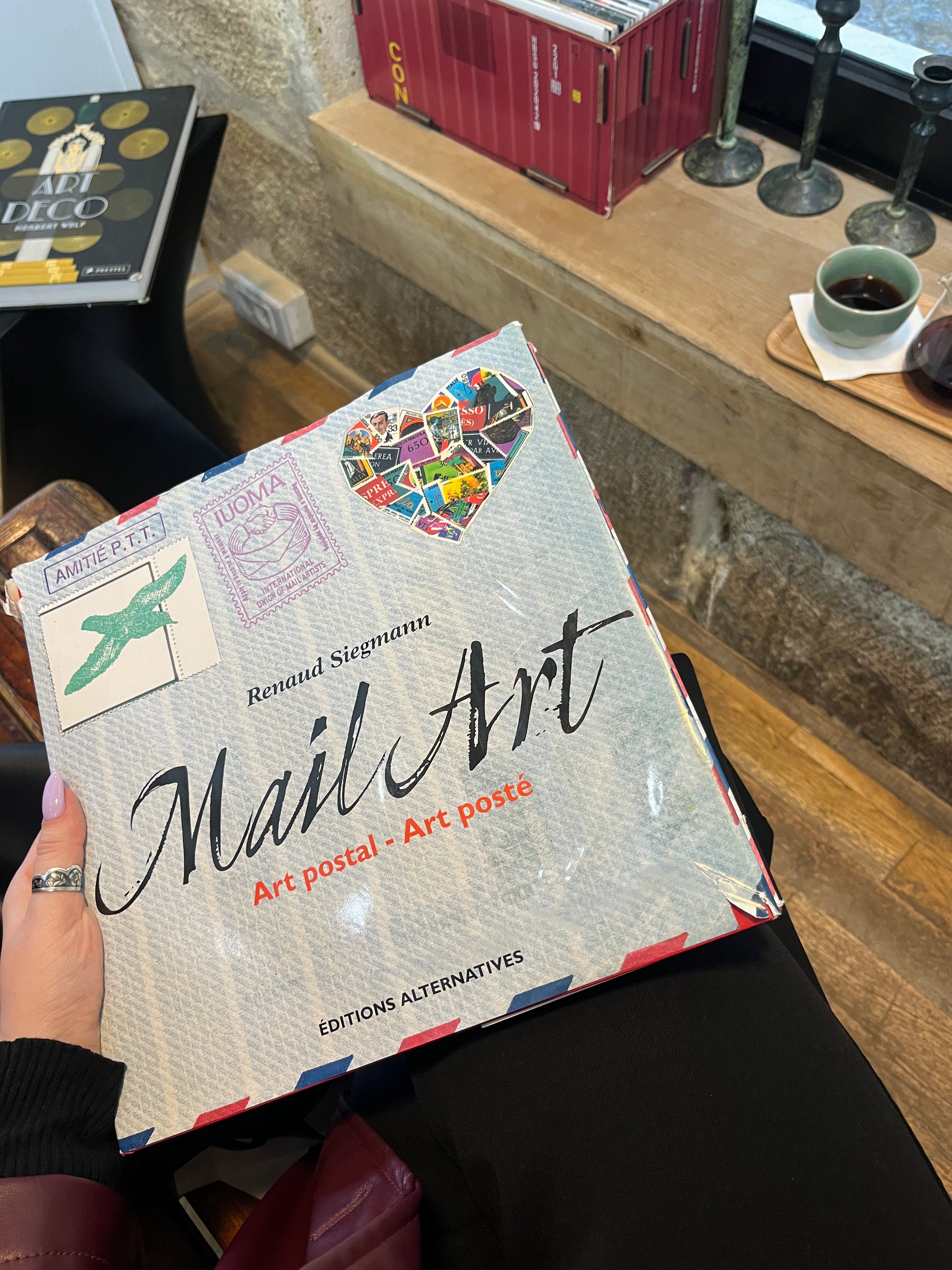
Looking back, I think they functioned as little signs of affection — a hand stretched across a distance, if you will. A physical reminder that someone was thinking about you and was willing to do something about it. I repeat: not just think, act.
They bought paper. They chose stamps. They found an envelope. They wrote. They walked to a post office. Seemingly small steps together bloomed into a beautiful, thoughtful gesture.
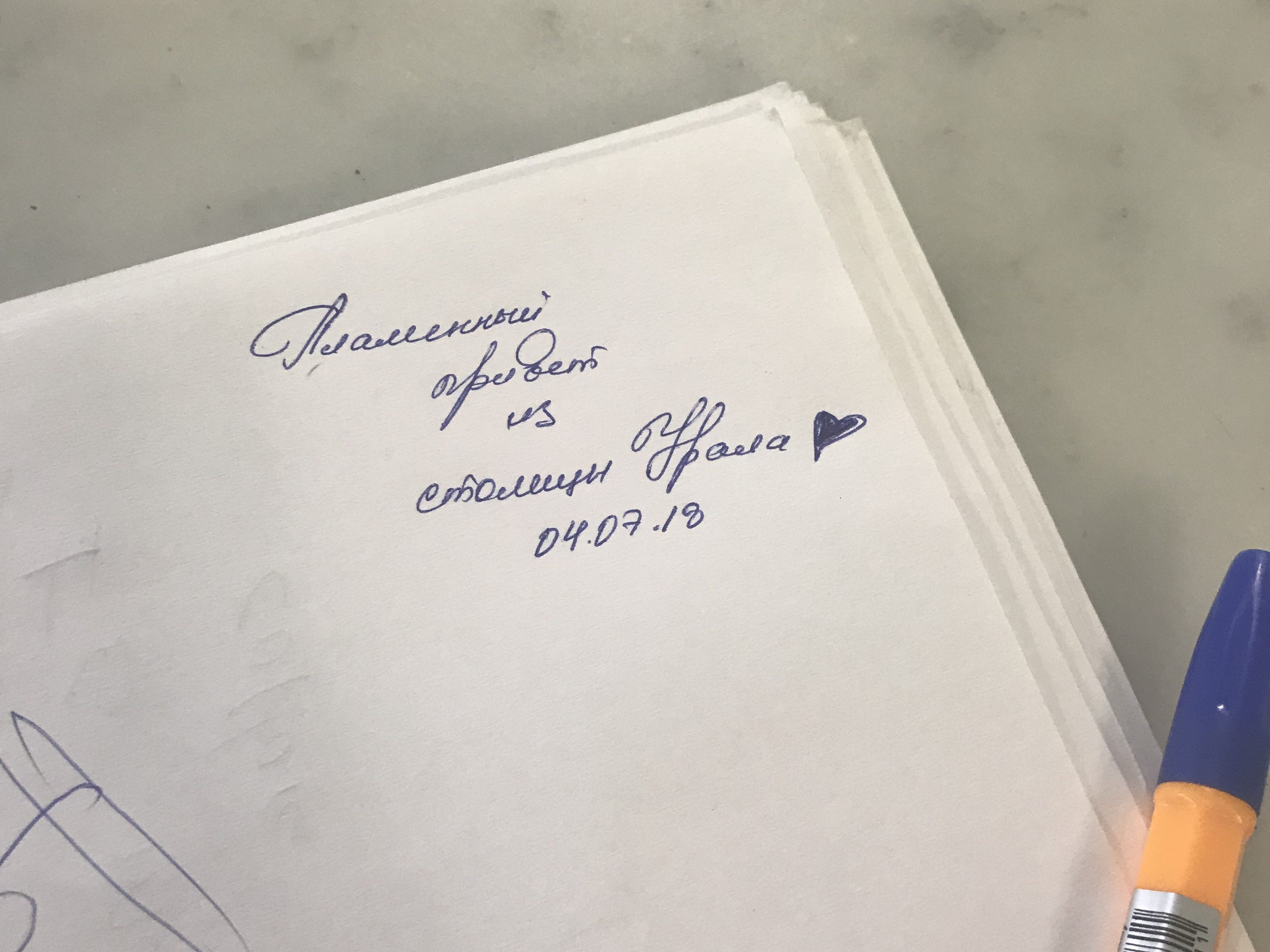
Even now, few things move me quite like seeing a friend’s handwriting that has crossed kilometres (sometimes, thousands of them!) to reach me. Not because I’m sentimental about stationery, but because handwriting contains traces of a person. You can almost picture them sitting at a desk, choosing words, crossing things out, pausing to think, switching pens when one runs out of ink.
You thought of me long enough to do all this!
Writing a letter was never instantaneous — since the beginning of time. Every letter contained waiting. You wrote without knowing exactly when the other person would read it. They replied without knowing when you would receive it. Weeks could pass between a question and an answer. On average, it took 4 weeks for a letter from abroad to appear in my mailbox.
And somehow, that never felt inconvenient.
Now, I don’t want to turn this into a “phones bad, letters good” manifesto.
Modern communication is wonderful.
I live in exile — without messengers, voice notes, video calls and group chats, staying close to my friends and family would be infinitely harder. I can react to a meme within seconds, hear my best friend’s latest life update before breakfast, and send photos from the other side of Europe in real time.
Communication has never been more abundant. Perhaps too abundant. There is rarely a moment in my day when there isn’t something waiting for my attention: a message to answer, a reel to react to, a voice note to listen to.
What feels rarer now is deliberateness.
Most communication today is designed to reduce friction — that’s largely a good thing. But that’s also precisely what the letters were! They required time and effort. Most importantly, they created something tangible.
Perhaps that’s why I keep seeing advertisements for snail mail clubs on Instagram. The premise is simple: subscribe, become a member, receive letters in your mailbox. It’s essentially a modern subscription service wrapped in the aesthetics of correspondence. I often come across an ad for this page, for example.
The fact that these businesses exist in the first place is telling. In a world where almost everything arrives instantly and disappears just as quickly, people seem to be craving objects again — who would’ve thought? We want something that doesn’t vanish when an app shuts down or a password is forgotten.
People aren’t nostalgic for stamps and envelopes. They’re nostalgic for tangible proof that somebody, somewhere, took the time.
Letters leave evidence — and that makes them special.
Evidence that someone thought about you. Evidence that they spent time on you. Hell, evidence that both of you existed in a particular moment.
Physicality
Handwriting reveals things that typed text cannot. Not because it contains some mystical truth, but because it carries personality. One friend of mine wrote in tiny, crowded paragraphs as if she was trying to squeeze every possible thought onto a single page. Another one decorated entire margins with watercolour sketches and little observations. Some letters were neat and composed, written in pencil on lined paper. Others looked rushed, excited, almost breathless.
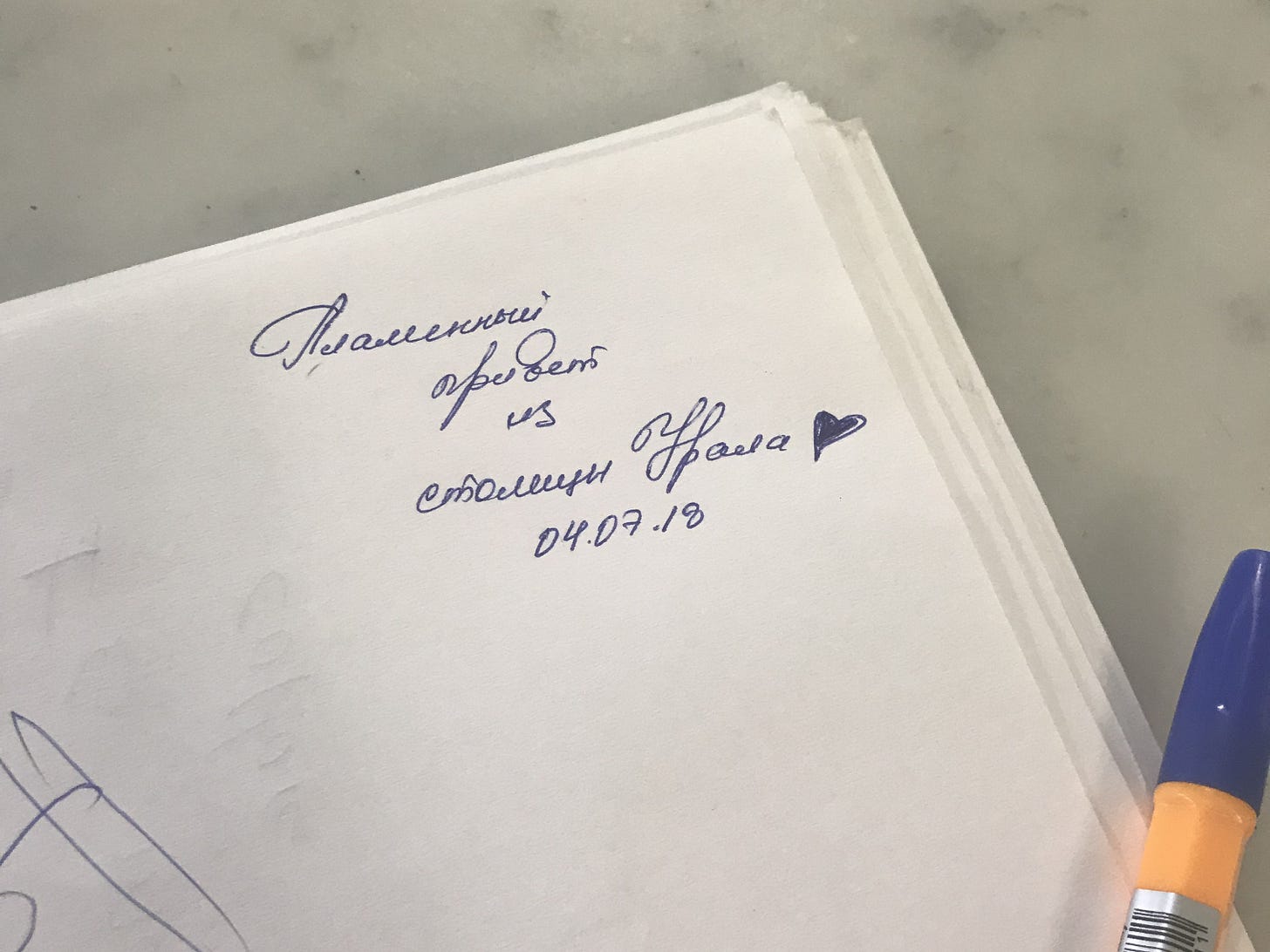
The paper itself is part of the message. Letters age, that’s unfortunate. The paper yellows slightly, ink fades, fold marks soften. The stickers that once seemed impossibly cool suddenly become artefacts of a very specific era…
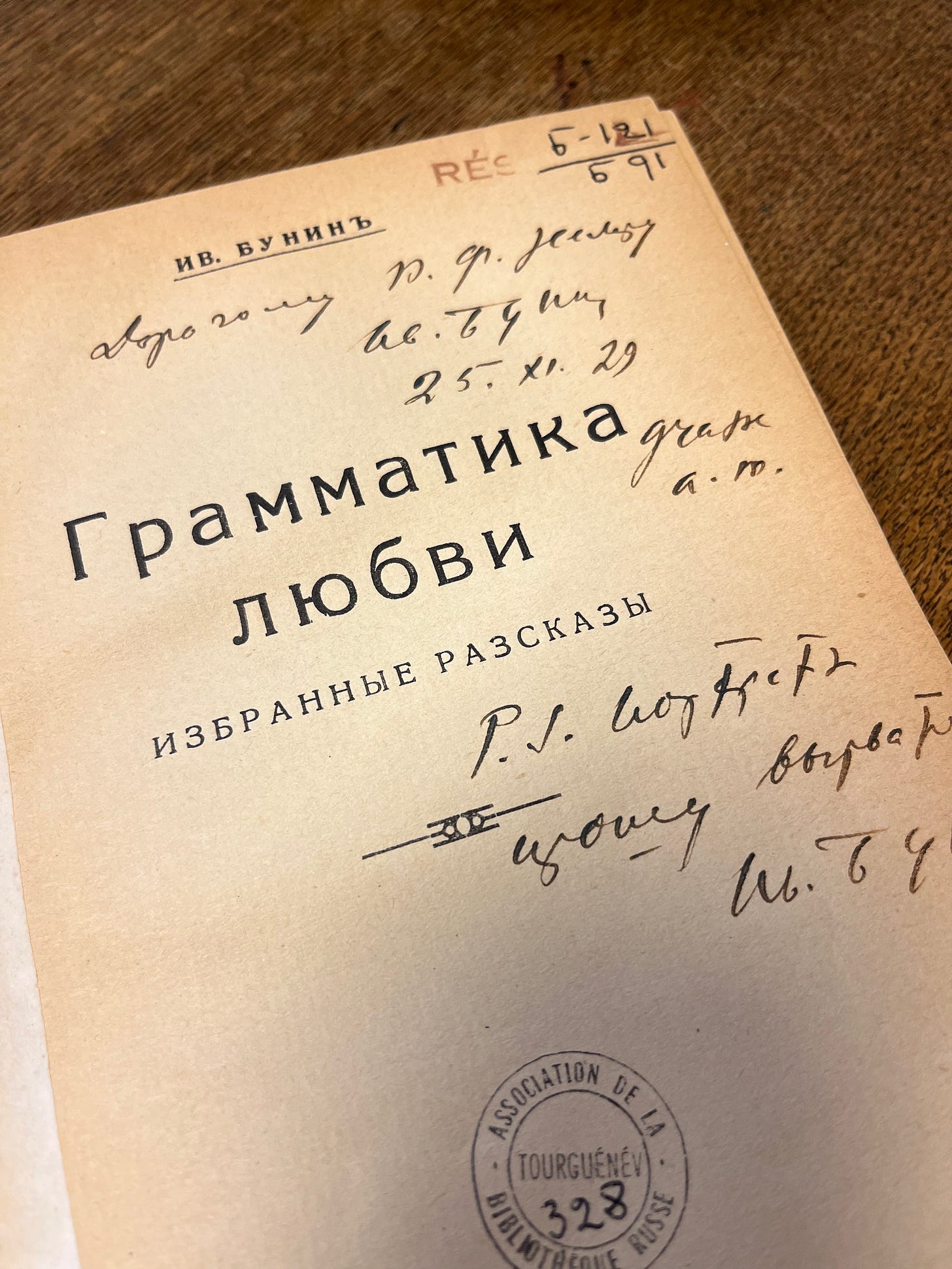
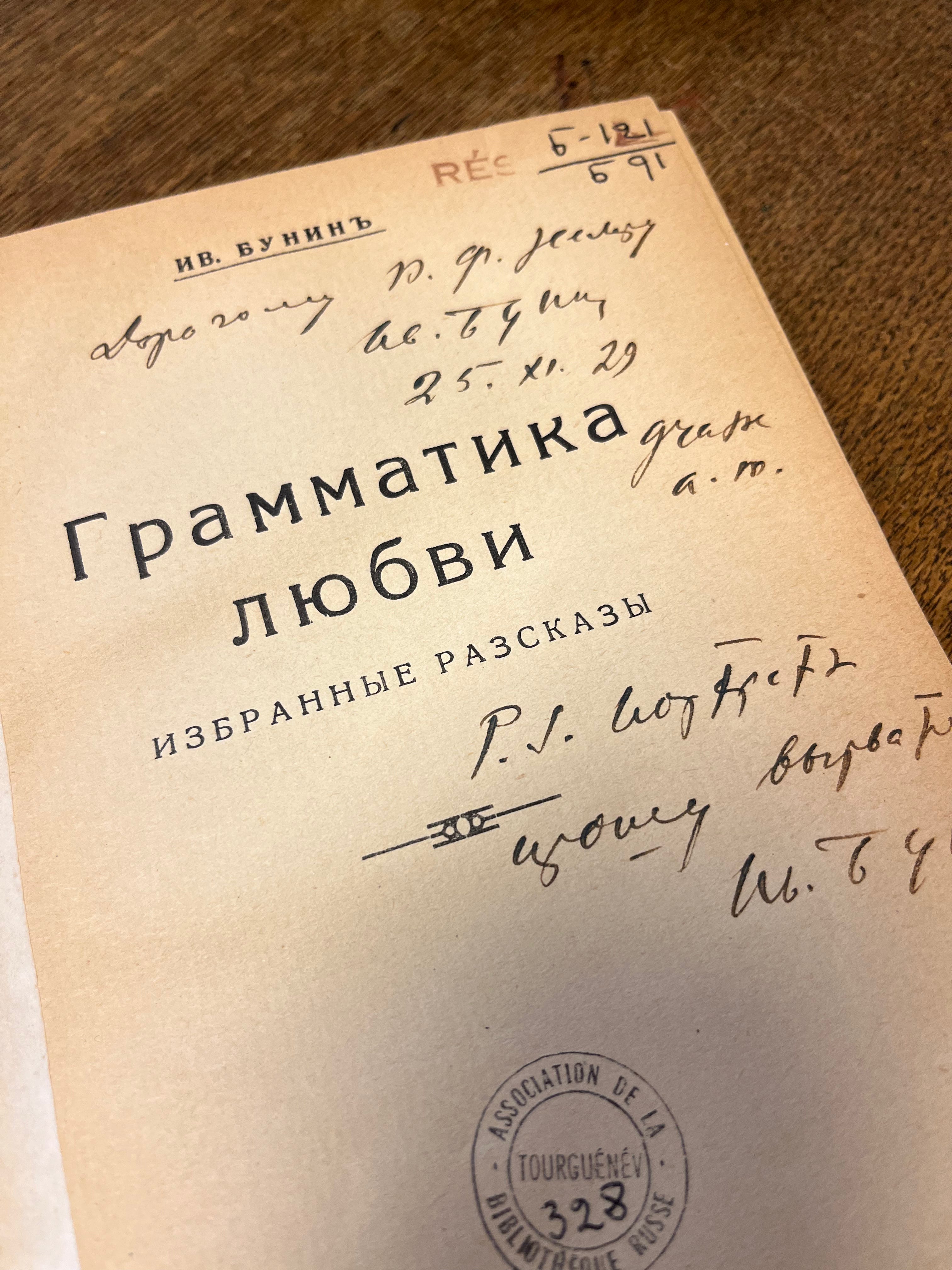
Russian writer and Nobel Prize laureate Ivan Bunin inscribing a book for a friend, 1929. One of my favourite finds while researching the history of Russian emigration in Paris, 2023. Letters occupy space in the world, as simple as it sounds. I keep mine in a box I decorated myself with collages, tape and stickers. Inside it are some of the most formative years of my life, preserved in paper form. And unlike most of my digital archives, I can touch them, smell them, hold them in my hands.
Effort
Without repeating myself too much — every letter is proof that somebody stopped whatever else they could have been doing and dedicated a portion of their day to you. That is rare!
Intention & Slowness
Oddly enough, the closest modern equivalent might be a voice note.
I love sending voice notes to close friends. They’re ideal when a story contains too many emotions, spicy details, too many side quests to fit into a text message.
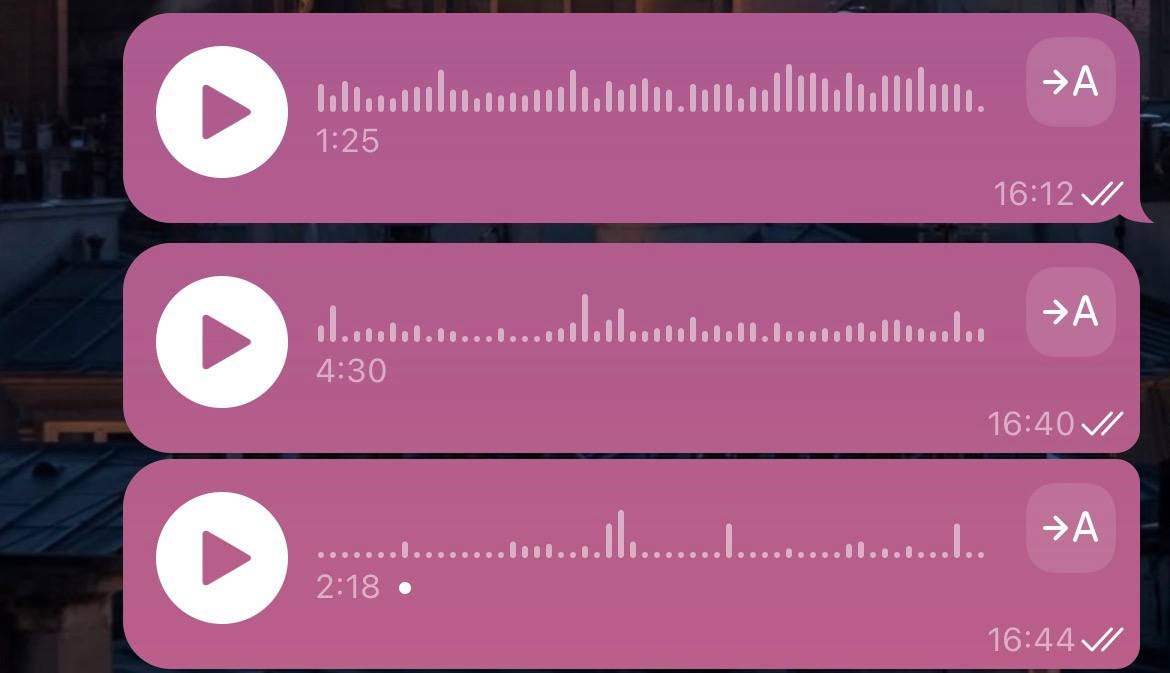
But even then, I try to be intentional by making little bullet points before recording. Otherwise a two-minute update turns into an eight-minute podcast (yet again).
Letters work similarly. You can’t tell everything, so you choose.
You share the most important things. A book you can’t stop thinking about. A film ticket tucked inside the envelope. A postcard from a trip. A pressed flower. A joke. Drop all this into a bottle and send it sailing across seven waters, hoping for the speed and a response sometime in the future.
Permanence
In 2020, I deleted a social media account that had accompanied me for around a decade. Along with it disappeared years of chats, saved photos, music, posts, screenshots and conversations.
I still don’t know exactly why I did it. Perhaps it was one of my recurring urges to disappear and never be found. What I do know is that I regret parts of it.
Important conversations are gone forever, voice messages from friends can never be replayed whenever I please, and certain versions of people only exist in my memory.
Letters, though — they survived! Decades of correspondence are still there, sitting in a box.
When I ask myself what those penpal friendships meant to me, I immediately think about the thrill, the warmth and the feeling of being chosen. A letter is attention made visible.
I shared my inner world with people across the country and across the globe. Somewhere out there, complete strangers knew about my tiny dramas, my favourite books, my ambitions, my bad jokes and my embarrassingly strong opinions.
There was something magical about that.
Most of my penpals came from dedicated penpal websites, whose visual design seemed frozen somewhere around 1998: Penpalworld, Interpals. Others came from fandom communities. We bonded over Harry Potter, Game of Thrones and whatever else had taken over our personalities at the time. I also loved exchanging letters with friends from a camp I went to each summer since 2011.
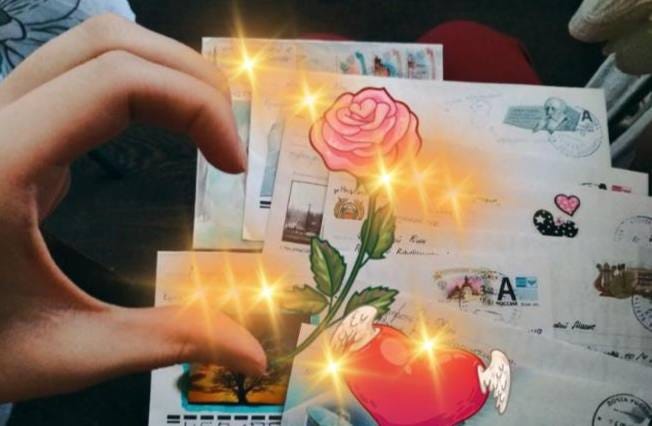
Some friendships lasted years, some — only a few letters, there were even some purely in the e-mail format — also fine, because all of them left traces. No bad or good connections, the love I gave is yours to keep!
The funniest thing, though, is that I even exchanged letters with people who lived in the same town as me.
The whole obsession actually started with my best friend at the time, who was in the year below me at school.
We would write letters to each other the night before, filling them with secrets, observations and silly doodles, then exchange them at school the next day during recess. The whole thing felt oddly ceremonial. I'd walk to her classroom with an envelope in hand, she would do the same, and we'd silently exchange letters like spies conducting a covert operation. No conversation. Just an envelope, a smile, a nod of acknowledgment, and off we went!
I had completely forgotten about those letters until I opened the box years later.
There they were — handmade blue envelopes, her Goofy painting (an inside joke), her perfectly round handwriting, comic strips.
A very formative friendship, preserved in paper long after we stopped being part of each other's lives.
Even my first boyfriend participated in the bit.
Knowing how much I loved letters, he once mailed me a necklace instead of simply handing it over in person. Inside the envelope was the gift, a printed meme and a handwritten note.
The local post office clerk apparently started seeing the pattern in his visits.
“So, another letter for Julie, huh?”
I imagine the poor guy trying to conduct business while being teased by nosy postal workers…
In 2020, I opened the box for the first time in years.
What I felt at that moment wasn’t nostalgia per se — in front of me, was the sheer amount of evidence. Evidence that I had been loved.
Inside were paintings, drawings, tea bags, bookmarks, postcards, dried flowers, little figurines, printed aesthetic pictures back when Pinterest still had to travel by post.
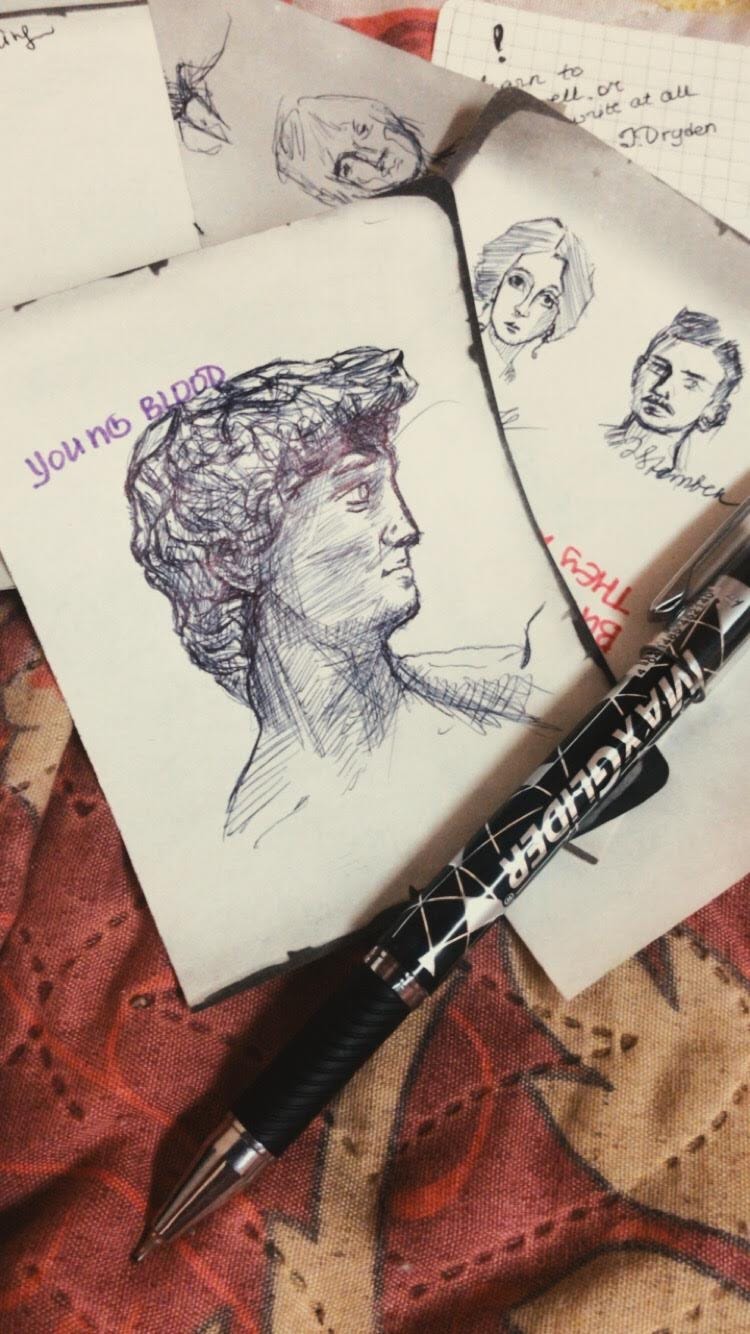
And words, of course — so many.
Travelling in time through those, I met younger versions of myself and people I had forgotten. I rediscovered connections so deep and otherworldly, I, honestly, was speechless.
Most of all, I encountered reminders of extraordinary kindness.
“I am thinking of your life with great gentleness.”
“You’re fifteen and already someone’s favourite poet.”
“Dear Julie, I’ve just received your letter. The weather is lovely...”
No social media archive has ever affected me quite like that.
Somewhere in a box in my grandmother’s flat, there are letters from people I no longer speak to: some moved away, some I simply outgrew, and a few of those, I barely remember.
Their handwriting, however, remains — the friendships themselves may have faded, the letters never did.
What surprised me most when I reopened that box six years ago, was the aforementioned evidence that, at various points in my life, people thought of me while standing in stationery shops. They picked postcards for me on holiday. They pressed flowers between pages, slid a bag of their favourite blueberry tea into the envelope. Printed beautiful photos thinking: “Julie might like it!”. They sat down at their desks and decided I was worth an hour of their afternoon.
The real allure of snail mail to me is that letters leave a trace. Years later, when memory starts negotiating with itself, and you sit on the floor of your overheated room, in front of your laptop on a summer night with a blank empty Google doc — they are still there to remind you: somebody, at one point, was thinking of you with great gentleness.
No posts
Comments
Nothing yet. Say the first thing.
Sign in to join the conversation.