
One of my childhood friends spent a year traveling with her family by boat around the Great Loop.
If you have never heard of the Great Loop, it is one of those adventures that sounds dreamy until you start thinking about everything that has to go right. It is a major waterway route that lets boaters travel through connected rivers, canals, lakes, bays, and coastal waters around the eastern part of North America.
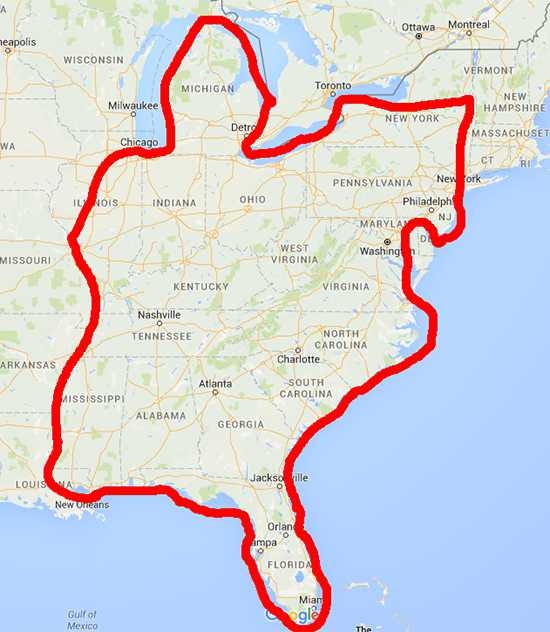
My husband and I had talked about doing that same trip years ago, so when my friend mentioned she was on the loop, I knew exactly what she was talking about. I could picture the route. I could picture the planning. I could picture the docks, the timing, the weather checks, the tight passages, and the decisions that probably have to be made every single day.
I had been following her journey on social media, watching the photos and updates as they moved from one stretch of water to the next. Then one day, I noticed she was coming up the Chesapeake Bay.
And I realized something.
She was going to pass right in front of my house.
I live on the Chesapeake Bay, and I have always been fascinated by the boats and massive ships that pass by. Some days, it is a quiet little leisure boat drifting along. Other days, a huge commercial ship moves through the water like a floating building.
I texted her to see if they wanted to stop by because I have a dock right outside my house.

That was when the practical side of the journey became very real. It was not just a question of whether they wanted to stop. It was a question of whether they could safely stop.
Because I live on a tidal river, the dock nearby can get shallow. Her boat may have been fine at one moment, but if the tide shifted, the water could become too shallow for her to safely stay there.
Because I am a data geek, I also have a marine traffic app on my phone. When a ship goes by, I can open the app and see public information about it. I can see the name of the vessel, where it is coming from, where it is going, what country it is from, its route, and all kinds of other details.
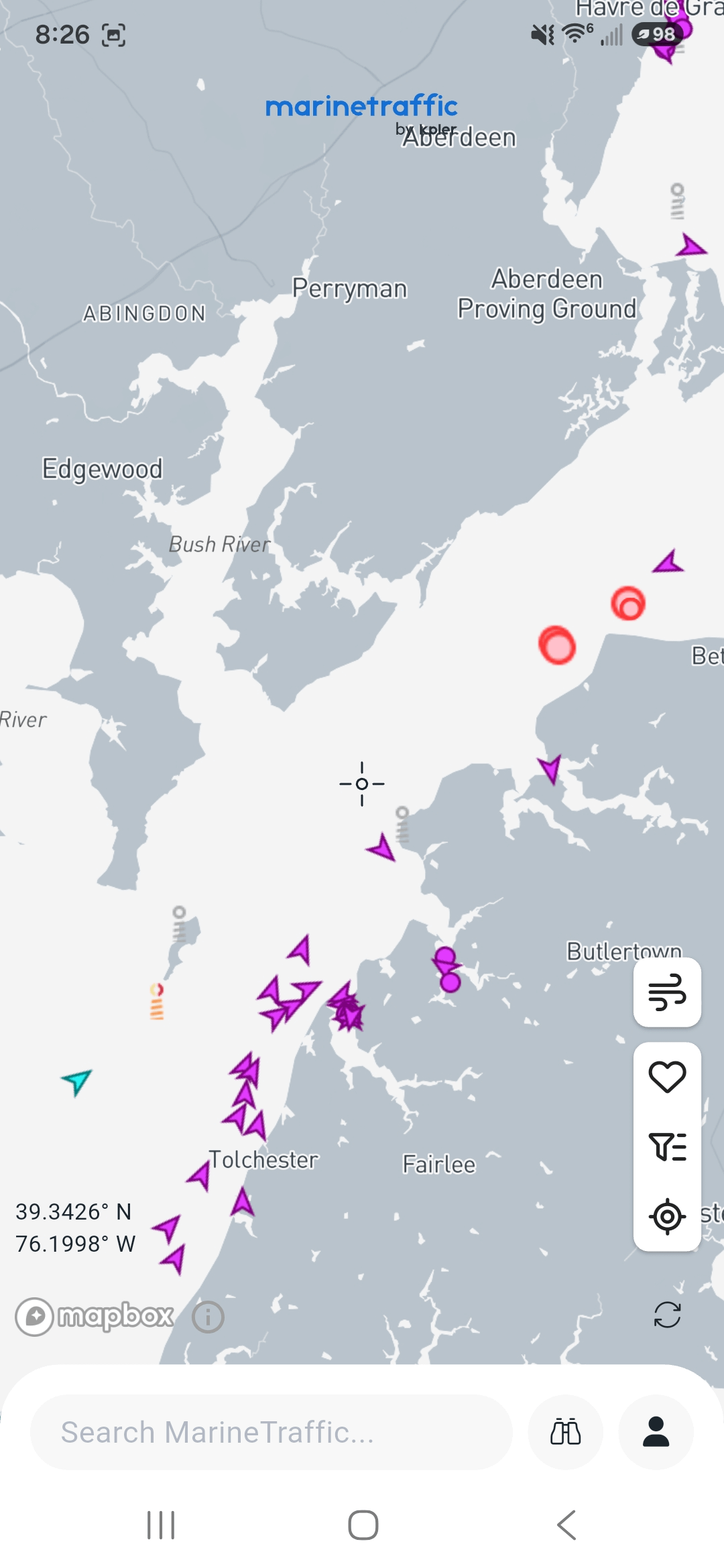
So when I realized my friend’s boat would be coming up the same waterway right in front of my house, I opened the app to see if I could find her.
And I did.
Within moments, I could see information about her boat. I could see her location. I could see her route. I could see that someone I knew was moving through the water near my home before I could even see the boat with my own eyes.
So naturally, I sent her another message.
“I can see you.”
Then I sent her screenshots of the public information available about her boat.
I think it may have freaked her out a little.
It is a little unnerving when you realize how much data is available about us.
We all know it exists. We know our phones, calendars, search history, documents, location data, apps, websites, and digital tools are constantly creating signals. We know there is information moving around us all the time.
But knowing that in theory is different from seeing it in real life.
It feels different when you open a map and realize you can see the exact boat your friend is traveling on. It feels different when you can see her location before you can physically see her. It feels different when the invisible information suddenly becomes visible.
That was the moment data stopped feeling abstract.
It became real.
And as I looked at her boat on the app, I kept thinking about business.
Because when you are on a journey, the information around you can be incredibly valuable.
But only if you know it is there.
And only if you know how to interpret it.
The marine traffic app was fascinating, but it was not going to make or break my friend’s trip.
It gave me a view of where she was. It showed me where she was headed. It let me see her movement through the water. But it was not the only information she needed to navigate safely.
There were other signals that mattered much more.
She needed to understand the weather. She needed to understand the tides. She needed to know the water depth. She needed to know where she could dock safely. She needed to know whether her boat could fit in a certain area. She needed to know whether the water would still be deep enough an hour later.
That last part became very real when we talked about whether she could stop near my house.
The dock was right outside my house, which sounded simple at first. But on the water, simple is not always safe. A boat can be fine at one moment and at risk later if the tide changes and the depth drops.
That kind of information matters when you are on the water.
It can keep you from running aground. It can keep you from heading into a storm. It can keep you from making a decision that seems fine in the moment but creates a serious problem later.
The same thing is true in business.
Every business owner is on a journey.
You have a destination in mind. You know the kind of business you want to build. You know the revenue you want to create. You know the freedom you want to feel. You know the impact you want to make. You know the growth you are working so hard to reach.
But business growth rarely moves in a straight line.
Markets shift. Customers change. Buying behavior changes. Offers that used to convert easily may start to feel harder to sell. Momentum can feel effortless in one season and heavy in the next.
There are moments when you feel like you are headed in the right direction. There are other moments when you quietly wonder if the business is drifting off course.
That question matters.
Because your business is constantly giving you information.
It is showing you where you are gaining speed. It is showing you where you are leaking revenue. It is showing you where customers are dropping off. It is showing you where profit is being lost. It is showing you where friction is building. It is showing you where you may need to adjust course before the cost gets bigger.
The question is not whether the data exists.
The question is whether you know how to read it.
Your business has data everywhere.
It has lead data, customer data, revenue data, profit data, sales data, retention data, website data, email data, pipeline data, offer data, team data, and delivery data.
There is no shortage of information.
But having data is not the same as having direction.
That is where many business owners get stuck. They are surrounded by dashboards, reports, spreadsheets, analytics, and metrics, but they still do not know what those numbers are actually trying to tell them.
They can see the numbers, but they cannot always see the meaning.
They can see activity, but they cannot always see whether it is creating growth.
They can see movement, but they cannot always tell whether they are moving toward the destination they actually want.
When data is not interpreted clearly, it becomes noise.
And noise does not help you adjust course. Noise does not help you avoid the storm. Noise does not help you see the shallow water. Noise does not help you know whether the business is healthy, profitable, and moving in the right direction.
Data only becomes powerful when it becomes insight.
On the water, running aground can happen when the depth changes and you do not realize it in time.
In business, running aground can happen the same way.
You may keep pushing forward, assuming everything is fine, until suddenly you realize the business is stuck. You may be generating leads, but they are not turning into enough clients. You may be booking clients, but profit is not growing. You may be increasing visibility, but the right buyers are not converting. You may be filling your calendar, but the business is becoming more chaotic instead of more profitable.
Those are signs that something beneath the surface needs attention.
The danger is that many business owners do not notice the shallow water until they are already stuck.
They do not see the revenue leak until it has cost them months of growth. They do not see the retention problem until customers have already left. They do not see the profit issue until the business is busier but not healthier.
They do not see the storm coming until they are already in it.
One of the biggest mistakes business owners make is paying too much attention to vanity metrics.
Vanity metrics may look impressive, but they do not always tell you whether your business is actually healthy.
You may have more followers, more views, more clicks, more website traffic, more email subscribers, or more people in your audience. Those numbers can matter, but only if they are connected to something real.
They need to connect to revenue, profit, retention, customer lifetime value, offer performance, lead conversion, follow-up effectiveness, or high-quality customer growth.
A business can look visible and still be leaking revenue. A business can have more traffic and still have weak conversion. A business can be busy and still have poor profitability. A business can appear to be growing and still become more fragile underneath the surface.
The real question is not, “Are the numbers going up?”
The better question is, “Are the right numbers moving the business in the right direction?”
That is why business insight matters.
It helps you separate the numbers that look good from the numbers that actually make or break the business.
Business revenue navigation is the process of using revenue insights, customer data, profitability signals, and key business patterns to understand where your business is headed and what needs to change before you drift off course.
It helps business owners see what is working, what is leaking, what is creating friction, what needs attention, and which next step will create the highest-value growth.
The goal is not to obsess over every number.
The goal is to know which numbers matter, what they mean, and what action to take next.
Because the most important business signals are not always the loudest ones.
They may show up in your lead conversion rate. They may show up in your profit margin. They may show up in your customer retention. They may show up in your sales cycle length. They may show up in your follow-up process. They may show up in your offer performance. They may show up in your customer journey friction.
When these signals are clear, business owners can make better decisions.
When these signals are ignored, the business may keep moving, but it may not be moving toward the right destination.
Most business owners do not need more data.
They need better interpretation.
They do not need to spend hours in spreadsheets every week. They do not need to sit through long financial meetings that leave them more overwhelmed than clear. They do not need another dashboard filled with numbers that no one has translated into action.
They need to know the “so what.”
So what does this number mean? So what is this pattern telling us? So what needs attention now? So what is urgent? So what can wait? So what is the best next step? So what decision will actually move the business forward?
That is the difference between data and insight.
Data tells you what is happening.
Insight tells you what it means and what to do next.
I have spent years working with Fortune 500 companies, pharmaceutical companies, agencies, and large organizations.
What has always amazed me is that the size of the business does not automatically mean the business knows what is working.
I have seen massive organizations with endless dashboards, reports, and marketing metrics that still did not have a clear understanding of what was actually happening inside the business.
They had data. They had reports. They had dashboards. They had teams of smart people looking at the numbers.
But they did not always have clear insight.
That is not just a big-company problem. It happens in businesses of every size.
Small businesses, growing businesses, established businesses, expert-led businesses, and billion-dollar organizations often miss the same thing. They do not always know what is working, what is not working, what needs to change, or where the next best opportunity is hiding.
That is exactly why I created the Elevate Revenue Engine.
The Elevate Revenue Engine is a private revenue insight system that helps business owners read the critical signals inside their business, identify hidden revenue leaks, and understand what actions will create the highest-value growth.
It translates business data into clear direction so you can see what is working, what is leaking, what needs attention, and where to adjust course.
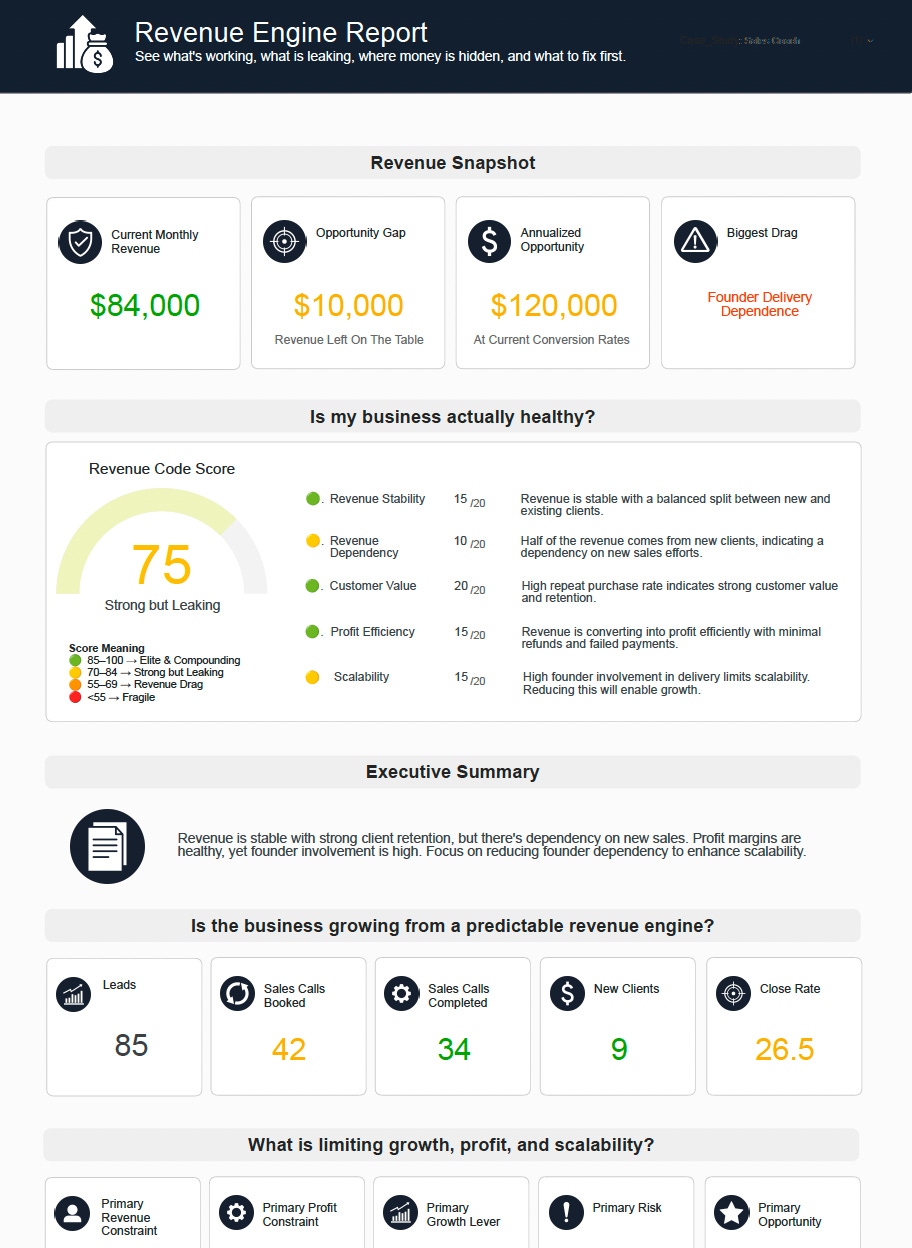
Instead of overwhelming you with vanity metrics or complicated reporting, the Elevate Revenue Engine helps you see the health of your business in a simple, visual, and actionable way.
It is designed to help business owners see the critical signals inside their business quickly and clearly. Instead of spending hours trying to interpret scattered data, the Revenue Engine gives you a simple view of what is happening in your business, where you are headed, and what needs attention.
It helps you see whether your business is healthy, whether something is questionable, or whether something is urgent.
The goal is to make business insight simple enough that you can understand what is happening without needing to memorize benchmarks, decode complicated reports, or spend hours trying to figure out what the numbers mean.
One of the biggest problems with traditional business analysis is that it takes too much time.
I spoke with one client who had been spending two hours every week reviewing financial analysis. That is a lot of time, especially when the goal is simply to understand what is happening and what needs to be done next.
With the Revenue Engine, that process became dramatically simpler.
Instead of spending hours trying to figure out the meaning behind the numbers, they could get a clear view of the business in less than fifteen minutes.
That matters because business owners do not need more complexity.
They need clarity. They need speed. They need confidence. They need a way to see the most important information without getting buried in the details.
Your business is already giving you signals.
It is showing you where the water is getting shallow. It is showing you where the storm may be building. It is showing you where you are gaining speed. It is showing you where you are drifting. It is showing you where the destination is still possible, but the course may need to change.
You do not need to love data.
You do not even need to like data.
But you do need to know what the critical signals mean if you want to grow with clarity, confidence, and direction.
When you can see where your business is headed, you can adjust before the cost becomes too high. You can stop guessing. You can stop drifting. You can stop reacting.
You can start leading your business with insight.
And that is how growth becomes easier to navigate.
See the hidden revenue opportunities already inside your business.
The Elevate Revenue Engine helps you read the critical business signals inside your business, identify hidden revenue leaks, and understand which actions will create the highest-value growth.
Request your private revenue insight and see what your business has been trying to tell you.

PS: If this gave you a little more clarity today, would you restack it so another founder can find it too?
I believe there’s a reason you’re here today. Sometimes the right words find us right when we need them.
And there may be someone in your world who is carrying the same pressure, asking the same questions, or trying to make sense of what their business is showing them.
Your share could help them see something they needed today too.
So appreciate you! 🤍
No posts
Comments
Nothing yet. Say the first thing.
Sign in to join the conversation.