
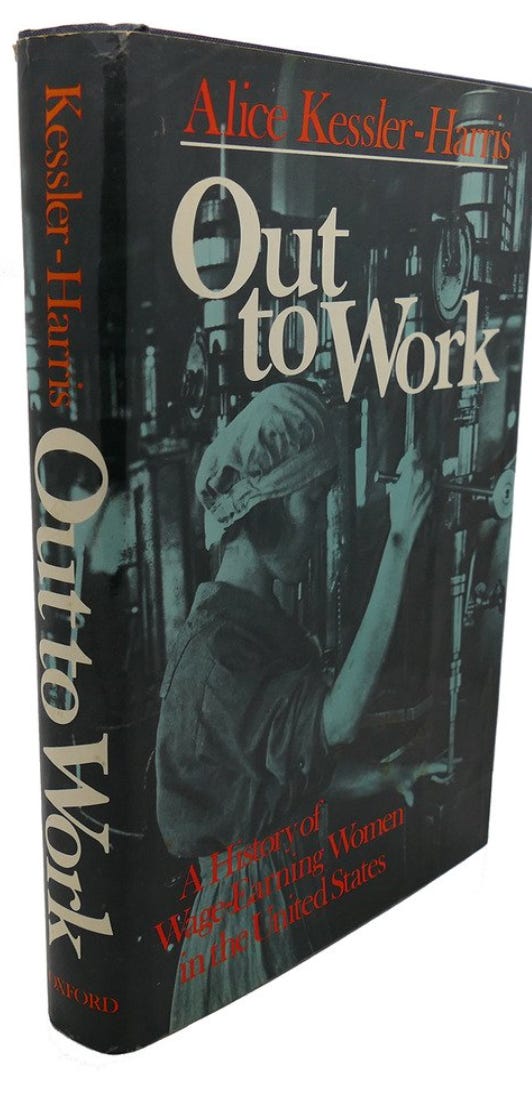
One of the most powerful myths of American history is that women have not always been integral to the capitalist economy. At most, the traditional textbook acknowledges that women temporarily entered the workforce during WWII, before employment surged in the 1970s.
Alice Kessler-Harris’ classic book, Out to Work, shattered this myth by demonstrating how Americans bought into the cultural ideal of the male-earner, single-income household. In her eye-opening account, essential reading for graduate students like me in the 1990s, Kessler-Harris documented the long history of working women dating back to the colonial era. The breadth of their contributions, whether it was in the domestic sphere or on the factory floor, was expansive. Throughout industrialization, businesses sought out female employees to fill the growing need for labor. During the Progressive Era, she argues, protective labor laws reinforced rather than dismantled differential workplace treatment. One key period, according to Kessler-Harris, was the 1920s, when there was a broader embrace of the idea that marriage and work did not have to be mutually exclusive. During the New Deal, policies were important in improving conditions through workplace protections and benefits. By tracing this history, Kessler-Harris challenged the conventional argument that WWII was transformative by showing that women had already been joining the workforce in growing numbers by that point.
Comments
Nothing yet. Say the first thing.
Sign in to join the conversation.