
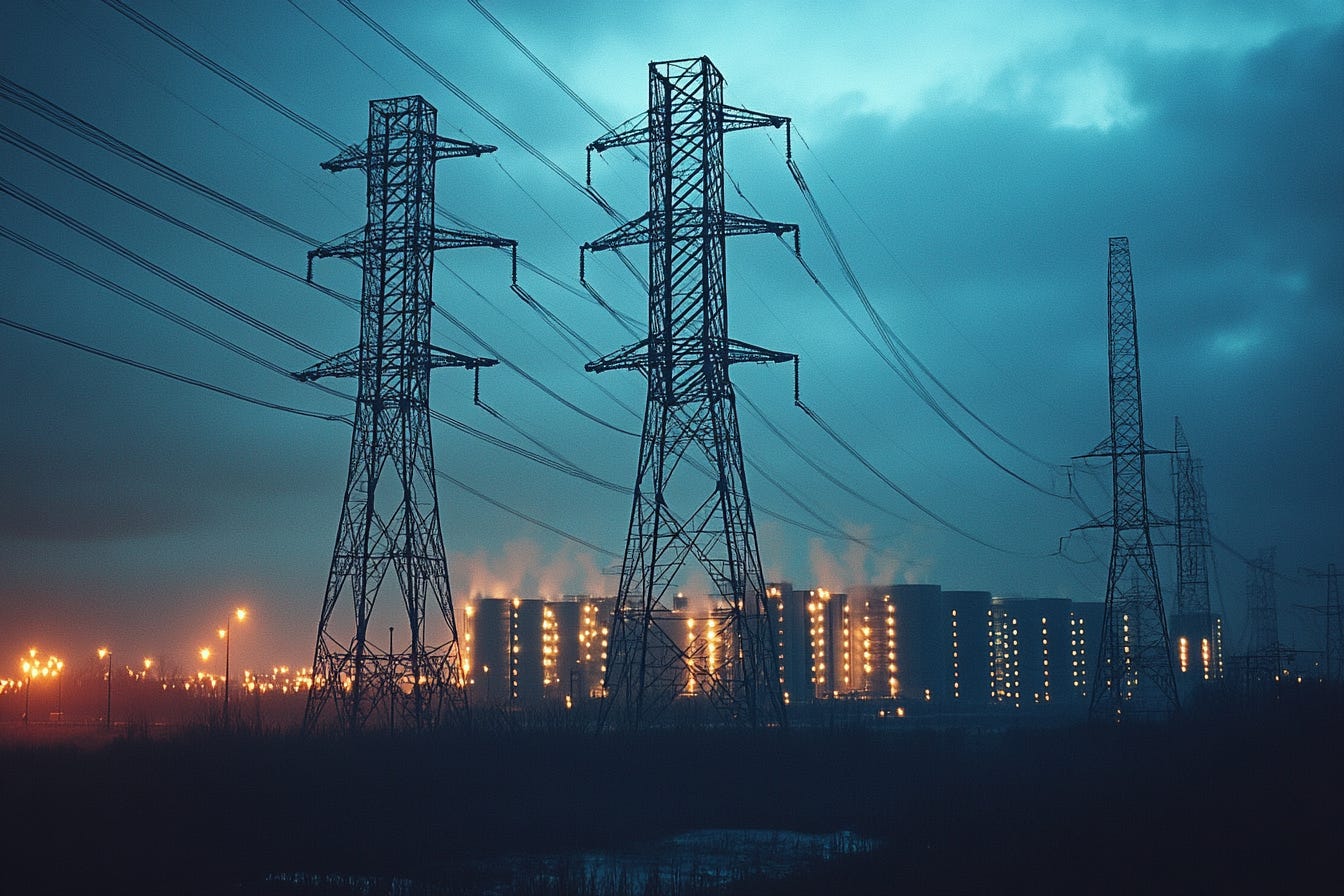
In July, the technology sector experienced severe turbulence: chipmakers and the AI hardware index shed over 20% of their capitalization. Wall Street immediately began warning of a popped AI bubble.
August earnings reports from Microsoft and Amazon temporarily halted the panic. Microsoft Cloud revenue reached $59.3 billion, while AWS posted 37% growth to $42.2 billion. Stock prices surged upward once again.
Mainstream financial media present this rebound as undeniable proof of AI monetization. Retail investors are eagerly buying nominal record highs.
This is not an economic breakthrough. This is a balance sheet audit.
While retail capital rushes in on the bounce, the underlying free cash flow of tech giants is being turned to ash under the pressure of historic capital expenditures.
(ad)
The downward slide has begun.
According to data attributed to Bloomberg, the U.S. dollar's share of global reserves has recently fallen to among the lowest levels this century.

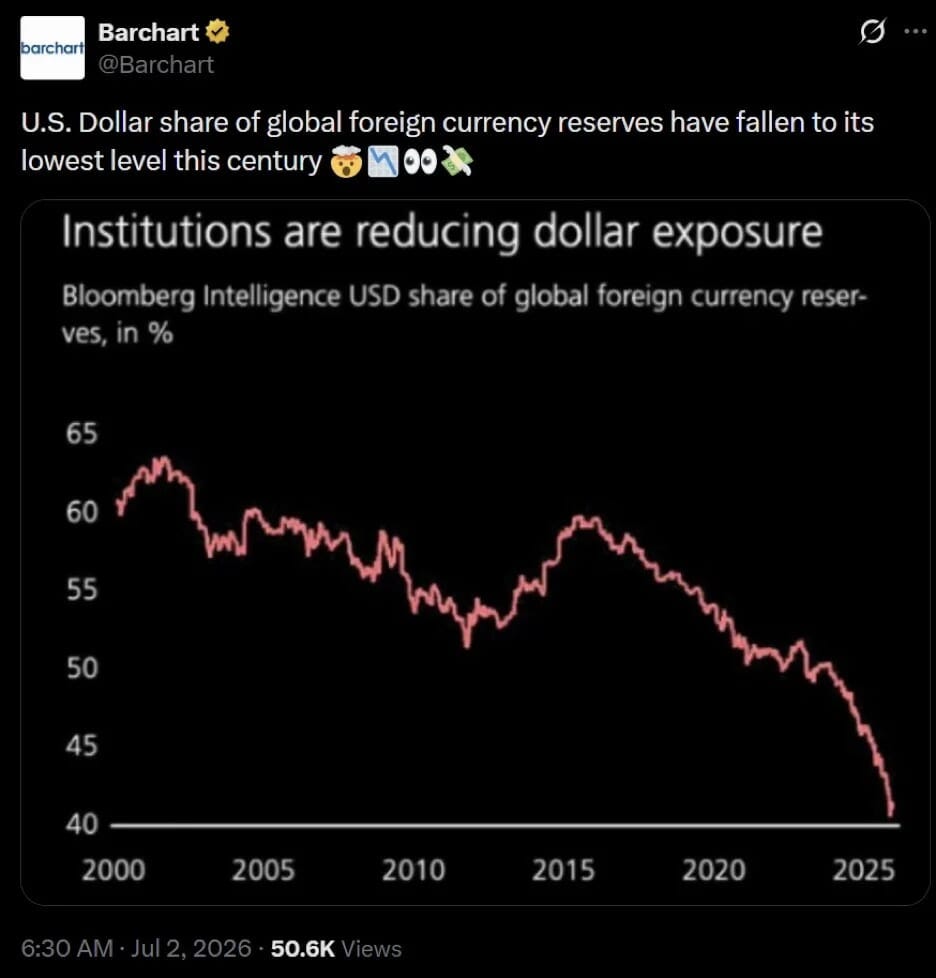
While everyone is distracted by hyped-up IPOs and the AI bubble, the world is, in my view, moving away from the dollar.
And I believe the consequences for the country – and your financial security – are extremely serious.
That's why, the promotion asserts, President Trump has signed executive order 14241, which the author characterizes as a step toward the first full reset of the American dollar in half a century.
The author suggests this could mean every dollar you have saved and invested… every good, every service, every asset… may eventually be repriced against a new monetary anchor.
It's not gold, or crypto – but something far more unexpected. An asset so fiercely contested and so critical that Vladimir Putin once claimed whoever controls it "will become the leader of the world"
Nobody can tell you exactly how this reset will play out.
But I do know that the last time America changed its money like this – half a century ago – it split the country in two. Between the folks who understood what was happening and responded accordingly – and those who got brutally left behind.
That line is being drawn again. And what you do with your money in the months ahead could decide which side you end up on.
I'd like to show you which investments could thrive – and which could be the most dangerous – inside Trump's new monetary order.

Netanyahu’s “Complete Disarmament”: The $36 Trillion debt trap in disguise
The 2021 Repeat: Why Record S&P 500 Earnings Growth Is an Accounting Illusion
When hyperscalers accelerate capital expenditures (Capex) to astronomical scales, the financial transmission mechanism follows a strict physical chain:
1. Hyperscaler Acceleration: Hyperscalers ramp up annual Capex to $190+ billion to procure specialized accelerators and build data centers.
2. Equipment Revenues: Purchase orders flow directly to chipmakers and hardware suppliers, inflating their quarterly top-line revenue.
3. Cloud Rentals: Cloud divisions (AWS, Azure) record surge revenue by renting out these newly deployed computing clusters.
4. FCF Blindness: Wall Street bids up equity valuations while ignoring the accompanying collapse in organic Free Cash Flow.
5. Debt Financing: Infrastructure expansion is funded by issuing corporate debt and burning liquidity reserves.
6. Retail Trapped: Retail capital enters at peak valuations, absorbing the long-term hardware depreciation risk.
The Nominal Ledger: Top-Line Revenue vs. Organic Cash Flow
AWS Q2 Revenue: Official Narrative: $42.2 billion (+37% YoY) | Archive Audit: Margin expansion driven by inflated GPU rental rates and debt.
Microsoft Annual Capex: Official Narrative: $190 billion projected roadmap | Archive Audit: Free Cash Flow contracted by 22% quarter-over-quarter.
Amazon Operating Cash: Official Narrative: $161.4 billion operational flow | Archive Audit: Net outflow of $7.6 billion once equipment Capex is deducted.
AI Hardware Index: Official Narrative: 20% recovery from July lows | Archive Audit: Valuations calculated on vendor revenue, not software ROI.
(ad)
Scott Bessent went on record before anyone was paying attention.

“A new economic reordering.” His words. Your retirement. A direct line most Americans haven’t drawn yet. There’s an IRS-approved position sitting inside the retirement account you already own. It was designed exactly for a moment like this. Bessent already told you what that moment looks like.
Reagan Gold Group does not provide financial, legal, or tax advice. This information is for educational purposes only and should not be considered investment advice. All investments carry risk, including loss of principal. Past performance is not indicative of future results. Consult your licensed financial advisor before making investment decisions.
The Bait: Strong quarterly reports from Big Tech. Financial outlets claim that AWS and Azure revenue proves rapid AI monetization.
The Friction: Revenue growth is achieved by draining operational cash into hardware that depreciates within 3 to 5 years. Power, memory, and facility costs expand faster than net margins.
The Extraction: Corporations fund the AI race by issuing bonds and eroding Free Cash Flow. Investors receive high nominal equity values with severely compromised balance sheet resilience.
In the 1850s, investors poured millions into railroad construction. Equipment manufacturers and iron suppliers reaped massive profits. Yet most original railroad operators faced bankruptcy due to overbuilt capacity.
In 1999, telecom giants laid millions of miles of dark fiber optic cable. Cisco and Global Crossing surged on equipment sales reports. When capital expenditures abruptly halted, the sector cratered 80%.
“Infrastructure booms always leave behind real technology, but they almost always destroy the initial capital that funded it. In 2026, you are not investing in artificial intelligence—you are funding server depreciation.”
01. Filter Companies by Free Cash Flow
Eliminate equities from your portfolio where operational cash flow grows slower than capital expenditures.
02. Separate Hardware Vendors from Software Buyers
During an infrastructure boom, hardware manufacturers and power providers capture real profit, not the entities attempting to monetize end-user software.
03. Hedge Risks Through the Energy Sector
Data center expansion is bottlenecked by power grid constraints. Independent power producers hold vastly superior real profit margins.
04. Maintain a 90-Day Short-Duration Buffer
Tech sector volatility will intensify with each earnings cycle. Do not hold operational capital in equities trading above 30x P/E.
05. Anchor Realized Profits in Hard Reserves
Transfer realized gains from equity rallies into unencumbered physical assets held outside commercial banking rails, immune to hardware depreciation.
The August Big Tech bounce is a nominal pause before a protracted re-evaluation of technology ROI. Position your capital stack based on organic cash flows, not corporate marketing releases.
THE MATH REMAINS ABSOLUTE.
No posts
Comments
Nothing yet. Say the first thing.
Sign in to join the conversation.