
It is not only drones dominating the skies. Ukraine has expanded its use of ground robotic systems in a development that signals a new phase in modern warfare. Just days ago, the country reported the first confirmed instance of a battlefield position being fully captured using only unmanned systems – and no infantry involved.
According to President Volodymyr Zelenskyy, the operation took place “for the first time during the war,” marking a fundamental shift in how frontline assaults can be conducted. Ukrainian forces deployed a coordinated mix of ground-based robotic systems and aerial drones to seize a Russian-held position.
Russians were taken prisoner and “the entire operation carried out without infantry and without a single Ukrainian casualty,” Zelenskyy wrote.
So a robot entered the most dangerous zones in place of a soldier and took the positions – the areas traditionally considered too dangerous for soldiers.
Military officials said the operation concluded without deploying infantry and resulted in zero Ukrainian casualties. The systems involved included remotely operated ground vehicles capable of navigating contested terrain, alongside drones providing reconnaissance, targeting, and strike capabilities.
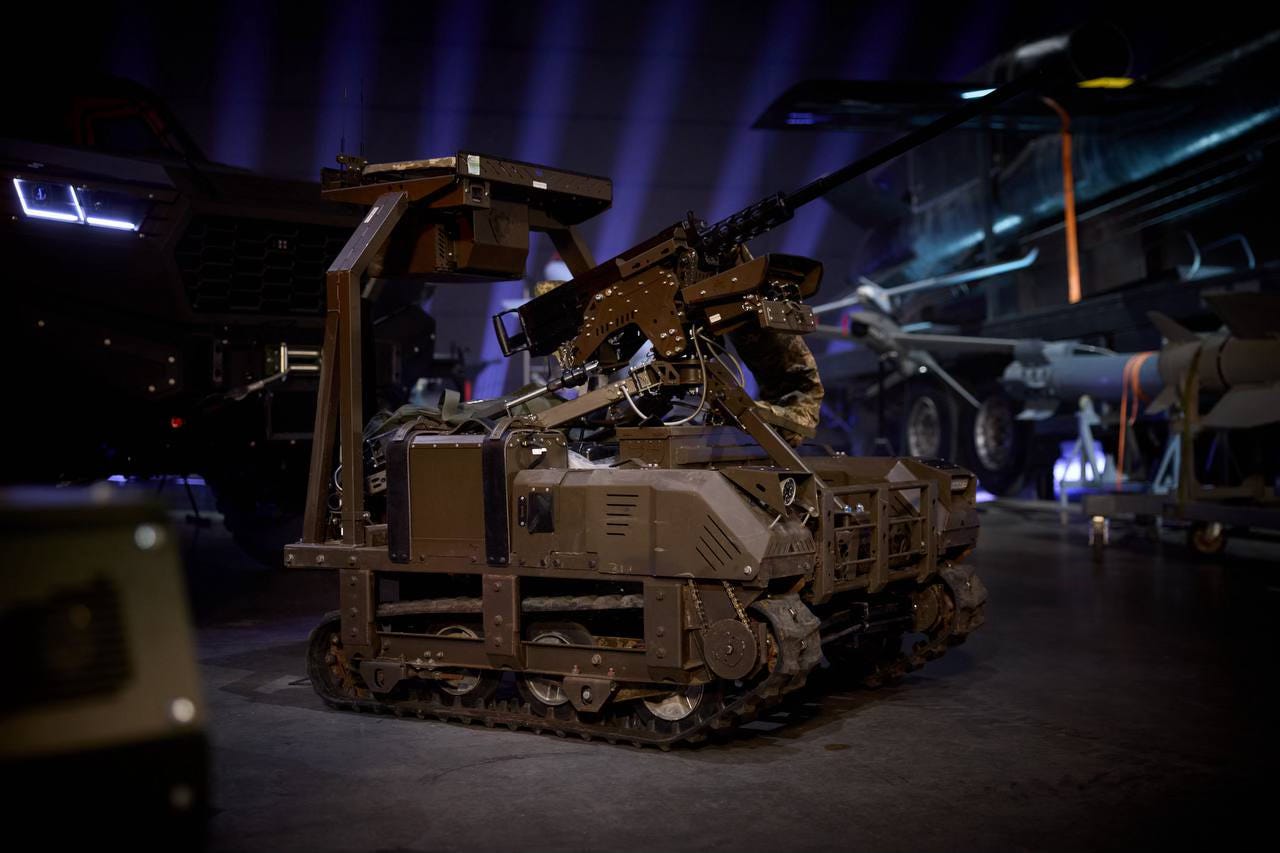
An Ukrainian combat or armed type UGV / Telegram channel of Ukrainian President Volodymyr Zelenskyy
Unmanned Ground Vehicles (UGV), have by now become a common presence on the battlefield in Ukraine. A ground robotic system is emerging as one of the more consequential adaptations of the war – a machine designed to go where soldiers increasingly cannot.
These systems handle an entire spectrum of battlefield tasks – reconnaissance and mining, evacuation of the wounded from kill zones, ammunition resupply to forward positions when stocks run critically low. In some cases, Ukrainian forces used ground drones to assault Russian positions and even capture prisoners – though previously those tasks were carried out alongside infantry. Now, as recent days have shown, they are being done without soldiers at all.
The underlying logic is clear and straightforward – shift the highest-risk tasks from humans to machines. In a war where visibility on the butterflied is constant, due to staggering use of surveillance drones, and chances of survival are narrowing, ground drones offer a way to preserve manpower without slowing operational tempo.
At its core, a UGV is an unmanned mobile platform – either wheeled or tracked – operating without a crew on board. It can be controlled remotely by an operator or, in more advanced configurations, navigate with a degree of autonomy. That combination allows it to function in environments defined by constant Russian drone surveillance, artillery exposure, and dense minefields – conditions that have made traditional movement on the battlefield exceptionally dangerous.
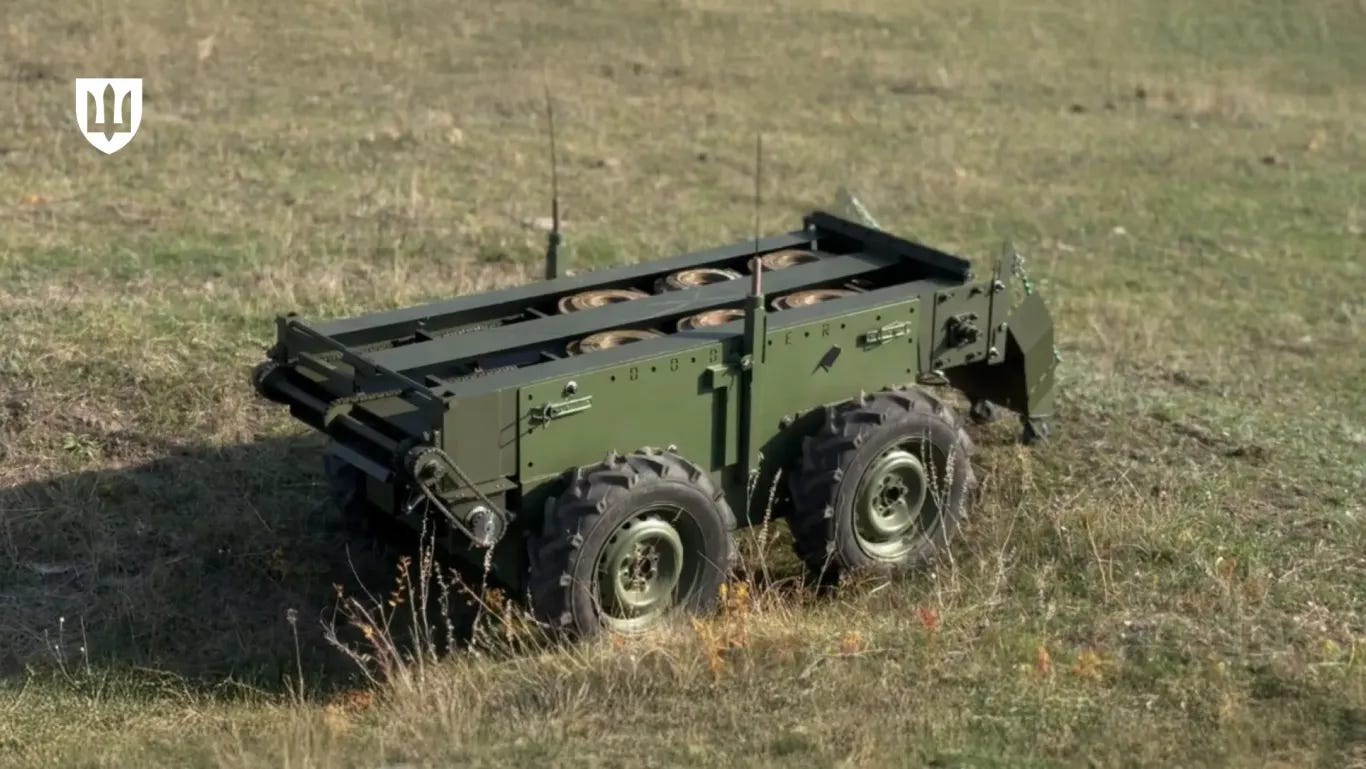
The Ukrainian unmanned ground robotic system DODGER, which can be used for a wide range of logistics tasks – including evacuating wounded soldiers from the battlefield – as well as for operational support missions such as laying mines in designated areas / Photo and info ArmyInform
Now, the expanding role of UGVs has elevated them into one of core element of Ukrainian military. Initially used for reconnaissance, logistic and evacuation, UGVs are now being adapted for a wider range of missions. They can provide fire support, carry mounted weapons, and engage targets while keeping operators at a distance. In logistics roles, they move ammunition, supplies, and equipment to forward positions, reducing the need for soldiers to make high-risk resupply runs. They are also increasingly used in mine warfare – both for laying and clearing explosives – as well as casualty evacuation, retrieving wounded personnel from exposed positions where medics would otherwise face immediate threat.
Evacuation of wounded soldiers is no easy task either – rescue operations can stretch on for days, and drones remain a constant threat throughout. Yet ground drones are being used for evacuation consistently.
However, the trend of battlefield use is only growing, and as a result, a significant reduction in the burden on combat personnel is expected. As Defence Express reports, by November 2025, UGVs were being operated by 67 specialized units within Ukraine’s Defense Forces. Just four months later, by March 2026, that number had surged to 167 dedicated unmanned systems units across the Ukrainian military.
The scale of that expansion alone do not suggest a random experiment, but a focused military reorganizing around a new way of war. Against this backdrop, tracking the pace and depth of adoption becomes essential to understanding how the battlefield itself is evolving.
In Defence Express analysis data cited by the German defense outlet Hartpunkt helps put that trajectory into sharper focus. Over the first quarter of 2026, Ukrainian forces carried out roughly 20,000 missions involving UGVs – a figure that suggests a steady increase in operational tempo, as ground drones move from niche deployments toward routine use across multiple fronts.
The growth is even more striking when viewed month to month. In March, unmanned ground vehicles were used in more than 9,000 combat and logistics missions along the front line, according to the Ukrainian Ministry of Defense.
Just months earlier, in November, the figure stood at just over 2,900 missions, before climbing to more than 7,500 in January 2026 – a sharp rise that points to the military’s growing reliance on ground drones.
As Defence Express noted, this is no longer about experimenting with new gadgets on the battlefield. Ukraine is moving to make ground drones a normal, everyday part of how it fights – ramping up production, deploying them at scale, and building them into how operations are planned and carried out. The shift is toward systematic integration, a sign that robotic ground systems are becoming a core component of Ukraine’s evolving warfighting doctrine.
Recently, the Ministry of Defense announced the introduction of a new type of military unit – drone assault formations. These combine aerial drones and unmanned ground robotic systems into a unified structure alongside infantry.
The Ministry noted that such units have already demonstrated results on the southern front, where they helped liberate significant territory.
The use of aerial drones has already become a defining feature of the war, with Ukraine relying heavily on drones for surveillance, precision strikes, and intercepting Russian drone attacks – though Russia deploys them massively as well.
The integration of ground robotic systems into offensive operations – and their use as the primary assault force – can be another Ukraine’s technological adaptation.
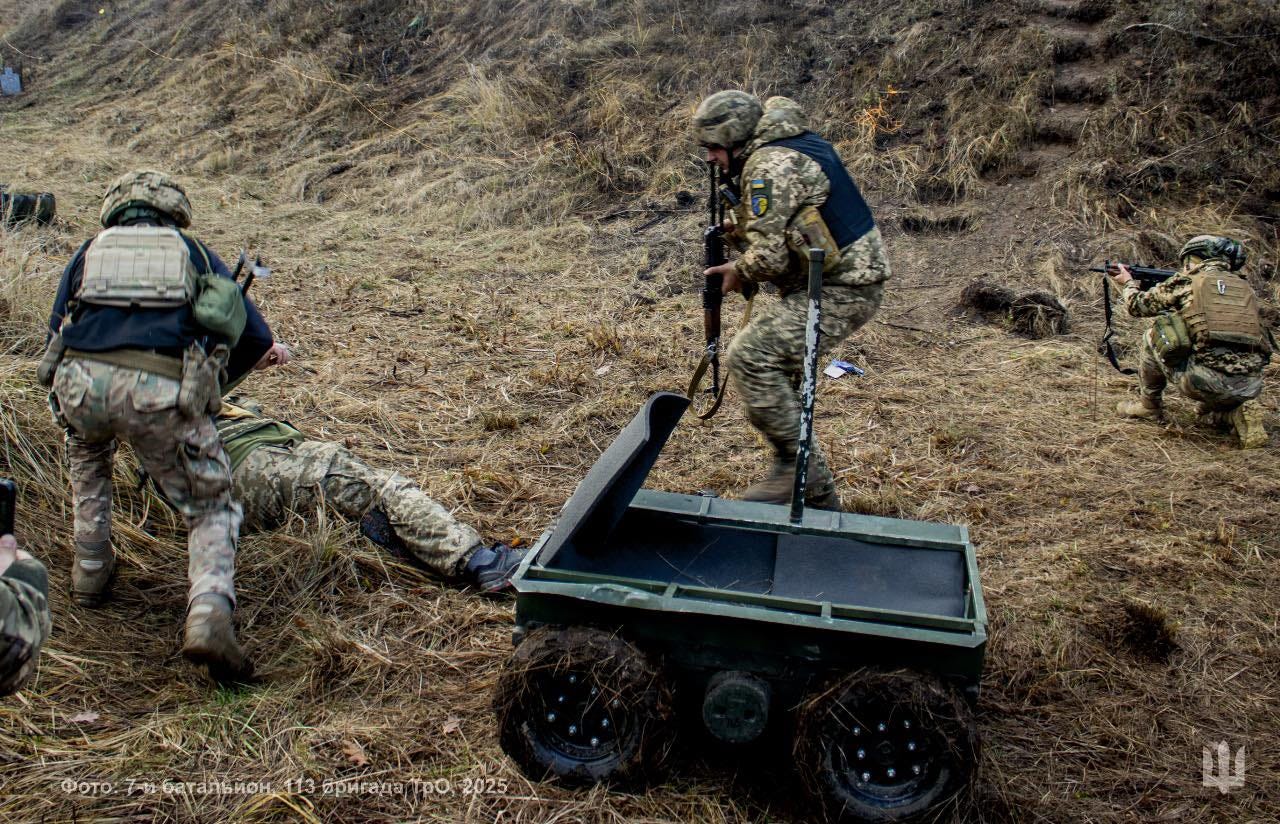
The 113th Separate Brigade of Ukraine’s Territorial Defense Forces uses ground drones in combat operations and casualty evacuation / Photo: Facebook page of the 113th Separate Brigade
Analysts suggest such tactics could reduce battlefield casualties while allowing Ukrainian forces to probe and capture fortified positions at lower risk.
At the same time, the approach depends heavily on reliable communications, electronic warfare resilience, and the ability to coordinate multiple unmanned platforms in real time.
Ukraine has increasingly invested in domestic drone production and robotic technologies to offset manpower constraints and counter Russian offensive tactics. Many Ukrainian manufacturers produce these ground drones – companies such as Tencore, or Ratel Robotics, which before the full-scale invasion manufactured street lighting. There are many such companies, and as with the broader drone production story, they started small – funded by Ukrainian people donations – before scaling up.
Officials have framed these innovations as part of a broader strategy to transform the nature of frontline combat. Russia, too, has deployed ground robotic systems in the war, though at a considerably smaller scale than Ukraine.
No posts
Comments
Nothing yet. Say the first thing.
Sign in to join the conversation.