
Recently I’ve been writing books that sell into the adult market, so I’ve given myself a little breather from school visits. Yesterday, however, I was back in the saddle and remembered how much I liked doing them (most of the time).
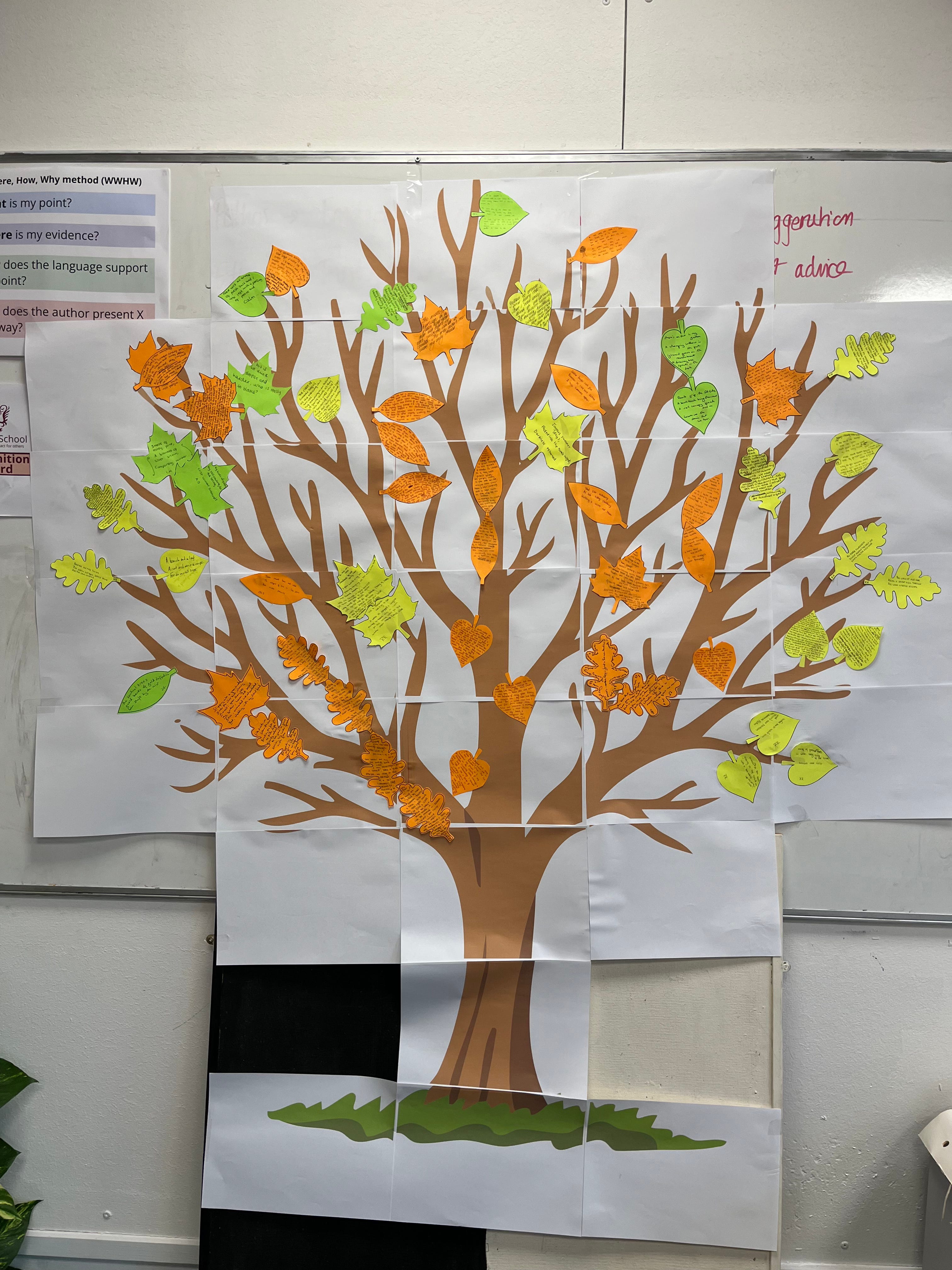
Here’s the tree of writing we put together at yesterday’s writing workshop with eight Sixth Formers at Cheney School, Oxford. Thanks, guys, you were lovely company!
If you are an aspiring writer, or just getting published in the younger end of the market, here’s what I’ve learned over the twenty years of doing visits. Good visits are a big part of flourishing as an author for children and young adults.
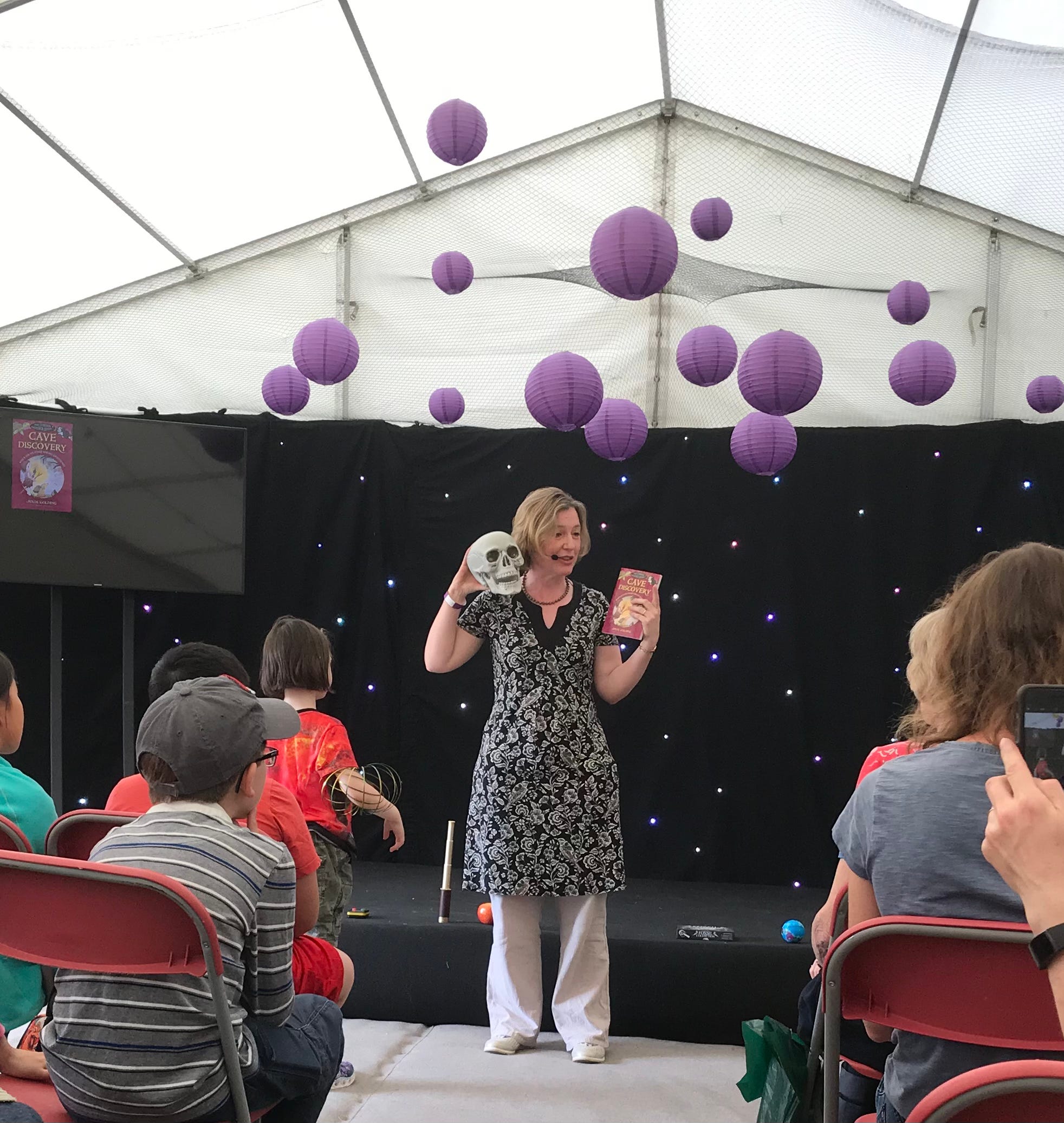
An obvious point but hats off to teachers. Think of a bored Year 9 class on a Friday afternoon (tough crowd) and dream up fun things to do. Bring the creativity you put into your book into your event. I always devise mine around a game that they can play with me, one that suits the theme of the book - that really helps.
Make sure they provide a chaperone teacher for your safety and that of the young people. If you are left alone in a classroom with the children, you may need to walk out and inform the nearest teacher what’s happened. I’ve had this where the teacher I was with was called away to an incident - really tricky to know what to do. These days I’d leave the room and flag up the issue.
You’ll get lost looking for a school you’ve never been to before in a town/city/village you’ve never visited. There was one memorable day when my publisher send me to the wrong city academy in London. I ended up south of the river when I should’ve been in Hackney. Londoners will know it is difficult to get across town in half an hour. I had a whole school assembly waiting plus the embarrassment of explaining to a bemused librarian at the wrong school that she was expecting me. She wasn’t - though she did know who I was, which softened the blow.
Some schools do zero preparation and treat you like a supply teacher. I drew up a do’s and don’ts list after a number of these but it can be grim sitting in a corner of the staff room as they gossip around you. It happens. I keep a list of schools I’ve visited with remarks on how it all went so I can make sure either it goes better or I politely decline.
I’ve had the occasional school (and a festival talk) where bookselling has been torpedoed by a teacher standing up at the end and saying the young people have to save their money for X event, or that they’ve already spent it on Y: unbelievably rude and not the deal that the author makes with the audience. It’s right to complain when this happens as a public appearance at a festival etc. is premised on the idea you might get a small fee but expect some sales if you don’t totally flunk your event.
I’ve never visited in a time when teachers felt the financial situation of parents made asking for book money unproblematic. Don’t think that things are exceptionally difficult at the moment - that tension is always there. It is a choice to support a child’s reading in the same way as it is a choice among the many demands on a family to pay for school trips, music lessons, sports clubs etc. Books are inexpensive in comparison to most other charges.
That said, there are plenty of people in genuine hardship and not every family can squeeze it out of their budget even if they want to. It would be preferable if there was a way to make your book available to all. Occasionally I’ve gone to a school in a poor area that has sponsorship from local companies (such as lovely idea) which means disadvantaged kids get the chance to own a book. If you know you’re visiting an area like that it might be worth asking the question if that would be possible, especially if you have some connections in the area.
Don’t apologise for wanting to sell books. I’ve felt that pressure coming at me but it is my job. The vast majority of author incomes are much lower than a teacher’s.
Writing workshops are a little different - I’m there as a creative writing expert rather than talking about a book - so I don’t expect a book stall for those days.
That all said, it is a real privilege to meet your readers.
Primary schools are like little power stations of energy and forgiving of a visitor - they are primed to be entertained.
Secondary is much harder, especially in the tricky years of 9 to 11. Participation up front is harder to inspire so you have to think how to adapt your material. Meeting Sixth Formers is easier - you have young adults to talk to and they can be very inspiring and open to getting as much from your session as they can.
Bottom line, on the commercial side of things, you can often sell a lot of books in a way that bookshop events or even festival talks can only dream of achieving. Books build your audience and get you noticed in the wonderful network of librarians and English teachers. It is good for the children too as there is a strong correlation between the number of the books in a household and educational outcomes. Yours can be a little positive in their reading journey.
If you want to read my modern classic The Diamond of Drury Lane it is out in a lovely new edition right now.
And I am once again available for school events…
No posts
Comments
Nothing yet. Say the first thing.
Sign in to join the conversation.