
A few years ago, as the end was nearing for my beloved chocolate Lab, Mo, I sometimes put his giant head on my lap and just sat with him. Still and unbothered.
Mo usually needed me there at the most inopportune times in our human schedule—prompted by a middle-of-the-night bark or during the brief respite of a baby’s naptime.
My husband praised my patience. But holding a giant Labrador head in your lap doesn’t actually feel like patience. Patience puts up with time. Holding his heavy head was like leaning back into time. I highly recommend it to anyone who is trying to remember what it feels like to let go.
Like many hard and beautiful parts of life, caregiving repeatedly tests your patience while also expanding your capacity to be patient. I worry that AI is poised to do the opposite.
AI’s champions often laud it as “infinitely patient.” AI’s unerring support is undoubtedly powerful, especially when time and resources are scarce. But it falls short of the experience that accompanies real patience: not just material support, but the feeling you are worth someone else’s while.
Silicon Valley is all too willing to sacrifice that. Marc Andreessen has written that “Every child will have an AI tutor that is infinitely patient, infinitely compassionate, infinitely knowledgeable, infinitely helpful.” Mustafa Suleyman tweeted that “AI’s value is precisely because it’s something so different from humans. Never tired, infinitely patient, able to process more data than a human mind ever could.”
I find claims like these quite telling—and chilling.
AI’s ever-present capabilities can certainly feel like patience. But that’s a misnomer. The etymology of patience is the Latin verb pati, meaning “to endure, undergo, or suffer.” Being patient, by definition, takes a toll. AI tools are not suffering through your prompts. In fact, they are benefiting from the novel data you put into them.
Ironically, AI isn’t even scaling patience—it’s disrupting it.
AI offers support without personal investment. It’s there at 2 am, but didn’t stay up for you. It’s a giant self-help machine that allows users to solve their own puzzles without burdening those around them.
But cheaper machine patience won’t actually make patience more abundant among humans. In fact, it could have the opposite effect, atrophying our tendency to show up for one another. Research shows people actually want to help more than they end up helping because they are waiting to be asked. Put differently: you’re worth more people’s whiles than you might think.
In fact, AI is the perfect fuel for our growing impatience, offering instant gratification and tidy answers to evermore complex problems. The more we rely on it, the more we stand to lose patience for the speed and messiness of human interaction.
If you’re a utilitarian who thinks this is all sentimental drivel, I get it. But let me offer at least one final defense of human patience for the naysayers: it turns out patient people fare better. They earn more and are healthier long term. That’s because, try as AI might to make us hyper-efficient, the world is largely unpredictable. Trading human patience for the infinite machine version could deprive us of those long-term upsides; and of the patience we need to thrive in a world we can’t (fully) control.
AI could, of course, be a tool to do the opposite: to expand our capacity for patience and our access to patient people near and far. But that requires operating models that take time saved by AI and pour it back into human connection.
For example, if a doctor uses AI to transcribe her notes, does she spend 10 more minutes with every patient? Only if the healthcare system starts to reward something beyond the sheer quantity of visits. The same can be said for AI tutors, therapists, and digital twins—the deeper breakthroughs of these technologies won’t come from scaling endless one-on-one interactions with bots. They will unfold in systems that use these tools to unlock human presence and connection, making students, patients, and mentees worth more people’s whiles.
For any of that to happen, we’ll first need to learn to moderate the feeling that there is never enough time with the recognition that time isn’t just how we measure productivity, but how we spend our love (to quote Nick Laird).
Without that shift, we’ll just be trading more efficiency for less patience.
Because praising AI as patient isn’t only a misnomer—it’s also a troubling surrender. It’s a sign that we’re giving up on patience with ourselves and on the willingness to be worth something to each other.
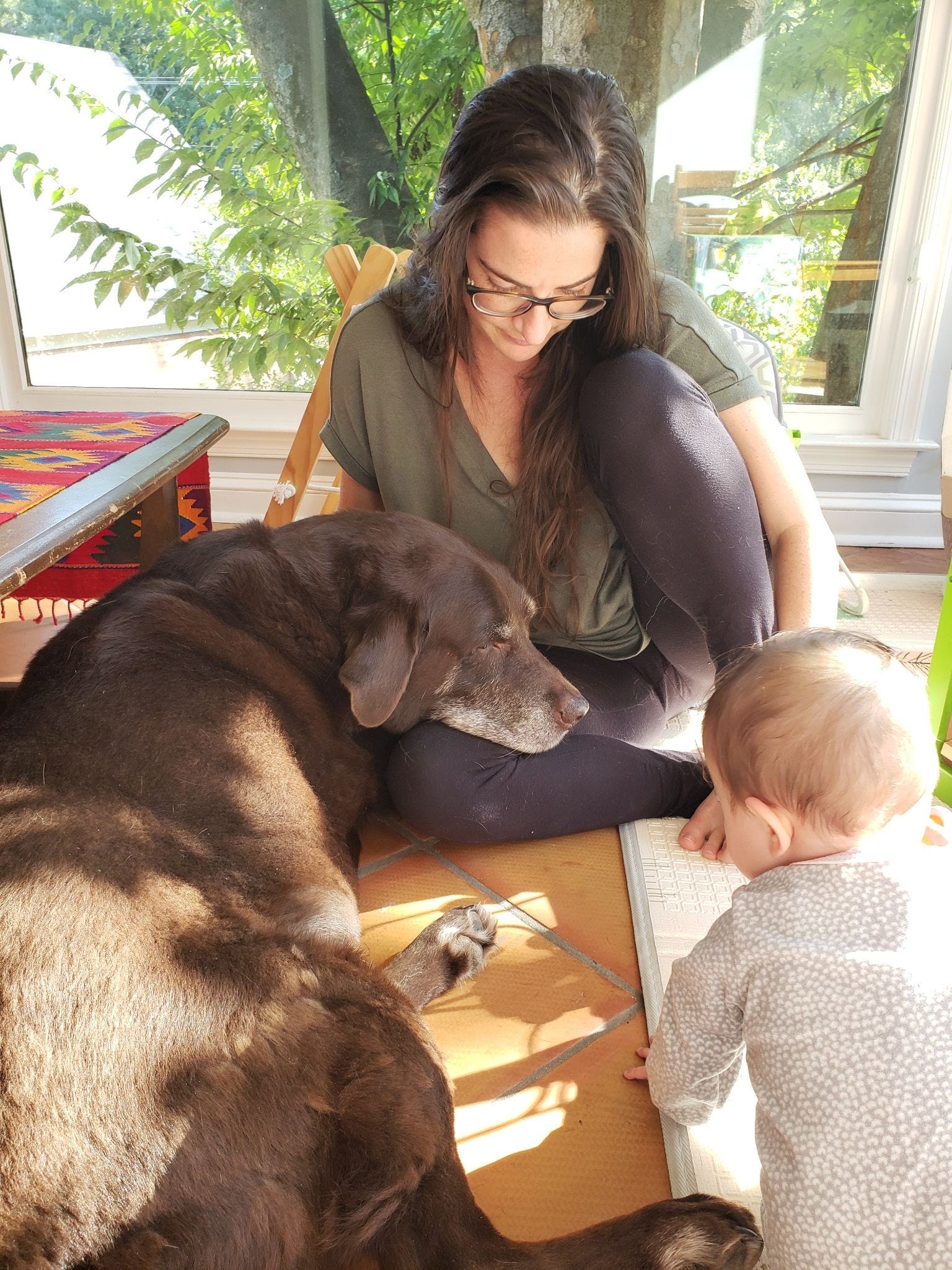
Mo, 2020. (Photo by Marisa Reisel)
No posts
Comments
Nothing yet. Say the first thing.
Sign in to join the conversation.