
I could never really sing, a somewhat uncomfortable revelation from someone who once worked in musical theater. Yes, I can carry a tune and even harmonize a bit, but I never had the confidence to “belt out a song,” especially not solo.
And yet, just last night, I dreamt that I was singing. I was with my voice teacher and, for one clear moment, I let my sound flow. It was exhilarating and freeing, filling the air with glorious sound, as the teacher exclaimed, “You’ve got it!”
Then, this very morning, I was doing a guided meditation that unexpectedly included singing—not by a beautiful, trained voice, but sung simply, authentically in an unselfconscious way that met the meditative moment.
I remember singing that way just once. I was waiting for the bus to New York City after a long hike in Harriman State Park. I was tired, the kind of tired that feels gratifying and earned. It was warm, a late spring afternoon, the trees were in full leaf, and everything from earth to sky felt beautiful.
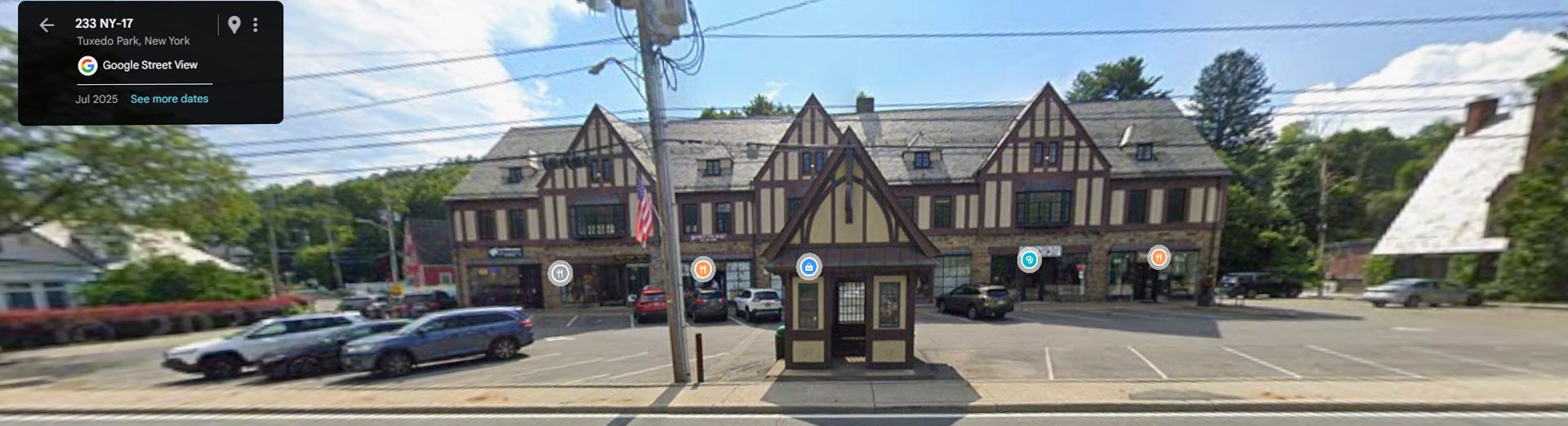
I started almost unconsciously, without forethought, tension, or care. The only one who could hear me was my husband who didn’t criticize or even comment on my lilting, unconstructed tones. If he had, I probably would’ve stopped. I’m that self-conscious! But he left me alone and I let the notes wander and float on the soft breeze.
My uncertain voice released without the pressure of performing. I wasn’t trying to impress. I was singing for myself. That was all. Enough. Everything that I needed.
It’s this very mindset that I am seeking—and in recent days, finding—in my writing. The effortless, quiet trust of following a thought wherever it goes, without worry or expectation that it will land well or at all. And it’s actually helping to free me.
I thought the same thing as I watched Alysa Liu win her women’s skating gold medal in the Olympics a few weeks ago. Her glorious free skate was apparently the product of stepping back and giving herself space and time to reclaim a sense of joy, freedom, and play.
This is a lesson for all creatives. Once we move our craft from joy to work, our relationship with it changes. But if we can find our way back to the naivete that helped us begin (and still retain our years of experience, of course), wouldn’t our work be that much freer?
I wish I could sing like that dream in real life. But as I write more often in this softer, more luminous mode, every word becomes another quiet note drifting on my mind’s gentle breeze.
If this spoke to you, please share it with a friend.
This week, I’m happy with my writing, probably because I’ve been doing a lot of writerly self-care—meditation, kindness about the process—all to achieve the relaxed approach mentioned above.
With this release of tension, I’m inching much closer to the end of my draft. I can see it: that light at the end of the tunnel. But, like an old sci-fi movie, it keeps getting farther away.
I told a friend a few weeks ago, “I’ve got about twelve sections left.” (The book is organized in short sections, rather than formal chapters.) But every day, as I add to the manuscript, a new section appears, sometimes two or three. So while I’m making progress, the work is also expanding.
This is perfectly normal. In fact, it’s a good thing. This project has more to tell me. And yes, I do mean me and not the reader. This story isn’t ready for anyone else. But, with my quieter mind, I am listening better as the story speaks. And my writing no longer feels like the terrible slog it’s been in recent months. It’s feeling more like the journey I want it to be: sometimes still bumpy, at other times, smooth, but every word moves me along.
Sometimes books call to you when they are needed most. For a while now, Anne Michaels’ Held has been on my TBR pile. I’m not sure why I waited, but this week, I picked it up. It’s a short novel, but not an easy read. Spare, philosophical, written in breathes and pauses, it requires attention and frequent re-reading. There are still a few passages that I simply don’t understand.
Needless to say, it’s not for everyone, but for me, at this moment, it was exactly what I needed. It’s a novel about relationships and the passage of time. It’s about pain and comfort and loss. It’s about the nature of existence; and it neither pulls punches or attempts to answer the ineffable. It simply IS, as is life, as it invites the reader to follow its characters across the snow, into the woods, onto the battlefield, and into transgressions and chance encounters that somehow make sense of it all while leaving mystery and footsteps behind.
Here is a passage that spoke to me (There were many.) of the struggle of being or remaining human in particularly difficult and confusing times:
We think of history as moments of upheaval when forces converge, the sudden upthrust of the ground we’re standing on, catastrophe. But sometimes history is simply detritus: midden mounds, ghost nets, panoramic beaches of plastic sand. Sometimes both: a continual convergence of stories unfolding too quickly or too gradually to follow; sometimes, too intimate to know.
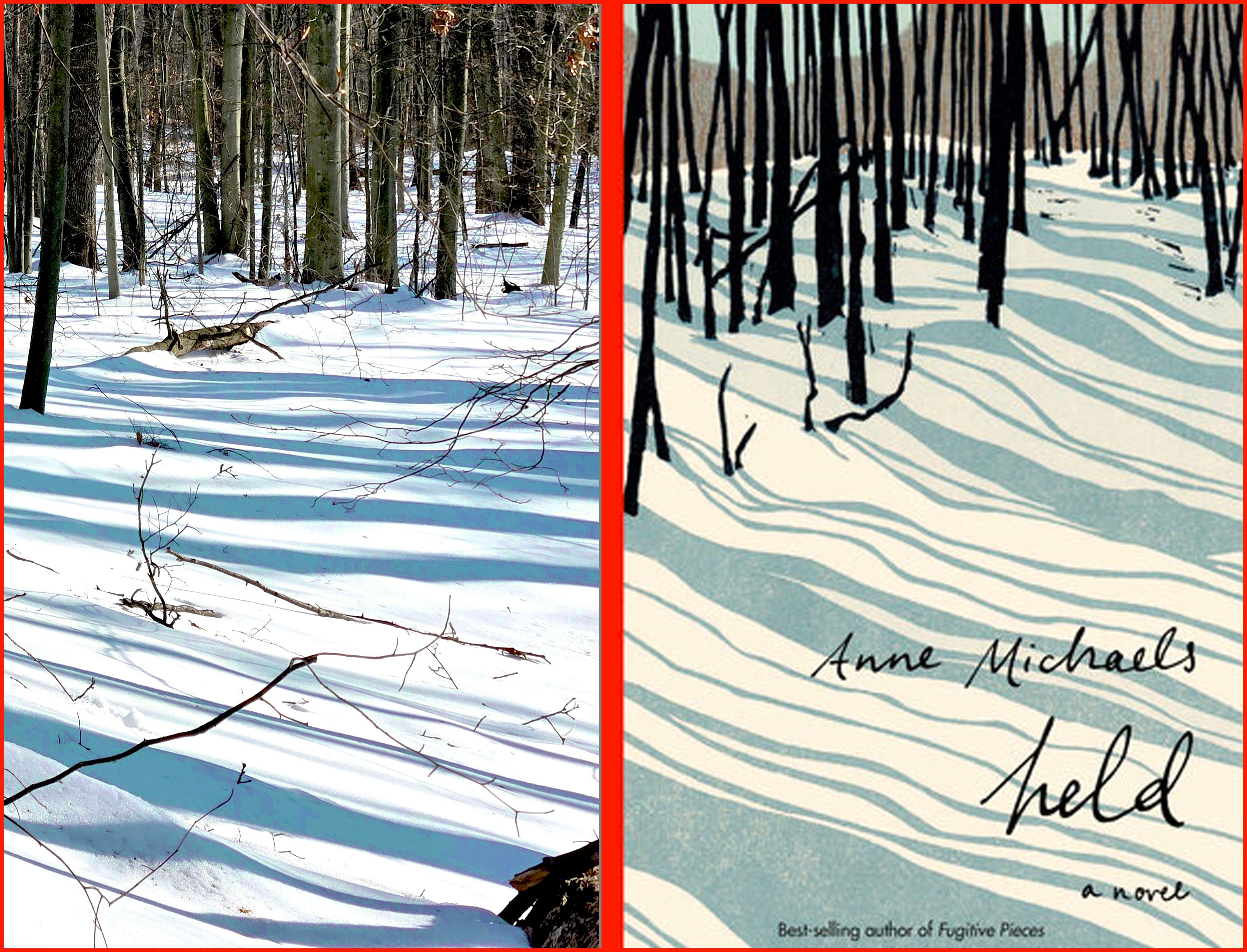
In another passage, “the long exposure of time” compresses the entire evolution of life on Earth into a single page.
Yes, this is my kind of stuff. And my WIP has some similarities in form, if not in poetic brilliance. If I can someday write like Anne Michaels, I will have reached the pinnacle of my craft.
It’s good to have a goal.
What book came to you when you needed it most?
Add your favorites in the comments.
Derived from both Latin and Greek, a museum was originally "a temple or shrine of the Muses.” These days, even the most obscure concepts and themes can be the focus of a museum’s collection.
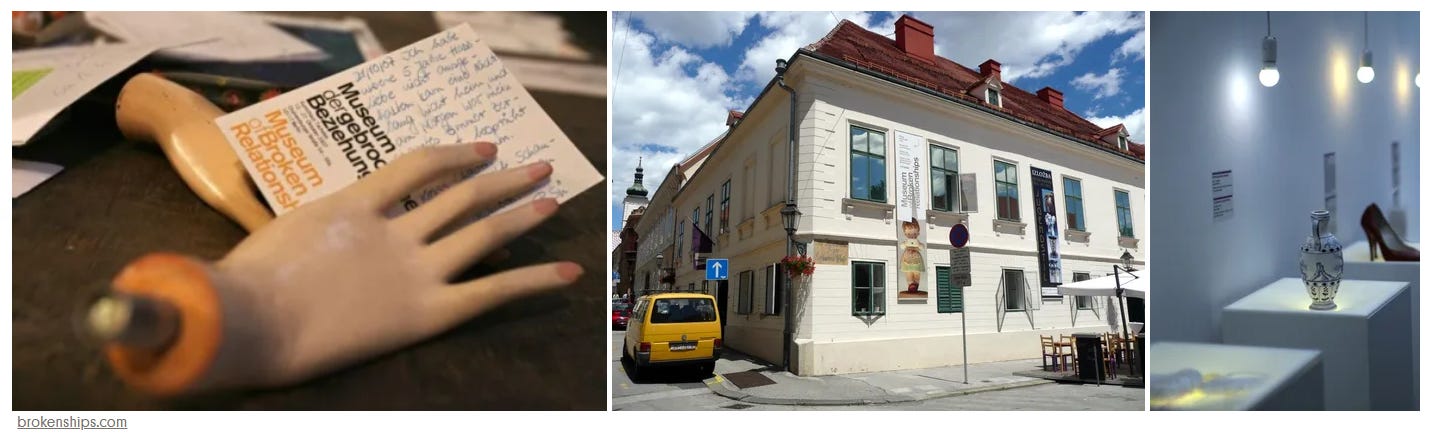
Among the most intriguing that have crossed my awareness is the Museum of Broken Relationships. It’s a real place you can visit the next time you’re in Zagreb, Croatia. Started by two artists whose own relationship fell apart, the museum collects objects of heartbreak and love lost, and is intended as a place of release and healing. Among the collection is a tiny bottle containing a woman's tears, but also an axe (used on furniture, not bodies), a taser gun, a variety of undergarments, and a prosthetic leg. The museum became so popular that there was briefly a Los Angeles branch and a coffee-table book published by Grand Central Publishing.
Prompt: Consider what sentimental object has become too painful or annoying to keep from a relationship that was once the center of your life. It doesn’t have to be a romantic relationship. Consider parents, siblings, even children or “best” friends. What object would you donate to the Museum of Broken Relationships? Write a revealing confessional about the object and what it represents from that part of your life, as well as why you are giving it away.
If you feel inclined, you can even post it on the museum’s website. If you do, please leave a comment so I can read what you shared!
AKMARAL: a nomad woman warrior of the ancient Central Asian steppes must make peace with making war - “A crackling novel”—Publishers Weekly | “A gripping saga”— #1 bestselling author Christina Baker Kline
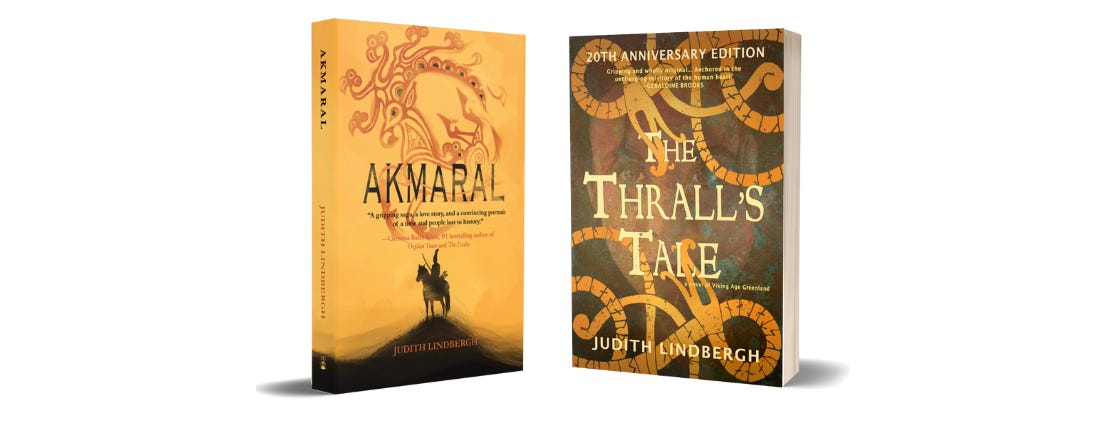
THE THRALL’S TALE: 20th Anniversary Edition: three women bound by fate in the first Viking Age settlement in Greenland - “Historical fiction at its best”—Philadelphia Inquirer | “Gripping and wholly original”—Pulitzer Prize winner Geraldine Brooks
Comments
Nothing yet. Say the first thing.
Sign in to join the conversation.