
To mark one year on Substack, I thought I’d share a travelogue from my recent visit to Switzerland. I’ve visited the country several times over the past few years, specifically making the trip to the Cartoonmuseum Basel three years running—in 2023, 2024 and 2025—to see retrospectives on Chris Ware, Richard McGuire and Alison Bechdel, all of which I reported on here.
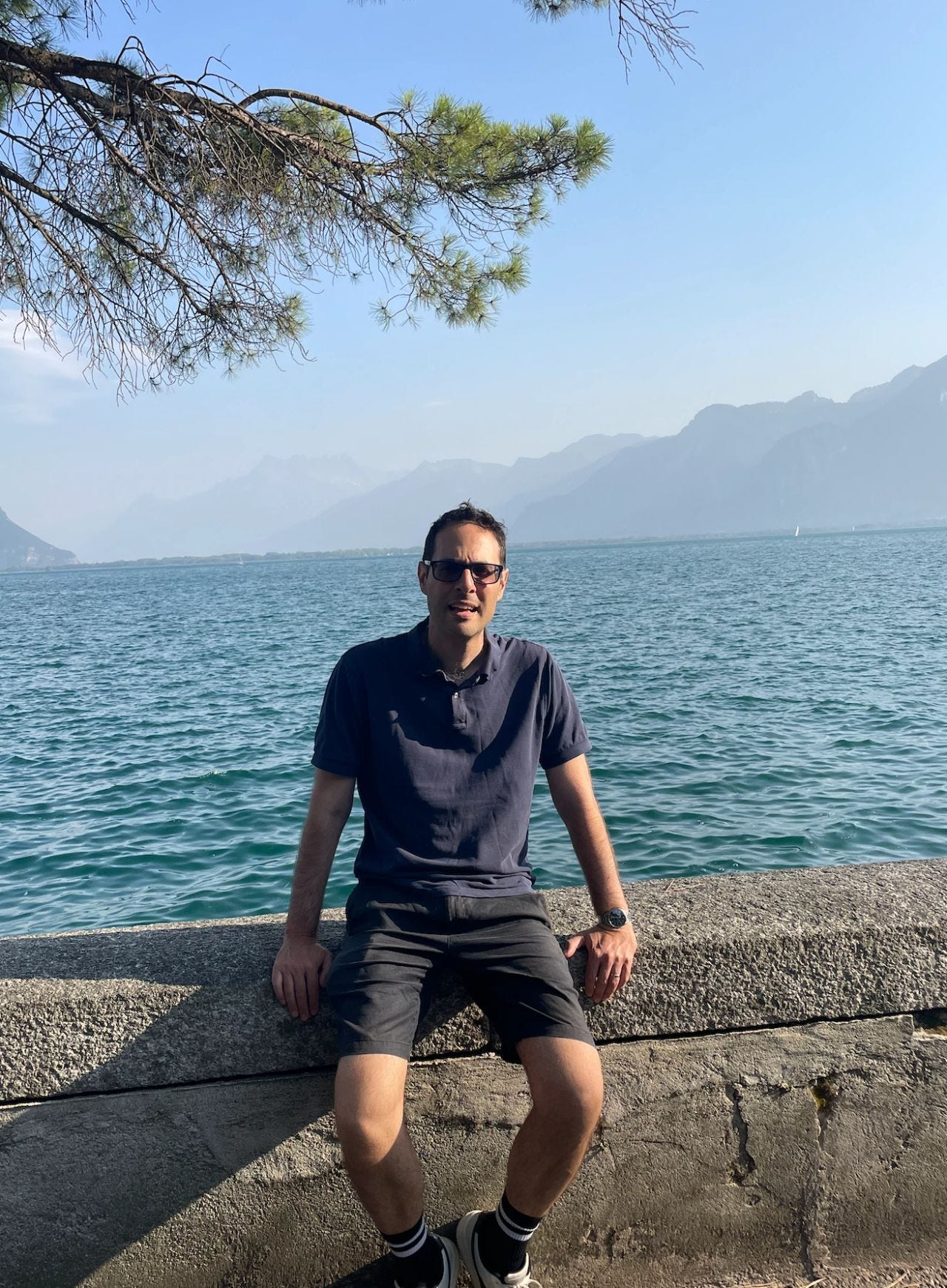
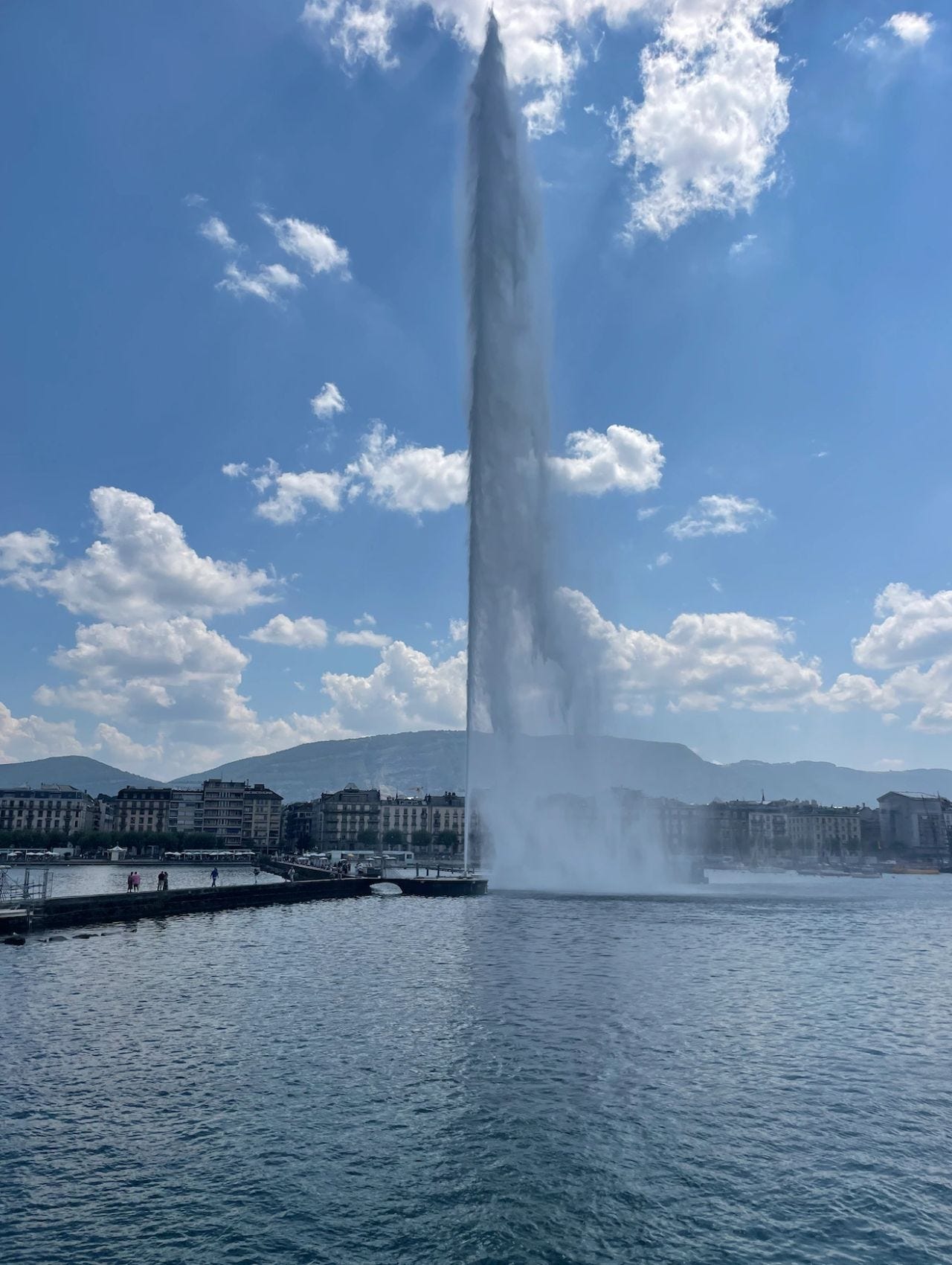
This time, I flew into Geneva for a short getaway with my son, travelling on to the lakeside resort of Montreux on Lac Léman, famous for its annual Jazz Festival. And, as ever, I managed to fit in a little comics tourism along the way.
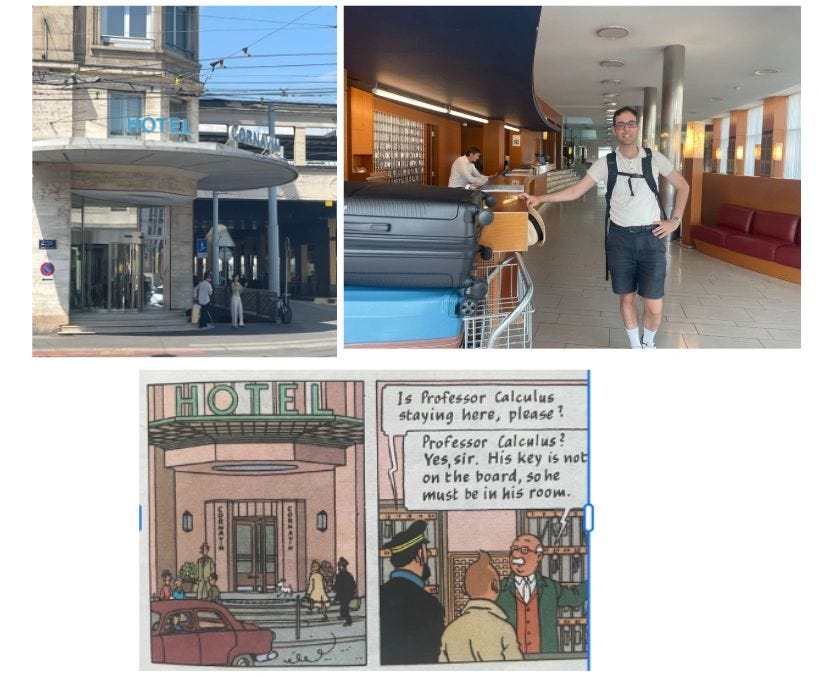
After a visit to CERN (the European Organization for Nuclear Research), there was one Geneva location I considered an absolute must: the Hotel Cornavin, situated just outside the city’s main railway station.
Growing up, Hergé’s The Calculus Affair was my absolute favourite in the Tintin series. It features an iconic sequence in which Tintin, Captain Haddock and Snowy arrive at the Hotel Cornavin to meet Professor Calculus, missing him by seconds as they go up in one lift while Calculus comes down in the other.
Hergé was famous for his scouting and his commitment to real-world accuracy. He stayed at the Hotel Cornavin himself, carefully recording details of the building—from the revolving front doors and hallways to the elevators and the bus terminal outside.
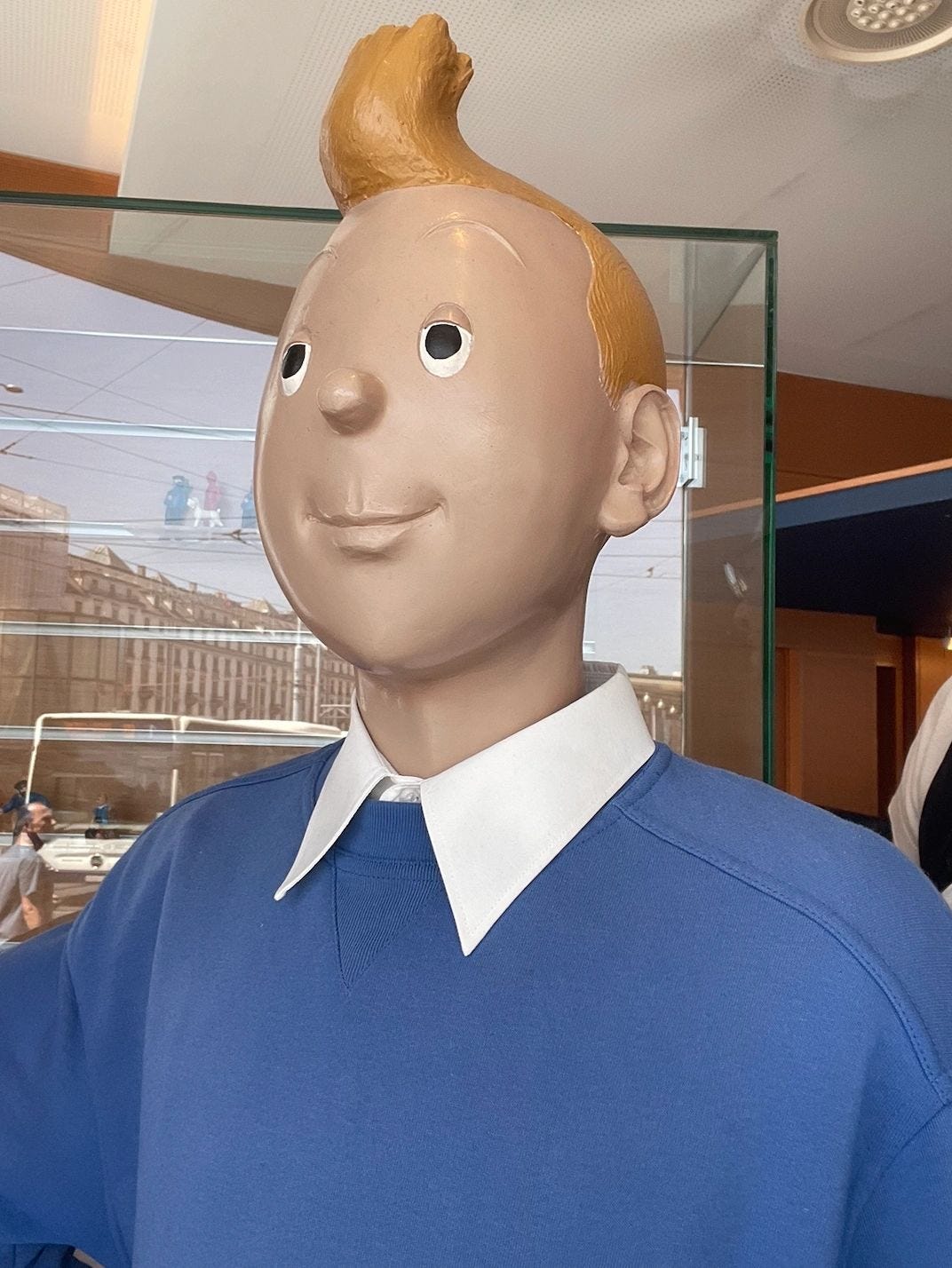
The hotel still has the same distinctive façade, although it has inevitably changed in the decades since Hergé visited. The management has embraced its Tintin connection, installing a life-size silhouette of Tintin near the entrance, along with a playful notice informing visitors that Professor Calculus’s room isn’t available for booking.
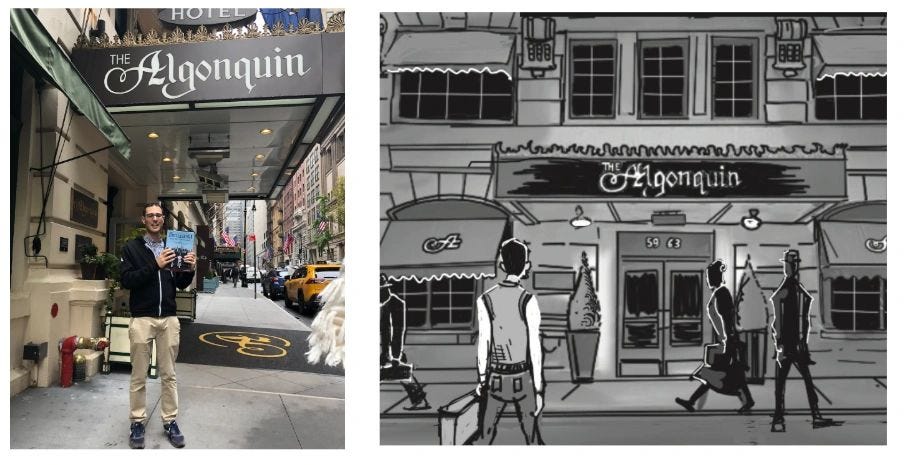
The experience of visiting a real place from fiction reminded me of something from my own experience of making comics. When I created The English GI, reconstructing my grandfather’s story during the Second World War, I also needed to recreate a missed meeting.
My grandfather was 17 when the war broke out and had been stranded in New York. He was due to meet a family friend in a hotel lobby, and I needed to choose a location. I settled on the Hotel Algonquin on West 44th Street, after seeing a photograph of its elegant 1930s lobby.
A year after The English GI was published, I found myself back in New York and visited the Hotel Algonquin for myself. My children remarked, “We’re now in the place where their grandfather stood.”
Well, not quite. But in both cases, a real hotel had become part of a story—and visiting it in person added another layer to the experience of creating that story.
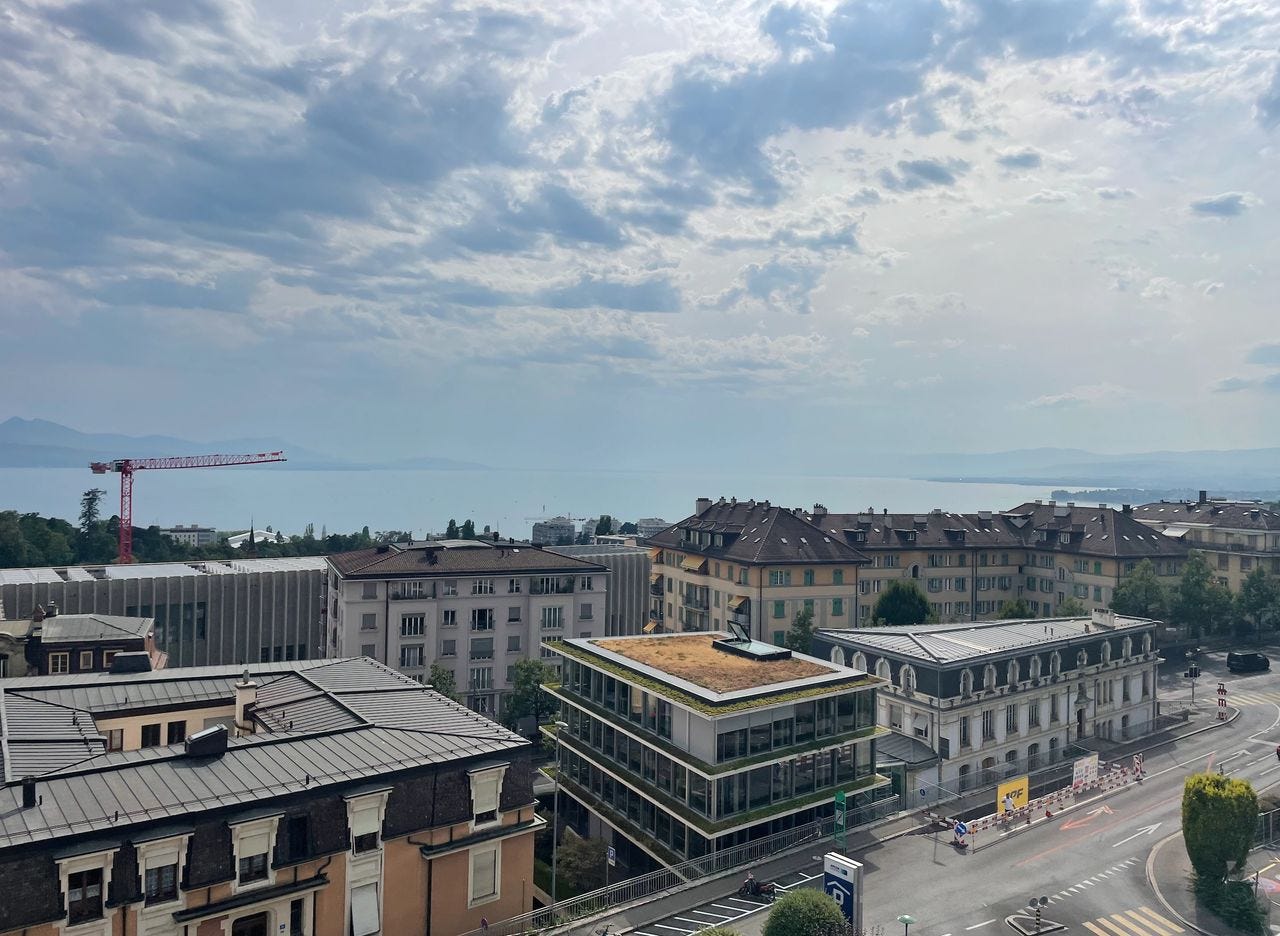
From Geneva, we headed towards Montreux, stopping briefly in Lausanne along the way.
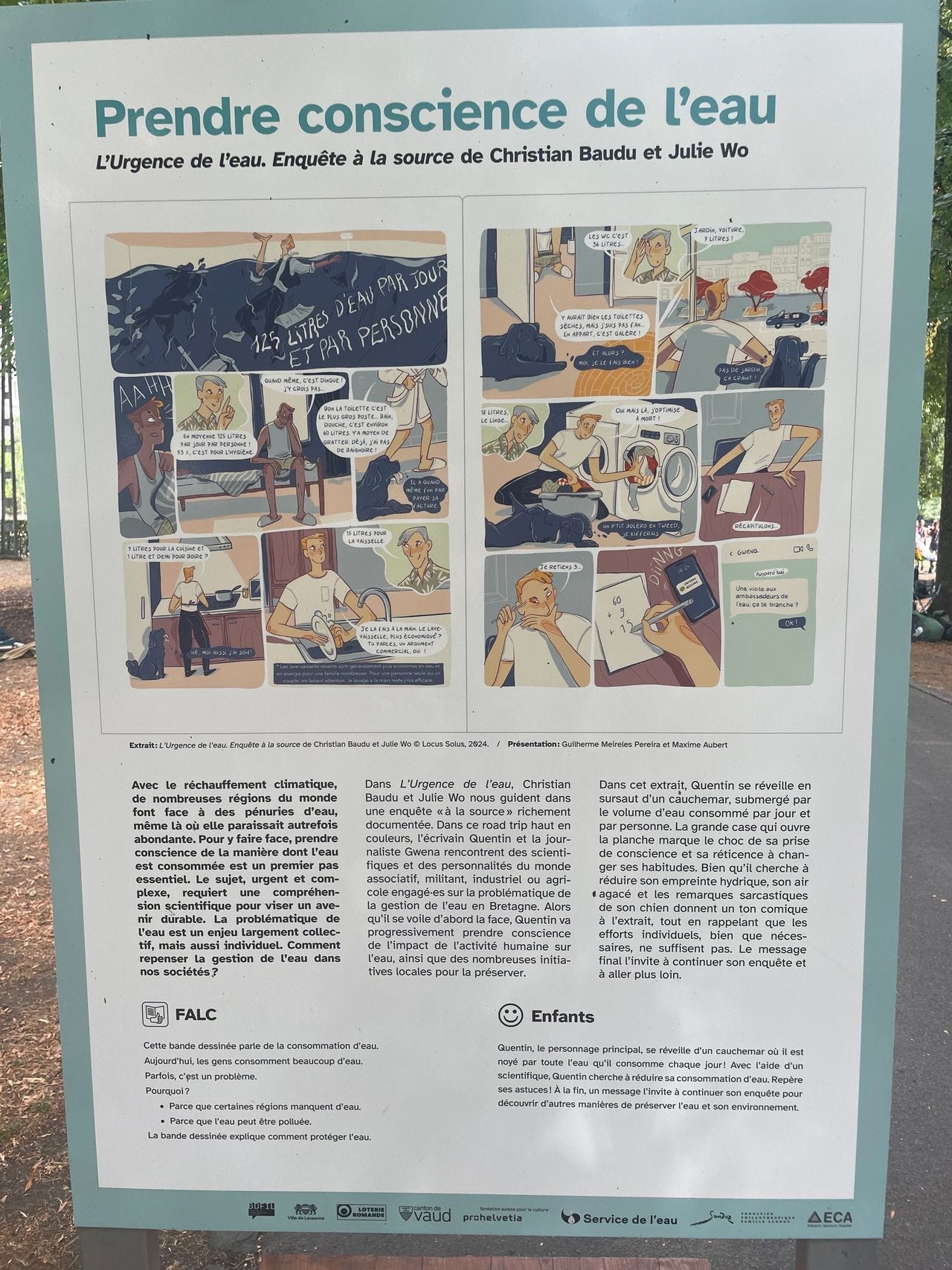
Lausanne is home to BDFIL (Bande Dessinée Lausanne), one of Switzerland’s major comics festivals. Although the main festival takes place in May, BDFIL’s programme continues beyond the festival itself with exhibitions around the city. In 2026, the annual theme was water, with the outdoor exhibition Bulles d’eau running through the summer.
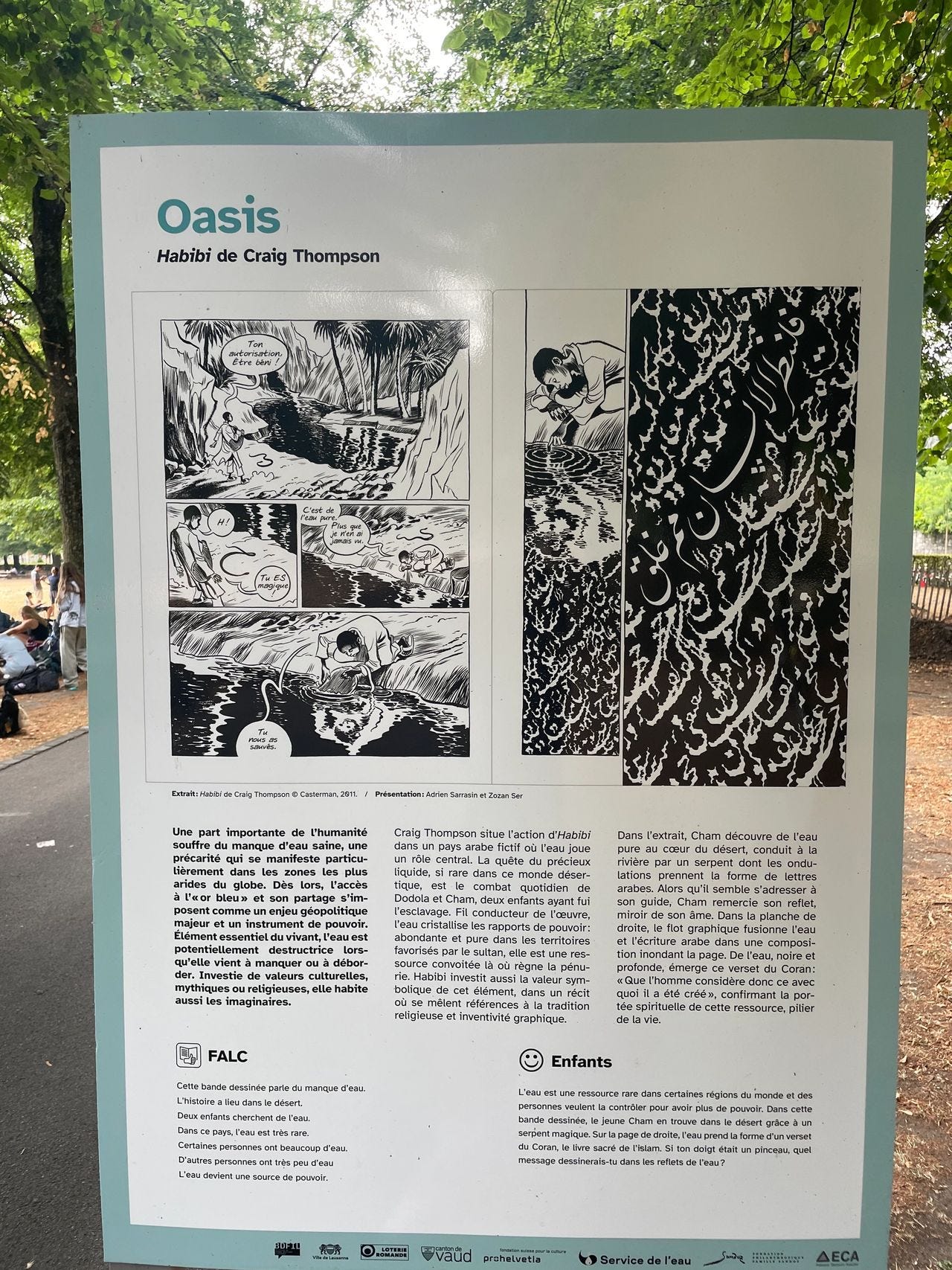
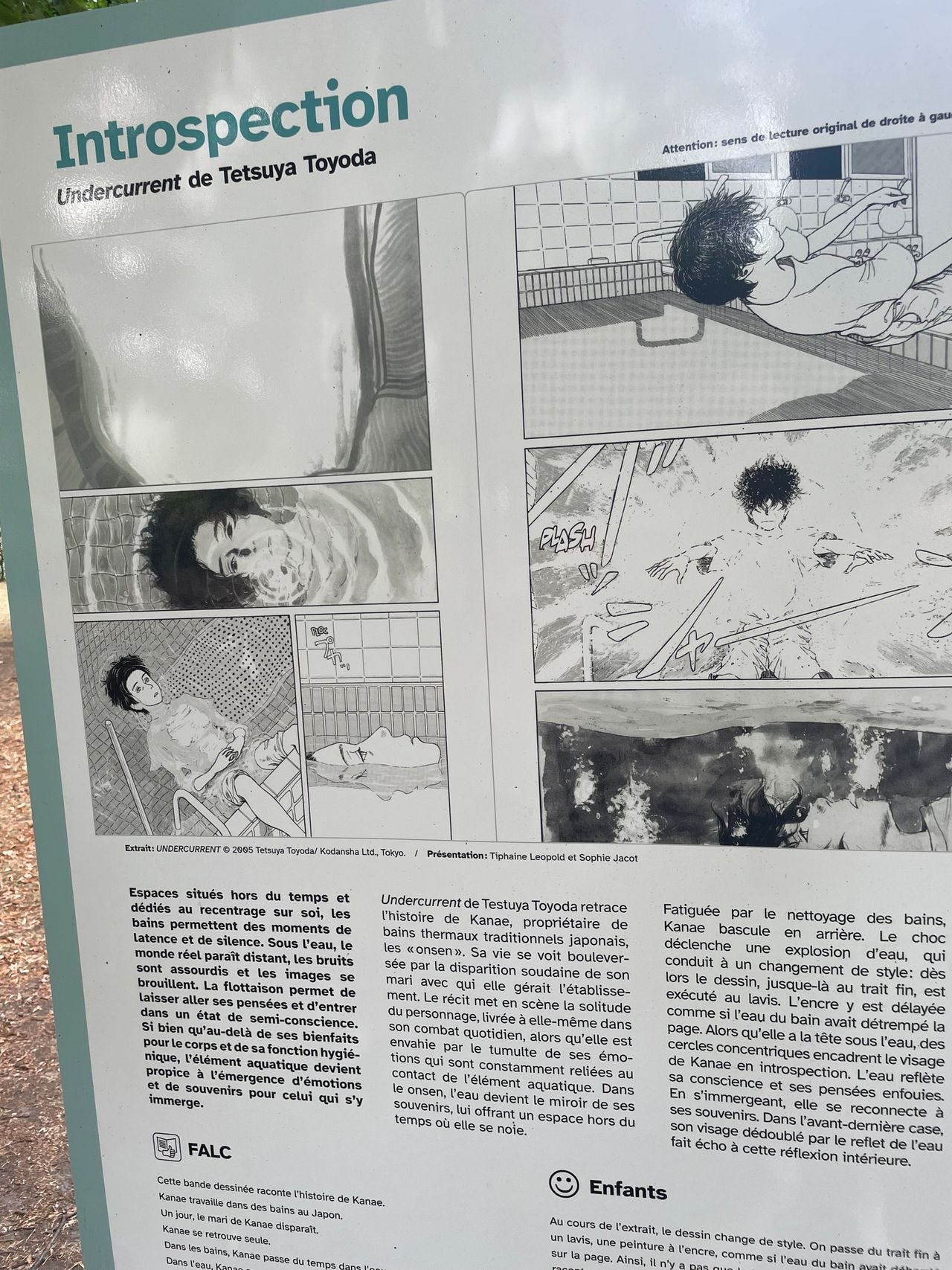
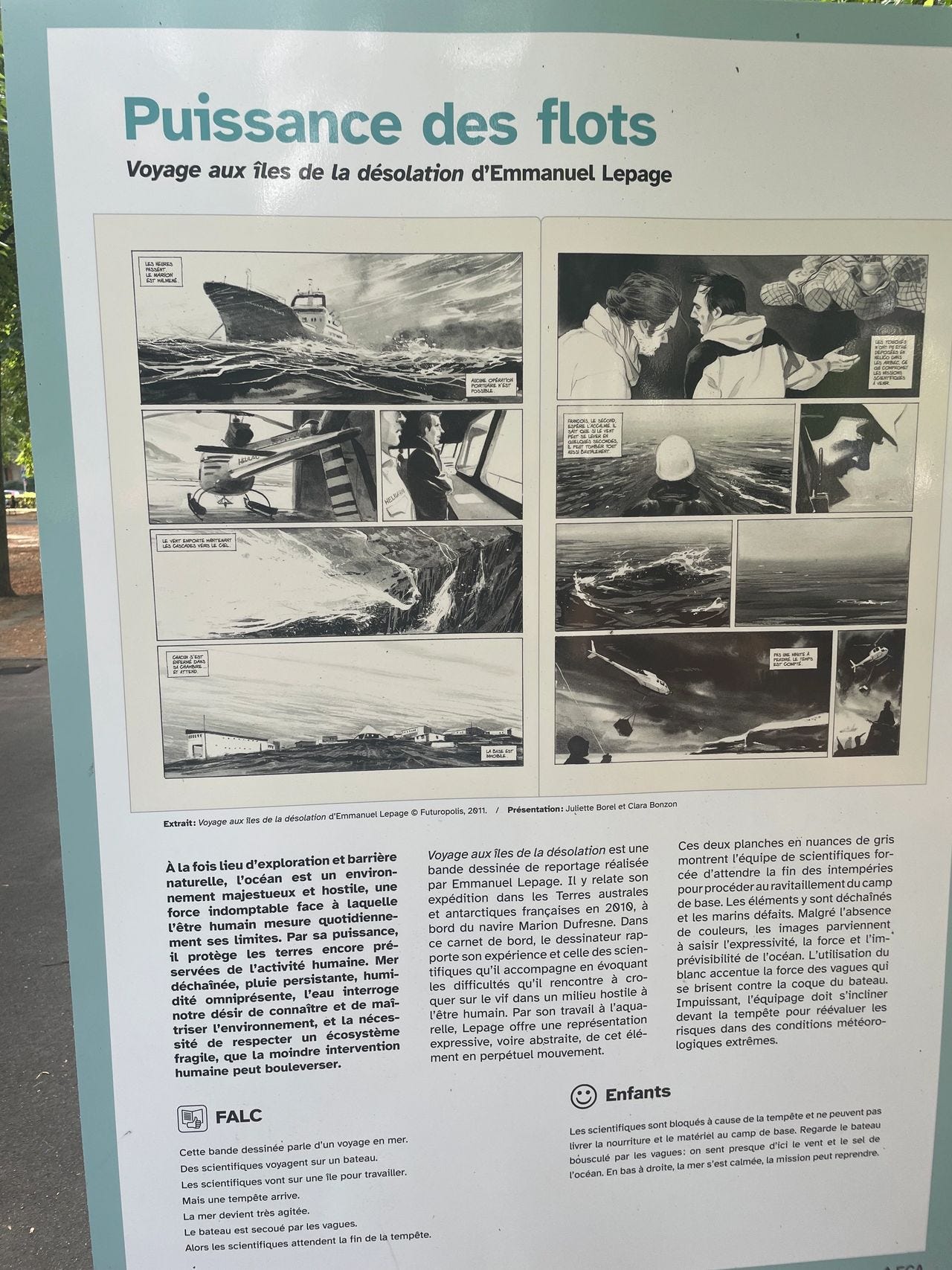
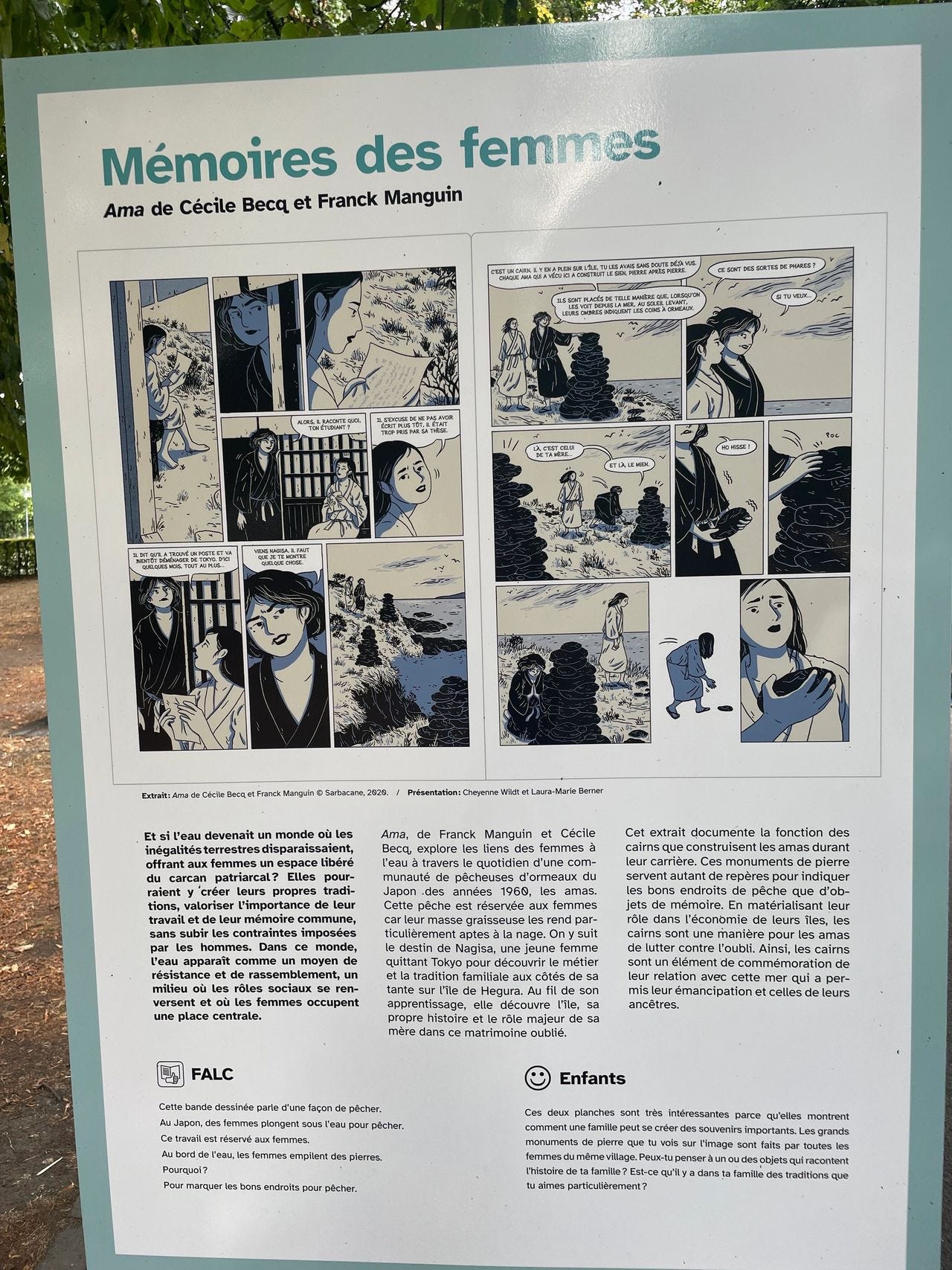
In Milan Park (Parc de Milan), I visited an outdoor exhibition co-created by BDFIL and the University of Lausanne. The exhibition featured large-format comic pages exploring different representations of water.
There is something wonderful about seeing comic art integrated directly into public parks. It normalises comics and places the medium into everyday civic life, making people more aware of the form.
We have started to see a little of this in the UK, including the Avery Hill exhibition in Harrogate earlier this year (see report). Perhaps this is something UK publishers could explore further.
The exhibition introduced me to a number of books I’m now keen to track down, including Craig Thompson’s Habibi, Tetsuya Toyoda’s Undercurrents (Gakuya), Emmanuel Lepage’s Voyage aux îles de la Désolation, Mémoires des femmes by Amélie Cécile-Bégot and Franck Manguin, and Prendre conscience de l’eau : Enquête à la source by Christian Baudu. I also interviewed Craig Thompson in London last September, which I wrote about here on the blog. It was a good reminder of one of the pleasures of comic festivals and exhibitions: discovering books and artists I might otherwise have missed.
I was fascinated by the number of comics I came across during the trip, from the exhibitions and gift shop at CERN to the books I found along the shores of Lac Léman. Even at one of the world’s great centres of scientific research, graphic storytelling was never far away.
At Chillon Castle (Château de Chillon), perched directly on the shores of the lake, comics once again found their way into the experience.
The castle gift shop had an impressive and carefully curated selection of graphic novels, including another legendary title: Asterix in Switzerland.
I had recently seen an original Uderzo drawing from Asterix in Switzerland during a trip to Paris, which I wrote about here on Substack. So it was particularly enjoyable to see the book sitting proudly in the very landscape that inspired it.
Perhaps that is the best way to mark a year on Substack: travel somewhere new, discover a few comics along the way, and come home with more stories to tell.
Article written by Jonathan Sandler, author of The English GI: World War II Graphic Memoir, curator of the GraphicMEMOIRBlog, and Advisor to Mensch Publishing.
No posts
Comments
Nothing yet. Say the first thing.
Sign in to join the conversation.