
Alpha-ketoglutaric acid (AKG), also known as 2-oxoglutarate, is a naturally occurring intermediate of the tricarboxylic acid (TCA) cycle, also called the Krebs cycle or citric acid cycle. It occupies a central position in cellular metabolism by linking energy production with amino acid metabolism, nitrogen handling, redox balance, and cellular signaling.
AKG is produced primarily within mitochondria during oxidative metabolism and serves as one of the most important metabolic “hubs” in human physiology.
Unlike many dietary supplements that introduce foreign compounds into the body, AKG is an endogenous metabolite synthesized continuously in virtually every cell in our body. Interest in supplemental AKG has expanded considerably over the past decade because of research suggesting potential roles in healthy aging, mitochondrial function, inflammation, bone metabolism, muscle preservation, intestinal health, and immune regulation. Most of this evidence, however, comes from animal models or early human studies, and of course as usual, large randomized clinical trials (RCT) remain limited.
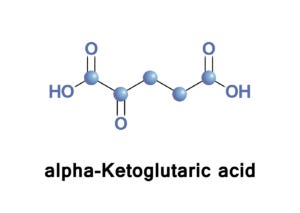
Biochemistry and Metabolic Function
AKG is formed during the Krebs cycle through the oxidative decarboxylation of isocitrate by isocitrate dehydrogenase. It is subsequently converted into succinyl-CoA by the alpha-ketoglutarate dehydrogenase complex, producing NADH that ultimately contributes to ATP generation through oxidative phosphorylation.
Comments
Nothing yet. Say the first thing.
Sign in to join the conversation.