
Happy Year of the Fire Horse to all you blazing broncos, all you fierce flames who refuse to be reined or corralled! I have missed you! You might notice things look a little different around here. Somehow, despite not sending out a newsletter for eight months, the audience for these ramblings has grown to such a size that Mailchimp now requires me to pay. So, welcome to Substack! I promise to underutilize all of its features.
As for my long absence from these digital halls, what can I say? 2025 kicked my legs out from under me, and I’ve spent these many months crawling around, trying to stand back up. But here I am now, walking around again, sometimes even mustering up a shimmy or two. Coming out of my hibernation, I feel less like a bear rousing from its torpor and more like the garlic that’s been poking its green shoots up in the garden, testing whether it’s indeed time to spring to life, or whether winter still has more in store. Which is to say, I make no promises to write as regularly as I used to, but rather to play it by ear, by energy, by emerging into whatever this newish year needs from me, from all of us.
But for now, it’s good to be back. May your month or two or ten until I write again be full of safety and solace, shimmies and shoots.
xo
JP
One reason I haven’t sent a newsletter in a hot minute is that I haven’t been writing much in the last year or so. It felt silly (and also boring) to have my only act of writing every month be a description of how and why I’m not writing. But recently, I realized I have in fact been writing—just in a more private way.
In July 2025, just after I sent my last newsletter, I enrolled in a program to become certified as a nature and forest therapy guide, something I’d been doing informally as a volunteer for several years. I have a history of being a diligent dabbler, an avid amateur—a word that I recently realized means to love—and for quite a few years now, I’ve been content to have forest therapy be a practice that I dabble in, turning to it and offering it to others occasionally, when the mood strikes. But last summer, I felt called by the moment—by the constant flood of horrors bidding for my attention, by the growing anxiety and numbness I noticed in and around me—to deepen my practice of forest therapy, to learn how to be more skillful with it.
So, for the last eight months, under the guise of professional development, I have sat nearly every day in my backyard in a little grotto formed by the low-hanging limbs of a Douglas fir, offering my attention to my senses and to the other beings who live alongside me. For twenty minutes or so each day—longer before the daylight grew scarce and the rain grew abundant—I would do nothing but sit and notice the soft give of earth beneath my weight, the high call of a cedar waxwing almost beyond my range of hearing, the scent of leaf decay and warming bark, the levity or heaviness in my heart. And then, I would write—not a poem or essay, or even something I might call a draft, but a journal entry—an awareness of what was alive in that moment, within me and around me.
I had zero intentions to share any of those entries with anyone, but one of the final assignments in my forest therapy program was to create a “web of interbeing” detailing the relationships among the beings with whom I share this patch of land. The goal wasn’t to record researched interactions, the sort of transactions that are constantly taking place within any ecosystem and that you could unearth in a good textbook or via an internet rabbit hole. Rather, the invitation was to create a visual representation of these relationships rooted in the intuitive, emotional, embodied sense of kinship we often reserve for human-to-human relationships.
As the end of my program neared, I looked at examples of past cohorts’ webs of interbeing—which ranged from drawings and photos to collages and PowerPoint presentations—and increasingly felt stumped. I tried to depict the relationships I was part of and witness to through all manner of media. I couldn’t imagine it being two-dimensional, so I tried making a mobile linking all the beings to one another, but I am no Alexander Calder. So I scaled back my ambitions, thinking instead I could take inspiration from the spider’s web and weave together depictions of all the beings with fabric and thread, but that turned out looking like nothing so much as a conspiracy theorist’s red-string fever dream.
Eventually, I landed where I always do, remembering that text is also, always, a visual medium. As I paged through my journal, the threads of relationships began to remind me of the Choose Your Own Adventure books I loved as a child. Each being was connected in so many ways to other beings—there were so many different paths I might follow that connected each to the others. But unlike a Choose Your Own Adventure book, there was no one right path I needed to take to reach the end of the story—indeed, there was no end of the story! The path just kept circulating, meandering back among all the different beings.
I wanted to emulate this through a hyperlinked website, where a person might be able to see the relationships in each being’s story, and follow the threads of their choosing to explore those relationships. I was a bit reluctant at first about doing this through a digital medium, since most of us don’t need more screen time, but then I thought about the health science research that shows that even watching videos or looking at photos of nature has positive health benefits, and thought, why not?
The program wrapped up last week, and I am now a certified nature and forest therapy guide (huzzah!). This choose-your-own-adventure project now lives on my website (the fitting place for a web, I suppose), and exists in a sort of hidden space, its own little grotto, inaccessible to anyone unless they know how to search for it. I created it intending to share it only with my instructors, as I didn’t write it with my Professional Poet hat on—it’s very much the work of an amateur doing nothing but making note of what it felt like to love and be loved by the thirty or so beings represented in the web.
But today, I wonder if keeping such love private is stingy, a kind of hoarding. This web kept me nourished during the aforementioned helluva year, and perhaps it might nourish someone else, too. So, friends, welcome to the grotto. If you need an alternative to doomscrolling—delightscrolling?—feel free to have a seat in the shelter of the Doug fir and to follow whatever path calls to you. The web has no beginning or end, but if you’d like to enter, here’s where my journey began.
I had a whole section drafted here about all the things in the world that are giving me “pause,” but sheesh, I don’t have the energy for that, and there are many more informed, eloquent sources out there already. So, instead, let me offer some music.
Many months ago, my Incite reading series co-host, Vinnie Kinsella, suggested I share a playlist for my latest book, which is threaded through with music—not just the assonance and meter and rhyme that poets like me feebly refer to as music, but a bevy of bona fide pop songs whose lyrics I carried over into my poems in an act of literary karaoke.
So, here’s a playlist of all the songs that made their way into the book, should you want to get into the Beautiful Outlaw groove. Can you spot all the poems where these songs appear? Most of songs are directly quoted or the musicians are directly referenced, but two of them—“Happiness Is a Warm Gun” and “Hey Joe”—are more oblique, connected to the book through this interview I did with Broadsided after they published one of the poems.
Fair warning: This may be one of the most chaotic playlists I’ve ever heard—which gives you some insight into my mental state while writing the book. Enjoy, and have fun discovering what havoc it wreaks on your algorithm.
Hey, since I last wrote, I had a new book come out!
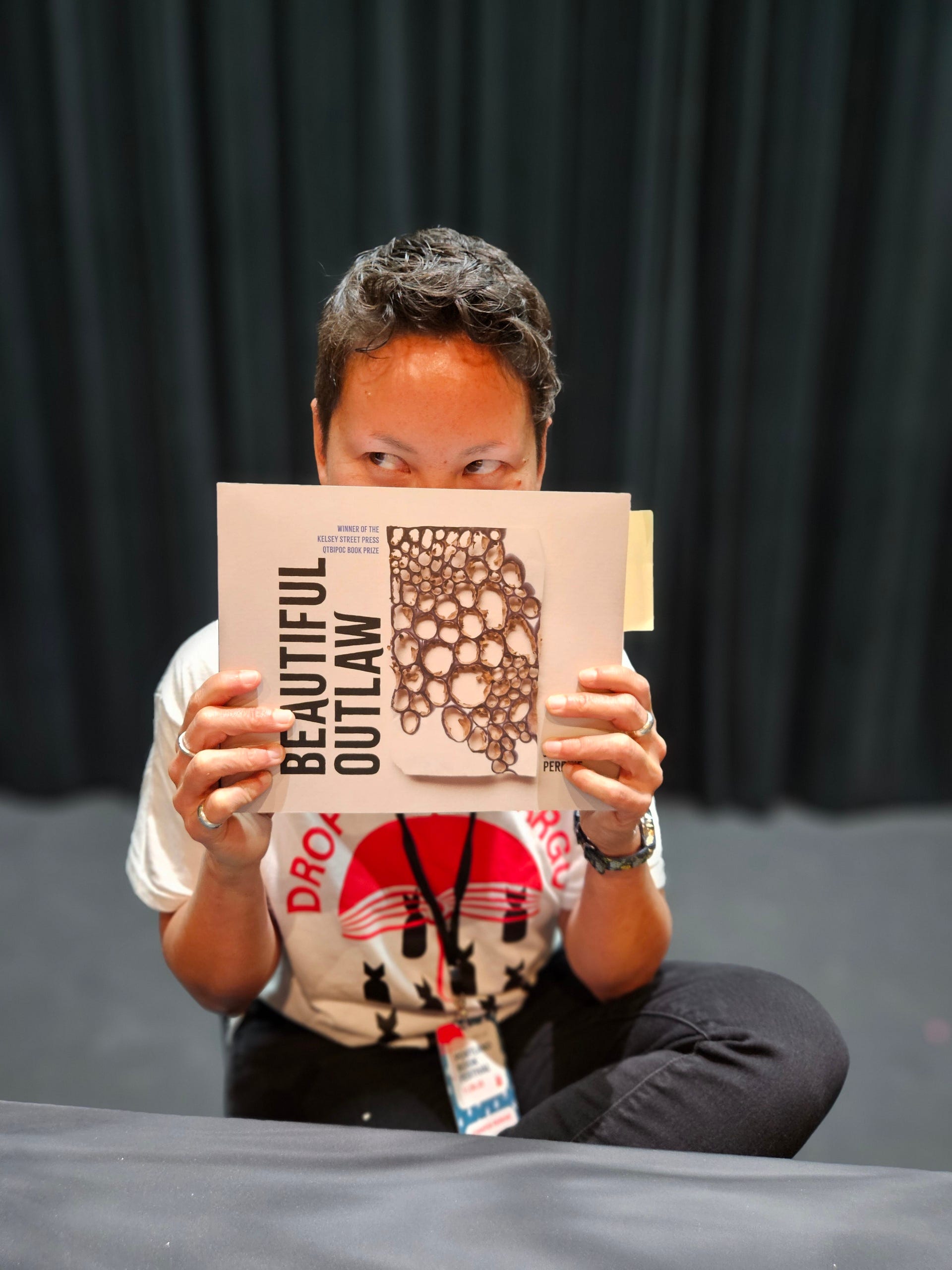
Although many of the poems are about decidedly unlovely things—misogyny, xenophobia, racism, gun violence, grief—it’s been a real delight to read from the book at events. I didn’t plan it this way, but in contrast to my previous books, this time around I’ve read almost exclusively in the company of other writers, and perhaps because of that, I’ve felt less like an orator declaiming to an audience and more like a human connecting with other members of their community. For a book that was written mostly in isolation, it’s humbling and wondrous to discover that this is where all of that lonely writing would end up. I recently learned that the book is a finalist for an Oregon Book Award, and it feels sweet to be in good company in this way, too, to see my book alongside those by Garrett Hongo, Olufunke Grace Bankole, and Justin Hocking—to name only a few of the many of this year’s finalists whom I admire.
Usually this is the part of the newsletter where I write reviews of the books I’ve read in the past month, but since it’s been many months, there have been many books! So, instead, here are a few books that have touched my heart since my last missive:
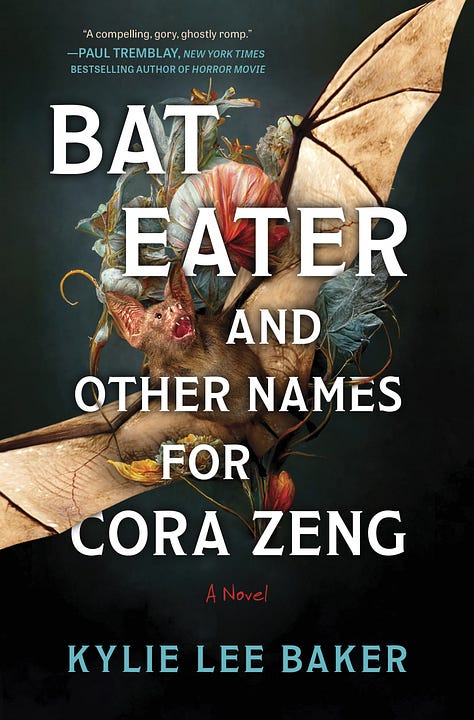
Part of the impetus for writing Beautiful Outlaw was my attempt to describe what it was like to be an Asian American person living through the wave of xenophobia and racism that was spurred by the “Chinavirus” rhetoric during the height of COVID. I needed elaborate poetic constraints to give me the container I needed to explore that, but Kylie Lee Baker tread similar ground in Bat Eater and Other Names for Cora Zeng through the horror genre. After Cora Zeng witnesses her sister being pushed in front of a train by someone shouting the words, “bat eater,” Cora is increasingly haunted by this trauma, unsure of her reality as she starts to see ghosts, bats, and dead Asian women in her everyday life. Perhaps this leap into the supernatural and speculative was the only way to so perfectly evoke the real horror and fear that so many Asian American folks felt during the pandemic.
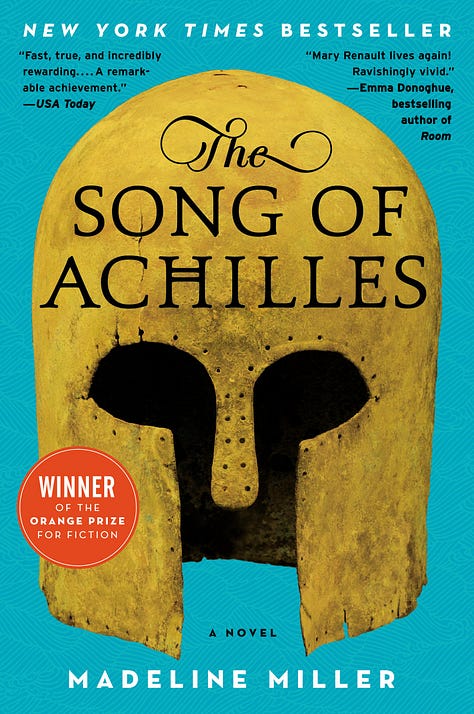
I am a sucker for a retelling, so Madeline Miller’s The Song of Achilles has been on my “want to read” list ever since I read Circe a few years back. This reimagining of the Iliad focuses on Patroclus and his relationship with Achilles, highlighting and foregrounding the romantic love that’s alluded to in Homer’s text. While I went in expecting—and getting—a queer coming-of-age story, what stuck with me about the novel was how it helped me consider the motivations of soldiers during wartime. Although Miller’s version of the Trojan War, which is still replete with the intervention of Greek gods and goddesses, feels distant from our reality, The Song of Achilles gave me deeper compassion for contemporary veterans who may have made other choices had larger forces not been steering their fate.
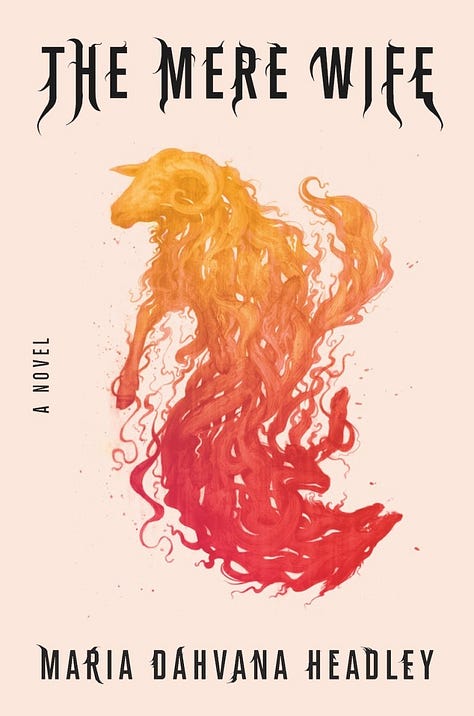
Did I say I was a sucker for a retelling? I sure am, and I was first introduced to literary retellings in high school, when my English teacher assigned John Gardner’s Grendel, which tells the epic story of Beowulf from the perspective of the “monster.” I have also always been curious about the mother of the monster—not just Grendel, but all whom we might deem “monstrous.” And Maria Dahvana Headley’s translation of Beowulf is sonically one of the best poems I’ve ever read, which is saying something. So, when I learned about Headley’s The Mere Wife, a contemporary retelling that places Grendel’s mother, Dana, at the center of the story and relocates her to the hills just outside a McMansion community, I expected to love it, and I was not disappointed. Come for the “Beowulf in the suburbs” marketing pitch, and stay for the deft commentary on racism, classism, patriarchy, and colonialism, as well as the literary flourishes, which include Old English alliteration and chapters written through the perspective of choruses of suburban mother-wives and lake creatures. (Also, Dana is a former soldier, and this book also has much to say about the lingering effects of trauma, so if you had “supernatural stories about PTSD” on your bingo card for what connects all the books I’ve loved in the last year, it’s time to claim your prize!)
In celebration of my recent certification as a nature and forest therapy guide, I’m offering a GAYAF (give as you’re able, friends!) forest therapy walk at Powell Butte Nature Park in Portland on Sunday, March 15, 9:30am-12:30pm PT. All proceeds from the walk will be donated to Portland Immigrant Rights Coalition (PIRC). It’s a win/win: Come out for some gentle, healing time in nature, and support an organization that’s doing a ton of advocacy to keep our community safe.
The following weekend, I’ll be back indoors, performing as part of Chatter PDX on Sunday, March 22, 10:30-11:30am PT at Pacific Center in downtown Portland. Chatter brings together classical chamber music and spoken word, so if you come out, you’ll also get to hear local artists Rachel Lee Priday and Judith Gordon perform the hauntingly stripped down Spiegel im Spiegel and Strauss’ fiery violin sonata. If you’ve never experienced chamber music before, I highly recommend the Chatter series—a room resonating with live music is powerful medicine, and the space is intimate enough that you can hang out and chat with the performers before and after the show, if that’s your jam.
Incite: Queer Writers Read, the series I co-host with Vinnie Kinsella, is on hiatus for a couple of months as we apply for 501c3 status and relocate to a new venue after leaving Literary Arts. But we’ll be back for a Pride month reading at Multnomah County Library’s Albina branch on Wednesday, June 3, 6-7:30pm PT. Stay tuned for more details by subscribing to our newsletter or follow us on Instagram.
If you’re the kind of person who is already planning for autumn even though it’s still winter, a) WHY? and b) consider coming out to see me at the Studio Series Poetry Reading and Open Mic at Ross Island Grocery & Café in Portland on Sunday, September 13, 7pm. I’ll be reading with Jaye Nasir, a phenomenal writer and performer who literally made me howl the last time I heard her read.
Other opportunities I recommend:
For Young Adults in Oregon:
The Humanities Action Fellowship is awarded to young adults (aged 18–25) who are interested in developing public humanities programs in their communities. Each fellow will receive a $1,500 honorarium, $1,000 for approved project expenses, and support from a mentor to complete a project that brings people together across differences of background, experience, or belief. Applications are open through Friday, April 10, and the fellowship runs from May to September 2026.
For Two-Spirit and LGBTQIA+ Adults in Oregon:
Pride in Numbers recently launched a statewide survey to gather the stories of Two-Spirit and LGBTQIA+ folks on themes from healthcare and housing to safety and belonging. Survey data will be shared back with local communities and organizations to help us strengthen and expand advocacy, policy, program, and mutual aid efforts in Oregon. The survey is available in English and Spanish, takes about 20 minutes to complete, and is confidential. They’re also concurrently running a community art project, open through October 2026, as an additional way to share stories and perspectives.
If you’ve got an opportunity you’d like me to include in a future newsletter, please let me know.
No posts
Comments
Nothing yet. Say the first thing.
Sign in to join the conversation.