
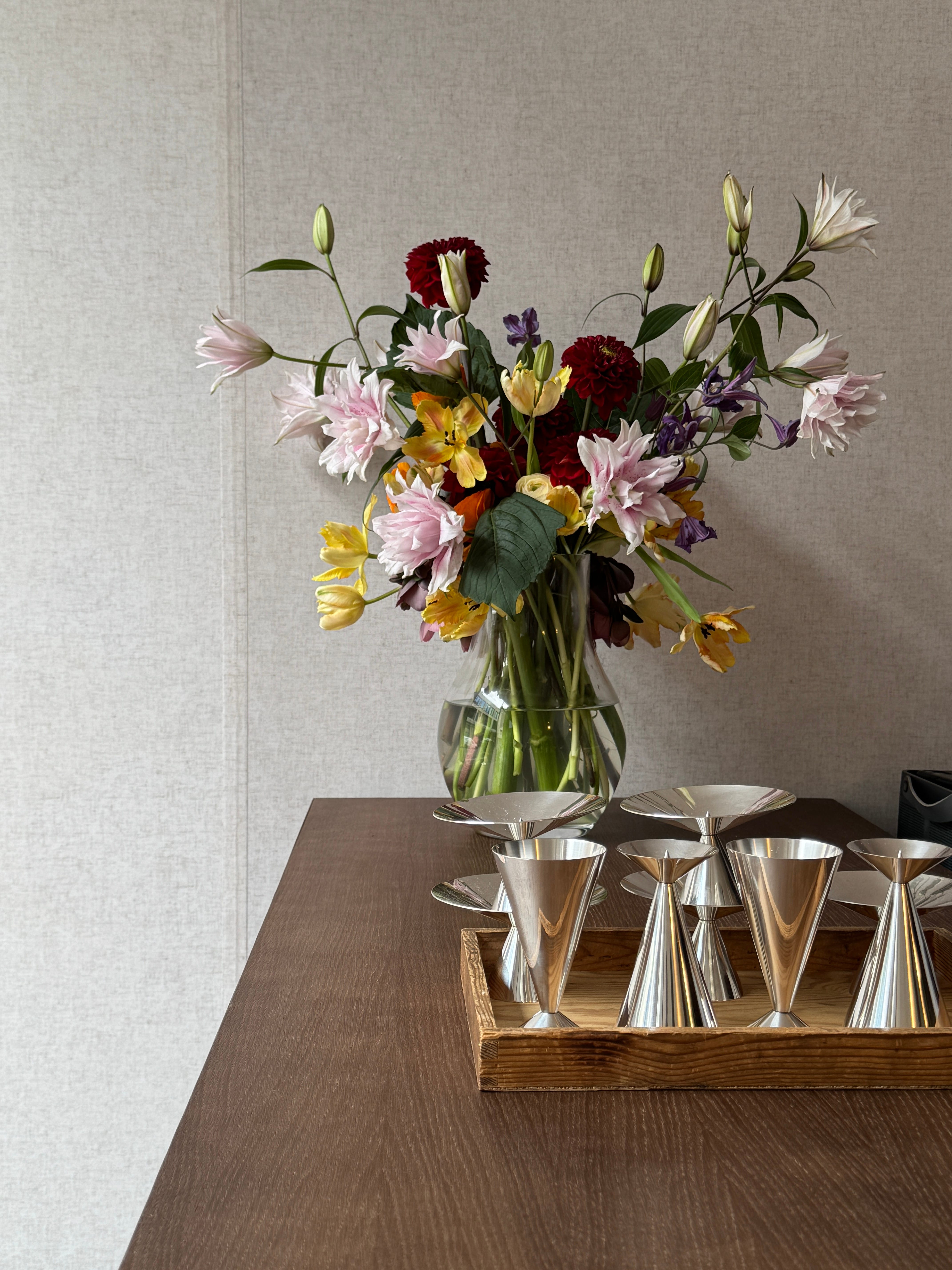
Somewhere off the main Salone circuit in April 2025, I ate a rose & raspberry ice cream out of a sterling silver cup.
Georg Jensen had turned a tiny space into a Danish gelateria: espresso, gelato and a side of crosswords. I’ve loved the brand for years, but this was something else: new pieces made not for the silver cabinet but for daily life. The little silver ice-cream pot. The cones. All of it so chic, so precisely designed, that the experience felt complete and I love nothing more than an experience elevated by aesthetics.
Silver, the stuff of locked cabinets and white gloves, was being licked off spoons in a Milan side street. And nobody blinked.
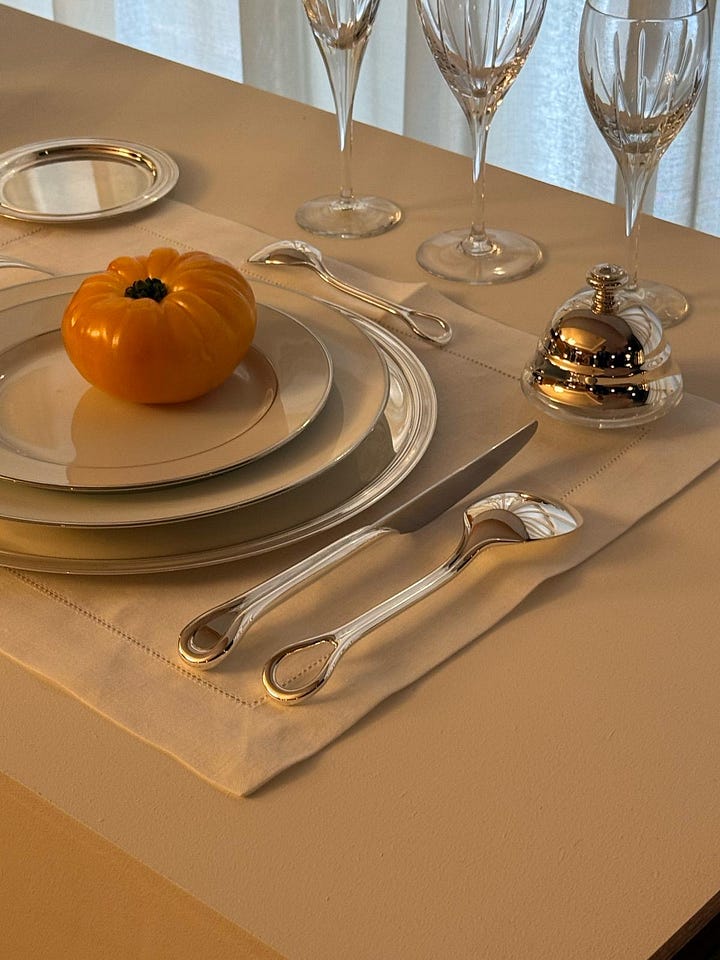
A few days later, at Sant Ambroeus, I saw Carrousel, the then-new Christofle collaboration with jewellery designer Charlotte Chesnais. No vitrine, no plinth: a whole table set with the cutlery, already lived-in, as if a lunch was about to begin. It is the best way to introduce a piece of flatware, not presented, but in use.
Looking back, those weren’t just two lovely stops on the Salone circuit. They were two heritage houses tackling the same challenge: silver has an image problem. It reads as old-school and traditional. And both had landed on the same answer: get the silver off the shelf. They just went about it differently.
The Danish Gelateria was the first public move of Paula Gerbase, appointed creative director in 2024, and it announced her entire approach in a single scoop. Her diagnosis of the brand, in her own words: silver had become something “to be handled with white gloves on special occasions.” Admired, shelved, and largely untouched. Her answer wasn’t to redesign the silver. It was to redesign the moment: take the house’s founding material and hand it an espresso, a gelato, your daily routine. Fair enough, we don’t eat ice cream every day but coffee, yes.

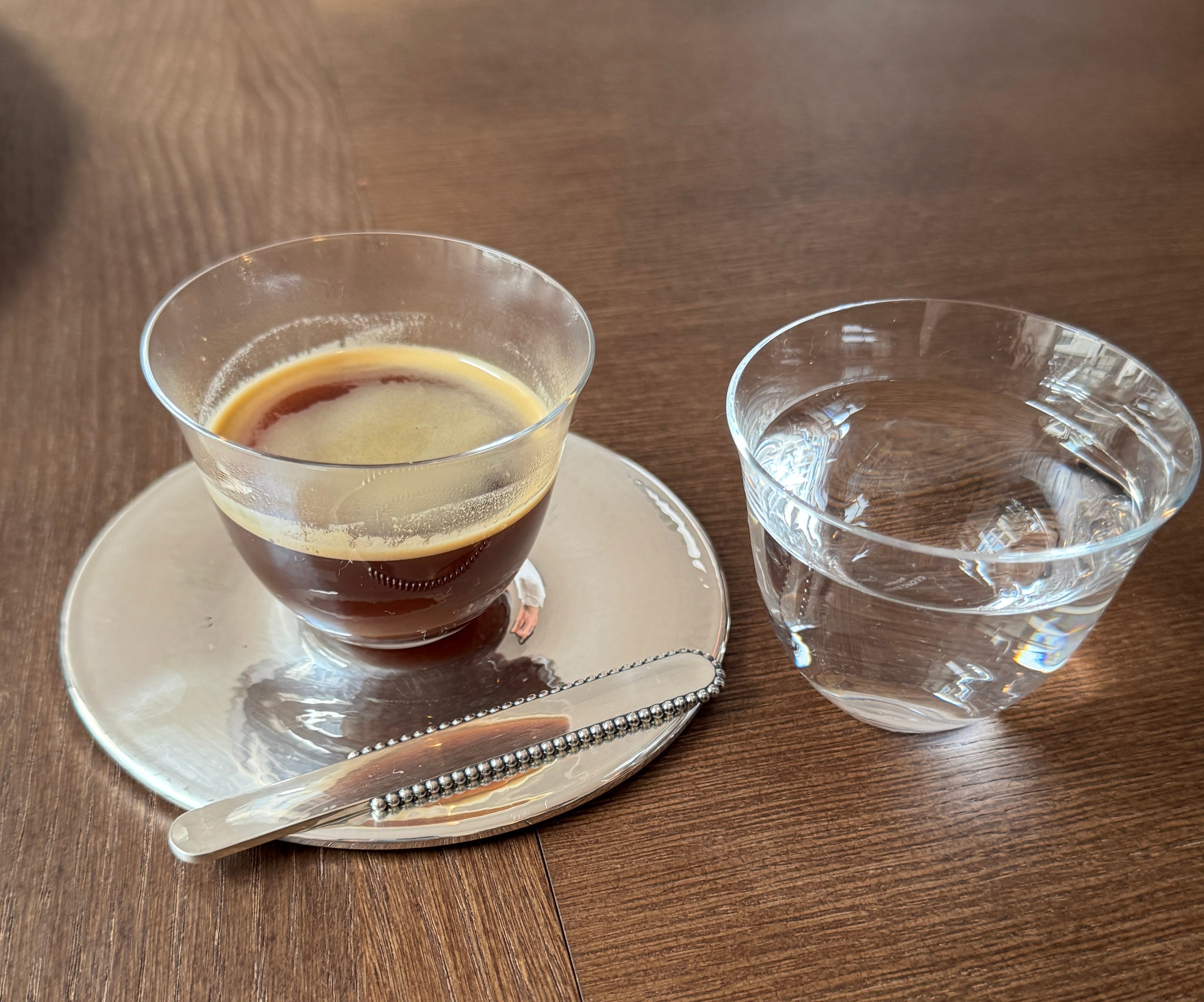
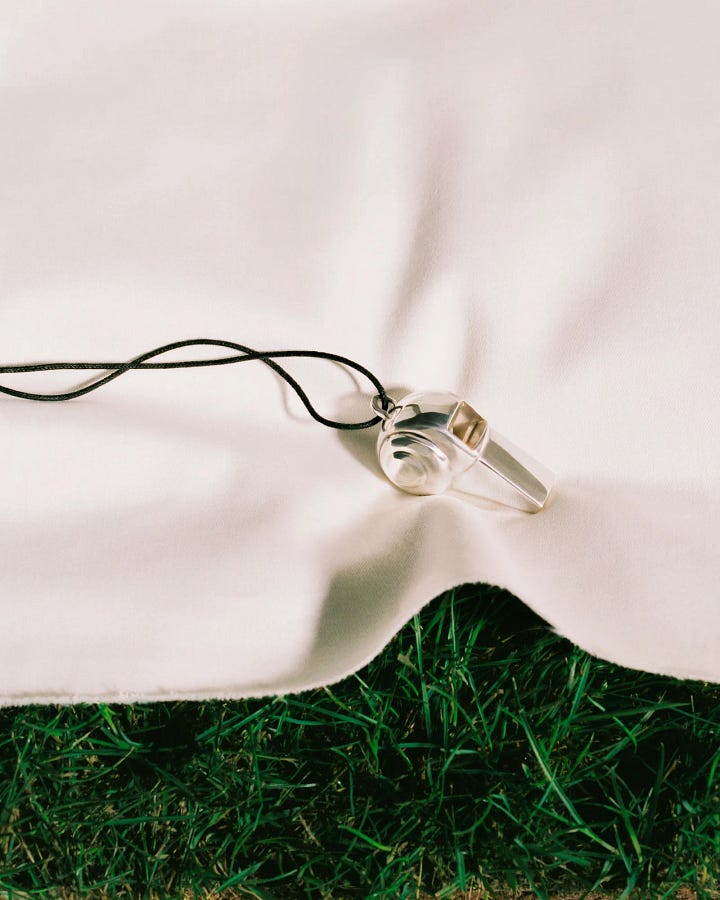
It could have been a one-off. A charming week in Milan, then back to the silver cabinet. Instead, Gerbase kept going. A series of archive jewellery, bringing back pieces by the female artists who collaborated with the house in the twentieth century. And then, just last month during 3 Days of Design in Copenhagen, the logical next step: a collection of games. Silver and stone dice, a Mikado set, a spinning top, a snail whistle, a silver take on the Scandinavian lawn game Kubb, all of it set up in a garden where people could actually play. Gelato in 2025, games in 2026. From silver you eat with to silver you lose to your competitive friend on a summer lawn.

There’s a line of Gerbase’s I keep thinking about: “If you inherit something, you’re inheriting it with the traces of moments well lived.” That’s the whole strategy in one sentence. She isn’t fighting silver’s association with heritage, she’s changing what heritage means. Not the untouched cabinet but the used and loved object that earned its patina at the table. It’s the smartest kind of repositioning, because nothing about the product has to change. Only the way we experience it does.
Christofle’s answer began with an unexpected name on the brief: Charlotte Chesnais, a jeweller.
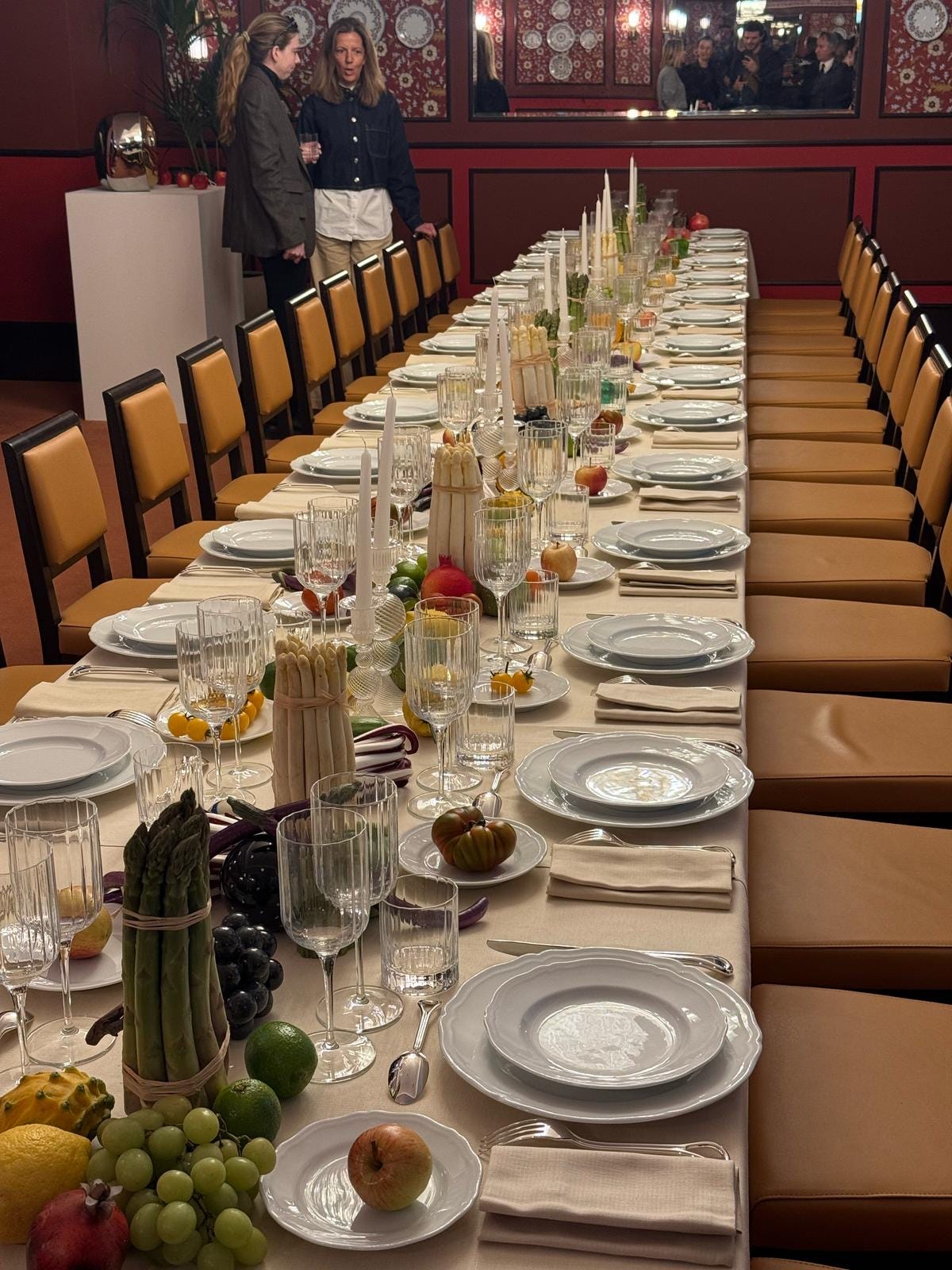
The logic is quietly smart. Jewellery is the one category of metal object nobody keeps in a cabinet. We wear it and we live in it. Chesnais brought that language to the table with Carrousel: curves borrowed from the body, a teardrop at the base of each fork and spoon, cutlery designed to be desired rather than inherited.

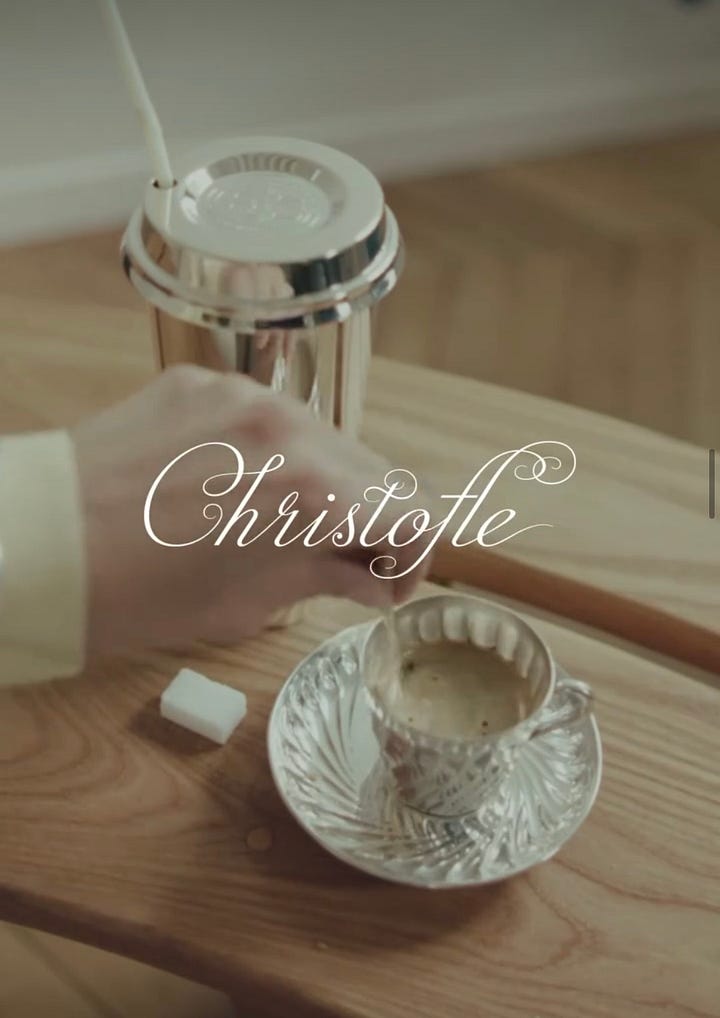
Then there’s my favourite of their recent moves: the silver takeaway coffee cup. The Objets Miroir collection took the most disposable object of modern life, the large paper cup we all carry and toss without a thought, and remade it in silver. It’s beautiful and slightly absurd. Let’s be honest, no one would actually buy and use a silver takeaway cup. But it changed the perception of the brand.
The images changed too. Christofle’s silver used to be photographed like archive material: still, polished, alone. Then it started appearing in the hands of Mélanie Masarin, the founder of Ghia, photographed at home in Paris with that silver takeaway cup, perched on shipping crates stamped FRAGILE mid-renovation. The casting is the strategy: not a celebrity, but a founder who built a modern aperitivo ritual from scratch, holding the oldest name in French silver. New faces, new settings, still silver.

None of this is a comeback. These houses never stopped being the reference: Christofle spent last winter being celebrated at the Musée des Arts Décoratifs in Paris, and Georg Jensen remains the name in Danish silver. But being the reference and being desired are two different things, and they know it. The generation they’re speaking to now didn’t grow up with a silver cabinet. They aren’t waiting to inherit a canteen of cutlery, and most will never collect in the old sense, twelve of everything, kept for best. That model of ownership is quietly fading, and rather than wait for it to disappear, the houses went looking for a new reason to be wanted.
Both found the same one: use. Not for legacy, not for investment, not for special occasions. A coffee, a game, a fork you actually want to hold. The silver earns its place at the table like everything else now.
Maybe that’s why these two collections stayed with me long after Milan. It’s the way I’ve always felt about objects: the good ones aren’t the ones kept behind glass, they're the ones living with us, collecting our memories along the way.
Stay cosy until next time, Jx
If you like this please drop a ❤️ , share it with a friend, leave a comment, or subscribe! For more JOSI, you can follow us on IG.
No posts
Comments
Nothing yet. Say the first thing.
Sign in to join the conversation.