
The QWERTY keyboard layout, a computing standard, was invented in the 1870s for mechanical typewriters. The arrangement was deliberately inefficient to force slower typing, preventing jamming of the typebars that collide with the ink ribbon. One hundred years later, the computer made jamming irrelevant. Keyboard alternatives such as the Dvorak layout - which can increase typing speed and reduce errors by about 70% each - were surely about to have their moment.
But nope. We didn’t, and still haven’t changed.
Why? Well, we all know QWERTY. It would cost a lot to change all that hardware. It takes time to become proficient at Dvorak. There are more than a dozen reasonable alternatives similar to Dvorak, so how will we even choose which to go with?
The status quo is effective at rejecting the potential change, even when the benefits of changing are objective and clear. Knowledge is not enough.
The modern organisation is a perfect example: Joyous work remains the exception, not the norm, despite our lived experience that tells us something is wrong about how we work, and a wealth of insight from pioneering organisations and researchers that paint a picture of better.
There is a gap between the thinking and the change. Perhaps it is a chasm.
This chasm is an outcome of a modern organisation that is a status quo precisely because it is so effective at killing potential change, just like QWERTY rejects Dvorak.
You can’t question the fragmentation of the organisation if some people risk losing power and status, that’s a boardroom presentation so quick you’ll be out the door before you can ask, What flavour is that danish? And you can’t attack the underlying causes of relentless emails, instant messages, and meetings suffocating you out of time to drive change when, well, you are being suffocated out of time to drive change. That’s some elegant self-defence.
We need to approach change for our systems of work in the same way we do other complex systems like the environment, government, cities, and healthcare: finding leverage.
These are small changes that attack the root causes of work-about-work: changes small enough not to trigger the blockers of change, but because they are targeting the root causes of all that junk, it also has a meaningful, enduring impact.
What stops most of us from making these leverage changes is the simple but critical question: Well, what exactly do I change?
That’s what Joyous Work is focused on: surfacing the small changes that have the largest positive impact. We see and understand the common patterns in systems of work, so we know how a small change here, can lead to a massive change there.
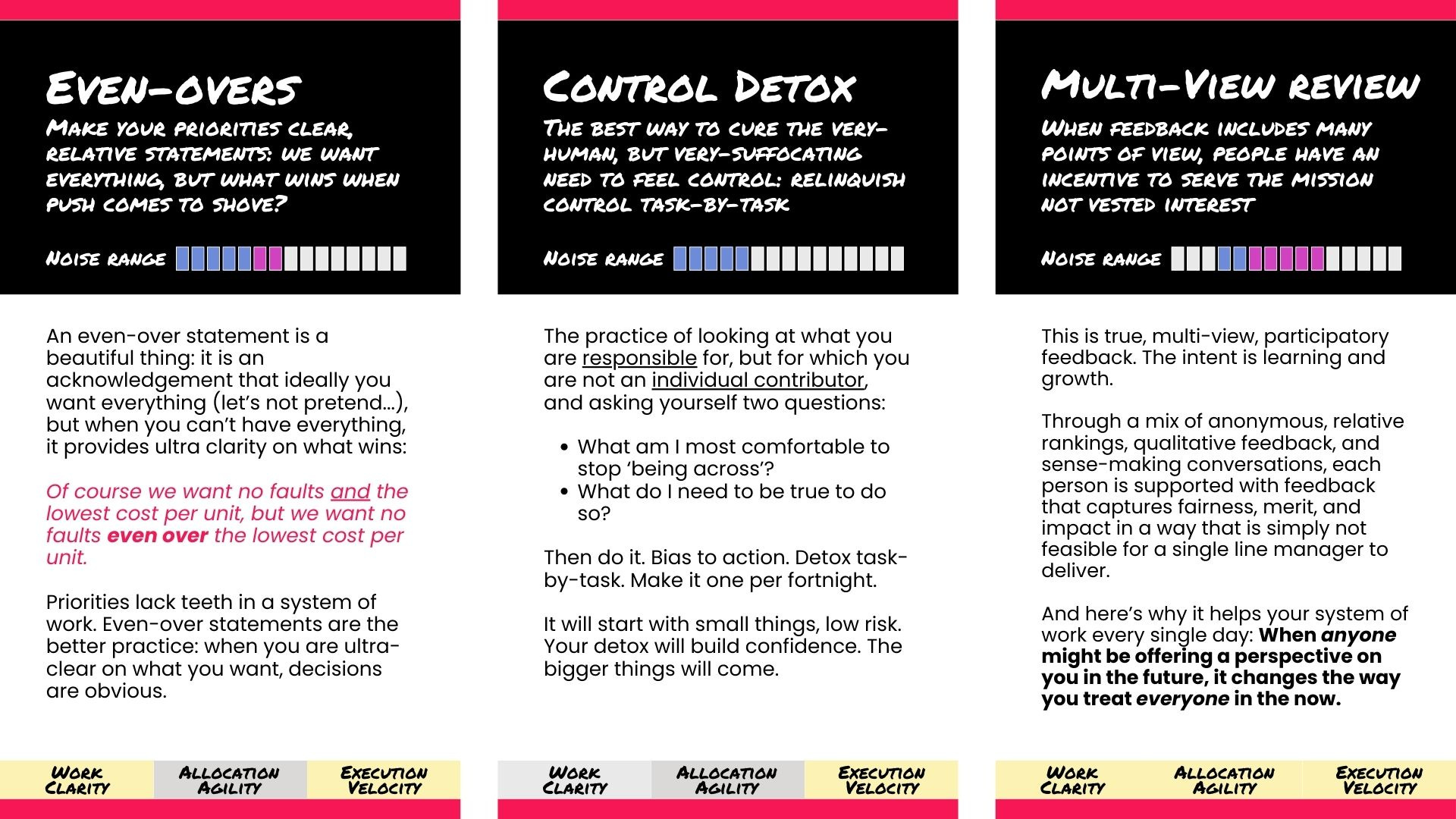
We share these changes through Practice Cards, each is a small change you can make today for massive impact in the future. For example, reduce time debating work with even-over statements, reduce time soothing anxieties up the chain of command with a control detox, or reduce the destructive power of fragmented, vested interests with multi-view reviews.
Leverage is the answer to change. It is how we take our organisations from QWERTY to Dvorak.
You don’t need to be the boss. You don’t need the power to change it all. You just need to start with the smallest change, and you can start tomorrow. Joyous work is within your reach.
At Joyous Work, we help organisations of all sizes to identify and eliminate the work-about-work that suffocates people from executing their crafts. Consistently joyous and super-productive work is closer than you might think. Visit joyouswork.com or reach out to john@joyouswork.com.
Comments
Nothing yet. Say the first thing.
Sign in to join the conversation.