
We just launched a paid version of the Joy of Cooking newsletter, but podcast updates and occasional posts are still free for all subscribers. Consider a paid subscription to support the work we do here and on the podcast.
If a paid subscription isn’t in the cards for you, that’s OK! You can still support our podcast by listening, subscribing, downloading episodes, and rating us. Find us on Apple Podcasts, Spotify, or wherever you listen to podcasts. You can also buy cookbooks from our Bookshop affiliate storefront or support our Patreon. This newsletter contains affiliate links.
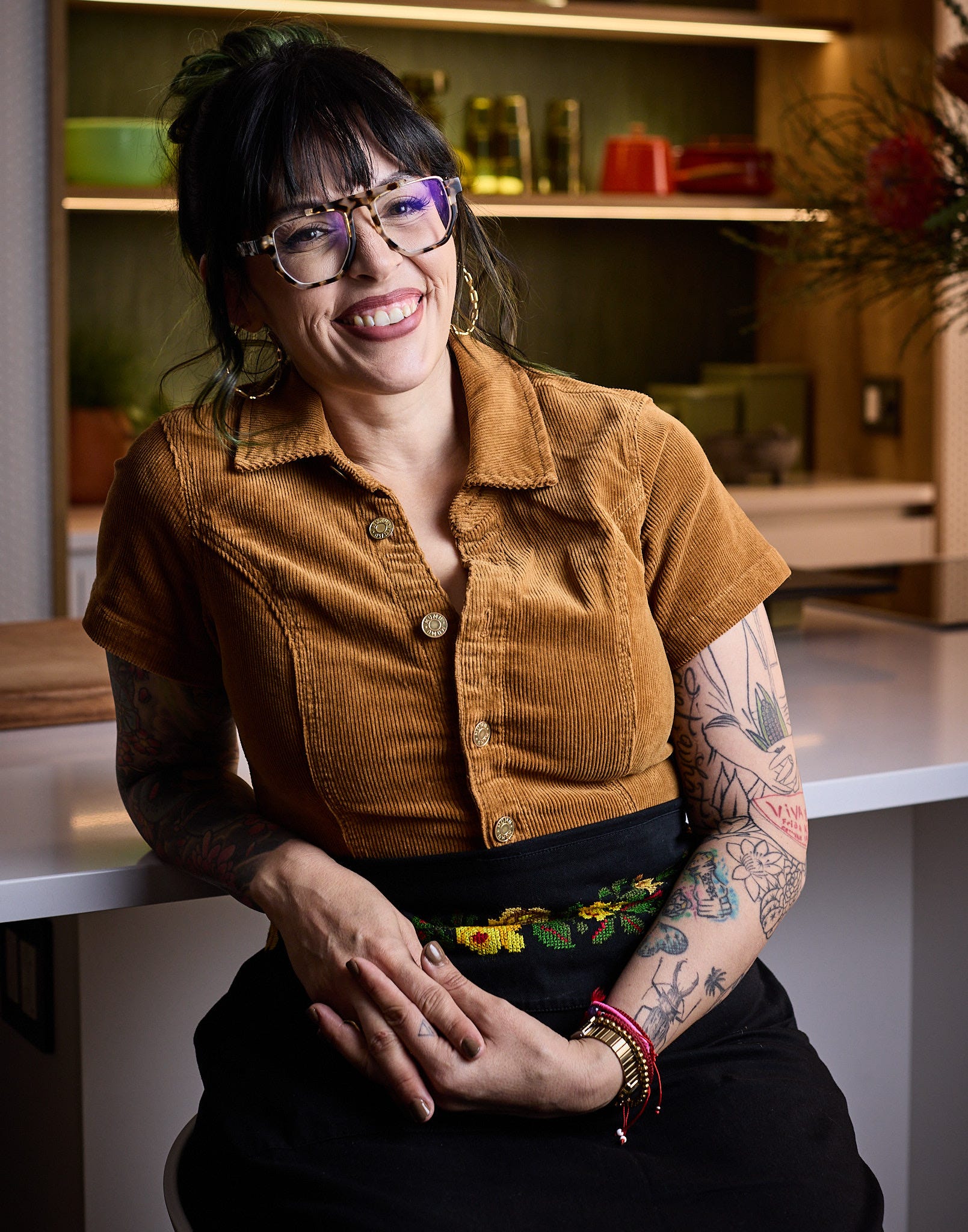
In this week’s episode, we spend a lot of time with our guest, Claudette Zepeda, talking about what defines the cuisines of the borderlands between the United States and Mexico. In literal terms, she spoke of the foods there being more acidic, saltier, and spicier. But in a more general sense, she spoke of the borderlands as a place where many food cultures come together to create a cuisine that is not unlike a patchwork quilt: made of many parts that may not seem to go together but that merge into a cohesive and beautiful whole.
I brought up the ecological concept of the ecotone: how the area where two habitats meet is often marked by greater biodiversity. That edge is where many different species converge and where new or distinct species evolve to take advantage of its specific conditions. But when describing what the food of the US-Mexico border is like, Claudette put it best: “Our food is more delicious when we hang out together.”
In that way, the food of the borderlands is remarkably borderless, or boundless. People from all over come to this liminal space, bringing their experiences and knowledge with them because culture, food culture in this case, knows no borders. A line drawn on a map might tell you what country you are in, but it can’t delineate culture so easily. And the mingling of these cultures, these foods, is often wildly delicious, with flavors stacked upon flavors and the volume dialed all the way up.
To hear more from the brilliant and very stylish Claudette Zepeda, listen to this joyous (and hunger-inducing) episode and buy her book, Cooking the Borderlands, wherever you buy books.
The surprising (to me at least!) origins of aguachile.
Claudette’s secret for making top-notch corn tortillas.
How grandmas are always right (at least in spirit).
Using zucchini to stretch a batch of guac.
How passed-down cooking tools can remind you of where you come from.
Chinese influence in the cuisine of Mexicali.
Our favorite sleeper recipes from Joy.
The caller question this week was about “sleeper recipes” in Joy, and John’s pick was Strawberries Cockaigne on page 178. This fits the definition of a sleeper recipe because it takes up almost no space on the page, doesn’t even have a yield, and doesn’t involve cooking at all. Blink and you’ll miss it. But it was one of John’s grandmother Marion’s absolute favorites, and once you try it you’ll understand why.
The combination of fresh strawberries, sour cream, and brown sugar cannot really be described—it needs to be experienced. You will probably close your eyes and sigh as you eat it. I always do.
To submit a question or story to our hotline, leave a message at 503-395-8858, or send a text.
No posts
Comments
Nothing yet. Say the first thing.
Sign in to join the conversation.