
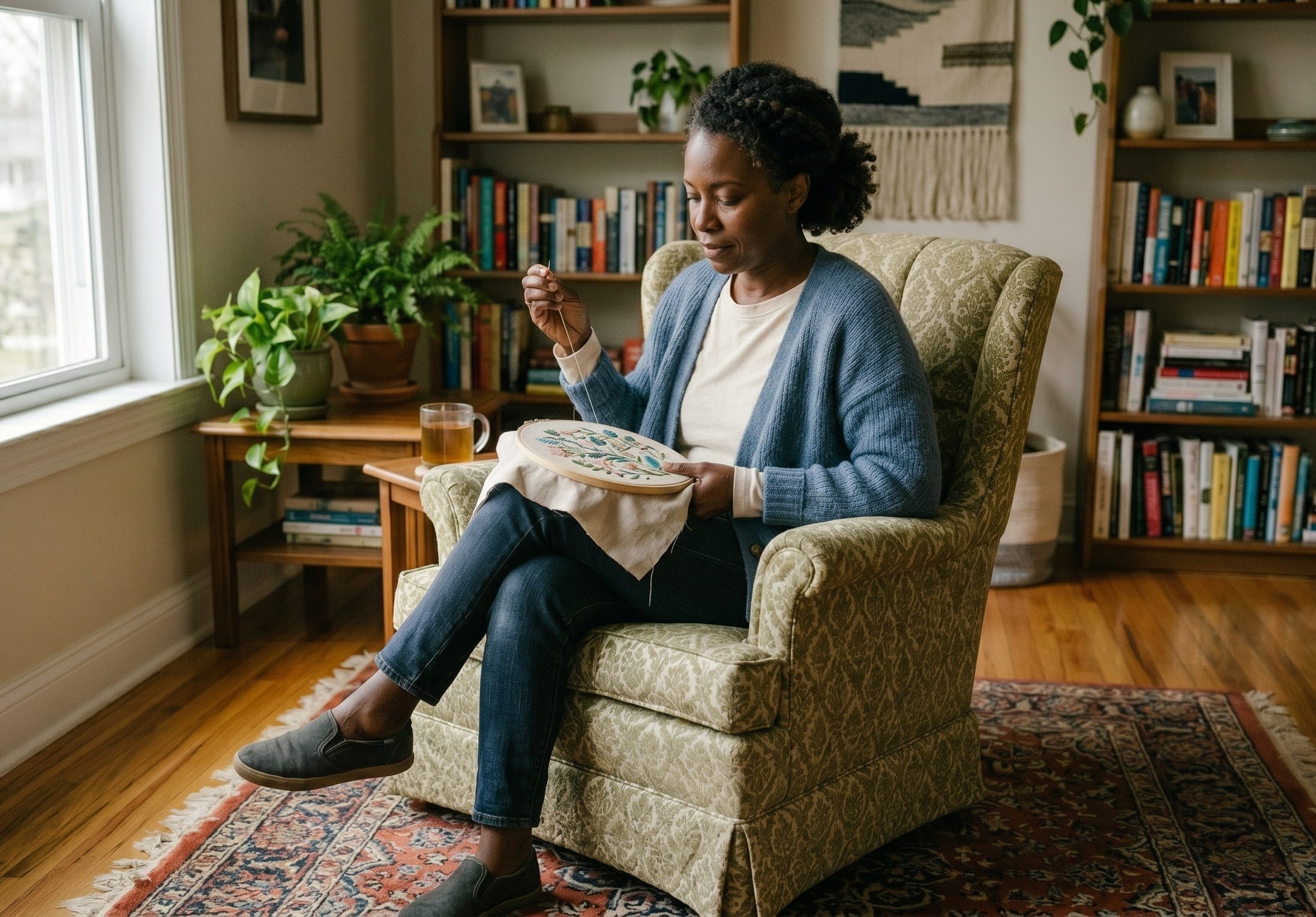
I’m selfishly writing this post for myself because I keep hearing about stitchers getting repetitive stress injuries, and I desperately want to avoid that myself. I was sitting outside one morning doing some hand stitching, and my upper back began to ache. I realized that I’d been hunched over my work in an unhealthy way. The ache in my neck and back inspired me to write about the importance of proper posture when stitching to help you avoid the pain I was feeling.
If you’re someone who works at a keyboard all day and then does hand stitching to relax in the evenings, this is for you because you’re spending a good portion of the day doing repetitive tasks with your hands and fingers.
Poor ergonomics can cause fatigue, upper back, shoulder, wrist, and elbow problems, carpal tunnel syndrome, and more. We often take to hand-stitching, knitting, crochet, and the like because of their repetitive nature. Performing rhythmic hand movements is relaxing and grounding, and it’s good for the brain and nervous system. But holding yourself in an unhealthy position for long periods can cause cumulative injury to your body.
Given that I am not a physical therapist, I decided to do a deep dive into the information available online to support improved posture while I’m stitching, to prevent injuries in the future.
How Do You Sew Without Hurting Your Back & Hands?
This article includes tips for getting into the correct body position for hand sewing to avoid repetitive stress injuries.
Stitch Without Strain: Ergonomics for Embroiderers
This article covers why proper ergonomics matters when you are doing hand embroidery, and it recommends products such as embroidery hoops, stands and frames, lighting and more. It also covers the importance of taking movement breaks to reset the body after sitting and doing intense work for long periods.
How to have a correct Hand Sewing Posture
Exercises for people who sit a lot
After my deep dive about ergonomics and posture, I’m going to buy myself a stand to support my embroidery hoop and bring it closer to eye level, so I won’t need to hunch over my work. I’m also going to be more mindful of taking breaks after I’ve been sitting and stitching for a while.
Adding a mindfulness element to your stitching routine can also help avoid repetitive stress injuries, once you’ve got your proper posture in place. You might do an occasional check-in with your body as you are working. Put your work down and do a quick, mental body scan from your toes to your head. Breathe into the places that feel uncomfortable and adjust your position to support your body better.
What changes might you make to ensure that you’re working in an ergonomic way to support your body while working on hand stitching.
Comments
Nothing yet. Say the first thing.
Sign in to join the conversation.