🧠 What Actually Makes AI Agents Intelligent? - Micheal Lanham
💧Machine Learning for Fluid Mechanics: Analysis, Modeling, Control and Closures
This is the second lecture series dedicated to machine learning for fluid mechanics. The course is hosted by the Université libre de Bruxelles (ULB) from 29 January to 02 February 2024.
The lecture series is co-organized by Miguel A. Mendez from the von Karman Institute (Belgium), Alessandro Parente from the Université libre de Bruxelles (Belgium), Andrea Ianiro from Universidad Carlos III de Madrid (Spain), Bernd R. Noack from Harbin Institute of Technology, Shenzhen (China) and TU Berlin (Germany) and Steven L. Brunton from University of Washington (US).
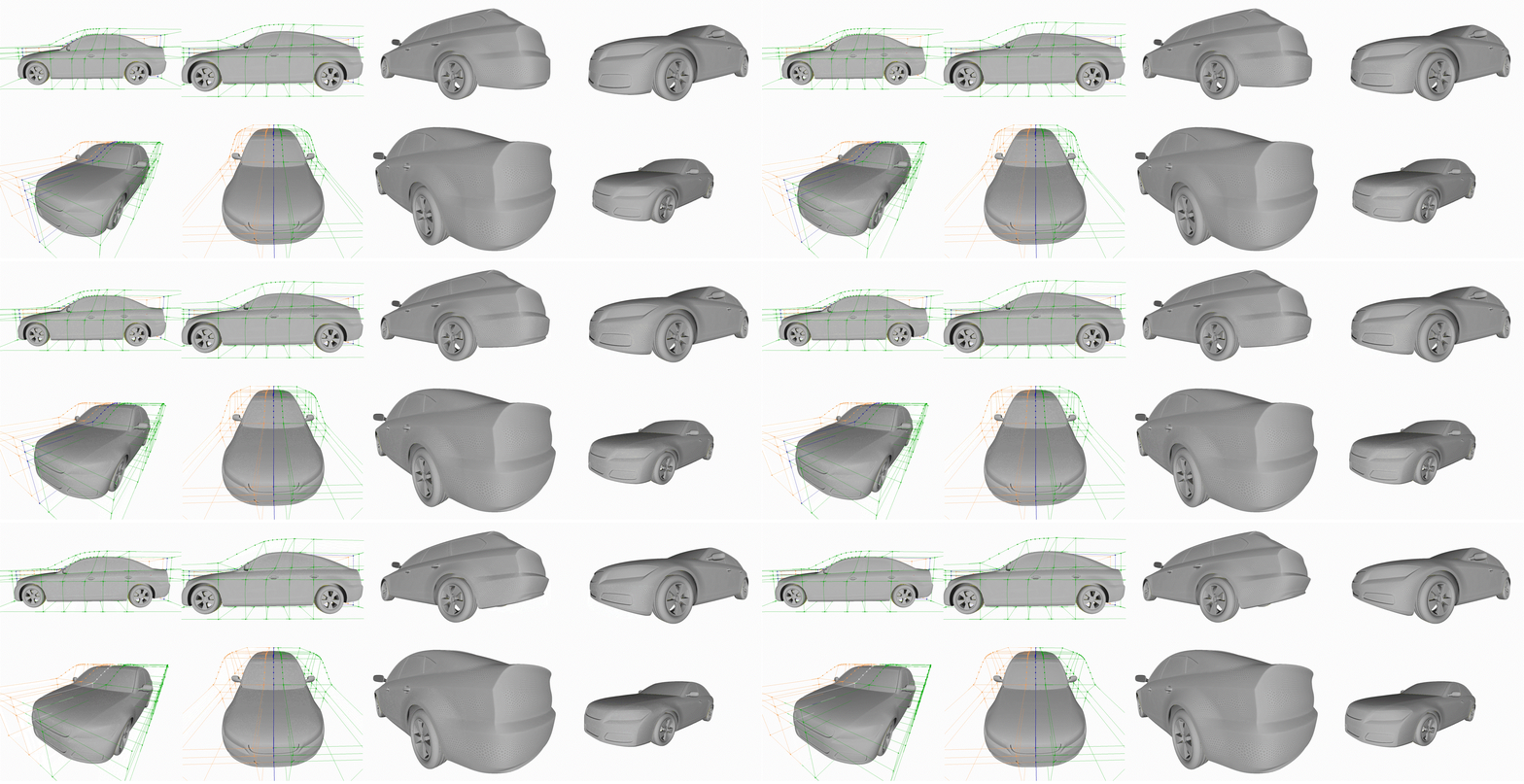
In this work, the authors introduce the first multi-agent system for car design, integrating: 🔹 𝗙𝗼𝘂𝗻𝗱𝗮𝘁𝗶𝗼𝗻 𝗺𝗼𝗱𝗲𝗹𝘀 (GPTs, Stable Diffusion) for language and vision 🔹 𝗚𝗲𝗼𝗺𝗲𝘁𝗿𝗶𝗰 𝗱𝗲𝗲𝗽 𝗹𝗲𝗮𝗿𝗻𝗶𝗻𝗴 models trained on physics-based simulations 🔹 𝗔𝗴𝗲𝗻𝘁𝗶𝗰 𝘄𝗼𝗿𝗸𝗳𝗹𝗼𝘄𝘀 that connect seamlessly with engineering tools
From a 𝗵𝗮𝗻𝗱-𝗱𝗿𝗮𝘄𝗻 𝘀𝗸𝗲𝘁𝗰𝗵 → to 𝗽𝗵𝗼𝘁𝗼𝗿𝗲𝗮𝗹𝗶𝘀𝘁𝗶𝗰 𝗿𝗲𝗻𝗱𝗲𝗿𝗶𝗻𝗴𝘀 → to 𝟯𝗗 𝘀𝗵𝗮𝗽𝗲 𝗴𝗲𝗻𝗲𝗿𝗮𝘁𝗶𝗼𝗻/𝗿𝗲𝘁𝗿𝗶𝗲𝘃𝗮𝗹 → to 𝗵𝗶𝗴𝗵-𝗾𝘂𝗮𝗹𝗶𝘁𝘆 𝗖𝗙𝗗 𝗺𝗲𝘀𝗵𝗲𝘀 → to 𝗿𝗲𝗮𝗹-𝘁𝗶𝗺𝗲 𝗮𝗲𝗿𝗼𝗱𝘆𝗻𝗮𝗺𝗶𝗰 𝗲𝘃𝗮𝗹𝘂𝗮𝘁𝗶𝗼𝗻, this framework shows how AI agents can seamlessly connect creativity with performance.
💦 Φ-SO : Physical Symbolic Optimization - Learning Physics from Data
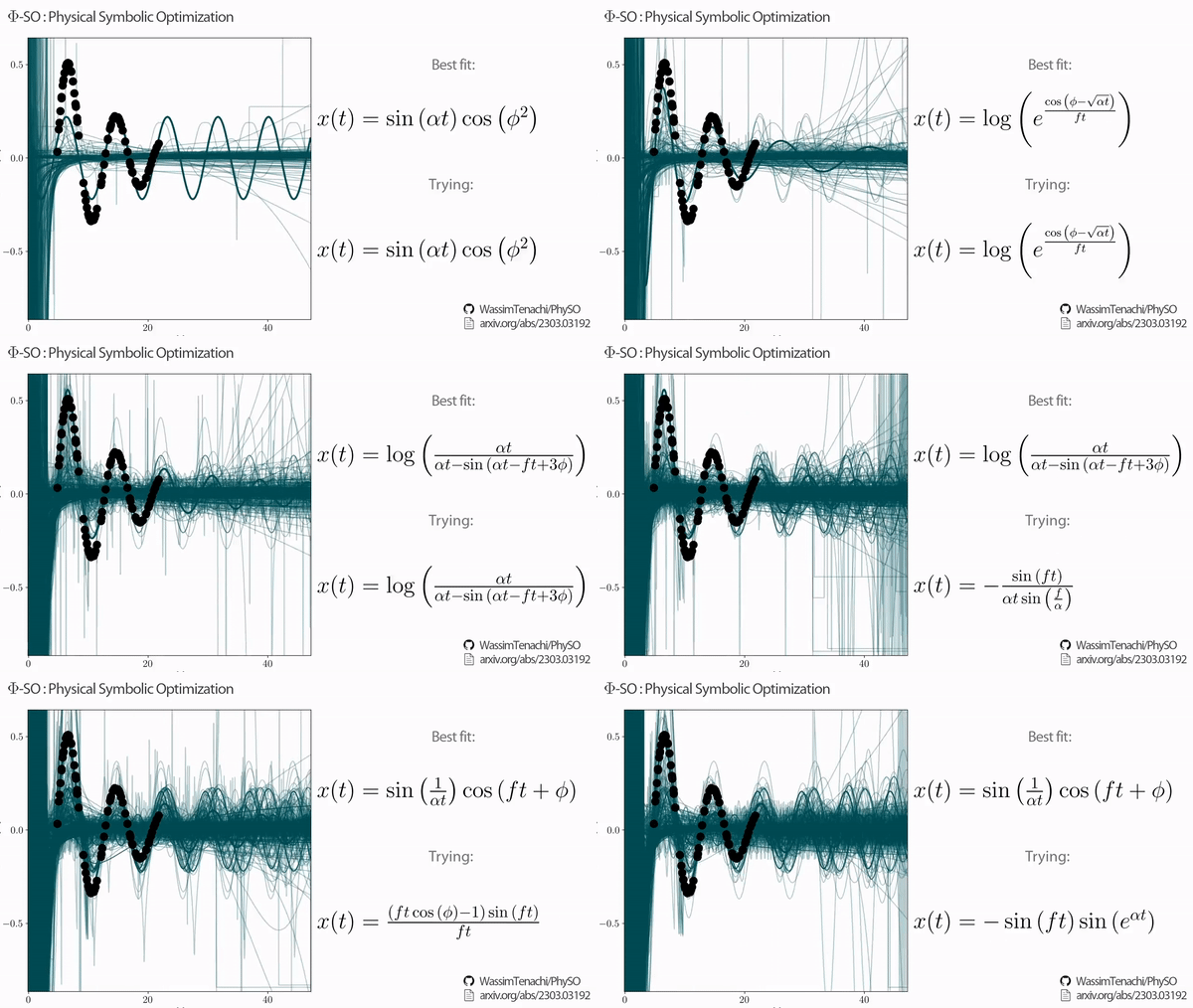
The Physical Symbolic Optimization package uses deep reinforcement learning to discover physical laws from data. Here is Φ-SO discovering the analytical expression of a damped harmonic oscillator.
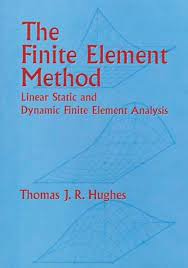
Engineering Tool of the Week – The Finite Element Method: Linear Static and Dynamic Finite Element Analysis
This text is geared toward assisting engineering and physical science students in cultivating comprehensive skills in linear static and dynamic finite element methodology. Based on courses taught at Stanford University and the California Institute of Technology, it ranges from fundamental concepts to practical computer implementations. Additional sections touch upon the frontiers of research, making the book of potential interest to more experienced analysts and researchers working in the finite element field.
Computational analysis tools have revolutionized the way we design engineering systems, but most established codes are proprietary, unavailable, or prohibitively expensive for many users. The SU2 team is changing this, making multiphysics analysis and design optimization software freely available and involving everyone in its creation and development.




Comments
Nothing yet. Say the first thing.
Sign in to join the conversation.