
“It is easier to carry an empty cup
than one that is filled to the brim.”
Lao Tzu
We often fail to realize how essential emptiness is. Perhaps it is because we instinctively value something over nothing. We tend to cherish sound more than silence, life more than death, and certainty more than the unknown. Likewise, we often prefer filling our minds, expressing our thoughts, and staying busy over stillness, silence, and simply ‘being’.
To the modern human, what’s emptiness but a deficiency to be filled?
But the ancient Taoists saw emptiness very differently. They believed emptiness has inherent value. In fact, they saw it as one of the most important principles of life, which shouldn’t be avoided but cultivated. The ancient texts provide various examples of how emptiness is important and how it can benefit our lives in profound ways.
Imagine walking through a large, beautiful, bustling city like Paris, Rome, or perhaps Singapore. Since Taoism is very much present in Singapore, it seems like a fitting place for our thought experiment.
So, you’re walking through Singapore. What do you see? You see skyscrapers in the distance, a Hindu temple on your left, a coin laundry on your right, and a subway station in front of you. You see people walking around, trees and plants decorating the sidewalks, and cars driving on the insanely clean streets.
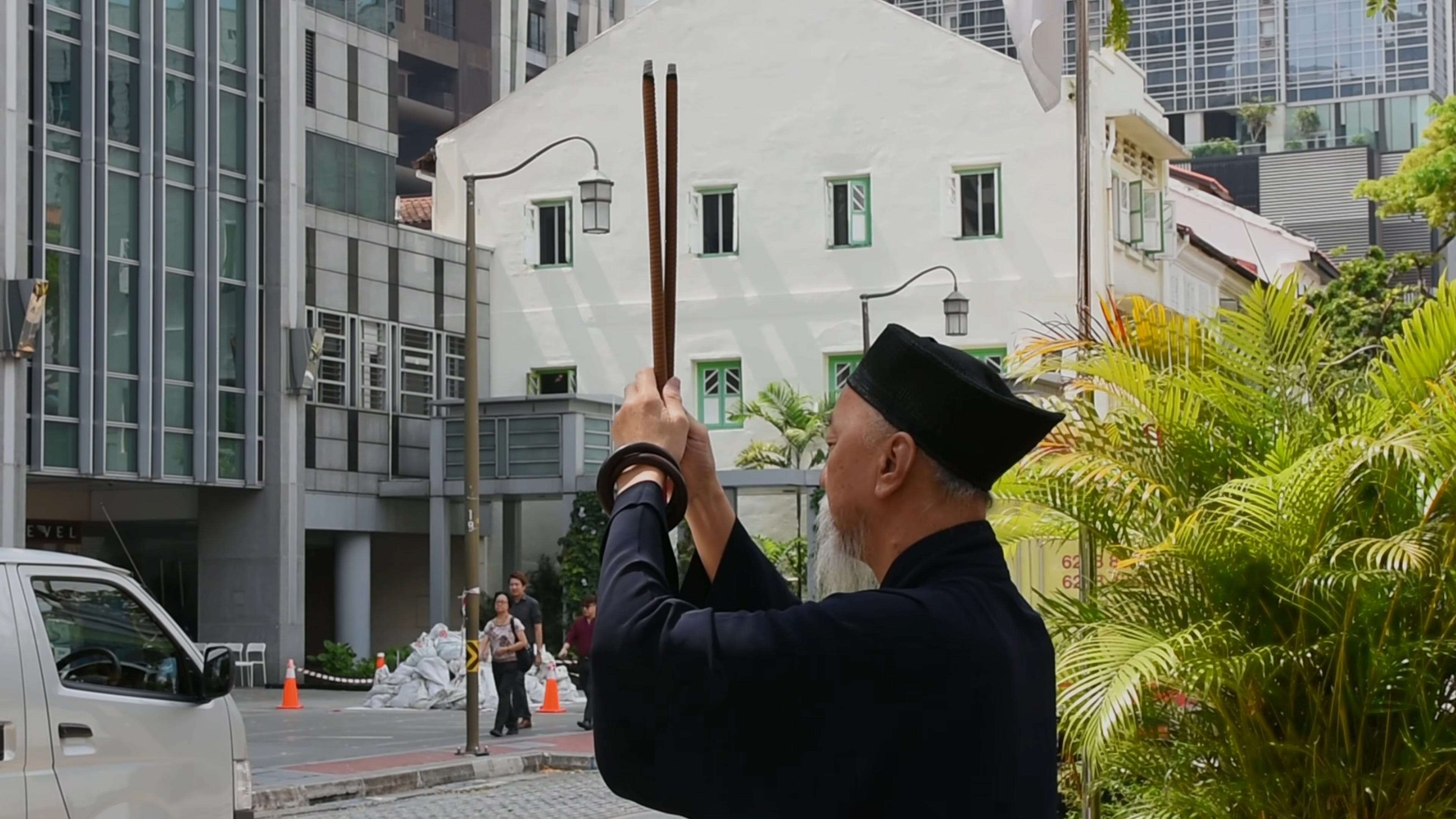
There’s much to see in Singapore. It’s a colorful, diverse place. But as you walk through its streets, are you paying attention to what isn’t there? Are you aware of the spaces around and within everything you see? These questions may seem strange, but the Taoists argued that emptiness is as much a part of things as their physical form. In fact, it is often emptiness that makes them useful.
Thirty spokes are joined together in a wheel,
but it is the center hole
that allows the wheel to function.
We mold clay into a pot,
but it is the emptiness inside
that makes the vessel useful.
Lao Tzu, Tao Te Ching, chapter 11 (John H. McDonald)
When we think about it, without emptiness none of the things we observe in our world can really exist, as the ancient Greek philosopher Parmenides already suggested. We need empty space. We need it for movement, for separation between objects and beings, for making anything functional.
Take a house, for example. We may put great emphasis on the materials used to build it, such as its concrete walls, wooden doors, or soundproof windows. We want the foundation to be strong, the roof to be durable. But, as Lao Tzu suggested, isn’t the emptiness inside that makes it livable? Sure, we use the materials to put the house together, but it’s mainly the empty spaces between them that we use.
The same goes for anything in a city, like Singapore: it’s the empty space within subway stations that allows us to enter, walk to the platforms, and board trains. It allows these trains to move within the tunnels in the first place.
So, emptiness turns out to be highly essential for our existence.
Okay. That’s a nice observation. But how could this notion help us in our daily affairs? The ancient Taoist texts show that the significance of emptiness isn’t limited to the mere functionality of objects in the world; it also applies to the workings of our minds and how we feel.
From a Taoist perspective, the problem with many people is that their minds are simply ‘too full’. Let’s take a look.
Give up intellectual learning
and you will have no worries.
Agreement and disagreement,
are they really so different?
Good and evil,
are they really so far apart?
What others fear, must I also fear?
This nonsense is unending!
Lao Tzu, Tao Te Ching, chapter 20 (Solala Towler)
In this translation by author and qigong teacher Solala Towler, is Lao Tzu advocating for full-blown anti-intellectualism?
Not really, at least not the kind of anti-intellectualism we often see today, where people reject institutional systems of knowledge, sometimes for understandable reasons, only to replace them with influencer slogans, simplistic worldviews, and conspiracy narratives that lack evidence and reinforce personal biases. That, too, is a form of “intellectual learning,” but a pretty poor one.
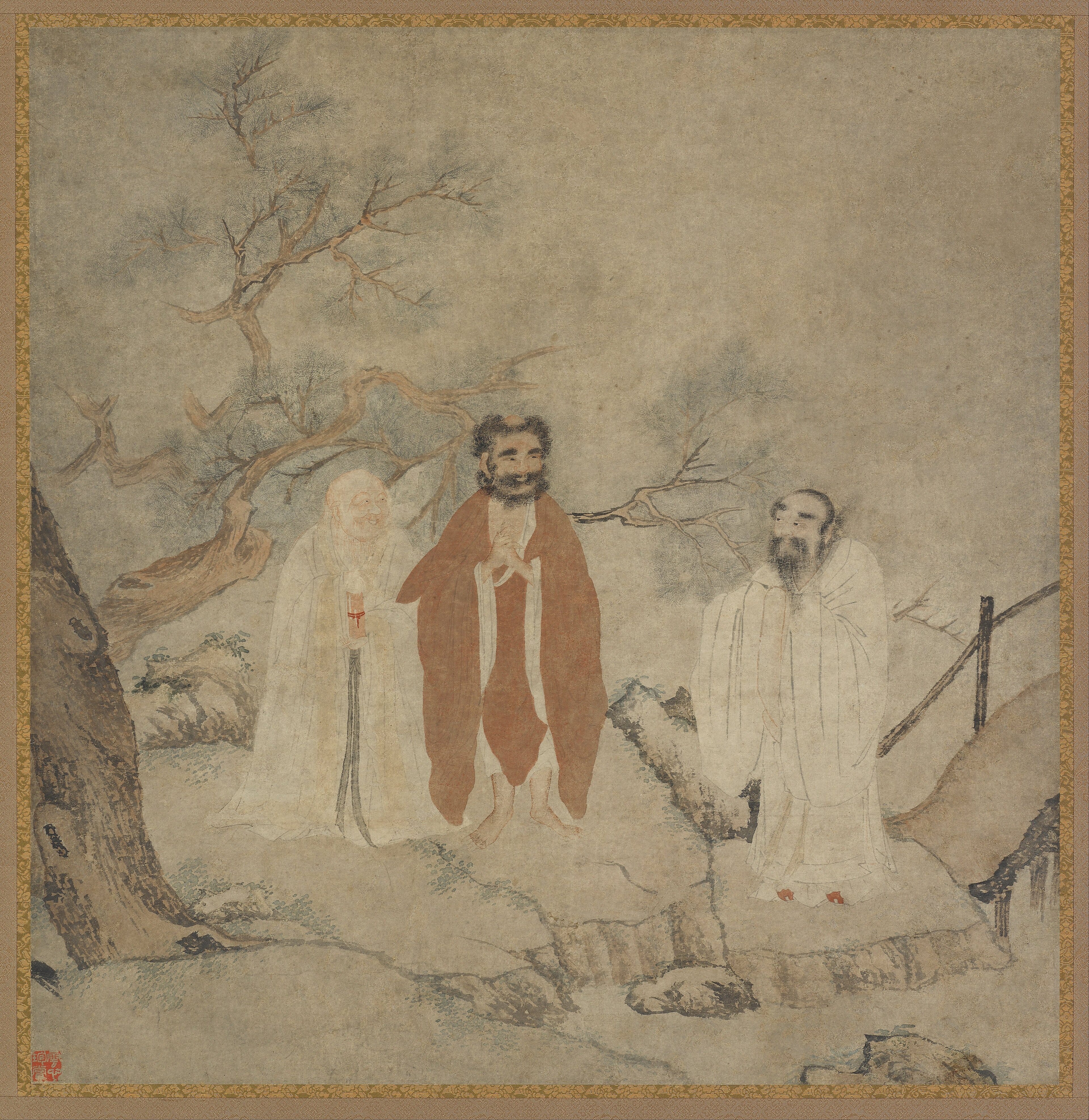
Lao Tzu does seem wary of intellectual pursuits, though. Gaining knowledge and immersing ourselves in countless categories, ideas, and theories is all fun and games, but these also occupy our minds. They can lead to worry and overthinking. We become attached to distinctions and conceptual frameworks, while reality itself may be far more fluid than our concepts suggest.
Over time, we may begin to mistake our interpretations for reality itself. We develop strong opinions about what is good and evil, right and wrong, whom we should fear and whom we should welcome. Inevitably, these belief systems clash with those of others, something we can observe in many parts of the West today.
When our minds are full and closed off, there is little room for new insights or different perspectives. But what if, even just temporarily, we’d empty our minds of existing beliefs? What if we’d just let go of what we know? What if we create space to see reality without immediately filtering it through the lens of what we already believe or assume to be true?
From a Taoist perspective, this space creates a sense of openness, or xū (虚), a receptive state of mind that allows us to perceive reality more clearly, without being overly constrained by prior interpretations. Zhuangzi said:
The empty apartment is filled with light through it.
Zhuangzi, Inner Chapters, 4.2
Like an empty room illuminated by light, an empty mind becomes more receptive to reality and direct experience.
There’s another aspect to ‘emptiness of mind’; not so much the absence of knowledge, but the absence of all kinds of discursive activity. We tend to fill our minds with problems, seeking solutions, planning, plotting, sometimes in a very repetitive manner. Our minds become crowded and tense. And the more we try to force a good idea, the less we seem to succeed.
Many of our best ideas emerge when we stop trying so hard. They arrive during a morning walk or in the shower. They come up when our minds are spacious; when there’s room for ideas to appear naturally. It is often the ‘emptiness of the mind’ in such moments that allows ideas to arise, rather than discursive thought trying to force them into existence.
But there’s another dimension of mental emptiness that could benefit us, according to the ancient Taoist texts, which we’ll explore right now.
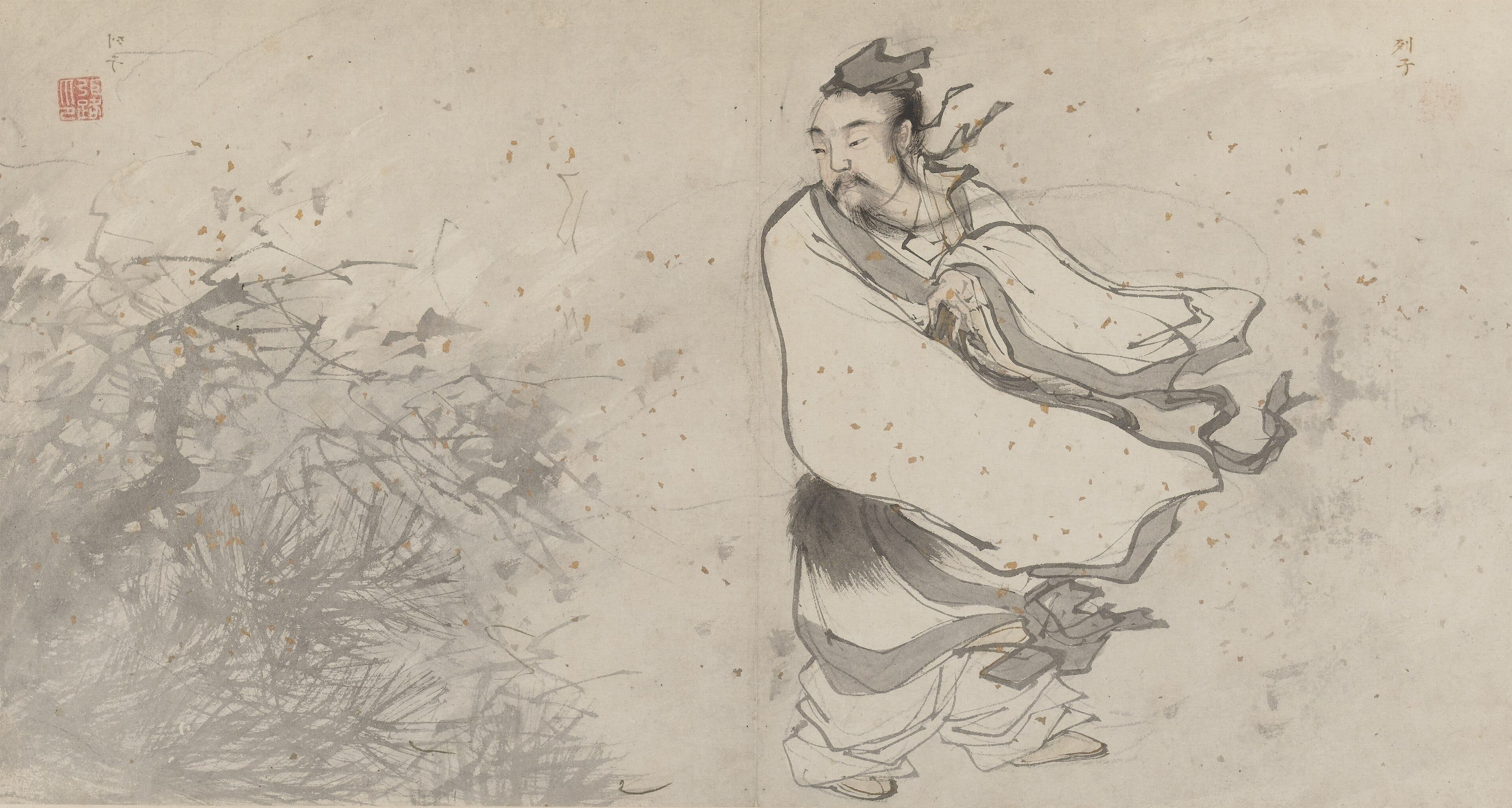
Someone asked the Taoist philosopher Lieh-tzu why he valued ‘emptiness’. He answered as follows:
Most people like to be praised. They feel good when their accomplishments are acknowledged. However, I feel we would be better off if we were empty of attachments and not imprisoned by recognition, approval, and disapproval. In the long run, we’d have fewer things to worry about. That’s why I value emptiness.
Wong, Eva. Lieh-tzu: A Taoist Guide to Practical Living (Shambhala Dragon Editions) (p. 54). Shambhala. Kindle Edition.
Lieh-tzu saw what many spiritual traditions and philosophers have observed as well: a mind preoccupied with worldly concerns, described in the original text as “fame and profit,” or míng lì (名利), is not a very pleasant mind. It’s a mind full of worry; a mind that generates suffering.
And let’s face it: pursuing fame often means constantly trying to please an audience. We end up doing and saying things with other people’s approval in mind.
Obtaining praise usually takes a lot of effort. And most people want to keep the praise coming; they fear falling out of favor, so they keep watering it, hoping people will continue to adore them. And so, they have built themselves a prison; one based on “recognition, approval, and disapproval”.
What’s even worse is that people’s opinions aren’t in their control, and they might fall out of favor anyway despite their efforts. So, there’s always the fear that they’ll lose the recognition and approval they spent so much time building, which, as we know, could happen in a heartbeat.
A mind occupied with profit is another path to ongoing worry and anxiety. When we view life primarily through the lens of gain and loss, our well-being becomes tied to circumstances beyond our control. Success leads to satisfaction, while failure brings disappointment. And so we spend our days pursuing profit and guarding against loss, as our happiness depends on it. Often, that’s a stressful way to live.
So, Lieh-tzu felt people would be better off if their minds were empty of such attachments. Pursuits of fame and wealth are worthless anyway, he claimed. And our so-called accomplishments rely so heavily on external circumstances that we might ask ourselves whether taking credit for them and parading them around is even fair.
Better just let them go and quiet down, says Lieh-tzu. And by doing so, we might even reach the ultimate form of Taoist emptiness, which we’ll explore next.
If you can empty your mind of all thoughts
your heart will embrace the tranquility of peace.
Watch the workings of all of creation,
but contemplate their return to the source.
Lao Tzu, Tao Te Ching, chapter 16 (John H. McDonald)
When we’ve contemplated the value of emptiness, calmed our minds, and let go of desires for fame and profit, we could engage in the process Zhuangzi called the ‘fasting of the heart’.
In ancient Chinese thought, the heart, xin (心), was seen as the center of both thinking and feeling, which is why Zhuangzi’s term is often translated as either “fasting of the heart” or “fasting of the mind.” In Chinese, it is called xinzhai (心齋).
When our modern lives usually revolve around ‘gaining,’ such as gaining knowledge, gaining experiences, gaining money, or gaining power, the idea of the fasting of the heart is more about losing or forgetting. Instead of trying to get more, we take the weight off our shoulders, until there’s nothing left but… emptiness.
In the Zhuangzi, Confucius describes the process as follows:
Don’t listen with your ears, listen with your mind. No, don’t listen with your mind, but listen with your spirit. Listening stops with the ears, the mind stops with recognition, but spirit is empty and waits on all things. The Way gathers in emptiness alone. Emptiness is the fasting of the mind.
Zhuangzi, Inner Chapters, 4.2
The fasting of the heart is more than letting go of desires for success or reputation. It means letting go of outcomes, beliefs, ambitions, and even our sense of self. Rather than constantly judging things as good or bad, right or wrong, we remain open to a world that is always changing.
This kind of mental clarity, so to speak, allows for spontaneous action. We can observe what is happening without distortion from preconceptions, expectations, or desires, and respond to what arises. It is an openness, an emptiness, that allows us to experience reality more directly. And this may even enhance our performance in certain situations.
We can find an example of this in the Zhuangzi, which tells about a skilled archer who could easily hit the target when nothing was at stake. But when he competed for a prize, his thoughts about winning interfered with his ability to shoot. His mind was filled with desire, anxiety, and thoughts about the future, whereas before it was clear, allowing him to shoot with ease.
From a Taoist perspective, the fasting of the mind brings us closer to the Tao, which lies at the very heart of Taoism. The Tao cannot be fully understood through concepts or intellectual analysis, yet it is ever-present and underlies all things.
As we let go of our attachment to ideas, concepts, and discursive thought, we become more attuned to the greater process of which we are a part. Or as Sinologist Woei-Lien Chong wrote in her book about Taoist philosophy: “one with the breathing of the cosmos.”
If you’re interested in Taoist philosophy, I’ve compiled a book of my ramblings inspired by ancient Taoist texts, titled Taoism for Inner Peace.
No posts
Comments
Nothing yet. Say the first thing.
Sign in to join the conversation.