
It seems that, for more and more people, life feels meaningless. We lack clear direction, struggle to define our purpose, and often find ourselves drifting aimlessly. Meanwhile, the world itself seems increasingly chaotic, as though many of the systems and structures that once provided moral direction, stability, and meaning are slowly falling apart.
And while we may have liberated ourselves, enjoying more freedom and individualism than ever before, many of us also seem somewhat lost… unsure of what to truly believe in or stand for.
So, in today’s tumultuous and confusing world, would we benefit from living by a code? And could Bushidō be it?
Bushidō is often described as the samurai code, a collection of virtues and principles associated with Japan’s warrior class. Yet there was never a single, universally accepted code that all samurai followed.
It was only in the late nineteenth century that Nitobe Inazō attempted to systematically describe Bushidō in his famous book Bushidō: The Soul of Japan. Drawing on the ideals of the samurai, he presented Bushidō as a moral philosophy for anyone seeking to live a good life.
Bushidō as a concept evolved over the centuries. Its origins can be traced back to the Kamakura period, when the samurai rose to power as a military class. These warriors valued traits such as discipline, loyalty, courage, and honor, living by unwritten ethics and codes of conduct that would later contribute to what became known as Bushidō.
Now, for centuries, the samurai occupied a special place in Japanese society. They were warriors, administrators, and members of a privileged class. But in the nineteenth century, the old samurai order began to disappear. Japan opened itself to the outside world, and the country rapidly modernized.
Even though the samurai as a social class faded into history, the ideals associated with them did not. During this period of massive change, a man named Nitobe Inazō sought to preserve and explain these ideals.
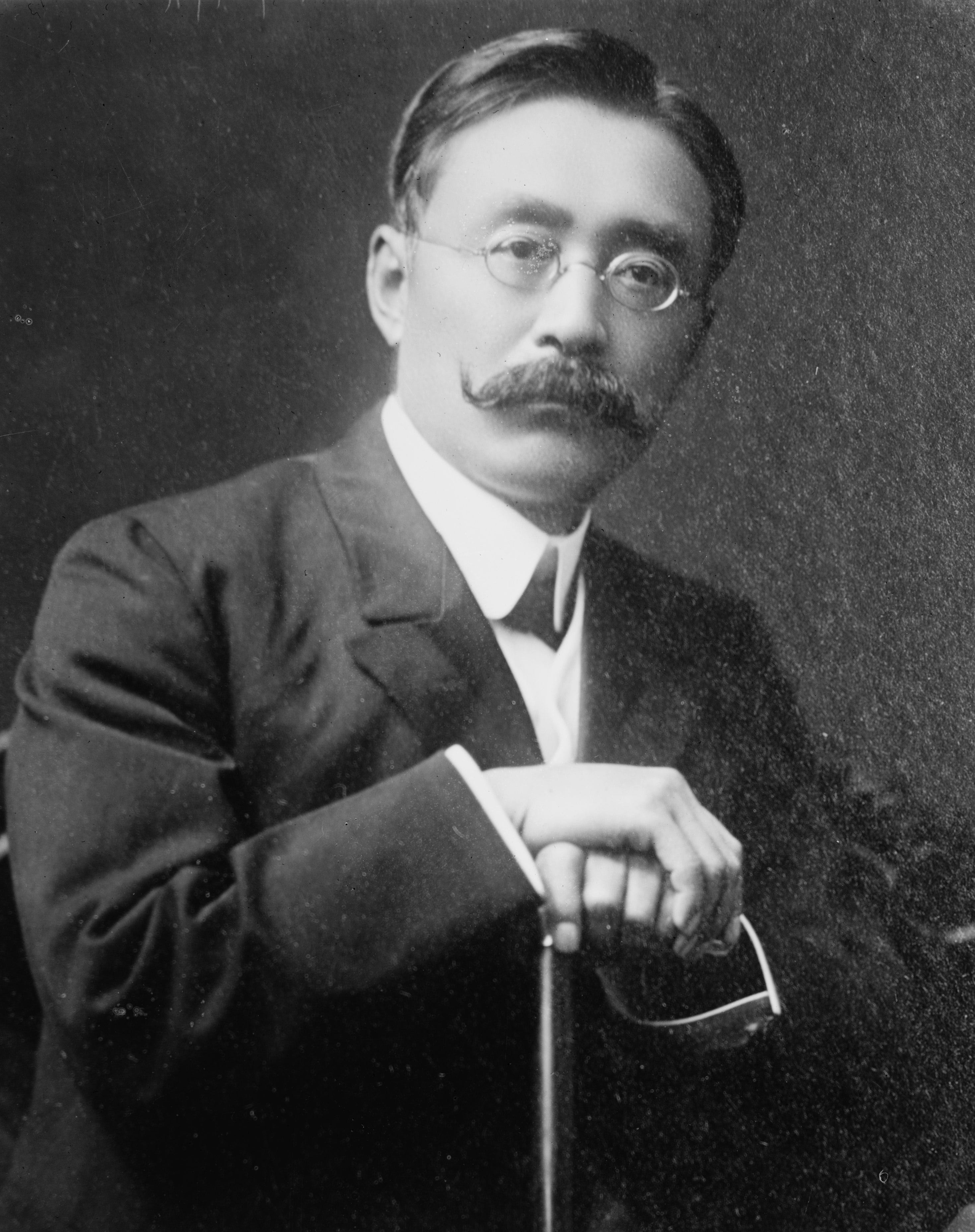
Nitobe Inazō was a Japanese diplomat, political scientist, politician, and writer, and saw himself as a bridge between Japan and the West. He studied at universities in both Europe and the United States, and even converted to Christianity.
When a Belgian lawyer asked him how moral education in Japan could be possible without religious education, Nitobe Inazō realized that his morals and understanding of good and evil were rooted in Bushidō.
During a period of illness, Nitobe set out to describe, in English, what Bushidō meant. But this wasn’t an easy task, as he was trying to describe something that had never been systematically written down and had developed organically over the centuries in different places.
Sure, many aspects of Bushidō can be found throughout Japanese warrior literature. Some of the most famous examples are The Book of Five Rings and Dokkōdō, written by Miyamoto Musashi, the latter of which I explored years ago. But there was no single, universally accepted code.
Still, Nitobe took on the challenge. He defined Bushidō mainly for a Western audience in his book Bushidō: The Soul of Japan.
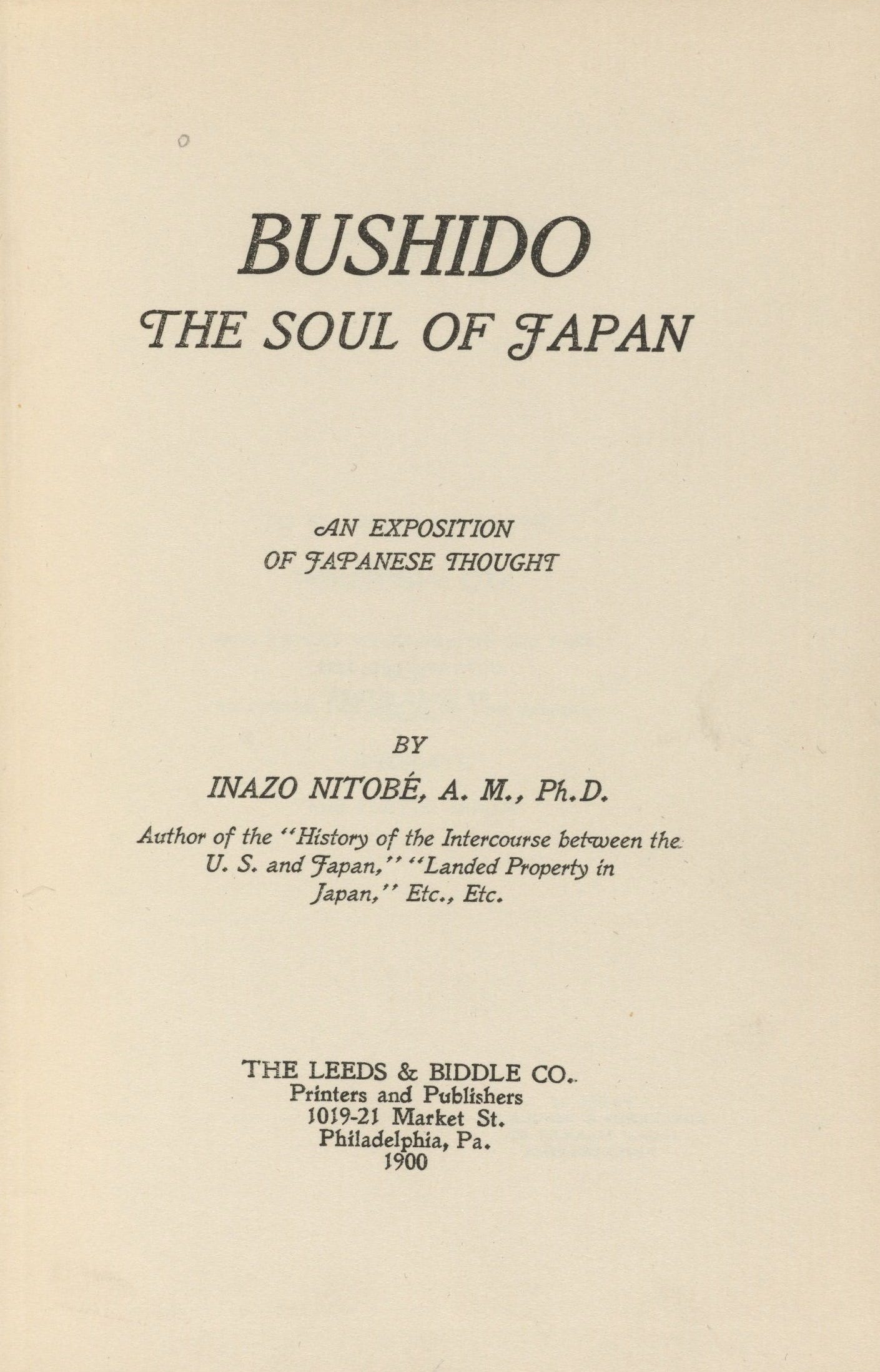
His work was met with both praise and criticism.
It is still debated whether Nitobe’s Bushidō truly reflects how the samurai lived. But regardless of that debate, it remains a fascinating guide to life. It brings together ideas from Confucianism, Buddhism, Shintoism, and even Christianity. And I think that’s part of what makes it so unique.
Now, let’s move on to the code, so we’ll have more substance of the matter when trying to answer the main question: can Bushidō benefit us today?
When we think of Bushidō, we might imagine ourselves carrying a sword, dueling anyone who challenges us. We might picture a life of relentless discipline and fearlessness, training in martial arts all day, sleeping on hard floors, living almost like monks (but monks who aren’t reluctant to kill).
But Bushidō, as laid out by Nitobe Inazō, is far more than a warrior aesthetic. At its core, it’s a moral code, a way of conducting oneself in the world: one that reflects the Japanese spirit, and to which he attributes the many achievements of the Japanese people.
Nitobe’s Bushidō consists of seven moral principles: rectitude (or justice), courage, benevolence (or mercy), politeness (or respect), sincerity (or veracity), honor, and loyalty.
The book, however, also dedicates a chapter to an eighth quality: self-control. But let’s just stick with the ‘official’ seven.
We’ll start with…
Rectitude or Justice, called Gi (義) in Japanese, Nitobe considers the spine of the Bushidō character. In his book, he quotes the Japanese military scholar Hayashi Shihei, saying:
Rectitude is the power of deciding upon a certain course of conduct in accordance with reason, without wavering—to die when it is right to die, to strike when to strike is right.
Nitobe, Inazo. Bushido: The Samurai Code of Japan
Rectitude gives direction to our lives. It requires us to make a decision based on what we believe is right and then act consistently in accordance with that decision. In a world of endless options, rectitude prevents us from constantly wavering in our commitments, whether to a marriage, our family, our health, or a creative pursuit.
Nitobe also refers to the Confucian philosopher Mencius, who called benevolence “man’s mind” and rectitude “his path,” and argued that if we neglect the path, we’ll also lose the mind.
But there’s also a caveat. Nitobe warns us not to confuse rectitude with mere duty. Duty, he argues, is a “severe taskmaster” and could easily degenerate into cowardly fear of social disapproval. Rectitude, by contrast, must come from within. The next principle is…
Courage, called Yū (勇) in Japanese, doesn’t mean being a thrill-seeking daredevil rushing “into the jaws of death”. Courage is only a virtue when exercised from a place of rectitude. In Nitobe’s own words:
Courage is doing what is right.
Nitobe, Inazo. Bushido: The Samurai Code of Japan
And this means, based on Confucian thought, that if we perceive some action as right but we refrain from doing it, we lack courage. It may mean looking away from an injustice that calls for intervention, remaining silent when a difficult truth should be spoken, or choosing comfort over principles.
Nitobe warns that dying a “dog’s death,” which means dying for an unworthy cause, isn’t true courage. Sometimes, refraining from action is the wisest and most courageous thing to do; sometimes it’s better to live when it’s right to live. The next principle is…
Benevolence, in Japanese called Jin (仁), is the quality of being kind and helpful to others, showing love, magnanimity, sympathy, affection, and even pity. It’s being mindful of those who are suffering and taking their distress into account.
Confucius and Mencius regarded benevolence as the highest requirement of a ruler. The latter argued that rulers without benevolence are unlikely to win the people’s hearts.
Nitobe considers benevolence as a “tender virtue,” softening the Bushidō characteristics of Rectitude and Justice. Yet, benevolence wouldn’t be right without these more upright and stern virtues, as samurai Date Masamune once stated:
Rectitude carried to excess hardens into stiffness; benevolence indulged beyond measure sinks into weakness.
Nitobe, Inazo. Bushido: The Samurai Code of Japan
The next principle is…
When many of us in the West think of Japan, one of the first things that comes to mind is its culture of politeness, which also happens to be a Bushidō virtue, called Rei (礼) in Japanese.
According to Nitobe, politeness isn’t virtuous when it comes from a place of fear; when we’re being polite just to prevent offending people. Politeness should be a manifestation of our “sympathetic regard” for the feelings of others. As Nitobe put it:
In its highest form, politeness almost approaches love.
Nitobe, Inazo. Bushido: The Samurai Code of Japan
Politeness is part of the elaborate system of Japanese etiquette, from bowing to walking to table manners. Ceremonies and bodily discipline are ways to train the body and mind: “the master of spirit over the flesh,” as Nitobe called it. But even though these forms of politeness seem artificial, they must be sincere, which brings us to the next principle…
Sincerity, or Makoto (誠) in Japanese, means that our words, actions, and intentions are aligned. Without it, our words and actions become little more than a performance. Nitobe even called politeness without sincerity a “farce”.
Today, we call people who lack sincerity “fake.” Such people say or do things they don’t mean or engage in disingenuous flattery. In a world where integrity can sometimes seem like a disadvantage, fakery has become just another means to get what we want. But from a Bushidō perspective, such behavior is little different from lying and deception.
When we’re sincere, we mean what we say, and our word is our bond. Anyone can make promises or offer compliments. True value lies in consistently acting in accordance with our words.
Sincerity may sometimes seem disadvantageous. A lie, an exaggeration, or a half-truth can often produce quicker results. Yet trust is one of the most valuable things a person can possess, and trust can only be built through consistent honesty over time.
The next one is…
The sense of honor, or Meiyo (名誉), deeply characterized the samurai. One of the most telling examples that comes to mind is the act of ‘seppuku,’ which was a form of ritual suicide to atone for one’s failures and restore family honor or show loyalty to one’s leader.
From Nitobe’s view, Honor entails a “vivid consciousness of personal dignity and worth”. These two factors strongly correlate with one’s standing, reputation, and sense of shame. Mencius saw shame as a good thing. And Nitobe quotes historian Thomas Carlyle, saying that “shame is the soil of all Virtue, of good manners and good morals.”
In Bushidō, shame serves as a safeguard for honor. It reminds us when our actions fall short of the standards we set for ourselves.
But not all deeds in the name of Honor are right, according to Nitobe. For example, some samurai would quickly draw their swords when offended. But such an attitude is a form of vainglory rather than honor. True honor doesn’t ignore the other virtues, as he wrote:
The morbid excess into which the delicate code of honor was inclined to run was strongly counterbalanced by preaching magnanimity and patience. To take offense at slight provocation was ridiculed as “short-tempered.”
Nitobe, Inazo. Bushido: The Samurai Code of Japan
We’ve arrived at the last principle:
The idea of Loyalty, or Chūgi (忠義), I consider the most disputable of the seven, as I’m usually suspicious about the whole phenomenon of loyalty, especially when it comes to people in positions of power who demand loyalty of their subjects, and those who, in turn, follow blindly.
But my own views aside, let’s see what Nitobe makes of it.
According to his writings, Loyalty is a typical characteristic of Bushidō, which takes the form of allegiance to a higher authority, such as a feudal lord or the emperor.
Luckily, he also recognizes the danger of blind loyalty. One shouldn’t make one’s conscience slave to a king or lord. In the past, when a samurai was confronted by the bad decision-making of those he served, he’d do anything in his power to change his superior’s mind. And when he failed, it wasn’t uncommon to commit seppuku to show his sincerity.
Now, how could the Bushidō code (by Nitobe Inazō) benefit us today? And could it help us navigate our tumultuous and confusing world?
Before we try to answer these questions, let’s take a closer look at where we stand today, a time when many people report feeling aimless and meaningless in their lives. Could the weakening of traditional sources of moral guidance, a lack of shared values, and stable principles have something to do with these sentiments?
Philosopher Byung-Chul Han wrote that, today, time lacks a solid foundation. Time doesn’t form a house, a place to inhabit, but it has become an unstable stream. It keeps going, and there’s nothing we can hold onto. He describes the smartphone as the epitome of this, as it misses this attribute of ‘staying the same,’ which grants stability to our lives.
Even though Han wrote this in the context of rituals, I think his diagnosis of today’s experience of time resonates with many of us. There’s less and less solid ground to stand on, which seems to be the case with almost every aspect of our lives. Very little seems ‘fixed’ nowadays.
I mean, let’s face it. We live in an age of constant acceleration. Technology advances rapidly; the way we work and relate to one another keeps changing; customs and traditions have become increasingly optional; relationships are more fragile; and fewer things are regarded as sacred than they once were.
Take marriage, for example. Marriage was traditionally understood as a lifelong commitment. The commitment was considered sacred, and people were expected to honor it, even when circumstances became difficult.
Today, many people view marriage differently, at least in the West. Rather than seeing it primarily as a lifelong bond, they view it as a relationship that, first and foremost, should contribute to one’s own personal happiness and fulfillment. And when it no longer does, ending it is often considered a reasonable option.
In her book Let the Samurai Be Your Guide, Lori Tsugawa Whaley argues that modern society increasingly relies on what she calls “situational ethics.” Rather than appealing to stable principles or moral codes, we often evaluate each situation on its own terms to decide what seems most appropriate.
The downside is that every situation becomes a negotiation; whenever circumstances change, or we ourselves change, we find ourselves wondering whether to stay the course or take a different path. And so, promises and commitments have become easier to break.
Even though such flexibility has its benefits, it can be quite difficult to find something enduring to hold on to, which may lead to a sense of aimlessness.
Now, let’s see what role Bushidō can play in all of this.
As we’ve seen, Bushidō provides a system of ethics—a kind of “house” to inhabit, to borrow Byung-Chul Han’s metaphor. It’s a house we can dwell in, so we don’t wander aimlessly through life; a place that offers continuity in a world of constant change. However, this house isn’t made of wood and stone, but of character.
Bushidō encourages us to think about what kind of person we want to be. Do we want to be trustworthy, honorable, and considerate toward others? Do we want our words to truly mean something? To make commitments and stick to them?
Maybe part of feeling so lost is that we no longer know who to be or what to stand for, making it even harder to navigate an already unstable world. A code cannot change our circumstances, but it can create stability in how we conduct ourselves within them. And that, ultimately, lies much more within our control.
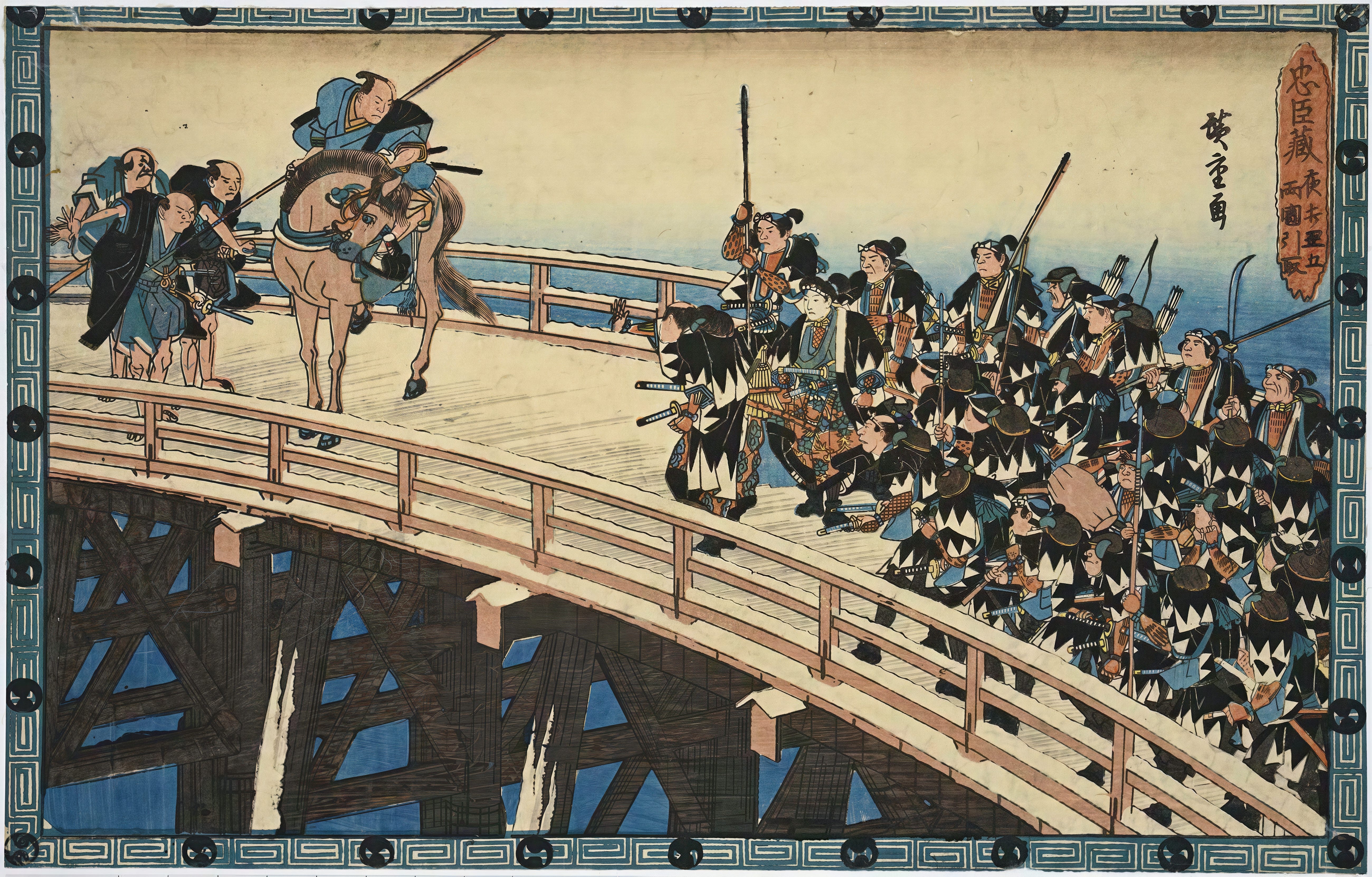
Nitobe’s work has also prompted valid criticisms worthy of consideration.
First, there’s the trap of dogmatism, which doesn’t apply to Bushidō alone but to any moral code. Rectitude, for example, can easily degenerate into rigidity. We might then stay in a clearly abusive marriage because we believe commitments should be honored at all costs. And loyalty, as discussed earlier, can become blind, leading people to follow authority without questioning.
We’ve also seen Bushidō used for ideological purposes. Before and during World War II, versions of Bushidō were used to support Japanese ultranationalism and militarism, which resulted in terrible atrocities and war crimes.
One of the main criticisms of Nitobe’s Bushidō is that it may be too Westernized. Nitobe was a Christian and wrote his book in English for a Western audience, which likely influenced his presentation of the code.
As a result, some question whether it truly represents how the samurai lived, as it seems more like an idealized version for Western readers. So, perhaps we should read Nitobe’s work less as a historical account and more as a philosophical work.
To finally answer our central question:
Yes, I think Bushidō, despite its flaws, could benefit us today by providing moral direction, stability, and a sense of purpose in a world marked by uncertainty, ambiguity, and rapid change.
But I wouldn’t consider Bushidō to be the solution we’ve all been waiting for, the end-all be-all. There are many ethical systems and moral codes worth exploring, some of which may suit us better than others. Perhaps it is best viewed as a blueprint for living by a code; a starting point for developing a set of moral principles to live by.
In my opinion, the greatest strength of Bushidō is that it changes the ‘paradigm of our lives.’ It shifts our focus from being circumstance-oriented to being character-oriented. As a result, fulfillment is found less in what happens to us or in our circumstances and more in how we respond to them.
I really enjoyed delving into Bushidō, and I like the idea of living by a code, mainly because it could serve as a counterbalance to today’s chaotic world. Having an ethical spine that helps us avoid losing ourselves in uncertainty, indecision, or moral dilemmas seems helpful to me, even though I myself am more of a ‘situational ethics’ guy.
Personally, I find Nitobe’s synthesis between East and West interesting. We find elements of Confucianism, Buddhism, Shintoism, and even Christianity combined into a single ethical system.
Perhaps that’s one reason why it resonates with me. Much of my philosophical journey has involved exploring both Western and Eastern traditions, and Bushidō seems to combine aspects of both. Maybe that’s also why its principles have a sense of universality.
No posts
Comments
Nothing yet. Say the first thing.
Sign in to join the conversation.