
Peering at a hot summer sky blurred into white smoke, I am thinking about how hard it is to remember a good idea.
This is why I use a little notebook and a well-made Japanese pen, why everyone at Journey Group remains stubbornly committed to taking notes by hand. The ideas escape us if we don’t write them down. Writing by hand solidifies a concept in a way that typing does not. But sometimes we have to go a step further.
If good ideas are necessary to make good design, how should we ENCODE a good idea?
In this latest iteration of Story Matters, we’re making an archive of what’s been influential in our design practice: the people, ideas, objects, colors, songs, essays, typefaces, books, and talismans that make us who we are as a design company.
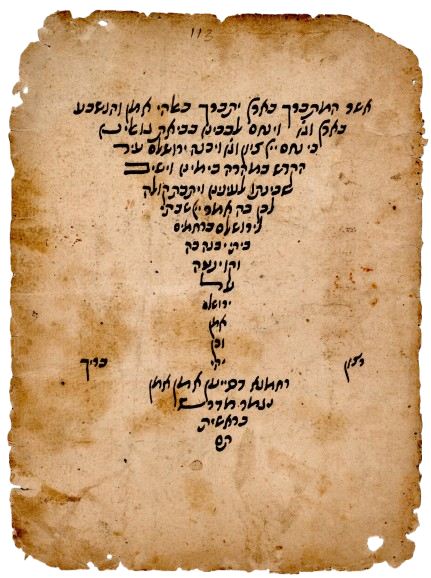
Consider these letters as a living colophon, if you will: an acknowledgment of the bits and pieces that have brought our collective design work into being.
Remembering a great idea requires a bit of magic, a bit of alchemy, if you will.
We have to take the spark of a concept and then transmute it if we have any hope of retaining its wisdom, utility, and promise.
This feels especially hard nowadays, but we might get help from an ancient Roman philosopher.
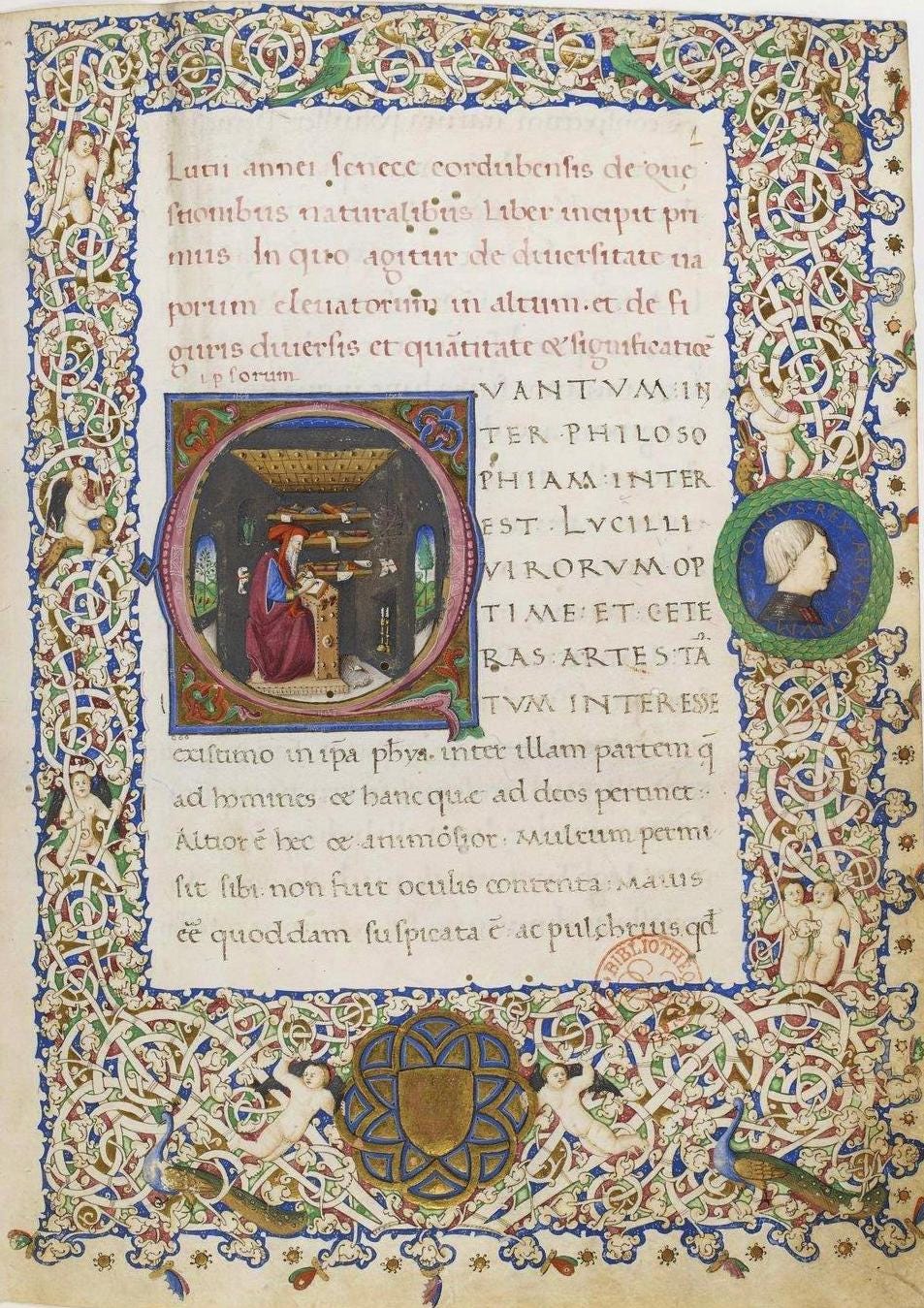
In a recent column in the New York Times, S.J. Murray proposes a solution to the modern attention crisis: Think about one good idea per day.
He shares a metaphor from everyone’s favorite Stoic, Seneca:
“Seneca compared the benefits of deep reflection to the alchemy by which bees transform nectar into honey. In the hive, bees repeatedly pass the nectar they gather among themselves, mixing it with enzymes that alter its chemical composition. Think of the nectar as information and the honey as wisdom. Whereas nectar sours within a matter of days, honey doesn’t spoil — not even after being buried for thousands of years in an Egyptian tomb.”
Nectar = Information. Honey = Wisdom.
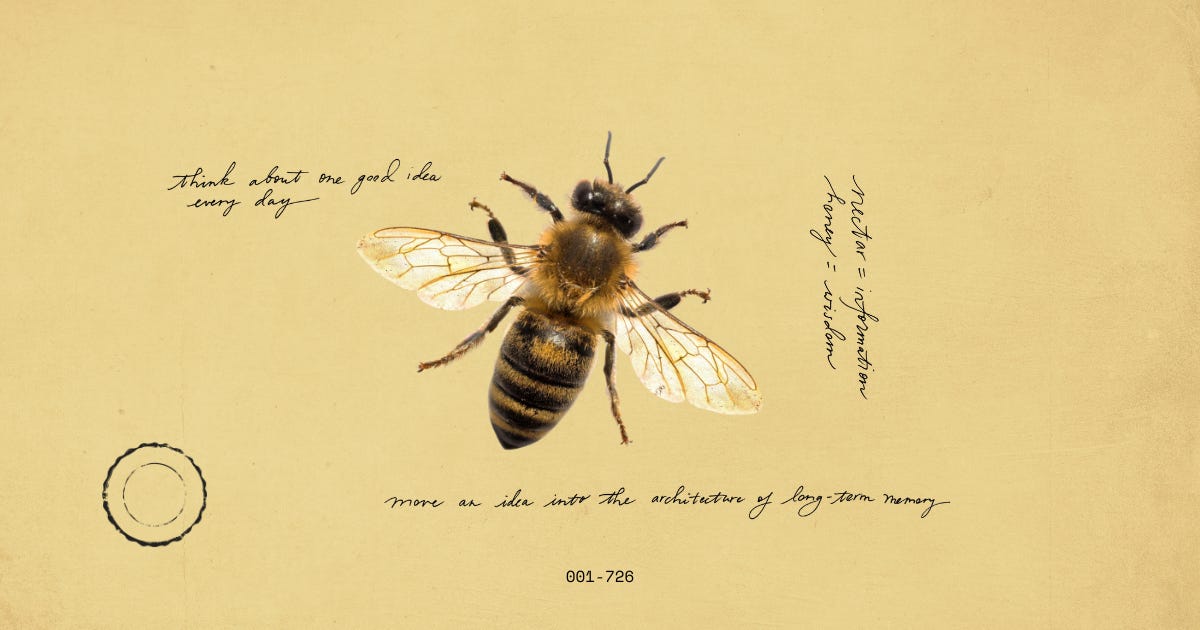
“Seneca’s honey metaphor corresponds to what psychologists call deep processing: By returning to the same idea repeatedly, we signal to our brain that the idea is worth moving into the architecture of long-term memory. Each time we retrieve an idea from memory, we also wrap it in new associations (a process known as reconsolidation), which ensures that those ideas remain relevant to our life as time goes on.”
Go back to a good idea over and over again. In this way, we can build memory and construct, collectively, our taste and our sensibilities.
No posts
Comments
Nothing yet. Say the first thing.
Sign in to join the conversation.