
I love nature and all of her gifts. In many ways, I built the life people say they want: close to nature, teaching wilderness skills, eating from the garden, living daily with the land. I spend meaningful stretches of time alone in both wild and cultivated landscapes. And yet, in my experience, it is unfulfilling long-term to be close to nature but far from human community. There are moments, like this one, when I admit to myself that I feel lonely in it.
The most common longing I hear from people in my circles is this:
“I want to live close to nature with people I love and connect with.”
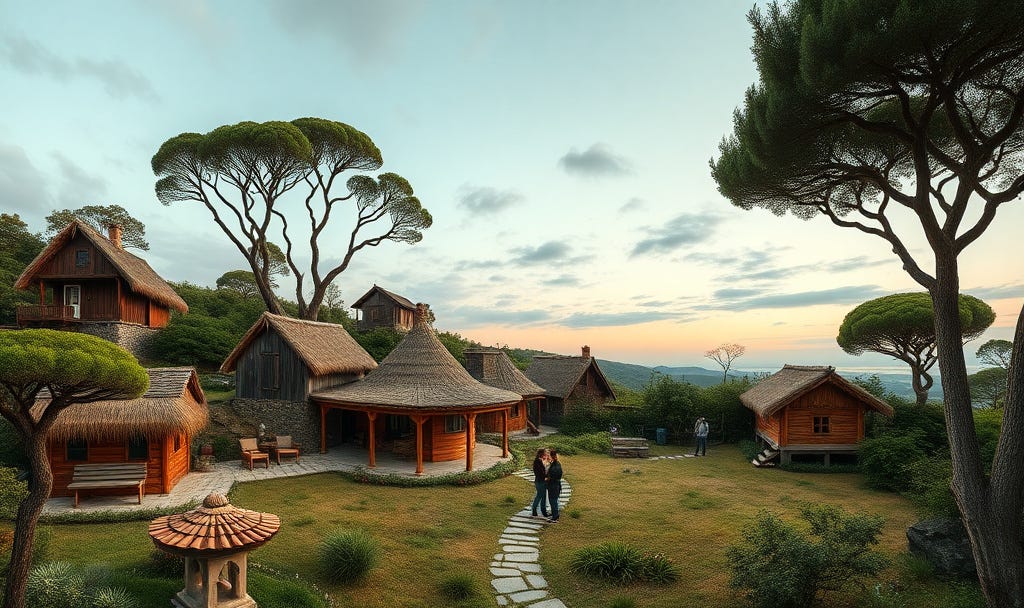
I hear it often enough that it feels less like a dream and more like a shared memory. Is that such an outlandish fantasy? Was that not the state in which most of our ancestors grew — even as recent as your great-grandfather?
It seems obvious at first: of course we want to be with others. Yet here we are. So many of us living in small units of one or two adults, sometimes with a child or three, often surrounded by concrete landscapes and thin social ties. Where’s the balance between “living close to nature” and “belonging with a people”?
At a fundamental level, I believe that humans crave to live close to nature because nature reflects wholeness. This theory is supported by the work of depth psychologist, Bill Plotkin. One who places high value on the natural world often places similar value in integrity—the consistency between what one believes, thinks, says, and does. Both nature and integrity offer a quality of groundedness and trustworthiness. They both emit wholeness, the quality of having all of oneself—soul, body, mind—activated and alive.
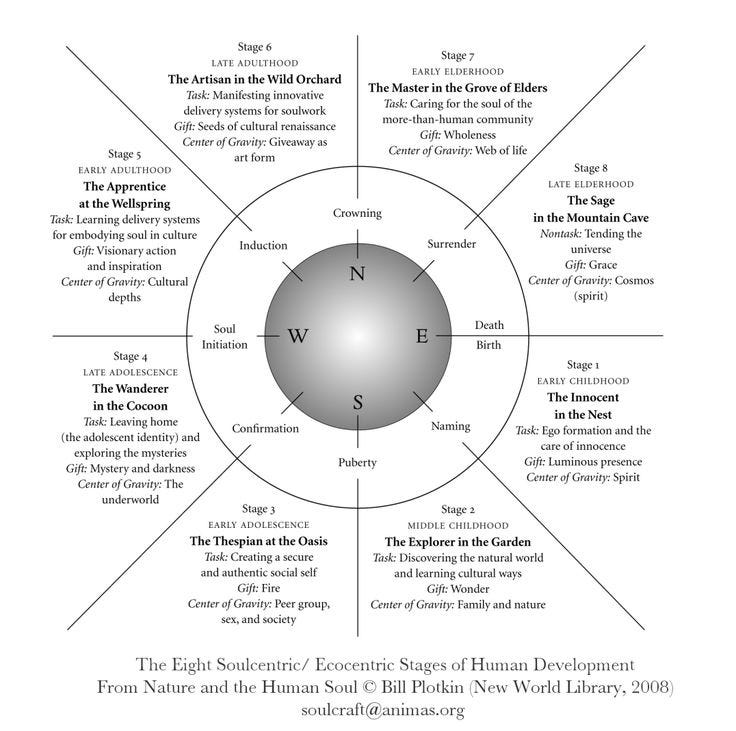
Currently my lifestyle places me close to nature daily. I’m mentoring deep nature connection, teaching wilderness living skills, enacting a mission to acquaint humans with the non-human world and to grow into our natural wholeness and role of creative caregiver. I dedicate at least the amount of time taken by a part-time job to specific, deep focus and attention on developing my own personal relationship and knowledge of the natural world. Learning plants, tracking animals, observing seasonal shifts, practicing skills that bring my body into direct conversation with the land. I use the experience gained to know myself. This knowledge informs how I develop holistically through my life cycle, and shapes how I help others in their development too.
Still, most of the time, this work happens solo.
If I’m really honest, I often feel lonely in it. I want a greater personal community of friends, collaborators and family sharing this brilliant living world alongside me. I’m deeply grateful for what and who I am in relationship with, and at the same time I notice the longing for more shared rhythm, more shared responsibility, more shared curiosity and awe.
This is a tension that I rarely hear spoken about openly in “back-to-the-land” conversations.
In her poem “How I Go to the Woods,” Mary Oliver begins:
Ordinarily, I go to the woods alone, with not a single
friend, for they are all smilers and talkers and
therefore unsuitable.
She goes on to describe the intimacy that solitude allows. Becoming invisible, sitting still enough that foxes pass unconcerned, hearing “the almost unhearable sound of the roses singing.” Solitude within nature primes the senses for perception. And yet, I’ve met very few people who want to live permanently alone. I need solitude and I need community. I need nature too. If you’re reading this, chances are you feel the same.
I’ll reveal one of my real edges: my will to be with people can be more powerful than my will to be without humans and alone within the non-human world.
Sometimes when I’m alone in the woods, perhaps walking, at Sit Spot or collecting firewood, I hit a point of retracting from the peace and simplicity of solitude. It’s a threshold moment that in which I move from my solo adventure and into calling a friend, or working on the land with co-habitants, or looking to social media to bring in more people for a wilderness gathering I’ll be offering in joyful anticipation of moments of immersion with nature-loving people and culture!
I remember living at Traditional Dream Factory, a land-based co-living space in Portugal, I felt surprisingly energized throughout each day and into the night. I had a group of people to collaborate and organize with, to teach and learn from, to make events to the public for plantings. My daily assignment was literally to create more biological life and creative harmonious culture within the ecosystem with other people outdoors.
Land + shared purpose + community generated a level of vitality in me that solitary practice rarely sustains.
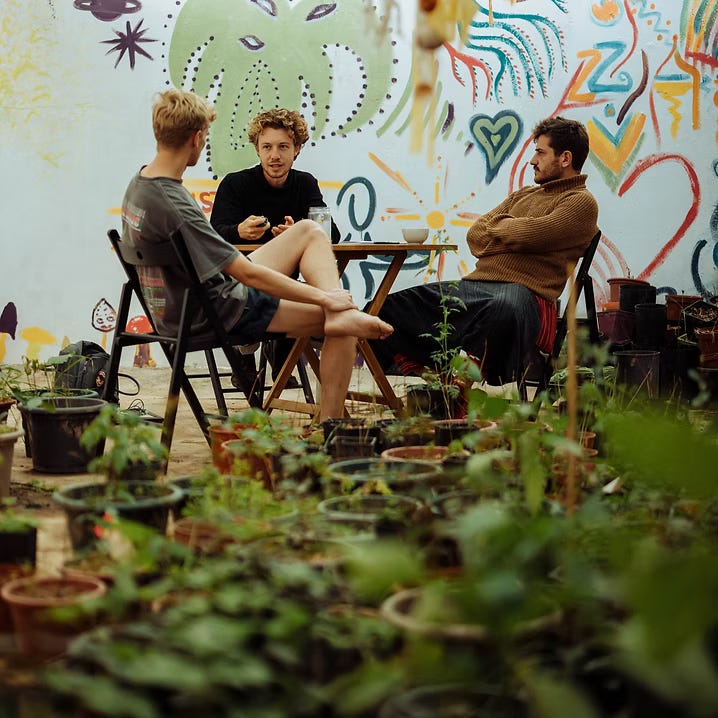
It may be romantic and idyllic to say, “I want to live in nature.”
It is simply human to say, “I want to live in nature with others.”
Perhaps the longing so many of us feel is not escapism. Perhaps it is a memory that wholeness requires both ecosystem and village; wildness and witness.
I’d like to hear what you’re imagining:
If you could design your ideal “nature + community” life, what would it look like? How many people? How close to land? What shared practices?
For adults
Adult Training: Nature Connection & Wilderness Skills — 28 February 2026 — Terra Alta, Colares, Portugal
Deep Nature Connection Mentoring Foundation Training 4 Days — 19-22 March 2026 — Relíquias, Portugal (Alentejo)
For families
Winter Wilderness Skills Community Day — 1 March 2026 — Sintra Mountains, Portugal
Family Deep Nature Connection Overnight — 27–29 March 2026 — Traditional Dream Factory, Portugal (Alentejo)
For boys & young men
Belonging Boys: Mentoring for boys 8-14 — Starts Feb 24 — Sintra, Portugal
Private personal mentoring for boys & young men — Ongoing — Portugal | Massachusetts | Remote
No posts
Comments
Nothing yet. Say the first thing.
Sign in to join the conversation.