
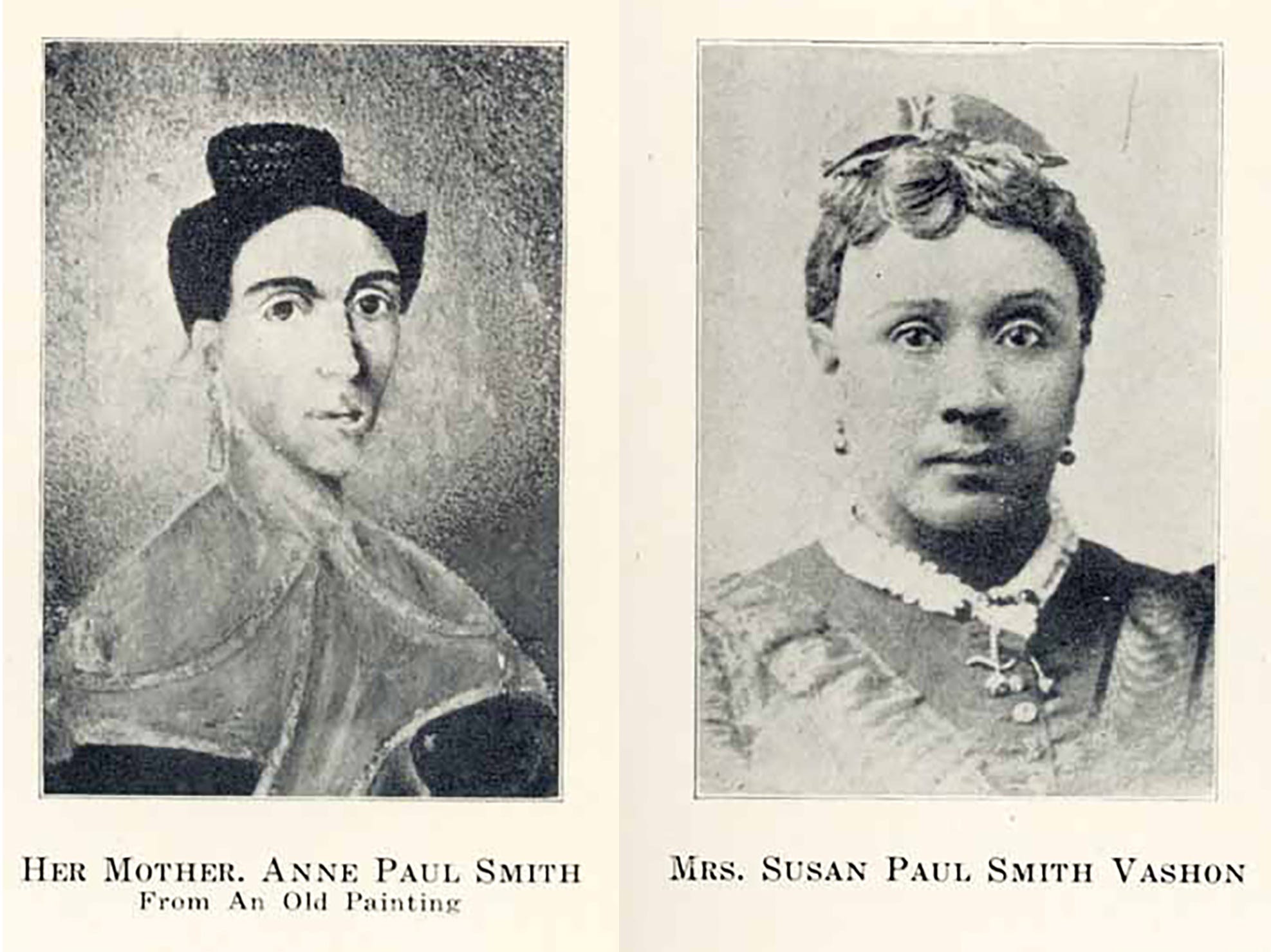
Susan Paul did not live to see what her sacrifice had built. When a packed audience gathered in 1855 to mark the twentieth anniversary of the Boston Gentlemen's Mob and celebrate the women who had stood firm against a riotous crowd, the pioneering Black educator had already been resting in an unmarked grave for more than a decade. Yet her indelible mark on the abolitionist movement—and her quiet resilience on that chaotic October afternoon in 1835—remained etched into the very fabric of the struggle.
The mob in question—a raucous assembly of Boston's so-called gentlemen, merchants and clerks among them—had stormed a women's antislavery meeting on Washington Street that October afternoon, chasing William Lloyd Garrison through the streets and jailing him for his own protection.
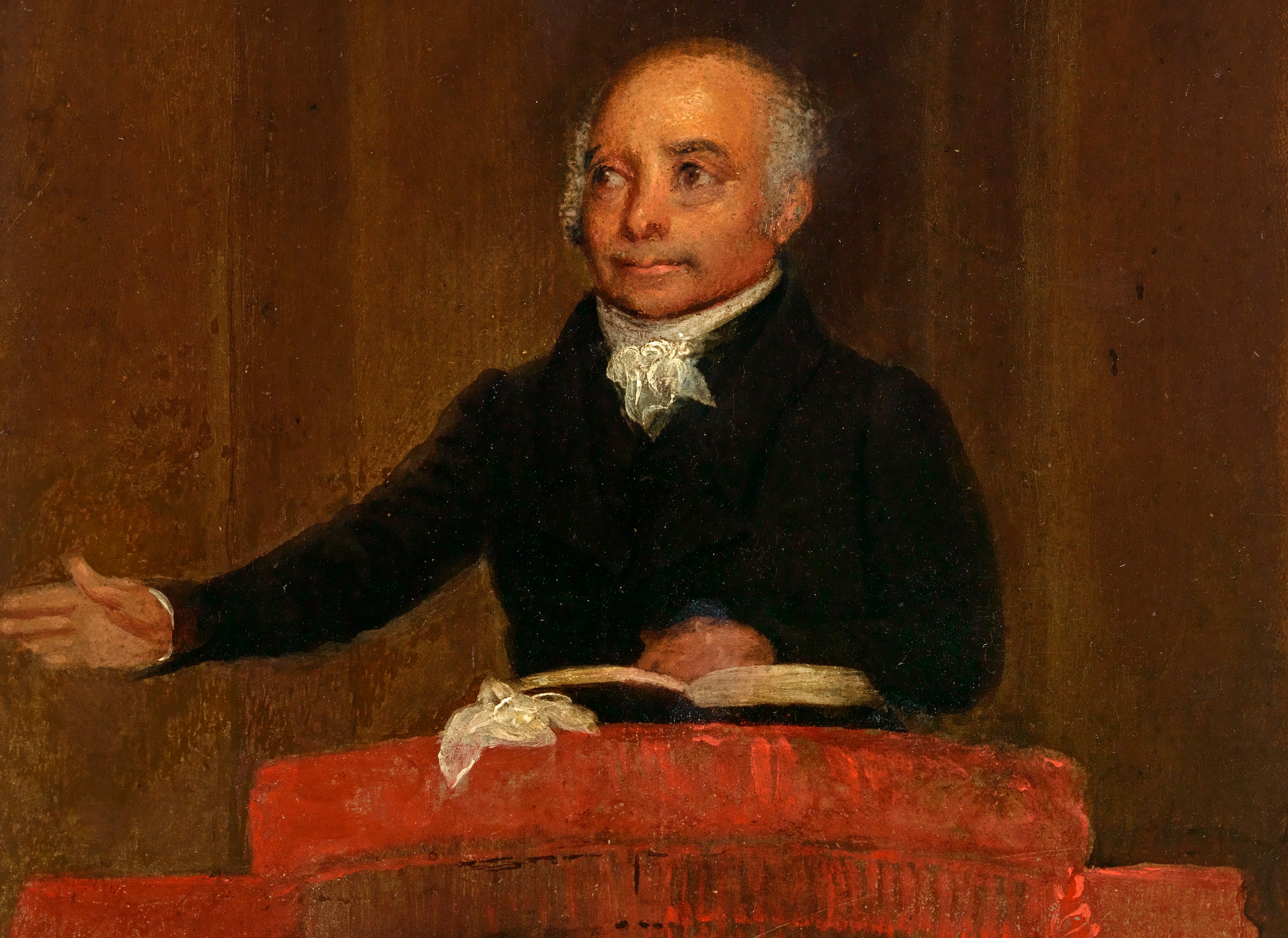
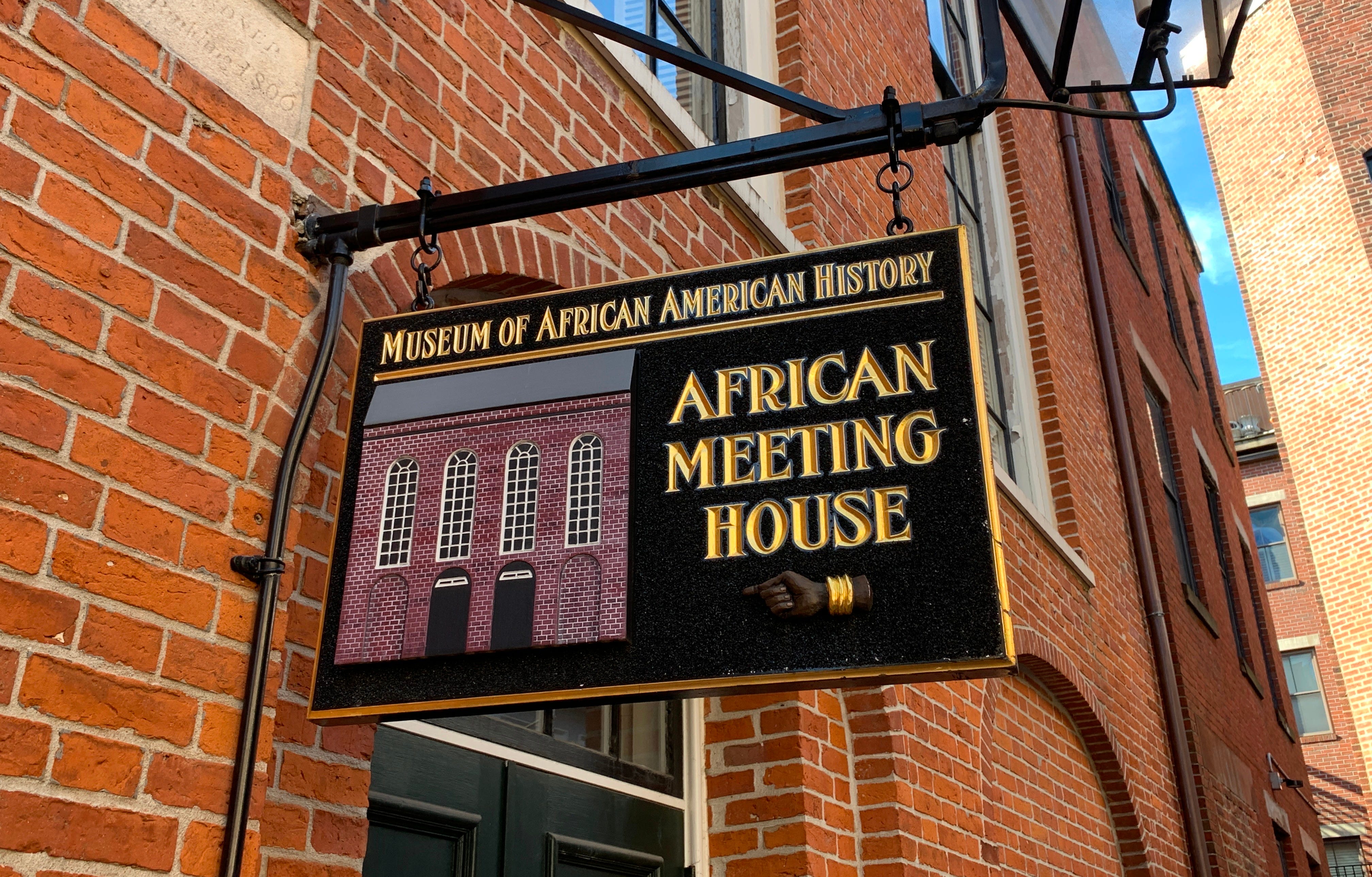
Long before she walked through the gauntlet of rioters on Washington Street, Paul was a pillar of Boston’s free Black community on the North Slope of Beacon Hill. As the daughter of the revered Thomas Paul, the pioneering pastor of the African Meeting House, she carried a powerful legacy of resistance and faith.
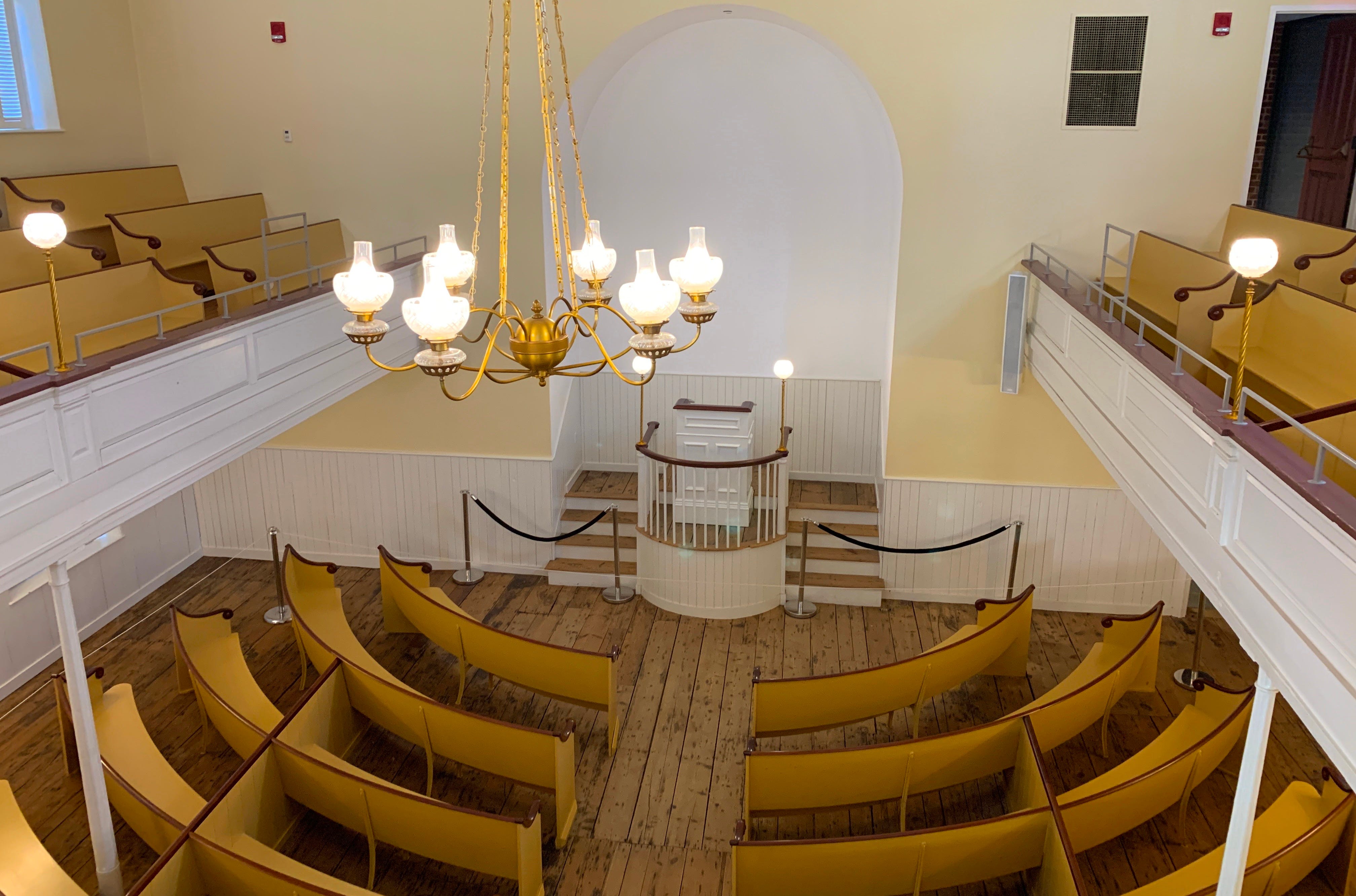
During his career, Reverend Paul helped spearhead the growing movement of independent black Baptist churches and traveled abroad to promote abolitionist aims and conduct missionary work. The African Meeting House, sometimes known as “Black Faneuil Hall,” remained a spiritual, cultural, and political center in Boston well after his death in 1831.
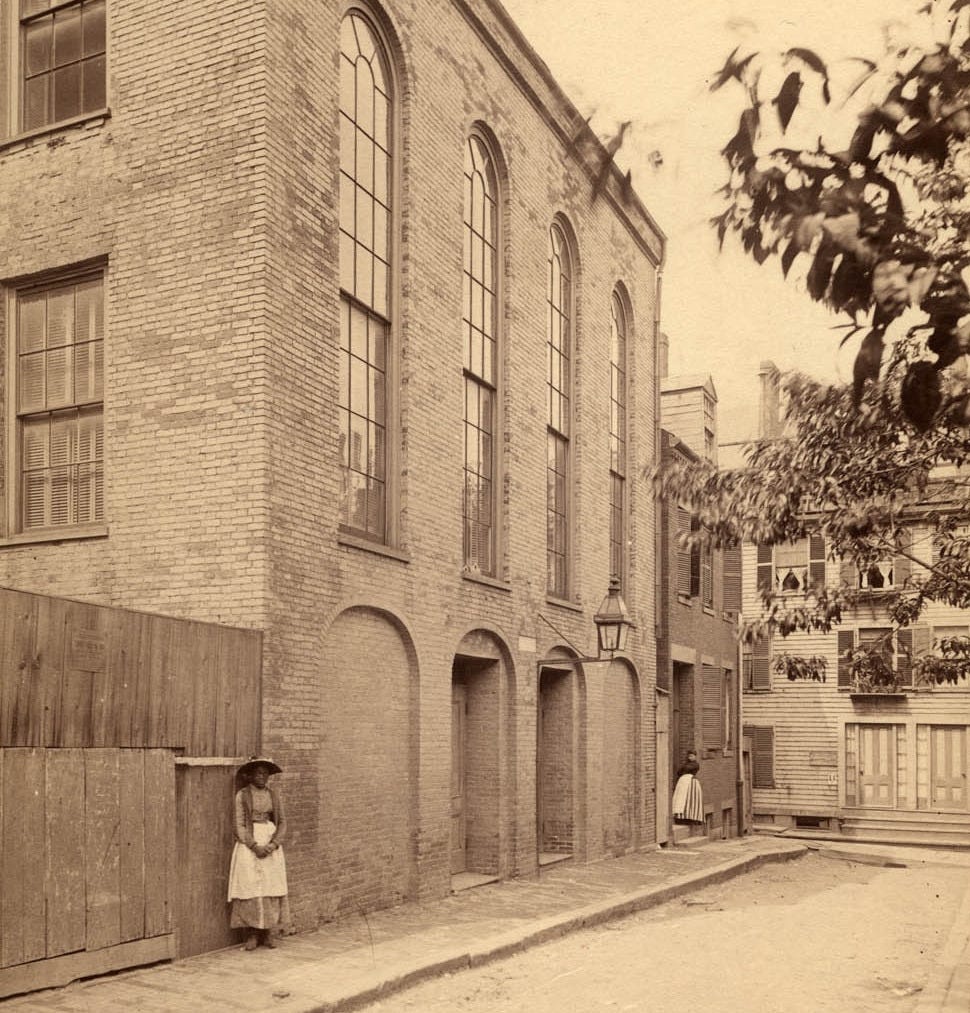
Following her father’s death, Susan Paul settled into a demanding routine as a seamstress, homemaker, and schoolteacher. She taught classes, likely on the ground floor of the African Meeting House, working almost directly underneath the pulpit where Reverend Paul had once preached. In doing so, she was following in the footsteps of her mother, who began teaching primary school from the Paul family home on George Street a decade earlier.
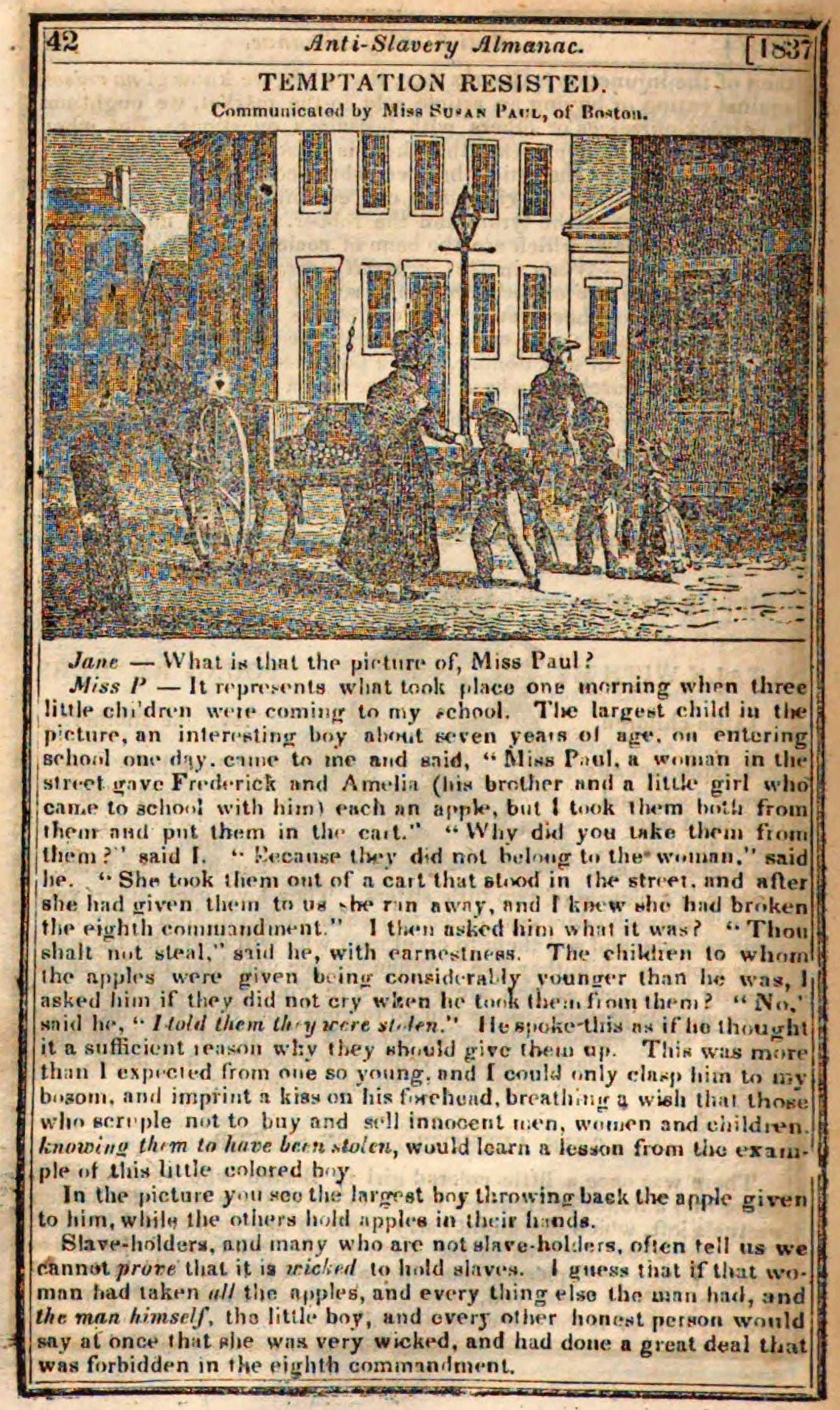
Susan Paul took a keen interest in the success of her students and adopted a warm and encouraging teaching style, much like her mother. She also made it a point to teach more than just the traditional ABCs. She believed in using her schoolroom pulpit to introduce them to broader issues of racism and segregation.
Among her most innovative efforts was a juvenile choir program for Black children, whose concerts mixed patriotic songs and antislavery hymns before mostly white audiences, spreading the abolitionist message in verse. The road to those performances was not always smooth.
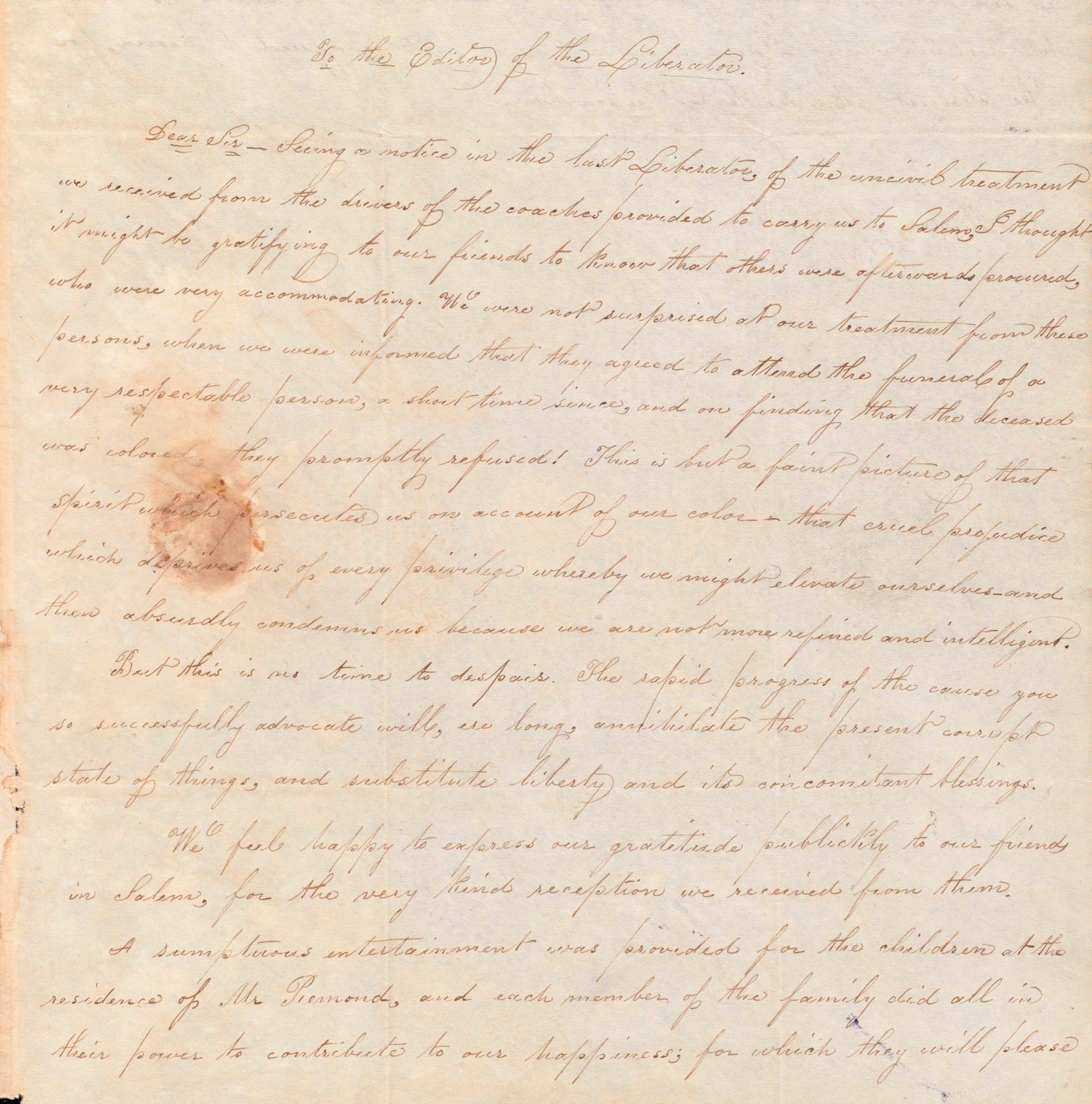
On one occasion, Paul arranged a choir trip out of the city for a concert before a local antislavery society. When it was time to leave, three stately stagecoaches pulled up—but when the hired drivers saw the complexions of the schoolchildren, they refused to offer them a ride. The men became enraged, shouting out racial epithets and proclaiming they would “rather have their throats cut from ear to ear” than drive the students.2 Paul was able to arrange alternative transportation, and the concert went on as scheduled. The choir was warmly received by a friendly crowd, initially unaware of the “uncivil treatment” she and her students had overcome to get there.
In a letter to William Lloyd Garrison afterward, Paul shared details of the “cruel prejudice” she’d encountered—but also sounded a characteristically optimistic note. “The rapid progress of the cause,” she wrote, “will, ere long, annihilate the present corrupt state of things and substitute liberty and its concomitant blessings.”3
Despite the grief of her sister's sudden death, the financial strain it brought, and the gauntlet of daily prejudice, Paul had just completed a remarkable project. She researched, wrote and published a biography chronicling the life of a young Black boy named James Jackson who was a student in her school: The Memoir of James Jackson, the Attentive and Obedient Scholar, Who Died in Boston, October 31, 1833, Aged Six Years and Eleven Months.4
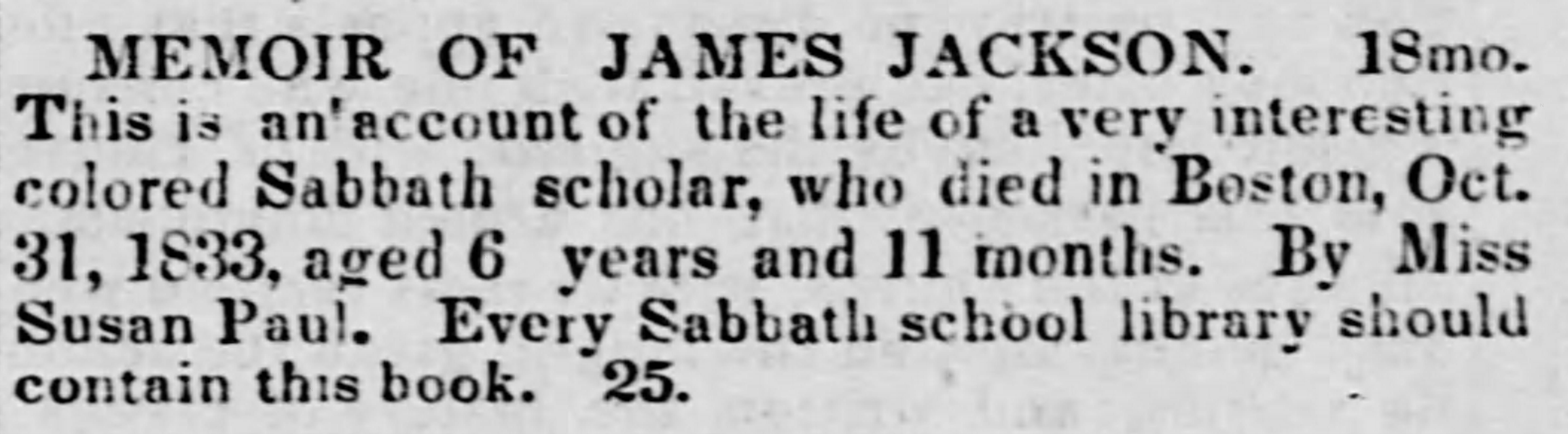
The memoir, published in May 1835, offered a window into the life of an inspirational young boy whose strong religious faith and spiritual health guided him through a life of challenges. Her didactic narrative was aimed at a younger audience, but there was also a broader message, one that Paul likely channeled through her own experiences confronting racism.
Paul’s class included a handful of students who had been born enslaved, but most were from free Black families, and she wanted to make sure they also developed some understanding of the harsh realities of enslavement, as she made clear in the biography.
When the Boston Female Anti-Slavery Society first formed, Paul became one of its first and most vital Black members—though only after William Lloyd Garrison shamed the board into opening their doors to women of color. The bond between Paul and the editor ran deep; following her father’s death, Garrison had taken Paul’s younger brother into his home as an apprentice at the Liberator, intertwining their families in the perilous, urgent work of the abolitionist cause.
On the afternoon of the mob, Paul had been one of roughly twenty-five women inside that lecture hall—most of them white, save for Paul and a small handful of others—who refused to abandon their meeting even as the crowd outside swelled into the thousands.
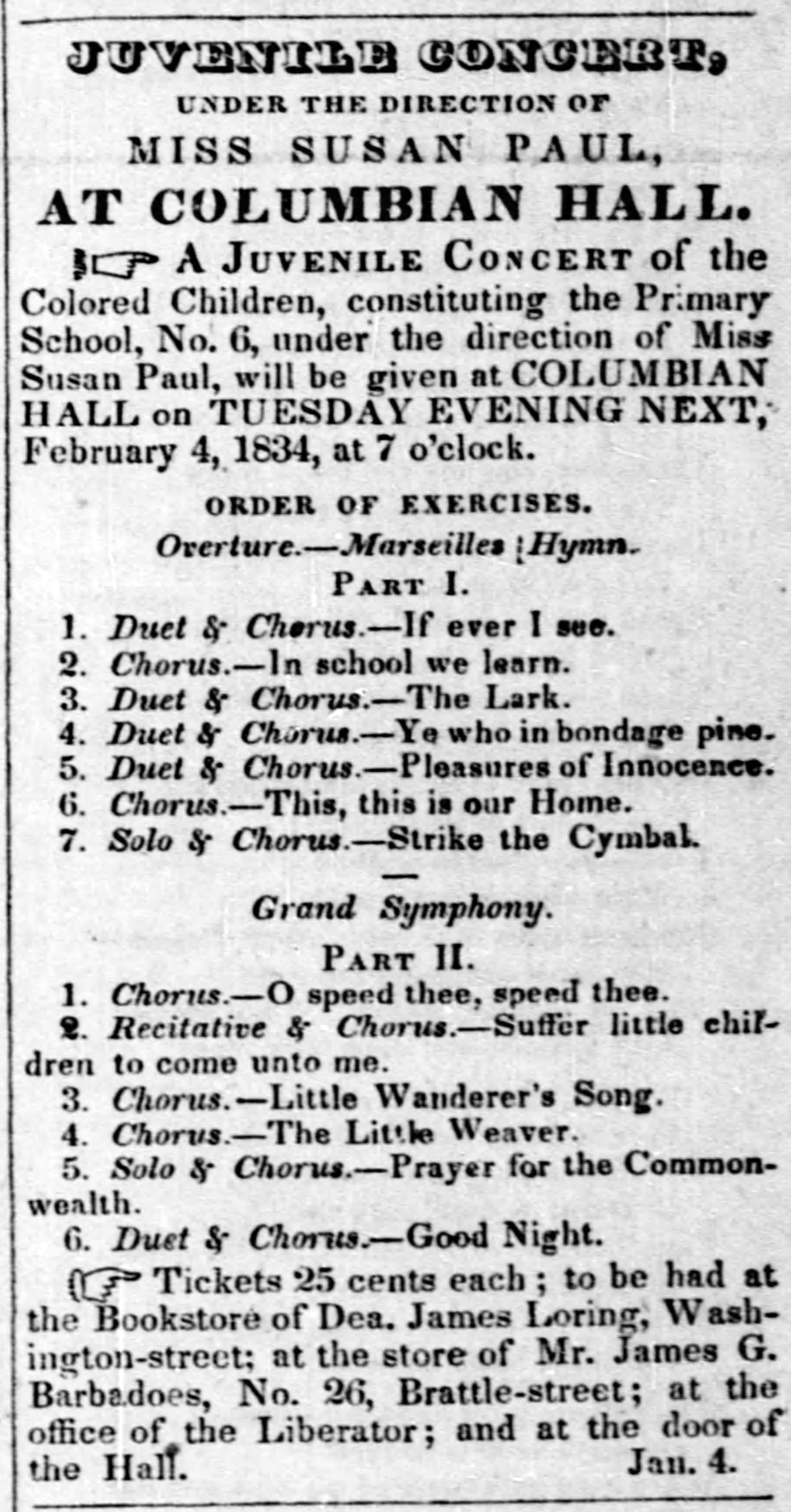
After a hiatus, Paul resumed her popular student choir performances in February 1837, with an event at Congress Hall. Tickets were twenty-five cents. Additional performances were held in early May at the anti-slavery office, in June at a Boston meeting house, and on the Fourth of July in the nearby city of Lynn, accompanying a lecture by then newcomer Wendell Phillips.
The students and their teacher impressed on every occasion. “We sat in our place, absolutely enchanted. Tears flowed on every side; and the audience gave vent to their enthusiastic admiration, by long and reiterated bursts of applause,” one reviewer wrote.6
As before, Paul made sure her talented students were not just singing all the right melodies, but also hitting the appropriate political notes. Her concerts mixed classical and religious tunes with songs that conveyed important messages, like “Mr. Prejudice,” pointing out the hypocrisy of the colonization movement; “The Sugar Plums,” decrying the use of Southern slave labor; and “Strike the Cymbal,” a rallying cry for freedom.
Text within this block will maintain its original spacing when published
MR. PREJUDICE
Pray who is Mr. Prejudice,
We hear so much about,
Who wants to spoil our pleasant songs,
And keep the white folks out?

They say he runs along the streets,
And makes a shocking noise,
Scolding at little colored girls,
And whipping colored boys.
We never yet have met the wretch
Although our mothers say,
That colored folks, both old and young,
He torments every day.
A colonizing agent hired,
We’re told he has a whip,
With which he flogs our honest friends,
And drives them to the ship.
The colonizers tell us all
They hate this wicked man—
Yet ask him every day to dine,
And flatter all they can.
He must be very tall and stout,
Quite dreadful in a rage,
For strongest colored men they say,
He’ll toss out of a stage.
We wish that we could catch him here,
We think he’d hold his tongue,
If he should see our smiling looks,
And know how well we’ve sung.
However strong the rogue may be,
Kind friends, if you’ll unite,
Should he peep in, oh, never fear,
We’ll banish him to-night.
 - Published in Liberator, May 31, 1834
Paul remained active as an officer in the Anti-Slavery Society and served as a delegate for the women’s national anti-slavery convention first held in 1837 in New York, and again the following year in Philadelphia. She was among a small number of Black women who participated and was also selected to serve as an officer for at least one of the conventions.
While most of the white women who were active in the anti-slavery movement hailed from affluent, or at least middle-class families, Paul teetered on the brink of insolvency after the deaths of her father and sister forced her into the role of family breadwinner. Her younger brother, Thomas Paul, Jr., was on his way to a successful career as an educator (and would later become one of the first black graduates of Dartmouth College) but he was not able to contribute much to the family during this period and so Susan Paul was left to carry the burden. The modest proceeds from the sale of her book may have helped, along with her teaching and seamstress income, but it wasn’t always enough.
Financial pressures forced the Paul family to move several times, and in 1837 they rented a home on Grove Street in the same North Slope section of Beacon Hill.5 They intended to split the two-hundred-dollar annual rent with another Black resident, but the plan fell through, and Paul was forced to do something she loathed which was ask for financial help. She reached out to her fellow abolitionists to share her struggles to care for her family and cover the rent.
Lydia Maria Child promptly took up her cause and wrote letters on her behalf. “Miss Paul is high-spirited, and I believe suffered much before she complained. Day before yesterday, she sent for me, and told me her distress, and how she struggled with it, rather than make it known to the abolitionists, who were called to sacrifice so much for the colored people,” Child wrote asking for donation on her behalf. Jonathan Phillips, a relative of Wendell Phillips promptly wrote back to Child with a contribution of thirty dollars.7
Paul remained loyal to Garrison even as Boston’s growing abolitionist movement began to splinter toward the end of the decade. A bitter struggle ensued within the Boston Female Anti-Slavery Society, with Maria Chapman and her sisters advocating for a broader, bolder, progressive agenda –– while others, including Society President Mary Parker and Martha Ball, preferred a conservative approach and felt the group should stick to its core anti-slavery mission. Religious and class divisions also fed into the competing factions, and support for the iconoclastic Garrison became a flash point.8
Paul sided with the Chapman camp, though she was no doubt displeased to see the infighting tear the Society asunder. She had never been shy about speaking out for the cause of freedom, but she was known to be amiable and kind-hearted and did not appear drawn to conflict in the same way as Chapman.
In early 1840, Paul faced her own personal challenge with the unexpected death of her fiancé. Little is known about the man but he may have died from tuberculosis. He and Paul had been expected to be married soon.
Later that same year, near the five-year anniversary of the Gentlemen’s Mob, Paul took a steamboat to visit New York City, probably for a meeting of the American Anti-Slavery Society. As a Black woman she was not allowed to stay in the women’s cabin, so she slept on the lower deck instead. A blast of cold air and rain descended, and Paul was left to brave the elements overnight. As a result, she later developed a bronchial infection.9
The lingering illness did not keep her from working at the annual anti-slavery fair held later in December. Paul manned a table selling a variety of linens, crafts, and handmade goods to raise money. She sat near Chapman in front of a large ornamental vase on a white marble slab decorated with fresh holiday greens. Anti-slavery slogans hung from the tables and walls and a plaster bust of Garrison perched on a pedestal stood in the middle of the room. Tea was served along with jellies and maple sugar candies, and Christmas melodies filled the air. Any divisions were temporarily cast aside; it was a festive and joyful occasion, one that Paul had always enjoyed in the past.
This year, however, her poor health got the better of her and Paul had to leave early. She was confined to bedrest and unable to attend the Christmas soiree on the final night to cap off the successful event.
Her friends tried to comfort her, but she never recovered. Four months later Susan Paul died at the age of thirty-one. Services were held in her father’s old church, and she was buried in South Boston. “The family will now be broken up and the children taken by sundry friends,”10 Maria Chapman’s sister explained in breaking the news. Sarah Southwick later recalled how her death was another example of the “cruelty of this prejudice.”11
Paul’s efforts at her final Society fair raised twenty dollars for the anti-slavery cause.12
Author’s Note: This post is excerpted and abridged from my previously published book, The Boston Gentlemen’s Mob. For a fuller telling of Susan Paul’s role in the historic Boston Abolition Riot of 1835 I encourage you to check it out!
Notes
1 The first public primary school for Black students in Boston opened in 1820. It was housed in a room at the African Meeting House next to the existing grammar school for an annual rent of seventy-two dollars. There were forty-seven students to start, most aged four to seven years old. Two more (segregated) primary schools were opened soon after, but problems at Primary School No. 2 led city officials to dismiss the original teacher and replace her with Susan’s mother, Catharine (sometimes Catherine) Waterhouse Paul. She moved the location from around the corner on Southac Street to an “airy and central” room in her own home on George Street. The move and her teaching abilities proved a successful match, and school enrollment grew quickly. “The school has a more orderly and cleanly appearance; and in the studies and manners of the children there is much improvement,” the school committee noted. Susan Paul began her own teaching career in the family home along with her mother and continued thereafter. It’s not entirely clear when the school moved out of the Paul family home, but it is likely that it relocated to the African Meeting House sometime after her father’s death, before eventually landing at the adjacent new Smith School House. See Wightman, Annals of the Boston Primary School Committee, 94–96; and more generally Baumgartner, In Pursuit of Knowledge, 161–66; Levesque, “Before Integration,” 113–25.
2 Liberator, March 29, 1834, 3.
3 Susan Paul letter to Garrison, April 1, 1834, Boston Public Library (BPL).
4 The Liberator published a brief but glowing death notice of Anne Paul Smith accompanied by Bible verse, noting that she died after “a short and distressing illness, which she bore with Christian meekness and fortitude.…In the death of Mrs. Smith, the colored population have met with a loss that will be long and severely felt.” Coincidentally, the notice was published in the same issue as the first excerpts of Susan Paul’s James Jackson memoir. See Liberator, June 17, 1835, 3–4. The broader significance of Paul’s publication would not be recognized until much later. Some historians credit her as the first African American woman to publish a biography. Brown, Memoirs of James Jackson.
5 Tracking the Paul family’s residences requires some sleuthing. Around 1823, the family moved from Belknap Street (Joy Street) to a three-floor gray brick home at 26 George Street (now 36 West Cedar Street), which now bears a plaque. Sometime after Reverend Paul’s death in 1831, the family moved. City directory records for the years 1834 and 1836 show the family listed at 6 George Street, a few houses down from their prior home. It’s not clear if this is simply a typo or an actual change in address. Given the family’s changing financial fortunes and other circumstantial evidence, it’s likely they did move soon after his death. Census records show that the Paul family lived in the same West End neighborhood (Ward 6) in 1830 and again in 1840 but do not pinpoint locations. For a time, the family lived on a street with most mostly white neighbors because they could not find suitable housing in the more crowded Black section. That arrangement did not last when the neighbors apparently took offense, according to friend and author Lydia Maria Child. In 1837, Susan Paul and her family moved once again, this time to a home on Grove Street in the same area of Beacon Hill. See Meltzer, Holland and Krasno, Lydia Maria Child, 583; Grover and da Silva, “Historic Resource Study.”
6 Zion’s Herald, as reprinted in Liberator, May 12, 1837, 3.
7 See Letter to Jonathan Phillips, Lydia Maria Child: Selected Letters, 1817-1880. Edited by Milton Meltzer and Patricia G. Holland, UMass Press, 1982. 583; and Grover, Kathryn, and da Silva, Janine V., Historic Resource Study, Boston African American National Historic Site, 12/31/2002, http://npshistory.com/publications/boaf/hrs.pdf, accessed 3/18/2021
8 A book could be written on the philosophical divisions and political infighting that split the Boston Female Anti-Slavery Society and it has.
9 The story of her catching ill on the steamboat trip comes from recollection of Sarah Southwick. There is no independent confirmation of her story on record, but the facts generally comport with what we know about Paul’s death from Liberator notice and city death records (see subsequent note). Also, Southwick sat next to Paul during her last holiday fair and may have heard the story then. See Southwick, Reminiscences, 29.
10 Anne Warren Weston letter to Henry and Maria Chapman, May 5, 1841. BPL.
11 Southwick, Reminiscences, 29.
12 For details about Paul’s participation in the holiday fair, see Liberator, February 25, 1840, 3; and January 1, 1841, 3 (which includes floor diagram of the fair setup). Her death was reported in the Liberator, April 23, 1841, 3; and reprinted in The Colored American, May 8, 1841. According to City of Boston death records she died of consumption on April 19, 1841 at the age of 31 and was buried at St. Matthew’s Church in South Boston six days later. The newspaper death notices record her age as “about 32.”
Comments
Nothing yet. Say the first thing.
Sign in to join the conversation.