
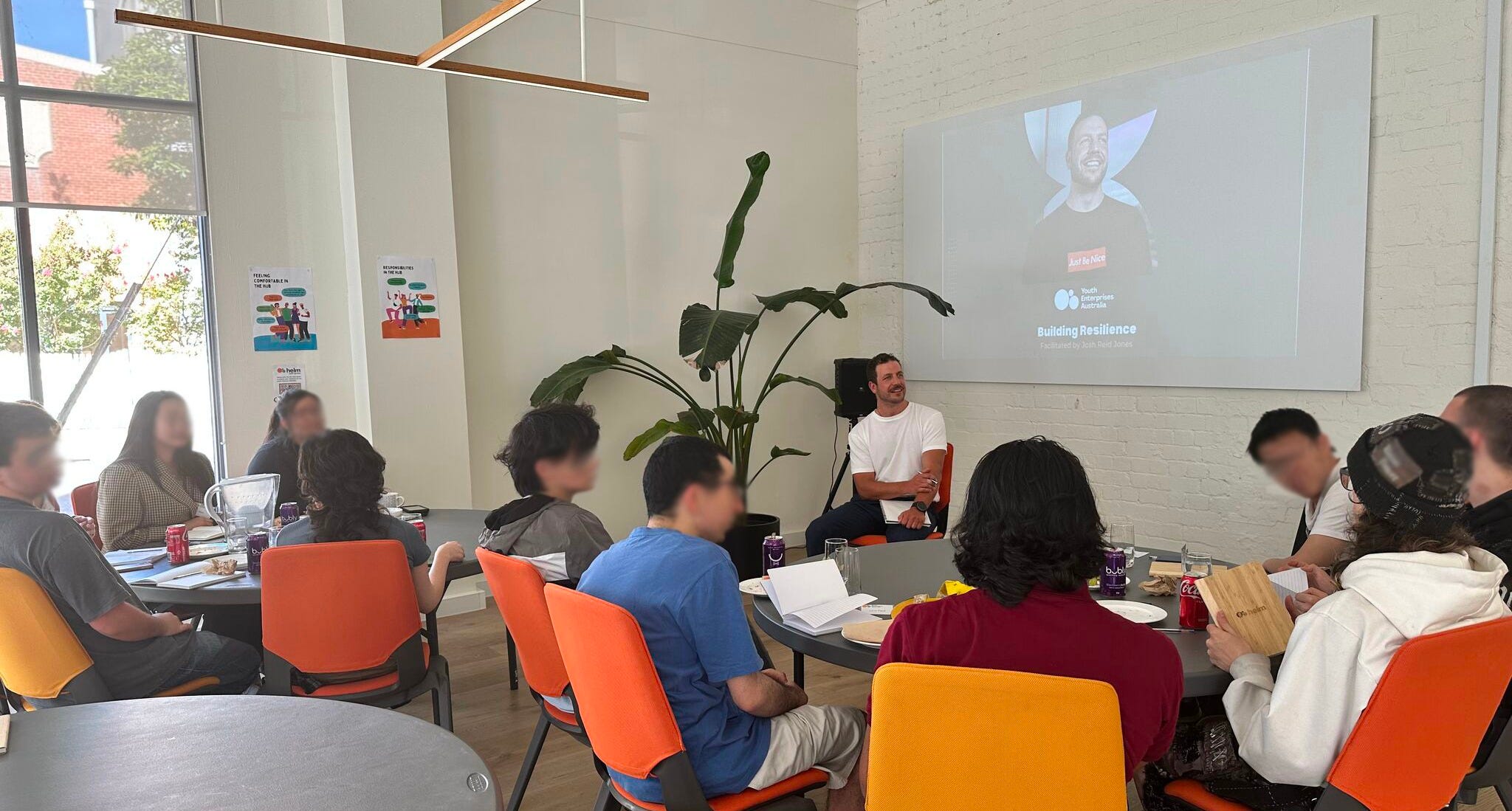
I believe there’s an extraordinary amount of goodwill in the world. I believe you want your attempts at help to actually work. So do I. That’s what this newsletter is for, and it’s the reason the Just Be Nice Project exists.
Here’s where I’ll start, because it’s where I always start: Just being nice is a great, accessible entry point into social impact. It’s a north star, a way to audit our behaviour, on the days we’re doing great and the days we’re not. We can all be a little bit nicer, at all times. It doesn’t cost anything, and there’s no barrier to entry.
But as a final destination, Just being nice is woefully inadequate.
Being nice is where you start. It is not where you finish. I started the Just Be Nice Project to give people an easy place to begin on a journey to creating a better world, but the actual outcome we work towards, every day, is bigger than niceness. It’s ensuring that everyone gets the help they need, when they need it, for as long as they need it, regardless of how they come to need help.
That’s a much harder goal to deliver than “be nice.” And it’s the reason this newsletter exists: to talk honestly about the gap between wanting to help and actually helping — and what closes it.
Here’s the uncomfortable truth I keep coming back to. Most people, when they try to do good, do it from a genuinely positive, generous place. I believe that completely. But when you don’t know what you’re doing, it’s possible to do more harm than good, despite your good intentions. Good intentions are a measure of motivation, not of efficacy or skill.
It shouldn’t be a controversial take. If I had the choice, I’d want my accounting done by a qualified accountant, my medical treatment delivered by a registered doctor, and my house painted by a master painter. Not because I doubt the good intentions of a generous amateur, but because good intentions and competence are different things, and in most of life, we already know it.
Social impact is one of the only fields where we regularly forget this. We assume that caring is the qualification. It isn’t. It’s often just the starting point.
“So what can I do to help?” I get asked all the time. It’s a great question, and the answer, at any given point of time is this: The best impact you can possibly have is on the other side of what you’re good at. Not what you’re passionate about in the moment. Not what everyone else is doing. What you’re actually, demonstrably, best at. That applies whether you’re a business deciding where to direct a CSR budget, a school building a leadership program, or an individual deciding where an hour of volunteering will have the best impact.
I call the skill of telling the difference, of being able to identify, create, deliver and measure good impact ‘Impact Literacy’. It can be simple, and it can be complicated, nonetheless, it is a skill, and like any skill, it can be learned, developed and improved upon. That’s what I’ll be writing about here every week or two, from now on: fewer topics, one throughline.
Over the next few weeks, I’ll walk through what this looks like in practice. Getting back to first principles and systems thinking to help individuals, organisations and communities navigate what good support looks like. I’ve been overwhelmed by the constant negativity and rage baiting in the news, in social conversations, on social media platforms. People seem to have forgotten what it is we’re actually striving towards together, a positive view of what’s possible, and practical frameworks for getting there, have been lost among a sea of grievances, finger pointing, and complaining. I have found myself holding back, overwhelmed with what to address, talk about, or teach. I’m going to try and lift my game, and the people around me, so that the vast majority of people who want to leave the world and their communities better than they found them, have the tools to do so.
If you want the people, teams, or organisations around you to stop confusing good intentions with good outcomes, you’re in the right place.
Just be nice, be really good at something (or some-things), then, do good – preferably with all of us together.
Love - Josh
No posts
Comments
Nothing yet. Say the first thing.
Sign in to join the conversation.