
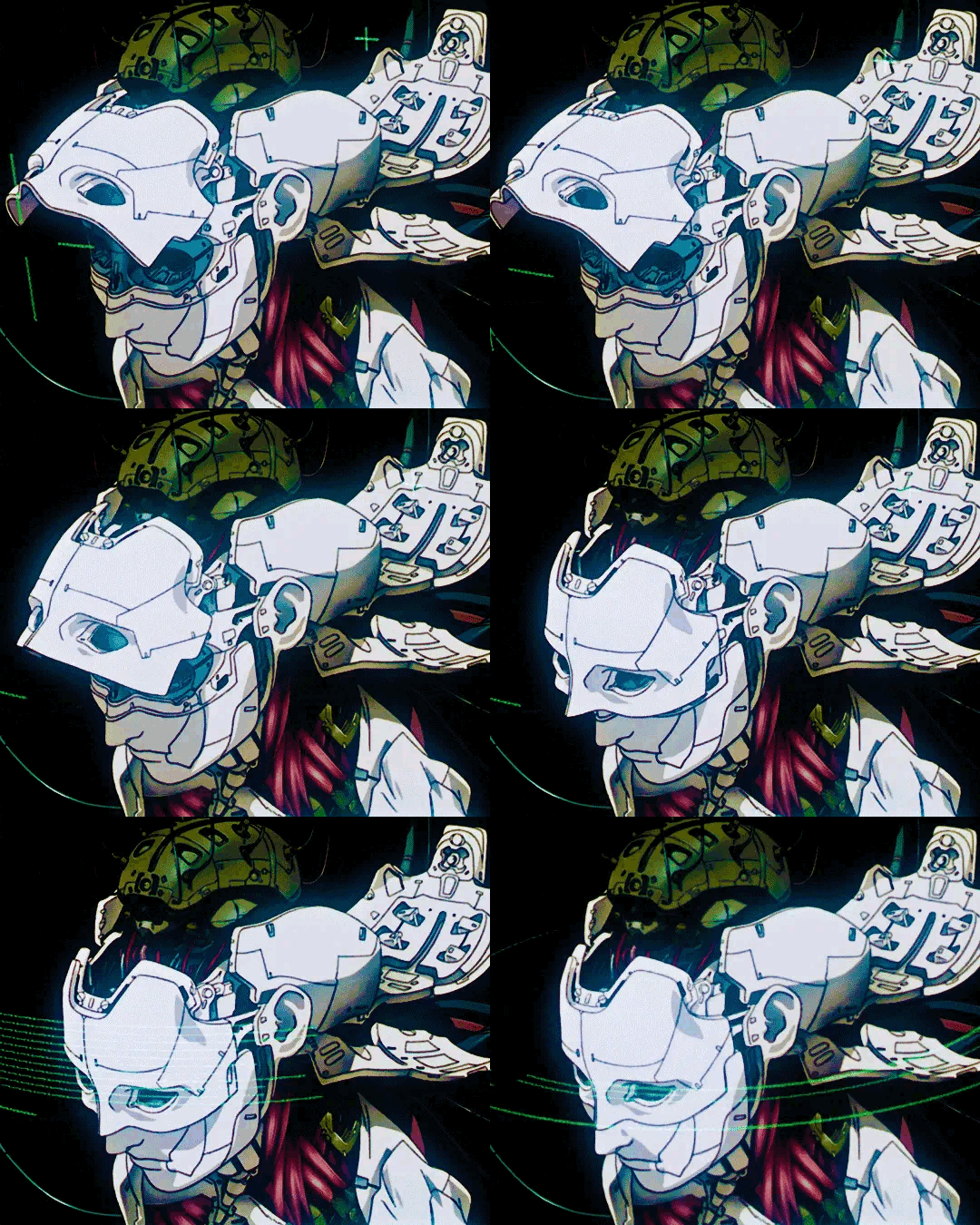
“The year was 2081, and everybody was finally equal.”
That’s how my good friend Kurt Vonnegut opens up Harrison Bergeron.
Let out your sighs of relief.
We made it.
All this effort, all this damn work, and the utopia is only about fifty-five years away.
Blow your party horns.
In just a mere half century, we will experience the end of the Culture Wars. All this mandatory virtue-signalling, all the sensationalized political takes, all the commodifying of controversy, well, it’s all worth it.
We made it.
Feels nice, right?
Sure, I’ll be at the ripe old age of ninety-two, but by then we should be able to figure out this pesky aging thing. Bryan Johnson, that vampire corpse, the one stealing his son’s blood, I’m sure he’ll figure out how we can bio-hack into eternal life. That’ll buy me at least a decade of utopia.
Truth be told, I wish ol’ Kurt was still with us. There’s a few more questions I’d like to have asked him. But alas, the man has crossed-over into the After-Life. Maybe into utopia.
A moment of silence, please.
Oh, what’s 2081 like, you ask?
The coming paradise? Heaven on Earth?
Well. It sucks.
Better breathe all those sighs of relief back in.
Let me explain.
This little story from Kurt should last just as long as you can hold your breath.
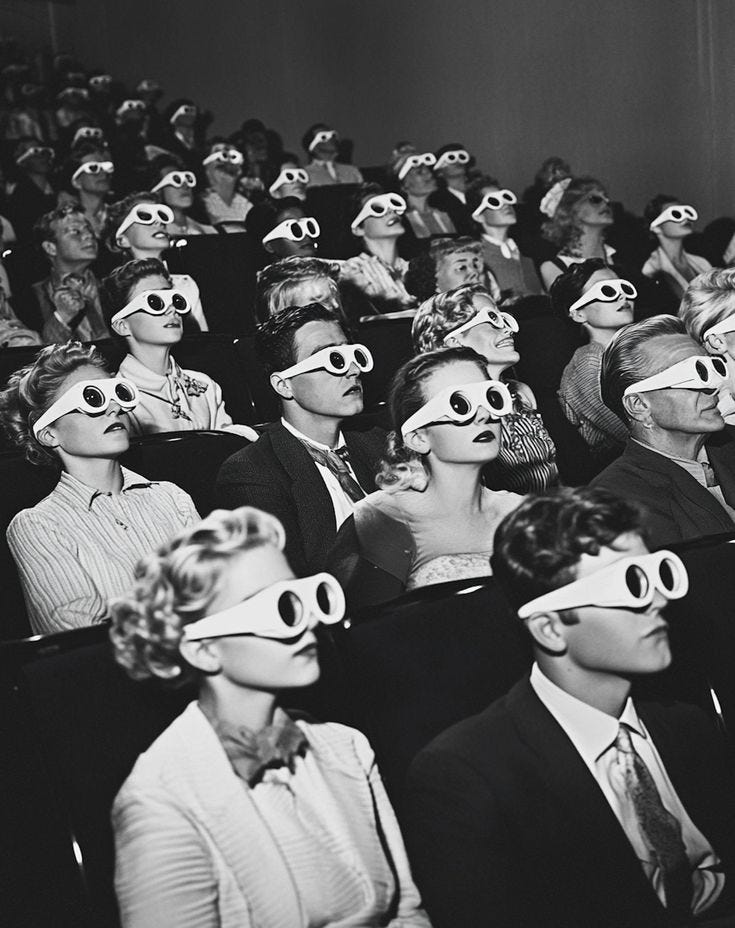
The big lie about 2081 is that we didn’t really make it.
To equality, I mean.
Too complex a problem, overall. Even with all these advancements in artificial intelligence. All of us people are cursed with a kaleidoscope of unique abilities. We’ve got all these various expressions of intelligence, strength, talent, beauty.
The list goes on and on and on.
There’s no real one-size-fits-all solution; and try as they might, it’s pretty hard to breed out the Divine Image.
So what they did, the powers that be, is introduce a few, simple, not-really-going-to bother-you-much bits of government mandated handicaps. No big deal.
Unless you’re smarter than average, prettier than average, stronger than average, have a nicer voice. Anything, really, that makes you special.
Say you’re too intelligent, lucky you, all those really benevolent folk at the top will just go ahead and place a little radio transmitter in your ear.
He was required by law to wear it at all times. It was tuned to a government transmitter. Every twenty seconds or so, the transmitter would send out some sharp noise to keep people…from taking unfair advantage of their brains.
We call them Airpods now, but you get it.
Say you’re too strong. No big deal. Just padlock a forty-two pound bag of burden around your neck.
If you’re too pretty, wear a mask.
If your voice is too angelic, grunt and mumble.
If you’re too graceful, hobble about awkwardly.
You get the picture.
With just a little bit of threatening, prison and fines, presto! We are all equal…ly mediocre.
That coming utopia, the New Eden, well, we can achieve it by exacting violence against all forms of human difference. A small price to pay, if you ask me, for everyone to feel good.
Through tons of research, the guys in white suits, the ones paid by NGOs and heads of state, well, they figured out that in order to bring about the just society we all want, to ensure fair growth economies, in order to enact the kind of equality our precious souls desire, all we had to do was:
Destroy Human Excellence.
Because, and surely you know this, if inequality is bad (and, I mean, of course, right?), and if varying talents create inequality, then all we need to do is eviscerate those abilities.
By any means. For Paradise, I mean. For Shangri-La.
Now, if I’m remembering Kurt correctly, or maybe I am just thinking of all these current, horrible days of ( ugh ) diverse aptitude, but it seems to take a lot less money, love, and effort to cripple the strong, than it does to strengthen the weak.
Make of this what you will.
There was this problem, though. Even in 2081, when we finally made it. Humans kept conjuring up all these obstacles to our perfect tyranny of mediocrity.
Harrison Bergeron.
That was his name.
He had to go and be all archetypal. Had to go and be the epitome of human potential.
Kurt told me that “In the race of life, Harrison carried three hundred pounds.”
That was the burden around his neck.
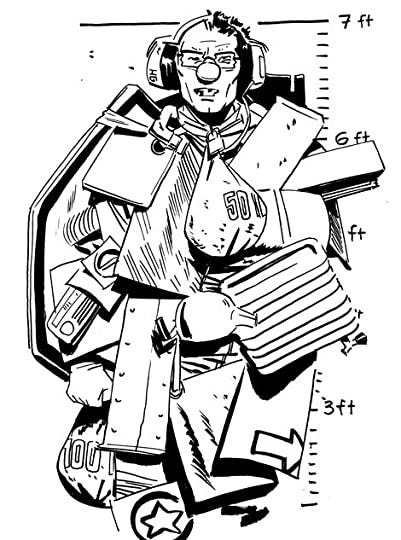
And that’s not all. Harrison was seven feet tall.
The rest of Harrison’s appearance was Halloween and hardware. Nobody had ever borne heavier handicaps. He had outgrown hindrances faster than the H-G men could think them up.
Instead of a little ear radio for a mental handicap, he wore a tremendous pair of earphones, and spectacles with thick wavy lenses. The spectacles were intended to make him not only half blind, but to give him whanging headaches.
Scrap metal was hung all over him. Ordinarily, there was a certain symmetry, a military neatness to the handicaps issued to strong people, but Harrison looked like a walking junkyard.
And to offset his good looks, the H-G men required that he wear, at all times, a red rubber ball for a nose, keep his eyebrows shaved off, and cover his even white teeth with black caps at snaggle-tooth random.
And I mean, that’s what you get when you go ahead and be so beautiful and brilliant in our age of enforced equality. You know how it is. All that unequal talent and ability and gifting, well, it’s just going to make people like me and you feel inadequate.
Insecure.
What else could we do but imprison him? Collectively, I mean.
Mediocrity is just so much more comfortable when we enforce it together. That’s our Golden Age. Our Avalon.
And then, Kurt tells me, one night, Harrison had to go and break free.
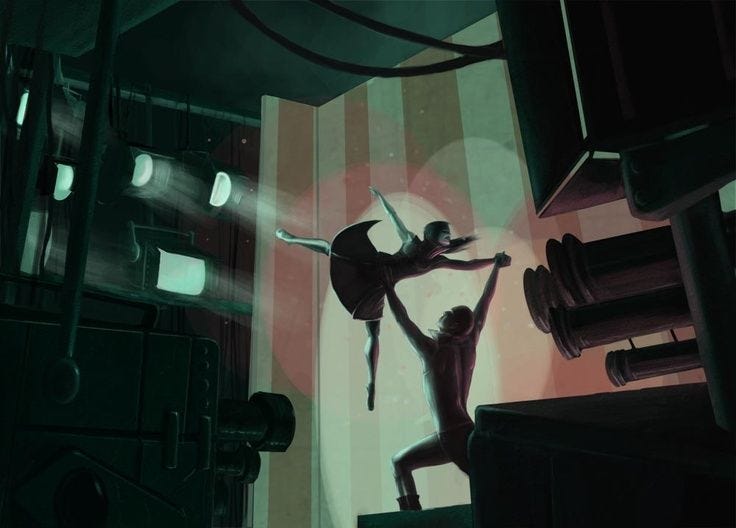
Clanking, clownish, and huge, Harrison stood - in the center of the studio…Ballerinas, technicians, musicians, and announcers cowered on their knees before him, expecting to die.
This is the scene right after he rips a door off its hinges and enters a performing studio.
“I am the Emperor!” cried Harrison. “Do you hear? I am the Emperor! Everybody must do what I say at once!” He stamped his foot and the studio shook.
“Even as I stand here” he bellowed, “crippled, hobbled, sickened - I am a greater ruler than any man who ever lived! Now watch me become what I can become!”
See what I mean? He had to go and be so quintessential, that even in his severely burdened state, he commits the greatest crime imaginable in 2081:
Reveals that humans might become excellent.
Harrison tore the straps of his handicap harness like wet tissue paper, tore straps guaranteed to support five thousand pounds.
Harrison’s scrap-iron handicaps crashed to the floor.
And there it goes, the whole damn philosophy of enforced equality.
The whole tyranny of mediocrity, clanging to the floor.
Harrison thrust his thumbs under the bar of the padlock that secured his head harness. The bar snapped like celery. Harrison smashed his headphones and spectacles against the wall.
He flung away his rubber-ball nose, revealed a man that would have awed Thor, the god of thunder.
Remember that pesky little problem, not being able to breed out the Divine Image? Well, turns out beneath all the lies, there it is. Eternally Beautiful.
“I shall now select my Empress!” he said, looking down on the cowering people. “Let the first woman who dares rise to her feet claim her mate and her throne!”
A moment passed, and then a ballerina arose, swaying like a willow.
Harrison plucked the mental handicap from her ear, snapped off her physical handicaps with marvellous delicacy. Last of all he removed her mask.
She was blindingly beautiful.
Ugh. Beauty. A disease completely intolerable to polite little tyrannies.
“Now—” said Harrison, taking her hand, “shall we show the people the meaning of the word dance? Music!” he commanded.
Careful, Harrison.
People might start remembering what they were made for.
The music began.
Harrison and his Empress merely listened to the music for a while — listened gravely, as though synchronizing their heartbeats with it.
They shifted their weights to their toes.
Harrison placed his big hands on the girl’s tiny waist, letting her sense the weightlessness that would soon be hers.
And then, in an explosion of joy and grace, into the air they sprang!
Not only were the laws of the land abandoned, but the law of gravity and the laws of motion as well.
And this is why we have all those burdens, mandated by the Handicapper-General, because as soon as they come off, well, people have this wretched little habit of getting Transcendental.
They reeled, whirled, swivelled, flounced, capered, gambolled, and spun.
They leaped like deer on the moon.
The studio ceiling was thirty feet high, but each leap brought the dancers nearer to it.
See? This is what happens when you give a person a bit of freedom; they stop settling for the earth, if you know what I mean.
It became their obvious intention to kiss the ceiling.
They kissed it.
And then, neutraling gravity with love and pure will, they remained suspended in air inches below the ceiling, and they kissed each other for a long, long time.
And for that moment, everyone watching, in the studio, and at home on their TVs, they all saw what kind of Beauty emerges when a human person is allowed to be magnificent.

The whole show, Kurt tells me, only lasted a few heartbeats.
On account of what might happen to the hearts and souls of people seeing something Good. Utopia is at stake. Elysium on the line.
And so, to keep all these ongoing efforts, all this hard work we wage online, for culture’s sake, well, you know.
Ka-boom!

A shotgun slug to the chest of Young Harrison and the Ballerina.
Sayonara! to all that mythic human potential.
The Handicapper-General, Diana Moon, well, she blew them away. Right there in the heavens. Right there in the middle of the dance.
And as it goes, according to Kurt, everyone watching, everyone witness to all this Incarnational Beauty, well, turns out all those burdensome handicaps worked. Worked wonders.
All that mesmerizing magnificence, forgotten.
Just as fast as the music stopped and the stream to the screens cut out. People were either zapped back to their false reality through their radio transmitters, or they just let it all slip from their memory.
Pretty nice to have all this deadening distraction.
Quite the tool, these anesthetizing, dehumanizing burdens.
How else would we keep our Ideal Society?
One thing, I think, that we are going to learn between now and then, is that people really do prefer mediocrity.
The “utopia,” the eradication and suppression of human excellence, well, turns out it persists on our complacency.
Someone else will set us free.
Don’t you see all these burdens I have?
Don’t you see that the roulette wheel of life didn’t create me beautiful enough to make a difference?
I can’t be going out and loving my neighbour, if others are better than me — and think of all the screen time I will miss out on.
And because of all this apathy, it seems it’ll be quite easy to enforce the equal Paradise we have been told we so desperately need.
Want to know how?
First, they will annihilate Beauty. Good-bye colour, harmony, craftsmanship, delight. Hello mundane, generic, inoffensive, small.
Second, best get rid of any pursuit of virtue or excellence. Contrary to the Desert-Wandering-Prophet-King who said it’s best to multiply the gifts given to you, latest research confirms that between now and Judgement Day, burying your talents will bring about the most societal harmony. Research is inconclusive for what happens after, however.
And Third, don’t go thinking about learning anything. Growing in wisdom. We can’t have people thinking. Knowing stuff. The only caveat, I think, is if you’re okay to swallow, whole cloth, pre-approved government created propaganda.
And just like that — poof! — good-bye human insecurity, inadequacy, and all unfairness. All we really need to do is build a society diametrically opposed to human life. Build something so anti-human, so ontologically destructive, that no one can thrive.
All at the bottom, together.
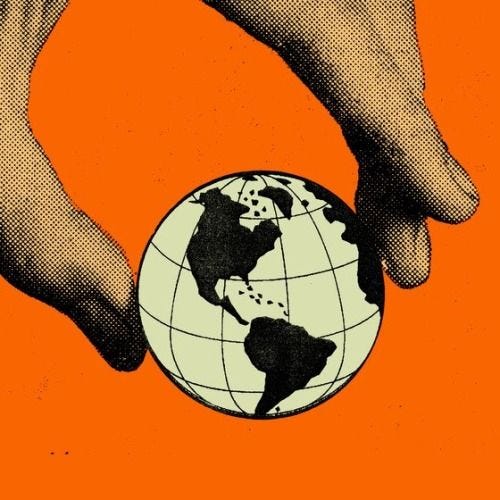
So after H. B. got blasted, after the Ballerina was riddled with buckshot, life went back to normal.
Hard to imagine, carrying on like everything is fine, even after such a Beautiful tragedy.
Who could do that?
Kurt tells me:
Just about everyone, actually.
And it turns out that Harrison Bergeron’s folks saw the whole thing.
Kurt tells me the mother is a bit dim, and the father, well, he’s so smart that every twenty-seconds some car crash or gun shot or, god forbid, a reaction video, plays through his airpods. Er, radio transmitters.
After the screen cut, George, the father, he goes to the kitchen for a beer. Hazel, the mother, she’s crying.
“You been crying” he said to Hazel.
“Yup,” she said.
“What about?” he said.
“I forget,” she said. “Something real sad on television.”
“What was it?” he said.
“It’s all kind of mixed up in my mind,” said Hazel.
“Forget sad things,” said George.
And that’s how you do it! Achieve your wildest dreams — the Perfect Society, equality of outcome, a fair civilization.
Horrible and mediocre and ugly, but damn, so fair.
Oh!
And one last thing.
Kurt didn’t mention this to me, but as I see it, these benevolent powers that be, they’re gonna have to get rid of all those people who follow the Desert King, that Wandering Prophet.
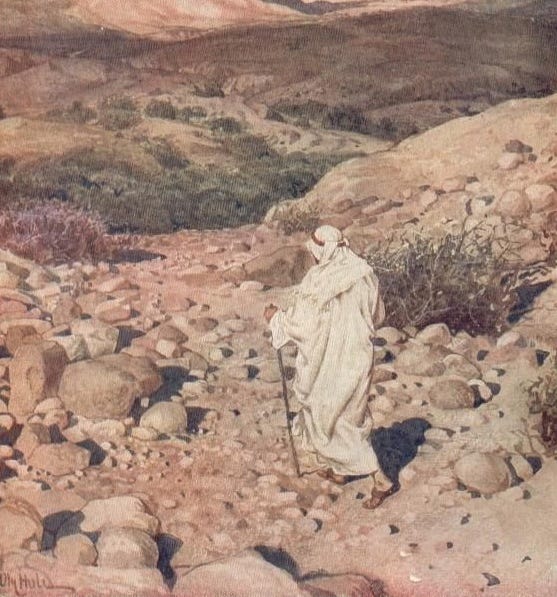
These followers keep going on about how this perfect utopia, this war won paradise, well, it sounds a lot like snake talk. Like it institutionalizes The Fall.
Whatever that means.
They keep saying that we don’t want to burden people down, aim them towards the dust and the grave, and then wrap a bunch of policy around it. They go on and on about how, together, we should aim at the ceiling.
Kiss it, even.
That all our unique differences, well, those make up a beautiful body.
They keep saying stuff like, we shouldn’t amputate our differences, that those parts of the body that seem weaker, well, they keep saying those parts are indispensable.
So my guess is, by 2081, they will have to go, too.
For the Greater Good.
Every Day Saints is a torchlight searching for the quiet miracles, the beautifully human stories and ideas that exist all around us. And it is a place to dialogue, not Holy Ground, but still a place of gathering.
Comments
Nothing yet. Say the first thing.
Sign in to join the conversation.