
For years now, education reformers have targeted history and civics education for special attention.
In the best case scenario, the argument goes something like: we all agree that public education is essential to American democracy. That educational commitment should include learning about a common past and a shared set of basic principles about the functioning of American government.
In the worst case scenario, reformers have used their argument to cover or not-so-cover a call for re-centering a version of American history and government that emphasizes white, usually male, and often Christian characters.
The conservative Hoover Institution at Stanford University has a recent summary of something close to the first scenario. The far-Right Heritage Foundation’s Phoenix Declaration—with its call for “cultural transmission” of Western and Judeo-Christian values in American schools—represents the other.
Meanwhile, progressive writers and mainstream scholars alike have taken on the task of developing a more comprehensive understanding of American history. As academic research becomes more specialized and technical, some of that work has focused on building an almost scientific approach that stresses careful archival work, rigorous scholarship, and the re-examination of commonly accepted truths or explanations for past events.
The same is true for legal scholarship and political philosophy.
Debates over all of this work sometimes become all-but-mainstream in media, journalism, and popular culture. Probably the best recent example of that breakthrough comes from The 1619 Project by Nikole Hannah-Jones, which became the target of widespread conservative (and some professional historian) criticism for the central theme in its work. Namely, that much of American history, politics, and culture—up to and including our government—is a direct result of human slavery.
All of this conversation preceded and remained ongoing heading into the 250th anniversary of American independence on July 4. It will continue.
I don’t need to recite or revisit every element in the way that conservatives, progressives, or even just apolitical Americans marked or reflected on that date except to say: many different people did and said many different things.
Maybe it was inevitable that Heather Cox Richardson, the most prominent historian in the United States today, weighed in—and did so in a way that bound a conversation about the American past into a celebration of some of the best, acknowledgement of some of the worst, and spotlight on some of the least known or understood stories about what America can be.
Dr. Richardson’s 250 to 250 project is a series of 60-second short videos on key events, people, and stories since 1776. The project began a few weeks before July 4th, and is running up roughly through Labor Day. There will be, as the name implies, 250 videos when it’s over.
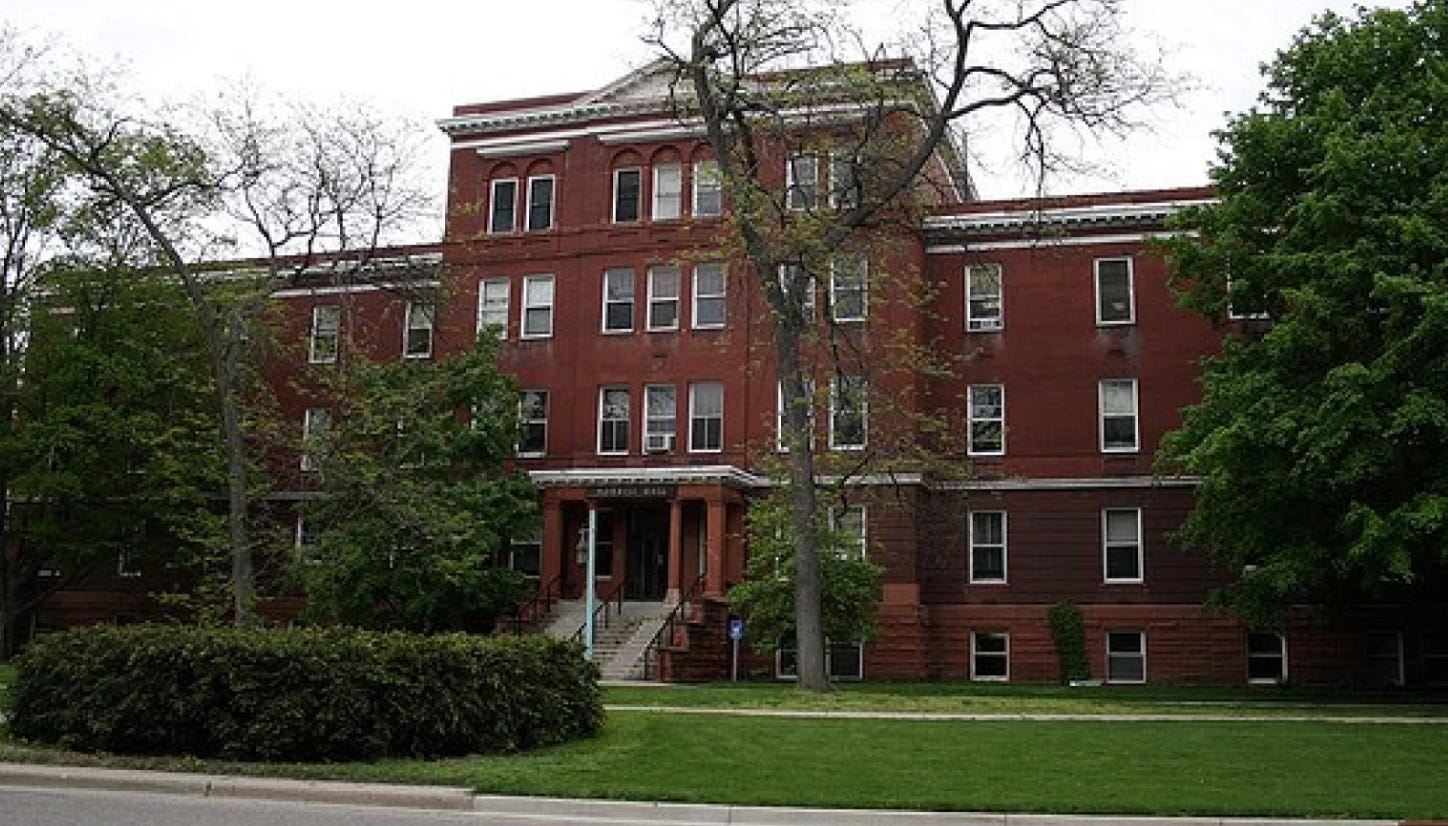
This week, I was honored to take part, narrating “The Morrill Act” that in the 1860s created the land-grant system of American colleges and universities. The fact that I am a professor at Michigan State University—the first land grant college!—makes it especially gratifying to join the project.
I also appreciate the change to reflect, however briefly, on the role that publicly funded education can play at any level, from early childhood to adulthood, in building opportunity.
Some of my favorites in this series are
Ken Burns on Ellis Island.
Pete Buttigieg on The Erie Canal.
Roseanne Cash on the Kent State Killings.
Bob Crawford on John Quincy Adams.
Julia Louis-Dreyfus on All in the Family.
Nicholas Ferroni on Horace Mann.
Harrison Ford on the Civilian Conservation Corps.
Sherrilyn Ifill on The 14th Amendment.
Paul Krugman on The Great Crash of 1929.
Kevin Kruse on the Voting Rights Act.
Governor Wes Moore on Thurgood Marshall.
Jim Obergefell on Obergefell v. Hodges.
Roxana Robinson on Harriet Beecher Stowe.
Maria Shriver on The Special Olympics.
The Rev. Liz Walker on the Integration of Little Rock.
Governor Gretchen Whitmer on The Great Society.
But there are many, many, many more. You really should check out as many as you can for yourself. Here’s the link to the main 250 to 250 page one more time. Or you can visit the 250 to 250 series on YouTube.
I haven’t asked her about it directly, but I think Heather would agree that any project like this—as with any textbook or narrative about the past—is partly an exercise in choices. The list of stories she curated in 250 to 250 may be different than one another historian may choose.
The choice is also about how to tell some of the same stories we share. There is a version of The Morrill Act that would focus on a great man—Senator Justin Morrill—and exclude the fact that much of these great state universities were built on indigenous land. Or the fact that the text in my narration noted that men were the first beneficiaries, not all people.
You can even tell from the comments on YouTube and some of the socials, where 250 to 250 is also posted, that some folks are quite unhappy that the text I narrated included those perspectives.
I call this the problem of whose history matters. Or, a simple change in punctuation puts it differently: whose history matters? The first phrasing, a declaration, asserts that how we decide which people’s stories to tell is part of the telling. The second phrasing, a question, asks to interrogate something about what we value.
Most of us in the education policy and reform worlds agree we should teach more and more rigorous history. And we should make sure far more people have some baseline level of civic education.
But after that? What are the stories we choose to tell? How do we choose to tell them? Who do include, and who do we leave out?
What do we tell our students in our classrooms every day?
Comments
Nothing yet. Say the first thing.
Sign in to join the conversation.