
Welcome!
Chances are you have heard about Ozempic, Wegovy, Mounjaro, and Zepbound. They are transforming how we think about weight loss and type 2 diabetes.
More than 1 in 20 people in the United States are currently taking one of these, and more than 1 in 10 people report ever taking one!
UK numbers are slightly behind these, but on the rise.
That means it is likely that you have friends or family taking the medications or may have even tried them yourself.
Hopefully you’re here because, like me, you are curious about these medications.
You might be asking… “What are these medications? How do they work, how well do they work, and what happens when you stop taking them?”
Or… “Are there side effects or long-term risks? What about muscle loss?”
If you want to know the answers, then you’re in the right place.
This is the first of a two-part deep dive into weight loss injections. In Part 1, we’ll walk through what the medications are, how they work, and the positive weight loss and health outcomes. In Part 2, we’ll tackle potential side effects, health risks, controversies, and unknown factors.
These medications were initially developed and approved for the treatment of type-2 diabetes and subsequently approved for chronic weight management.
For chronic weight management, the US criteria require someone to have a body mass index (BMI) over 30, or over 27 with the presence of at least one weight-related comorbidity, such as high cholesterol, type-2 diabetes, or high blood pressure.
In the UK, the BMI thresholds are slightly higher to access these medications, and they require a referral to specialist weight management services.
There are several health conditions that would prevent someone being prescribed these medications due to safety reasons (these are known as contraindications).
There is no assessment of the safety and effectiveness of these medicines outside of their approved use. For example, if used for weight loss in people who are not overweight or obese. The information in this article applies only to their approved uses and is for informational purposes only. It does not and should not be considered medical advice (see full disclaimer at the end of the article).
Okay, let’s go…
When people discuss weight loss injections, they are usually referring the two most prescribed medications:
Semaglutide (Ozempic® and Wegovy®)
Tirzepatide (Mounjaro® and Zepbound®)
Earlier generation weight loss injections are now less common:
Liraglutide (Saxenda® and Victoza®)
Dulaglutide (Trulicity®)
These medications were designed and approved primarily to treat type-2 diabetes and, more recently, for chronic weight management.
They are classified as incretin mimetics, meaning that they “mimic” the actions of natural incretin hormones in your body. Incretins are a group of metabolic hormones that play a key role in regulating blood glucose (sugar) levels, particularly after eating.
The medications mimic incretin hormones by binding to their receptors and triggering a biological response, giving them the name “receptor agonists”.
The incretin hormones they mimic are:
Glucagon-like peptide-1 (GLP-1)
Glucose-dependent insulinotropic polypeptide (GIP)
Glucagon
Medications can be classified based on the number of hormones they mimic and receptors they act on. We have single, dual, and now even triple receptor agonists:
Semaglutide, Dulaglutide, Liraglutide: GLP-1 single receptor agonists
Tirzepatide: GIP-GLP-1 dual receptor agonists
Retatrutide: GIP–GLP-1–glucagon triple receptor agonist*
*Retatrutide is currently being studied in phase 3 clinical trials and is not yet approved.
We may think of these as “new” drugs, but the first GLP-1, Exenatide, was approved in 2005, after a GLP-1 related peptide was discovered after being extracted from Gila monster venom in 1992!
The table below shows currently approved GLP-1RA therapies.
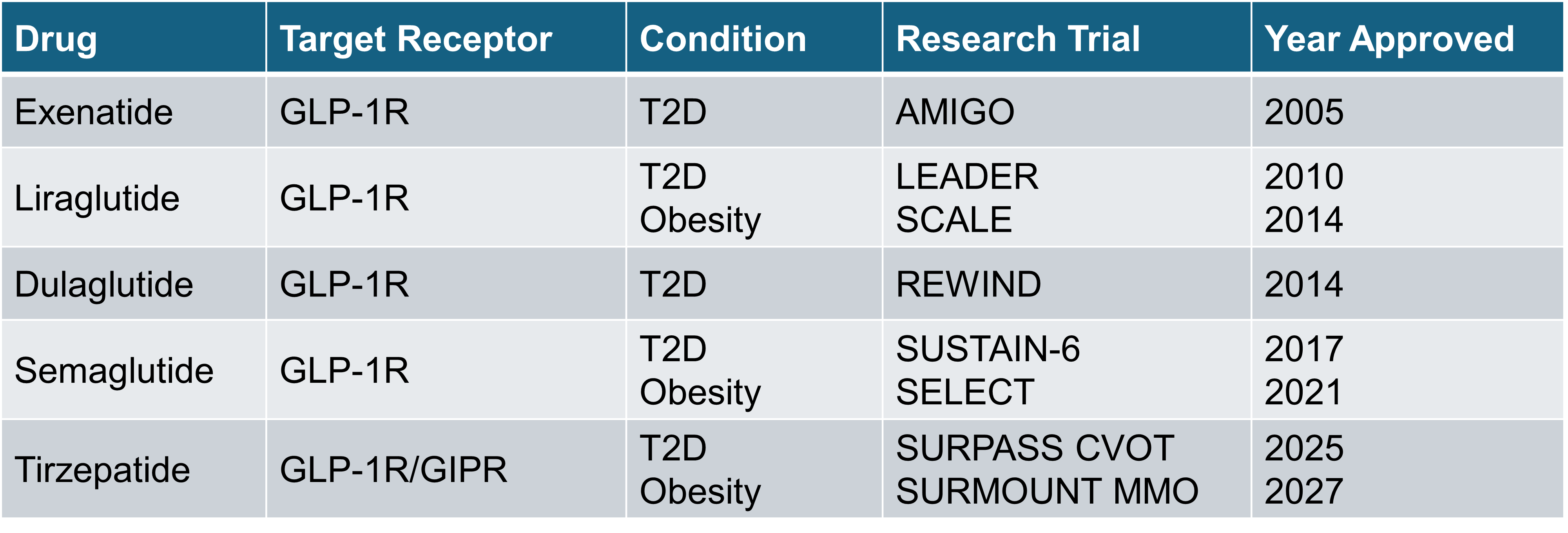
For simplicity, and to keep my sanity and yours, I am going to collectively refer to all these medications as GLP-1RAs (glucagon-like-peptide 1 receptor agonists). Though there are important differences that I’ll explain later.
Now we’re happy with terminology, let’s tackle the main topic...
Make no mistake, these medications work and work well.
The largest studies have followed people being prescribed the medication for over one year (up to 72 weeks in some studies).
The typical average weight loss after correcting for placebo comparisons is:
Liraglutide: ~6-8%
Semaglutide: ~8-16%
Tirzepatide: ~10-20%
Retatrutide: (unapproved): ~10-25%
The total weight loss is higher than these numbers, but I have corrected them based on weight loss in the placebo groups. Why? Because this tells us about weight loss that can be directly attributed to the medication effects.
Let’s put this into real-world numbers. For someone who weighs 90kg and takes semaglutide for one year, they could expect their bodyweight to decrease by 7 to 16kg. Giving them a body weight of 72 to 83 kg.
Realise that these numbers represent average weight loss. There is large individual variability with some people experiencing larger weight loss, and a proportion of people experiencing very little (we’ll revisit this in Part 2).
Linear weight loss occurs for the first few months of GLP-1RA use, with most people experiencing 75% of the total weight loss within 8 to 9 months. After which, weight loss becomes more gradual and stabilises around 12 to 16 months.
Thanks for reading Insight! This post is public so feel free to share it.
The % weight loss is greater in people with a higher starting body mass index, as there is more excess body weight (or body fat) to lose. Some medications also show a dose-response effect with higher doses leading to more weight loss.
Weight loss for newer generation GLP-1RAs far exceeds the average weight loss for long-term diet and exercise alone, usually in the range of 5-10%.
It pains me to write this. But we must acknowledge that, while some people have excellent individual success with diet and exercise, traditional lifestyle interventions have been largely unsuccessful at the population level.
According to a 2024 report from the CDC, US obesity rates decreased from 42.4% in 2017-2020 to 40.3% in 2021-2023 (although there continued to be a small increase in the rates of severe obesity).
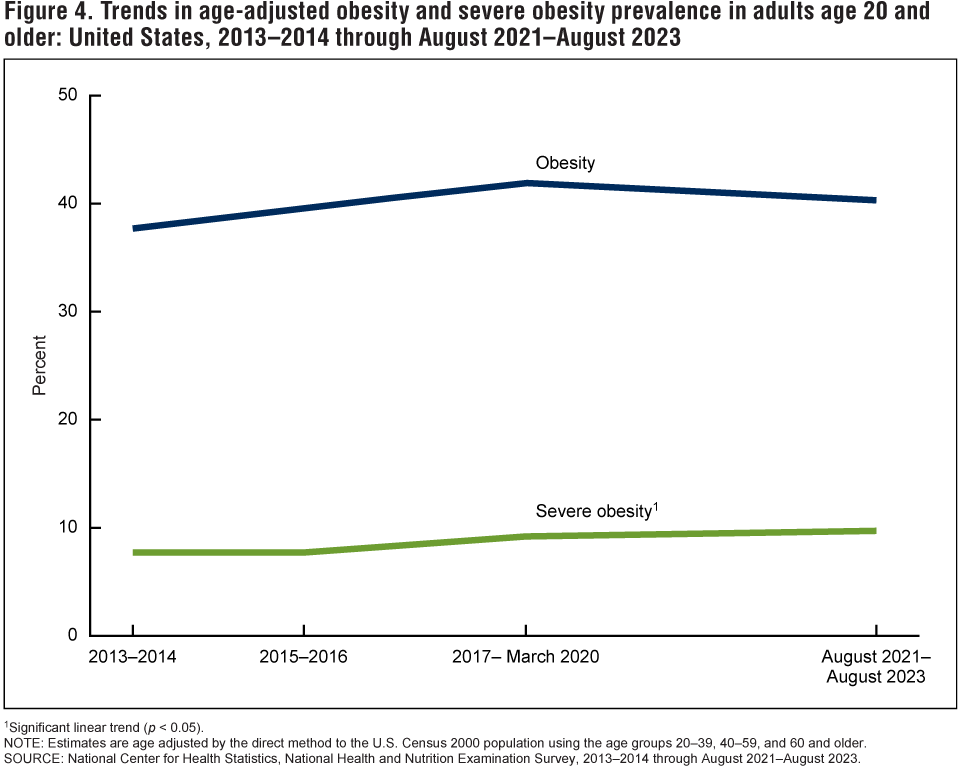
Now, this drop is not necessarily due to GLP-1RAs, but if we consider (1) their effectiveness, (2) their widespread use, and (3) Semaglutide (Wegovy) was approved for chronic weight management by the FDA in mid-2021, then we can speculate that the medications likely played a role in the falling obesity rates. *Ozempic was approved in late-2017 but only for the treatment of type-2 diabetes.
More recently, tirzepatide was approved for type-2 diabetes (as Mounjaro in 2022) and for chronic weight management (as Zepbound in 2023), so stay tuned for the updated obesity figures coming out over the next 1 to 2 years.
You might expect that GLP-1RA use improves health by causing large amounts of weight loss and helping with blood glucose control. And, for the most part, you would be right.
A large analysis of 215,970 GLP-1RA users published earlier this year evaluated the positive (and negative) health outcomes in people with type-2 diabetes.
GLP-1RA users were compared with standard of care, which included a range of anti-hyperglycaemic medications (classic diabetes medications that improve blood glucose control and, in some cases, weight management: sulfonylureas, DPP4 inhibitors, SGLT2 inhibitors, or a combination of the three).
The figure below shows the main health outcomes improved with GLP-1RA use.
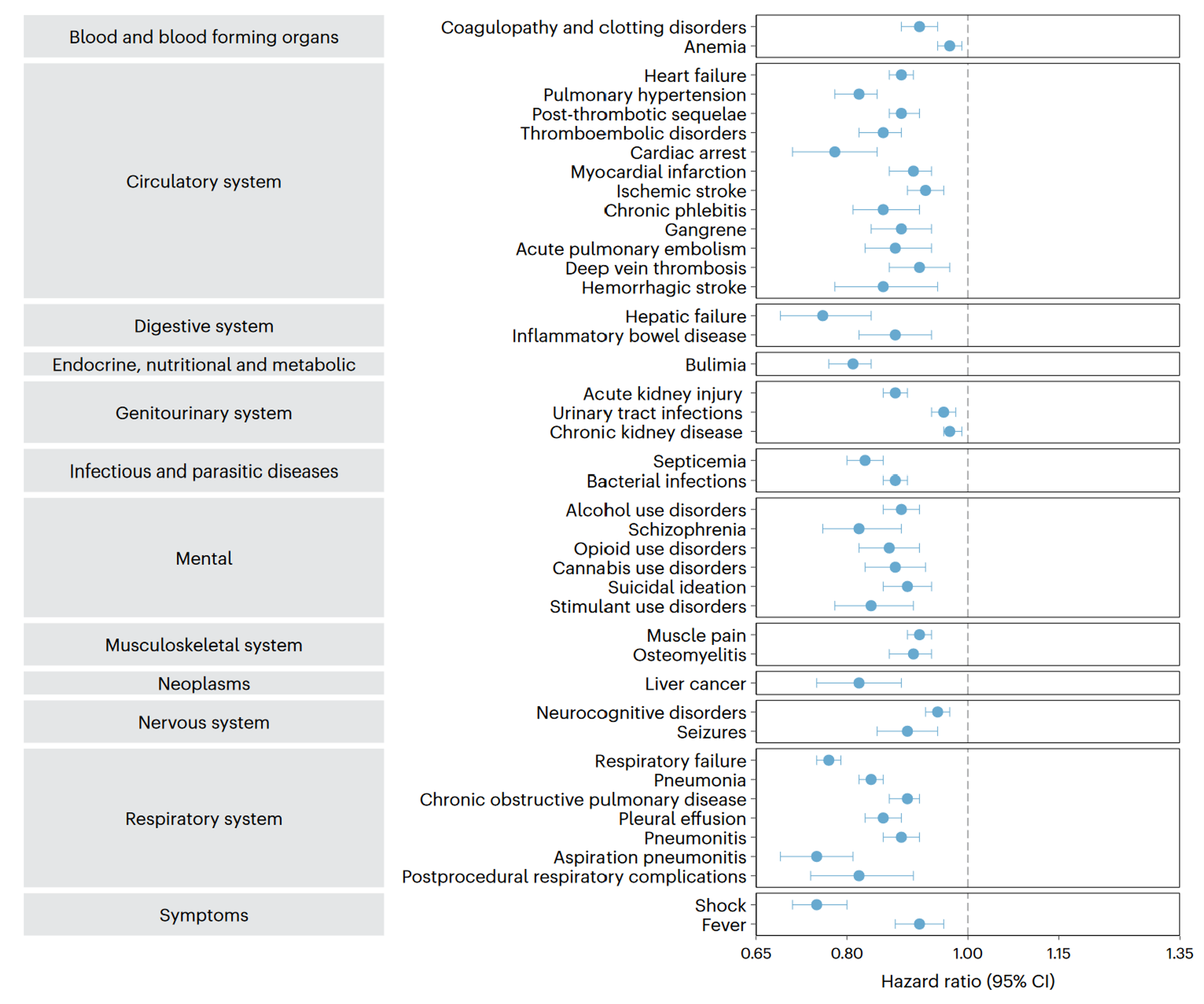
Each blue circle represents a mean hazard ratio. The further left it is, the lower (or slower) the risk of experiencing the associated health event. For example, the mean hazard ratio for cardiac arrest was approximately 0.80. This means a cardiac arrest was ~20% less likely to happen in the people receiving GLP-1RAs compared with an alternative anti-hyperglycaemic medication.
Overall, people with type-2 diabetes who used GLP-1RAs had a lower chance of many serious health problems. Such as heart attacks, strokes, blood clots, infections, liver cancer and failure, and several respiratory (lung) illnesses. These are excellent outcomes.
Perhaps more surprising, was the lower chance of alcohol, cannabis, opioid, and stimulant use disorders, as well as lower suicidal ideation*. This points to a central role in GLP-1RAs acting on incretin receptors in the brain.
(*Some earlier reports suggested a potential increased risk of suicidal thoughts or actions with GLP-1RA use. The FDA is conducting an ongoing evaluation; their most recent update states “preliminary evaluation does not suggest a causal link”. Several analyses (1, 2), including a large meta-analysis of randomized controlled trials, show a neutral or negative risk of suicidality and related behaviors with GLP-1RA use.)
The sample was from the US Veterans database, made up of over 92% males with an average age of 65 years. Results may therefore not be representative of health effects in females or across other age groups.
The analysis was open to all GLP-1RA medications… BUT over 98% of the data was from semaglutide (69%), liraglutide (15%), and dulaglutide (15%). Eagle eye readers will note that liraglutide and dulaglutide are now less commonly prescribed, so health effects may not be representative of the newer generation GLP-1RAs.
The follow-up duration was only 3.7 years. This means the hazard ratios for experiencing positive or negative health outcomes only reflect this timeframe. We do not know what would happen if people were followed for much longer periods, say 10 or 20 years.
Lastly, the study above is just one, albeit very large, analysis. There are more than 2,200 studies on GLP-1RAs, and over half of these have been published in the last 5 years!
It is impossible for me to give a full overview of this research. But, to bolster the results above: a recent meta-analysis showed a 14% decrease in major cardiovascular adverse events (MACE), 16% decrease in kidney failure, and 12% decrease in all-cause mortality (death by any cause) with GLP-1RA use in people with type-2 diabetes.
Promising results are also emerging for GLP-1RAs in the treatment of sleep apnea and metabolic dysfunction-associated steatohepatitis (liver disease). As I type, phase 3 trials on Alzheimer’s disease are currently underway.
Hard health outcomes (as in health “events”, not just changes in blood biomarkers) take years to occur and we will learn more about the long-term effects of GLP-1RAs in the years ahead. Watch this space!
I said earlier that GLP-1RAs bind to incretin hormone receptors and mimic the actions of natural hormones. We will now take a more detailed look at the mechanisms (how these medications do what they do).
Under normal conditions, the body’s own GLP-1 is rapidly released from intestinal L-cells following food intake. It has four main actions:
Enhances insulin secretion: It stimulates glucose-dependent insulin release from the pancreas (beta cells). This helps with glucose transport into the muscle and liver, which reduces post-meal glucose excursions (sharp spikes in blood sugar after meals).
Suppresses glucagon secretion: It reduces glucagon release from the pancreas (alpha cells). This helps control glucose production from the liver.
Slows gastric emptying: It delays the rate that food moves from the stomach into the intestines. This contributes to a feeling of fullness (satiety). It also slows the absorption of nutrients, like glucose, which reduces post-meal glucose excursions.
Promotes satiety: It acts on GLP-1 receptors in the brain (hypothalamus and brainstem) to reduce appetite and food intake.
Because GLP-1RAs play the same role as our own GLP-1, they cause weight loss primarily by reducing hunger and decreasing food intake.
There are other mechanisms thought to be important, particularly anti-inflammatory effects. But a lot of these are not disentangled from weight loss and blood glucose control. For example, if you lose 15% of body weight, then inflammation, blood lipids, and blood pressure will decrease anyway.
Some direct receptor pathways seem likely (like vasodilation effects), others are possible, but not yet well understood. Teasing out true GLP-1 receptor effects from the weight loss-induced effects is a task that lies ahead.
Back to food intake…
A review of eight studies showed that participants on GLP-1RAs reduce their energy intake (kcals) by 16-39% compared with people receiving a placebo medication.
Food diary reports show men and women on GLP-1RAs consume an average of 1933 and 1790 kcals per day. Because of their large starting body weight (men = 123kg, women = 118kg) these calorie intakes create an energy deficit for weight loss to occur.
Wait… Instead of using GLP-1RAs, could we just tell people to eat less?
Unfortunately, it’s not that simple.
Obesity is a neuroendocrine problem, to which many people seem to be genetically susceptible. A central feature of this is the dysregulation of appetite and food intake.
This summer, I sat through several presentations on GLP-1RAs.
The concept of “food noise” came up over and over again. It refers to the persistent, intrusive, and often unwanted thoughts about food and eating. These thoughts can be overwhelming and disruptive to daily life, making healthy eating habits difficult to sustain.
Food noise is often cited as one of the main reasons why weight-loss attempts fail.
What causes food noise? We don’t really know. But it appears to be common in people with obesity and may be associated with imbalances in (or resistance to) appetite-sensing hormones: ghrelin, leptin, and GLP-1.
What we do know is that GLP-1RA users experience much less “food noise”. They have fewer food cravings and better control of eating and many say they can get through their day without thinking about food.
By acting on these central drivers of obesity and quieting the “chatter”, people taking GLP-1RAs find it easier to make healthier food choices, eat smaller portions, and adhere to a long-term weight management plan.
In Part 1, we’ve explored what GLP-1RAs are, how they work, and their positive effects.
There is no doubt that semaglutide (Ozempic and Wegovy) and tirzepatide (Mounjaro and Zepbound) can cause large amounts of weight loss and improve health outcomes.
Newer generation “triple-agonist” GLP-1RAs, like retatrutide, are on the way and may be better still.
It is clear to me that GLP-1RAs represent a new frontier in the treatment of obesity and type-2 diabetes; the genie is not going back in the bottle!
But there’s another side to this story. The potential for side effects, serious health risks, muscle loss, and weight re-gain after stopping medication.
As a Physiologist and Nutritionist, and not a medical doctor, I am not qualified to diagnose any health conditions. The content in this article is for informational purposes only. It does not and should not be considered medical advice. The information shared here is current at the time of publication but may become outdated with time. Please verify details before relying on them. Use your own good judgment and consult a qualified medical doctor before starting or stopping any health or medical intervention. If you think you may have a medical emergency, call your doctor, go to the nearest emergency department, or call emergency services immediately. We are not responsible for any adverse effects resulting from your use of or reliance on any information or content on this blog. By using this blog, you acknowledge and agree to this disclaimer in full.
No posts
Comments
Nothing yet. Say the first thing.
Sign in to join the conversation.