
I write this the day after finishing the macro-edits and rewrites of my second novel - my wolf book. My mind is weary, my eyes heavy even though it is just past noon. I reflect upon the writing and personal journey this novel has seen me through. Working in Austria, moving to Scotland for a PGCE . Teaching in lockdown, seeing the publication of Embers, struggling with author impostor syndrome and feeling disillusioned with my teaching job. Moving back to Sweden to live with my parents, not quite knowing what my future will be. I take time off work, apply for a Literature PhD in Sweden, choosing comfort and a doctoral path with more financial security rather than going with my gut feeling (a Creative Writing PhD in the UK) - only to experience that sense of failure, disillusionment and displacement again when my applications proved unsuccesful.
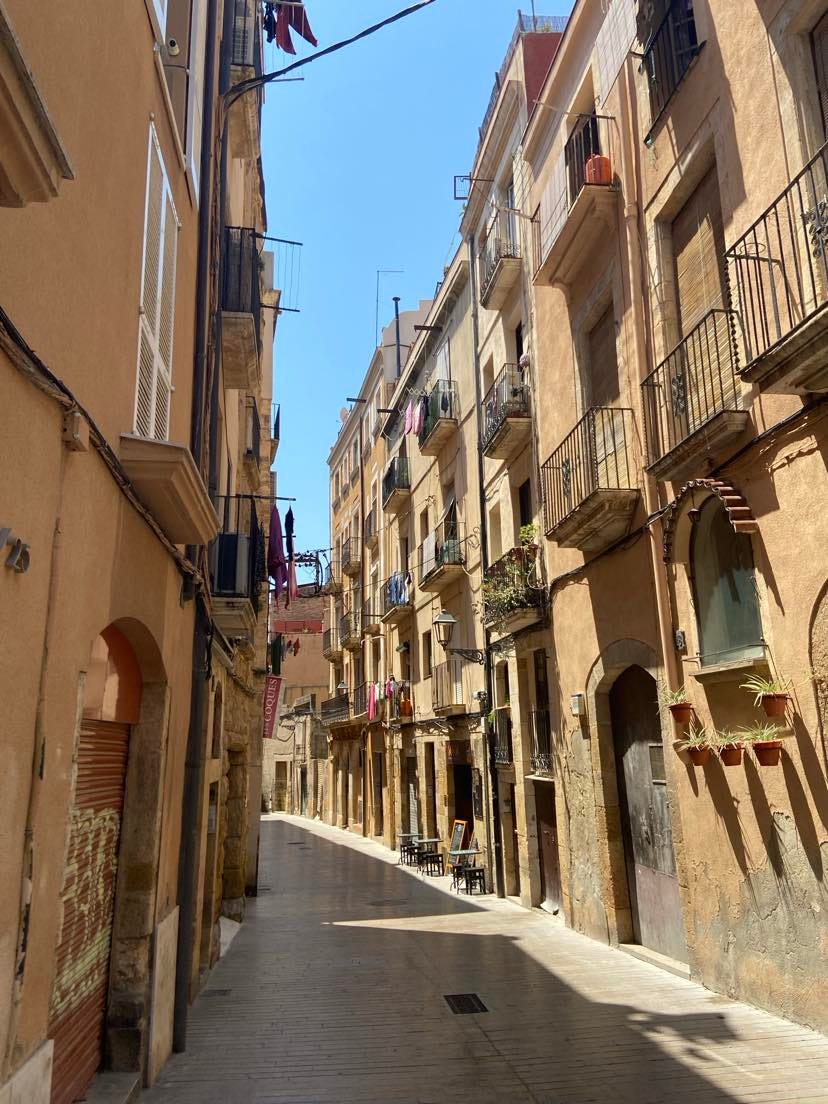
Streetview in Tarragona, Spain, Summer 2022
Only when I move country again, this time to Spain, spending full-on time with young people my age for the first time in two years, do I sense myself waking up. Realising how narrow and square my perception has been: chasing one thing after the next, taking pride in moving country once a year and never settling, allowing others to shape and influence my own values and opinions. In Spain, I found myself seeking life advice from people five years younger than me, people who in my perception seemed to have lived more, truly engaged with other people on a deeper level, who actually seemed more adult than me. I found myself realising almost too late that moving to Spain was going against my gutfeeling. I struggled settling in, did not fully see eye to eye with the workplace, and found myself quitting. Moved back to Sweden, unemployed again, I applied for a creative writing PhD and got it.
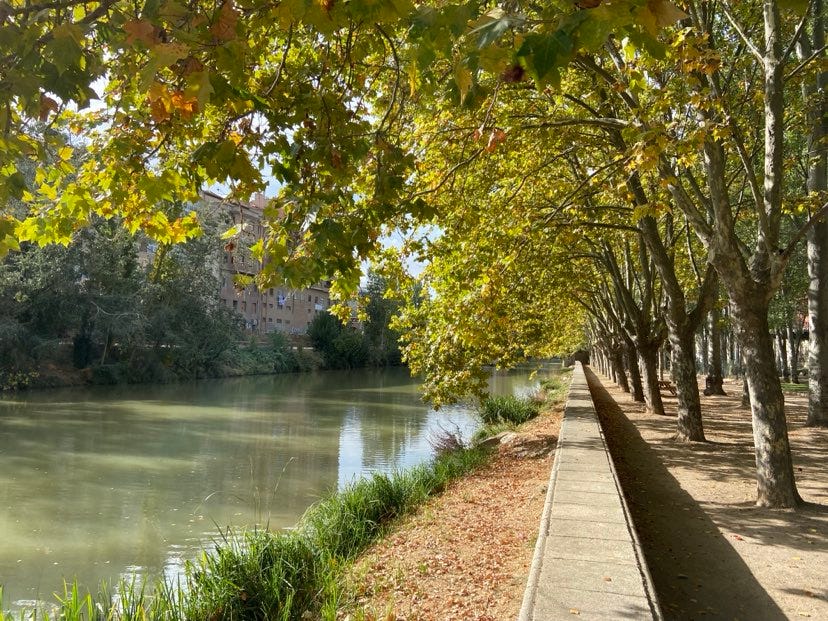
River Duero in Aranda de Duero, Spain, Autumn 2022
Now here I am in Norwich, writing this post, and one of the things I notice most clearly looking back on my journey, is how heavily that sense of displacement, of uprooting, impacted my writing. I continuously got stuck at the same midway point in the wolf novel draft after draft. I felt stuck in a vocabulary rut, using the same images, verbs and facial expressions for my characters, and seriously considered giving up.
When I got my acceptance letter for my PhD and moved to Norwich - returning to England after six years - something changed.
I realise this is probably a good place to say what inspired this post. It can be so easy to ramble on about hindsight reflections.
I was reminded of my own cycles of uprooting when attending a talk at the Norwich Literary Festival at the end of May, listening to nature writers and gardeners Marchelle Farrell (background as a psychiatrist) and Jessica J. Lee (background in academia) talk about their latest books - Uprooting and Dispersals. Exploring the parellels between the movements of people and plants (importantly touching upon the colonnial contexts of these), the writers talked about their respective mixed heritage and consequent struggle with belonging, and how connecting with the soil provided a sense of grounding and healing.
My struggle with belonging may not be of the same kind, but the feeling of being an outsider is one I’ve always carried with me. Raised in Sweden to a Swedish mother and an English father who raised me bilingual, I was always known as “the English girl” at school. I was constantly pestered by kids to speak English on demand, so they could hear how a “native” spoke. I was that kid always getting special assignments in English class because the course material was too easy. Part of me always hated being singled out that way. When I applied to go to university in England I was beyond excited - finally my English surname wouldn’t stand out, I’d just be one of the crowd and blend in.
I was in for a disappointment. I could barely open my mouth before I was asked where I was from. Me? Did I not have an English “native” accent? Could they not hear this was my second mother tongue? As it turned out, no. I didn’t sound like a 90’s kid born and bred in the UK, and therefore my accent was inquired about at every turn. From being the English girl I was now the Swedish girl: ambassador for my country on every subject from A-Z. Always asked to play Swedish tunes at music sessions. Almost unconsciously finding myself writing about Sweden in my creative writing tasks, where before I'd always written about England. I was deeply frustrated. Where did I have to go to belong?
I thought moving to a totally new country, preferrably on the other side of the world, would be the answer to my dilemma. Having no family or ethnic ties to the place, I was an outsider by default, I had no choice in the matter - and therefore I might feel more comfortable, more at home, in being an outsider.
Living in Thailand proved me wrong. Summer work in Austria and Germany proved me wrong. Living in Spain proved me very wrong.
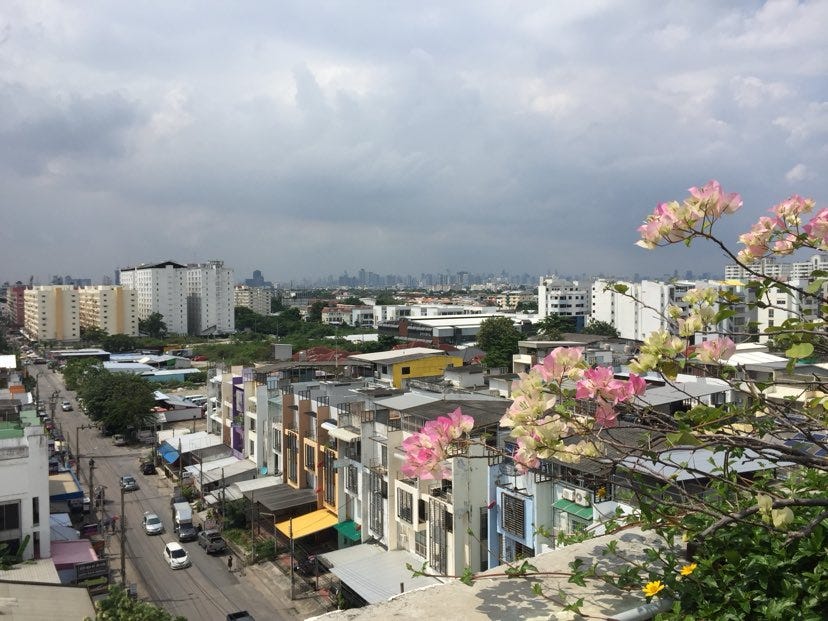
Hotel view of Bangkok during my teaching induction, 2018
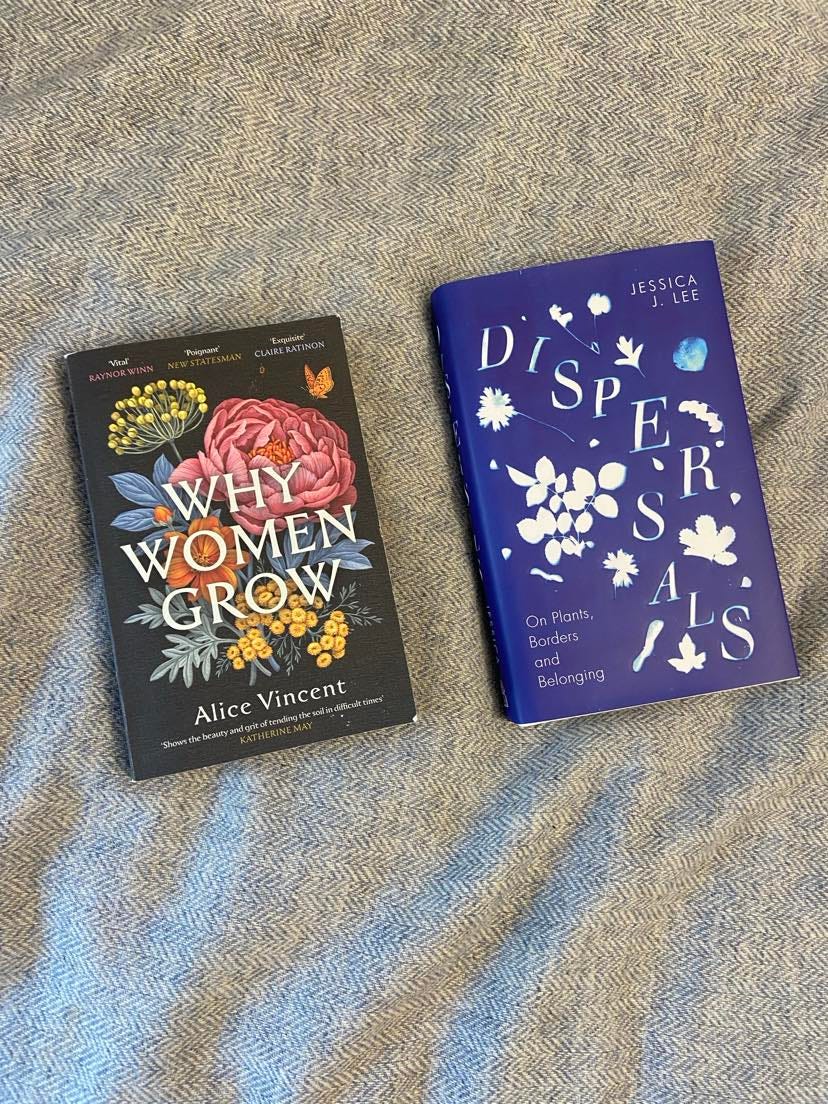
In the book Why Women Grow by Alice Vincent, a curious and sensitive account about women who garden, and how the soil provides a means of connection and healing, Marchelle Farrell pops up again. She explains why she turned to the countryside in order to feel herself at home in the UK. “I thought, if I’m going to be living in this country, if I’m going to feel like I belong here… the best way… is to have a relationship with the land. I need to have a space with a garden, I need to have a place where I can grow in the soil.”
Now, living in my tiny student flat, I may not have a garden or instant access to soil. I contempt myself with houseplants, which provide plenty of joy and grounding in themselves. I still get to repot them, take a cutting and watch new roots grow. But what Marchelle’s reflections, and the talk itself, made me aware of, is how connecting to the environment around me has helped me come to terms with my outsider-ness and finally feel like I belong in this country. Both in Sweden and England, I notice my surroundings: I take long walks in nature, touch the trees and trail my hands along plants and stones. I sit outside, just taking it all in. I sit outside at different times of the day, noticing the differences in length in the shadows and how they fall, the activity of birds and the temperature in the air.
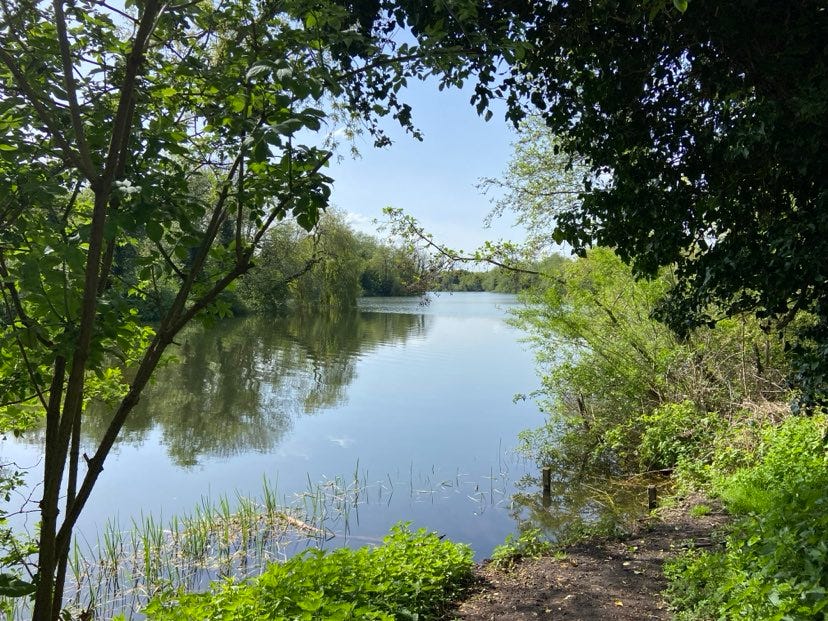
The lake in spring by UEA campus, Norwich, 2024.
Grounding myself in place has helped me come to terms with the ways in which I occupy the boundaries, being of two places and none, belonging in some senses and not others. I feel fulfilllment in the, hopefully, unique perspective this gives me. I own this other-ness, take pride in it, which in turn, I think, informs the impressions I make, the energy and vibe I give off.
In particular, finding belonging within myself, my positionality and the landscape has had an affect on my writing. I got out of the writing rut and finished the wolf book. My language is stronger, more confident and grounded. I am on trac kto submitting to agents. The prose flows and feels a lot more varied than it used to. I feel at home in my writing.
I’m not using this article as an urge for everyone to go out gardening in order to “belong” or write better. I do believe, however, that having a relationship with the land can help in one’s relationship with oneself and the place one lives in. The calm and sense of peace that gives is very likely to have a positive impact on your creative pursuits.
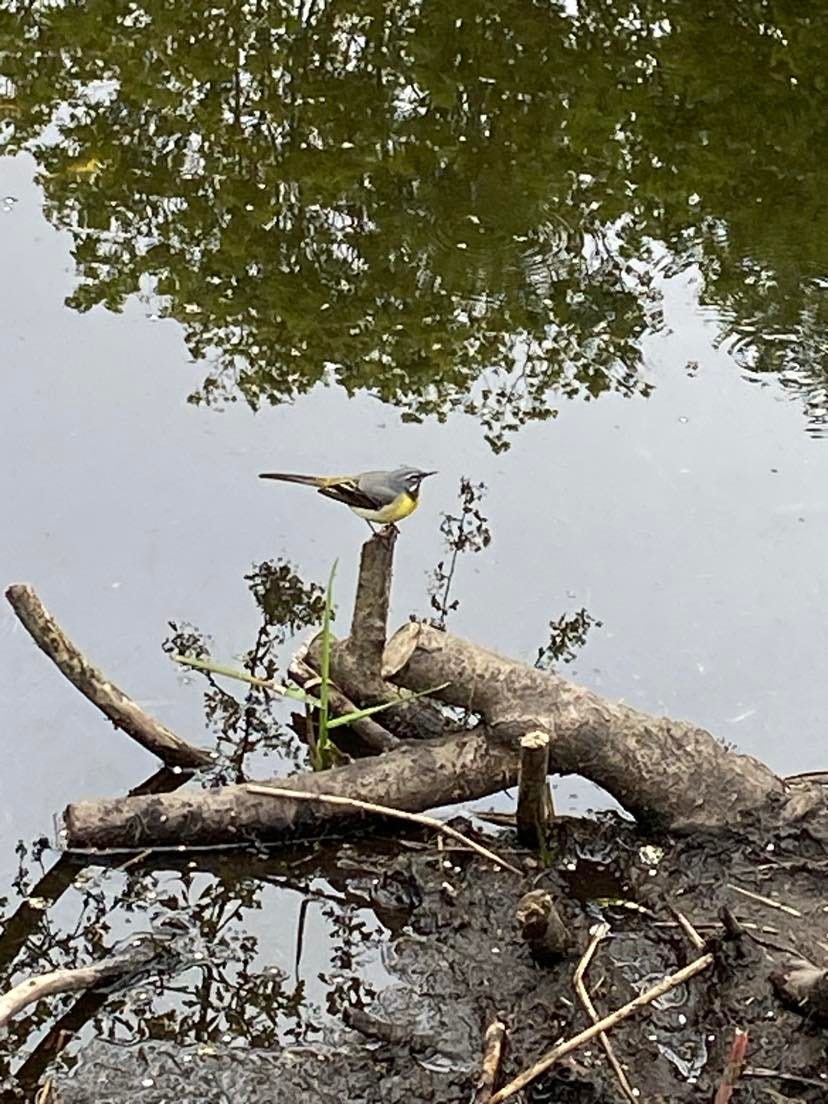
Great tit in pond by Norwich river walk, March 2024.
No posts
Comments
Nothing yet. Say the first thing.
Sign in to join the conversation.