

My parents seriously got into Buddhism when I was a kid. Almost most Sundays, we would all meditate together for 20 minutes.
My kid self gathered that the point of meditating was to realize something. There was this epiphany to be had, and if you had it, then your life would be perfect.
As I understood it then, life is suffering because all experiences are either obviously dissatisfying or dissatisfying because they don’t last. This clicked for me because I hated doing the dishes. Having to do the dishes felt bad. Having had done the dishes felt good. Yet the dishes would return the next day and they always somehow wanted to be washed right when I finally got a turn to play Zelda.
According to Buddhism, if I could realize this very cool thing, I would be enlightened and nothing would ever bother me again. I wouldn’t cling to Zelda or avoid the dishes.
At that point in time, I didn’t have too many realizations that both (a) I came up with and (b) were correct, so I wasn’t too sure that meditating would lead to my own mind coming up with the secret to life.
All my ‘realizations’ up until then were just finally getting my head around realizing what someone was trying to teach me.
My Dad told me that jello was better if you made it with milk. So, I took the last packet of jello, mixed it with some milk and water and brought the mixture to a boil. Per the packet instructions, I cooled down the hot jello with some water before putting it in the fridge to set. My Dad, who wasn’t a fan of having a thick film of lumpy raspberry flavored curdled milk floating atop his jello, let me know that I did it completely wrong.
It was at that moment that I had the epiphany that I was supposed to put the milk in at the end to cool down the mixture, not boil the milk.
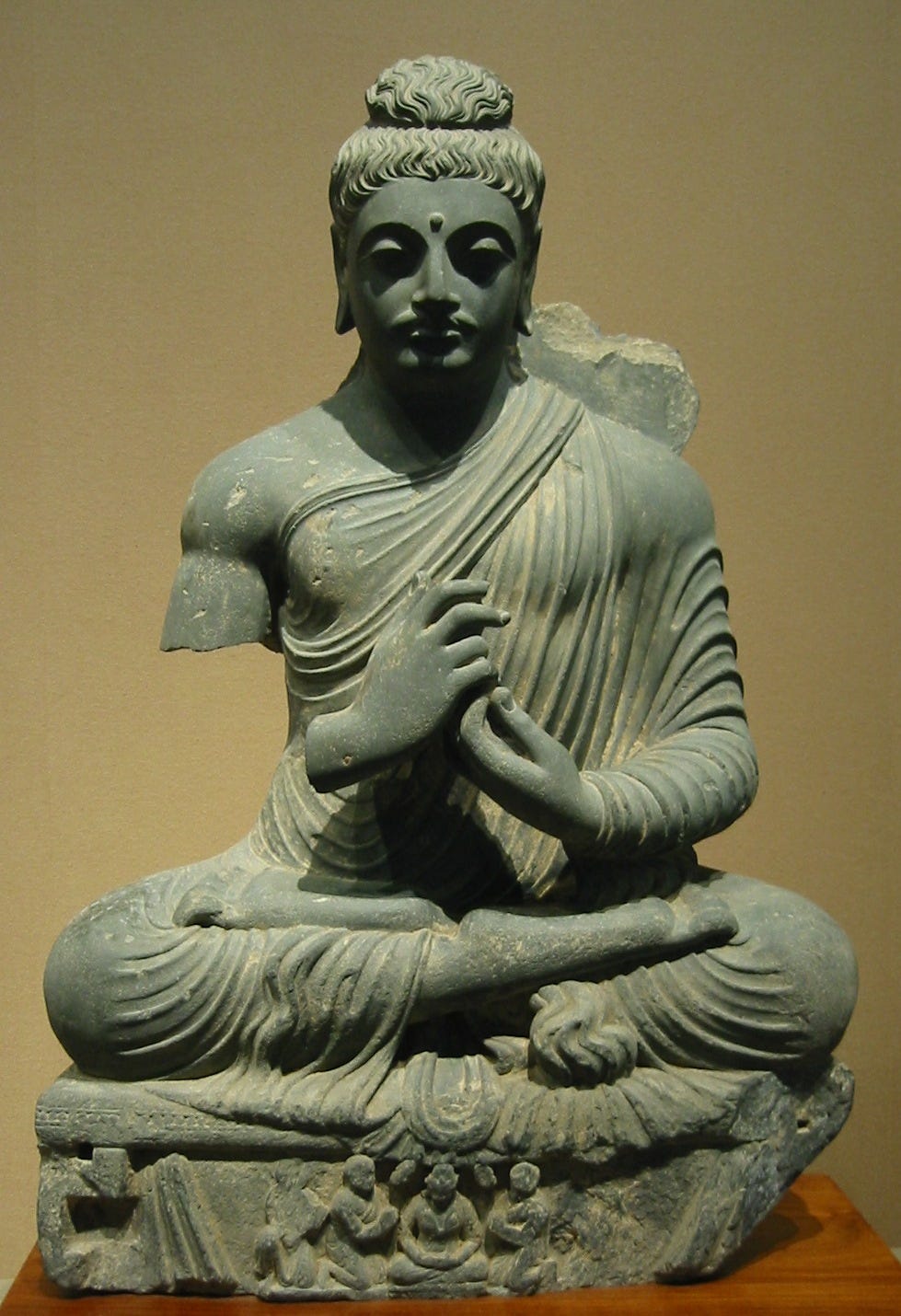
Unfortunately, Zen Buddhism seemed opposed to actually teaching me the specific steps toward enlightenment. What stuck in my mind were ‘teachings’ in the form of stories that made no sense. For example, I specifically remember one where an elder monk cut off a younger monk’s finger and the young monk became enlightened.
I searched around and found that this is the story of Isshi Gutei:
Gutei raised his finger whenever he was asked a question about Zen.
A boy attendant began to imitate him in this way. When anyone asked the boy what his master had preached about, the boy would raise his finger.
Gutei heard about the boy’s mischief. He seized him and cut off his finger. The boy cried and ran away. Gutei called and stopped him. When the boy turned his head to Gutei, Gutei raised up his own finger. In that instant the boy was enlightened.
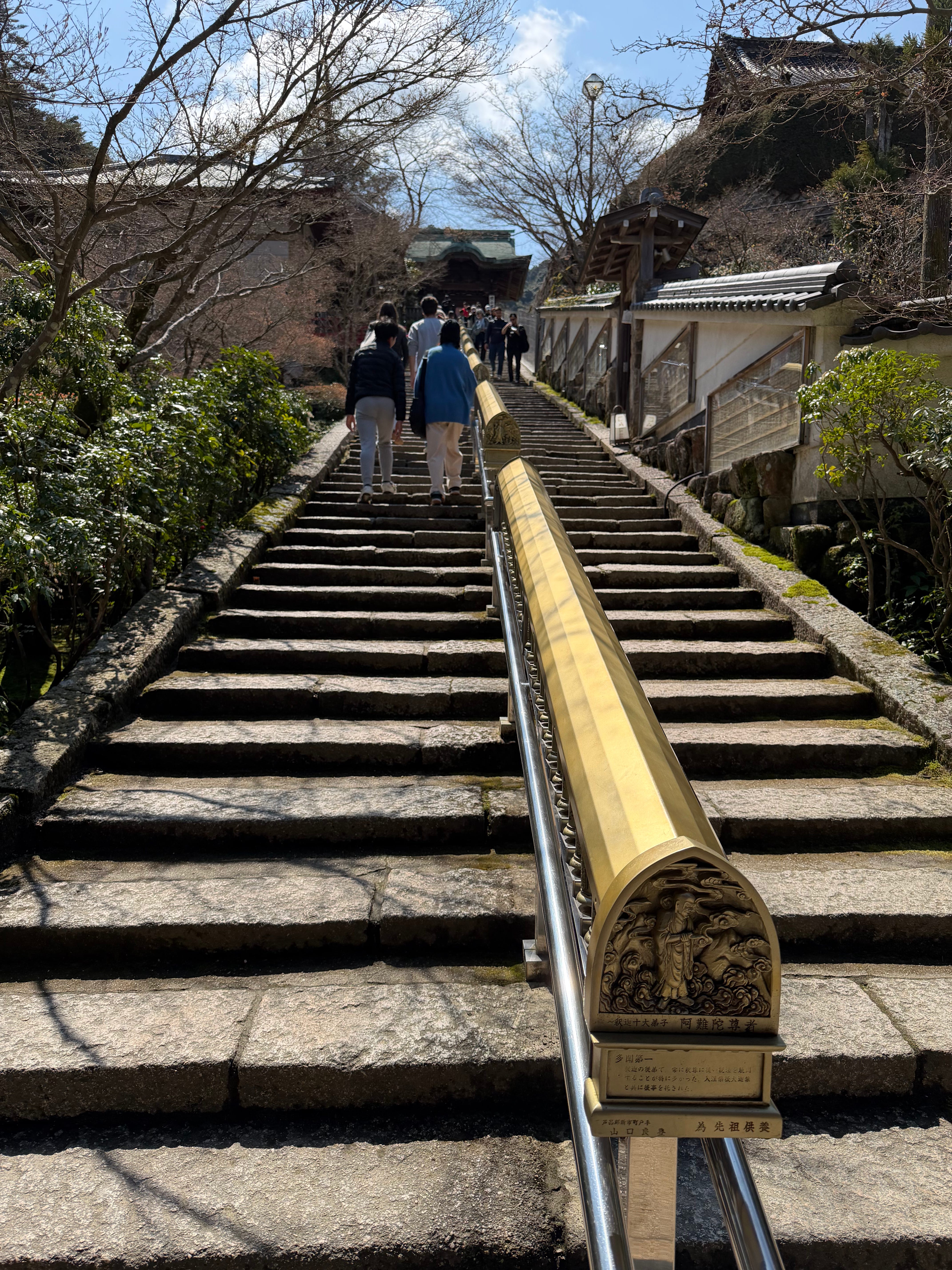
There was another story where a monk who had meditated for decades and finally became enlightened while sweeping the temple steps.
What I gathered from various Zen stories is that:
・There is a small chance that Enlightenment can happen spontaneously at any time.
・Meditating for decades increases the chances.
Zen didn’t talk much about how specifically to get enlightened, and asking if someone teaching how to get enlightened was indeed enlightened themselves was taboo.
Eventually I realized the reason Zen was so cryptic much later.
・Craving leads to suffering.
・Focusing on the getting of enlightenment turns it into a goal.
・Trying to achieve a goal is a form of craving.
・Enlightenment is the cessation of suffering, but if you crave it, you won’t get it.
So, the lesson from Zen is: do the thing but don’t worry about it.
Except, now we arrive at the same issue: how do you do that? How many fingers do you have to cut off to not want or worry about stuff?
If you don’t have 200mg of phenylpiracetam handy, the way to worry less about stuff so you can do more is to acknowledge that you don’t know why most things happen.
The fundamental attribution error is a cognitive bias where people misunderstand why other people act the way they do.
We are likely to assume ‘that’s the type of person they are’ or ‘that’s just their character’ or ‘they intended to act that way’ when making sense of other’s actions. Except, we minimize just how much external factors affect their behavior.
・He didn’t leave early because he doesn’t like you- he just didn’t get much sleep the night before.
・So and so isn’t ignoring you, they’ve just been vibe coding the whole day.
・That “lazy” coworker might have actually been taking care of his sick spouse the past month.
Ironically, we are much more likely to emphasize the effect of external factors on our behavior.
That guy cut you off cause he’s a jerk. However, you cut people off only when you’re late for very important meetings (you wouldn’t usually do this).
That guy on his walk who suddenly flipped out and began flailing around for no reason whatsoever did that because he’s obviously crazy. You only did that because of the spider web you walked into.
The David Foster Wallace version of this is that we’re all fish. Everyone else deliberately decides to do the annoying things they do. However I, on the other hand, only do annoying things because all this damn water is in my way.
You can make pretty good guesses, but you can’t know for sure why people act the way they do. You can’t even know for sure why you act the way you do.
“Understanding is the recognition of pattern as such.”
—Alfred North Whitehead
In Psychologist Dr. Timothy Wilson’s book Strangers to Ourselves: Discovering the Adaptive Unconscious, he lays out how looking inwards to understand our hidden motivations and desires is often more a process of story creation rather than discovering the inner workings of your mind.
His main point is that being honest about what our behavior reveals about us is the most effective way to understand ourselves. While it may feel like it, the mental conversations we have with our inner narrator don’t always lead us to the truth.
I thoroughly laid out the psychology and neuroscience of why you can’t “fully” know yourself in another article titled Stop trying to know yourself so hard. The point is that it’s difficult to draw concrete conclusions about yourself based on the ever-evolving chaotic story in your mind.
However, if you apply the same lens to yourself that you apply to other people, you can get a much more practical picture of yourself.
You analyze other people based on their behavior, so do the same for yourself.
Our minds are scared of cognitive dissonance, so they use tons of resources to come up with a story that makes sense of your actions that contradict your values. If you think of yourself as a smart person, you’ll come up with elaborate reasoning for why your odd actions had some kind of elegant logic to them.
The story in your mind is that you’re a wise teacher who warmly cares for the spiritual development of his young disciples. Despite having no access to your young student’s mind, you decided that one particular teaching of yours was so powerful that the student must be enlightened now.
However, from a third party’s perspective, based on your behavior, you’re actually a psychotic criminal who cut off the finger of a small child.
In the Stop trying to know yourself so hard article, I spoke about the experiments on split-brain patients that revealed that the brain is exceptional at creating sense of your actions after the fact.
For example, in one split brain patient, his left eye was shown a snow scene while the right eye saw a chicken foot. In line with that, his left hand pointed to a snow shovel while the right hand pointed to a chicken face. Remember, the language side of the brain is disconnected can’t communicate with the part of the brain processing the snow scene. This means the reason why they correctly picked the shovel is inaccessible to the part of the brain that can explain that. Nonetheless, instead of just saying ‘I don’t know why I did that,’ the brain just made something up:
“Of course a chicken foot goes with the chicken, and if you’re going to clean out a chicken shed, you need a shovel!”
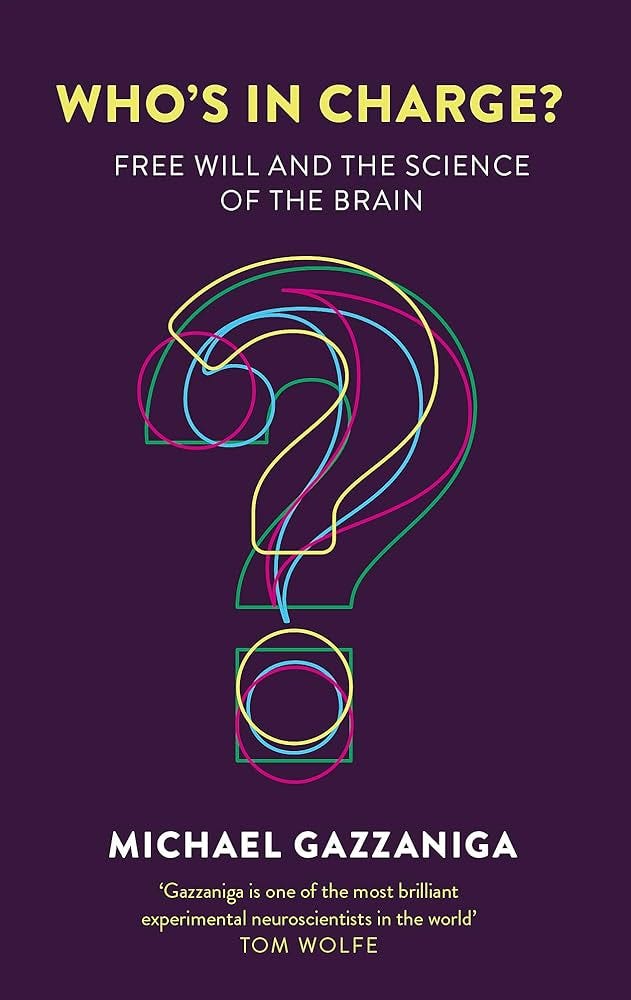
According to neuroscientist Michael Gazzaniga, much of what we consider “free will” is actually the mind creating a story that justifies your actions. That is, a split-second after your mind and body just goes off and does something, it rapidly cobbles together a story that has you as the main character making logical decisions in the driver’s seat.
Your mind is playing Super Mario World on the Super Nintendo. You are playing too. You have the second controller. You’re controlling yoshi. Except, in reality, you can’t play as yoshi. Super Mario World is a one player game. Your controller isn’t plugged in.
Mario just fell into a pit and you have to start the level over. Why’d you do that? You say yoshi is hard to control.
On the second run, you’re doing a great job of controlling yoshi. You helped complete the level. Good job.
When I first started playing Magic The Gathering in middle school, I would make decks with about 100 cards. Good players, however, would try and make a deck that worked with only 40 to 60 cards. Less cards meant an increased chance of drawing the cards that actually worked together. On the other hand, I figured “this card is cool,” “that card has a big number” so why not stuff the deck with as many cool cards as you can?

I often procrastinate by stuffing more and more data, papers, lectures, podcasts into my mind before actually writing the final script for my videos.
At some point I realized that to do good writing that actually flows, I need to hold most of the pieces in my mind at the same time. Eventually I can’t hold all the pieces I’ve accumulated and adding more ideas just makes everything worse because I start to forget some pretty damn good ideas I had at the start.
“Cognitive Load Theory,” developed by John Sweller is a widely recognized and influential model in the field of educational research. It says that your conscious mind can only hold so much information at once and when you overload that, some specific problems arise:
1️⃣ You lose track of pieces and you end up making decisions on what feels like a large base of information, but in reality your mind isn’t processing all of what you crammed into it.
2️⃣ With more pieces, it becomes harder to make connections between the pieces of information. Say with 5 concepts you might see how they connect together. However with 15, you’re missing contradictions and not linking them together appropriately .
3️⃣ Sweller also noted that the process of learning and applying the information don’t overlap very well. So, you might cram some new information in your mind thinking it’s going to be useful for your project, but you can’t actually put it to use because it’s still stuck in the learning phase.
4️⃣ Your brain also spends resources on simply managing all the information you put into it. So you might think you’re gonna come up with the best app, video, or Substack article because you’ve been cramming 15 different concepts in your head on the daily. However, you’re actually thinking with 7 of those ideas and simply wasting resources trying not to forget the remaining 8.
5️⃣ One extrapolation from (4) is the redundancy effect. It says that if you’re given a redundant piece of information, it actually just takes up space and worsens your learning. In one study, learners presented with excess information learned less than the learners presented the same material with the redundant info removed.
If you look up the characters 色即是空 (shikisokuzekū), you’ll be brought to the page for the South Korean movie Saek-jeuk-shi-gong. Here’s the synopsis from IMDB:
At a South Korean university most students are busy having a good time. A 28 y.o. and his horny friends are always getting into hilarious situations. He likes a much younger, pretty girl but she likes someone else.

However, we’re not concerned with whether the situations these horny friends are getting into are indeed hilarious. What we’re after is the phrase shikisokuzekū- the Japanese reading of the most famous line from the Heart Sutra which translates to:
“all forms (all physical and mental phenomena) are empty”
Buddhist monk and philosopher Nāgārjuna (c. 150 - c. 250 AD) explained it this way in his Mūlamadhyamakakārikā:
“[A]ll experienced phenomena are empty. This did not mean that they are not experienced and, therefore, non-existent; only that they are devoid of a permanent and eternal substance because, like a dream, they are mere projections of human consciousness. Since these imaginary fictions are experienced, they are not mere names.”
Would the Big Bang have exploded a void of nothingness into a better universe if it listened to 12 more podcasts before getting to work?
No posts
Comments
Nothing yet. Say the first thing.
Sign in to join the conversation.