
Friends, we are officially at peak summer! You might not want to think about it, but some people are close to sending their kids back to school…and it may not feel like it, but cooler temperatures at night will soon have us thinking about fall. So it’s a perfect time to host that big gathering you’ve been thinking about, to enjoy being together outside, and to enjoy adding to your long table.
Today I wanted to start by showing you something that a reader sent me a few weeks ago…his name is Bill Toone of Ecolife Conservation and he was so inspired by the idea of building longer tables…not higher walls…that he built his own beautiful Longer Table:
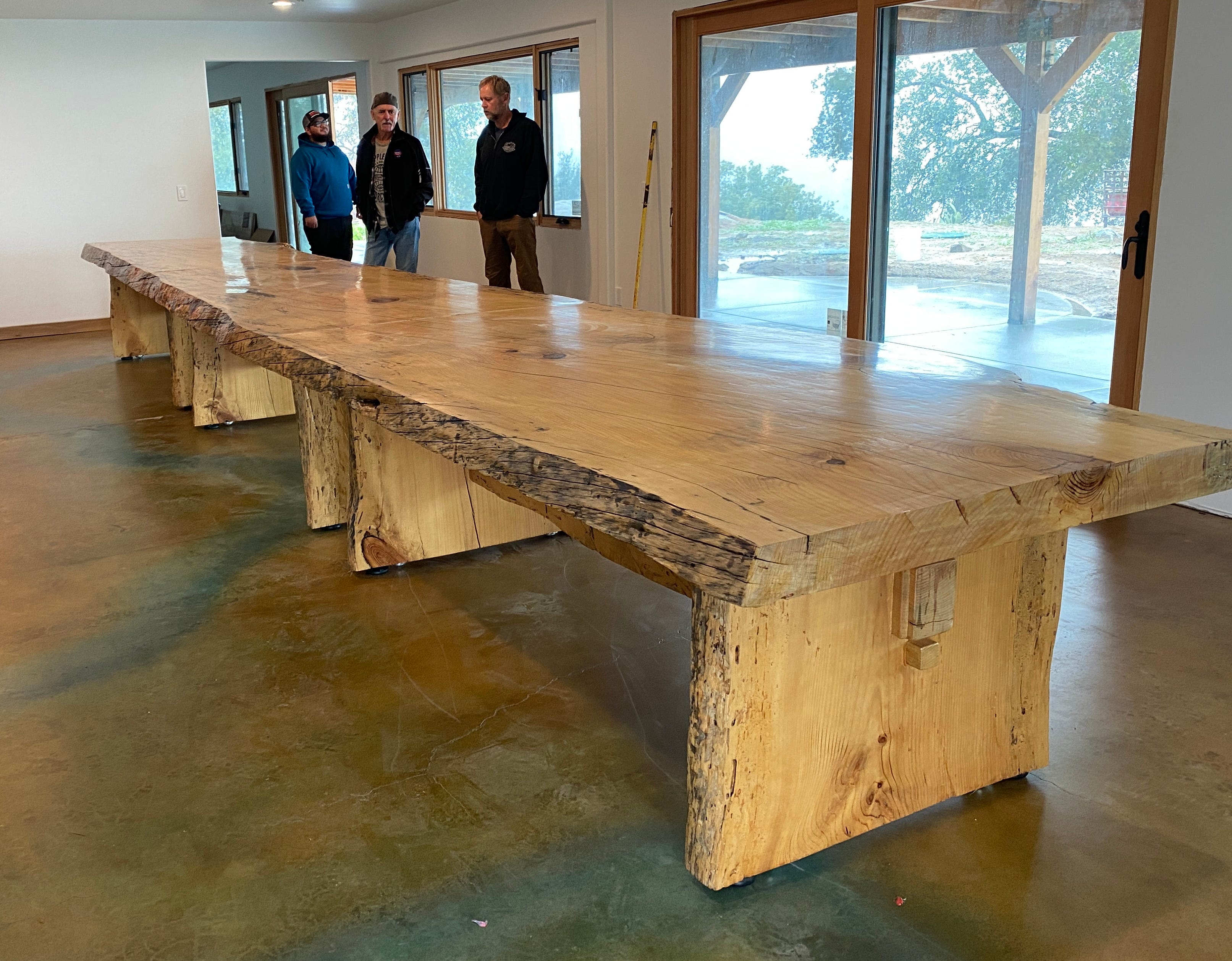
I wanted to create a table that would gather people who might otherwise never meet—a place where conversations, meals, and friendships could cross boundaries. This table is emblematic of the work that ECOLIFE Conservation has been committed to for the past 23 years. At ECOLIFE, we have partnered with indigenous Mazahua and Purépecha communities to install almost 17,000 fuel-efficient stoves in traditional kitchens, improving human health while making every family a collaborator in reducing pressure on the forests that shelter overwintering monarch butterflies. That work is naturally expanding into sustainable agriculture because healthy forests, healthy soils, healthy food, and healthy communities are inseparable. José has often said that a meal is never just food—it is an act of community. In these mountain villages, the kitchen is the heart of family life, where traditional Mexican cuisine, culture, conservation, and hospitality come together around a fire that is now cleaner, safer, and more sustainable. ––Bill Toone
I am so amazed and proud that our Longer Tables philosophy inspires people in their own work, and that Bill shared his personal story with us. And that’s always something you can do here, if you want to share a personal story with the community…just send us an email at longertables@joseandres.com.
Of course, when it comes to the food you serve at your longer table, I can’t think of a better way to enjoy a meal together than sharing a lot of small dishes—the act of passing plates around and talking about the food is a perfect way of spending time with loved ones. Of course that is a very traditional way that Spaniards eat, but lots of other places in the world do something similar! In Spain, we have tapas, and we have pintxos, and montaditos, and and and. In Mexico, of course there are antojitos. In many parts of the Mediterranean and beyond, they’re known as mezze, in Peru you might have piqueos to start a meal. So what’s the difference?
Tapas
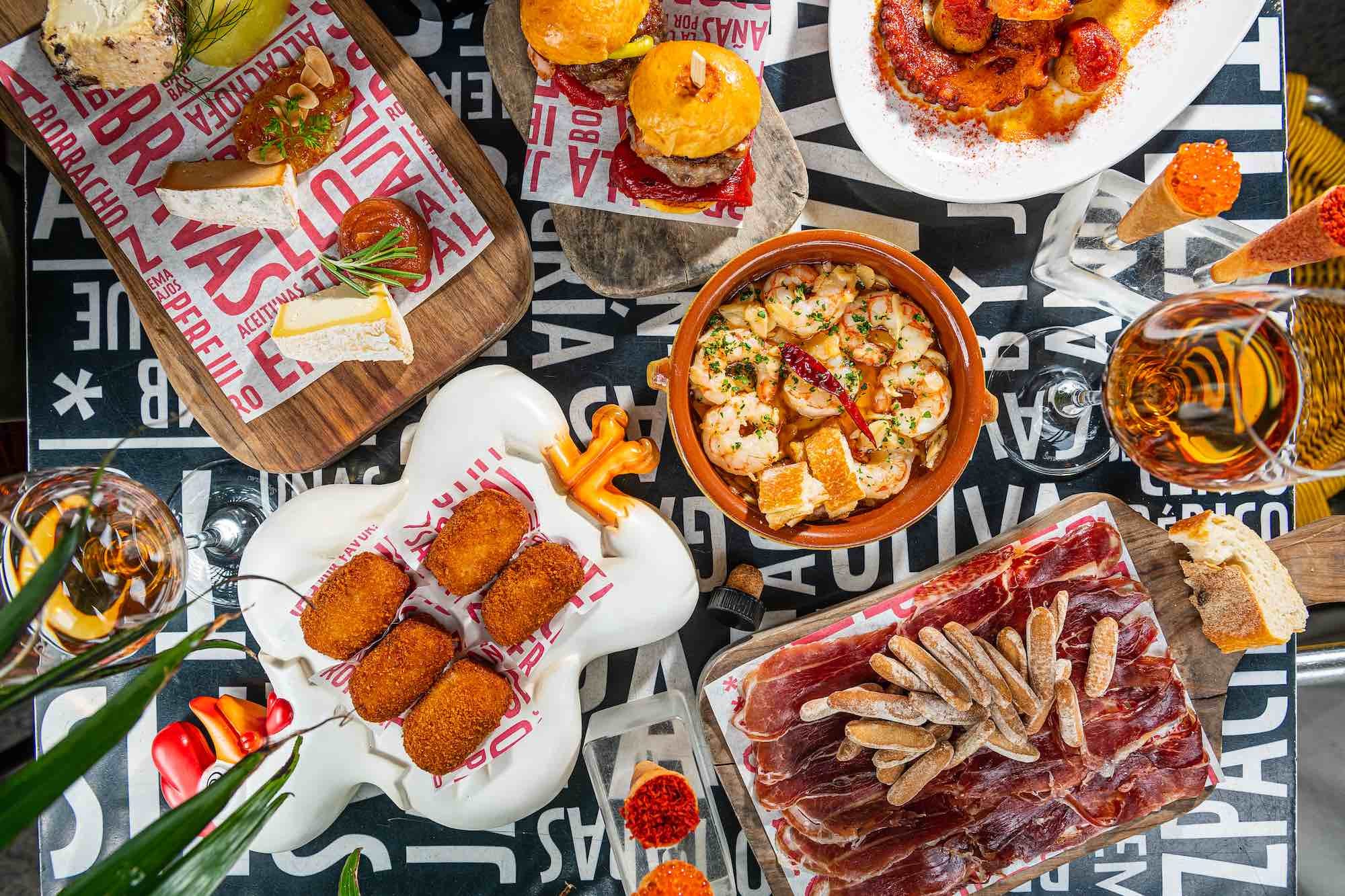
Do you remember, if you watched José Andrés and Family in Spain, in the first episode, when my daughters Carlota and Inés and I were riding around Barcelona on mopeds, they were telling me that they wanted tapas…that’s how everyone feels when they first land in Spain! You want tapas. You want to sit or stand around a table, drinking wine, beer, or vermut, and you want small, delicious plates—some may be traditional, some may be creative interpretations of traditional tapas.
The word “tapas” comes from the word “to cover.” Of course there are different theories about the beginnings of tapas…some people think that hundreds of years ago, in Andalucía, people who worked in bars would bring a small snack to literally cover your drink to keep flies and dust out. It could be a piece of cheese, or a slice of bread…and it kept spreading to become something you expected when you ordered a drink. Maybe it wasn’t that at all…but no matter what, it has become one of the most important Spanish culinary traditions—one that we eventually would share with the world.
When we opened Jaleo more than 30 years ago, the idea of sharing lots of different plates wasn’t something that was popular in America. Everyone wanted their own meal…have I told you about the 20 inch rule? If you put a dish in the middle of the table for sharing, it’s tapas. If you don’t like sharing, you can move the dish 20 inches to be in front of you—and boom, no longer tapas! In the early days it was a very good way to show how we eat in Spain, but not to feel like we were pressuring people to share if they didn’t want to.
But people have really embraced it, and I love seeing it! Traditional tapas might include jamón (of course!), marinated olives, different kinds of cheeses, and other types of sausages, but they also include heartier dishes…patatas bravas…tortilla español…gambas al ajillo…croquetas…and and and and and. I think it’s time for some tapas!
Pintxos
You may have had a pintxo, and you may not have realized what to call it, but they are similar to tapas…but do not confuse them! Both of them are uniquely Spanish (and I am proud that Spain has originated some of the best drinking food in the world, people!), but pintxos are a more modern idea from the País Vasco, the Basque Country that is a unique, beautiful place. The word “pintxo” comes from the Spanish verb “pinchar”—to pierce…because many of them started as snacks on toothpicks. The most popular, or maybe the first (we always love to debate!), might be the Gilda, which is an anchovy with a pickled pepper and an olive…the perfect bite of briny, spicy, and salty…amazing with wine or whatever else you’re drinking!
There are a few other differences, too—tapas originally were free with drinks, and they still are in a few parts of Spain, but it is different in different regions. And they are meant to be shared. Pintxos are meant to be just a few bites, and something you buy with your drink, but you can go from bar to bar and try lots of different flavor combinations and creative ways to enjoy a bite. Of course, one of the authorities (at least for English speakers) on pintxos is my friend Marti Buckley, an American who has lived in Spain for 15 years and who wrote two amazing cookbooks on Basque food. Her most recent cookbook, the Book of Pintxos, does an amazing job talking about how colorful Pintxos culture can be.
Basque Country, a pintxo at a time
·
July 22, 2024
Friends, I hope everyone is doing well this Monday and finally getting some relief from the heat! My hometown of Washington, DC just had a stretch of 100℉-plus days…even hotter than the South of Spain in the summer, and you don’t even get to be in Spain (I love you DC, but if it’s going to be this hot, I think I will choose Andalucía, maybe sitting at o…
Antojitos
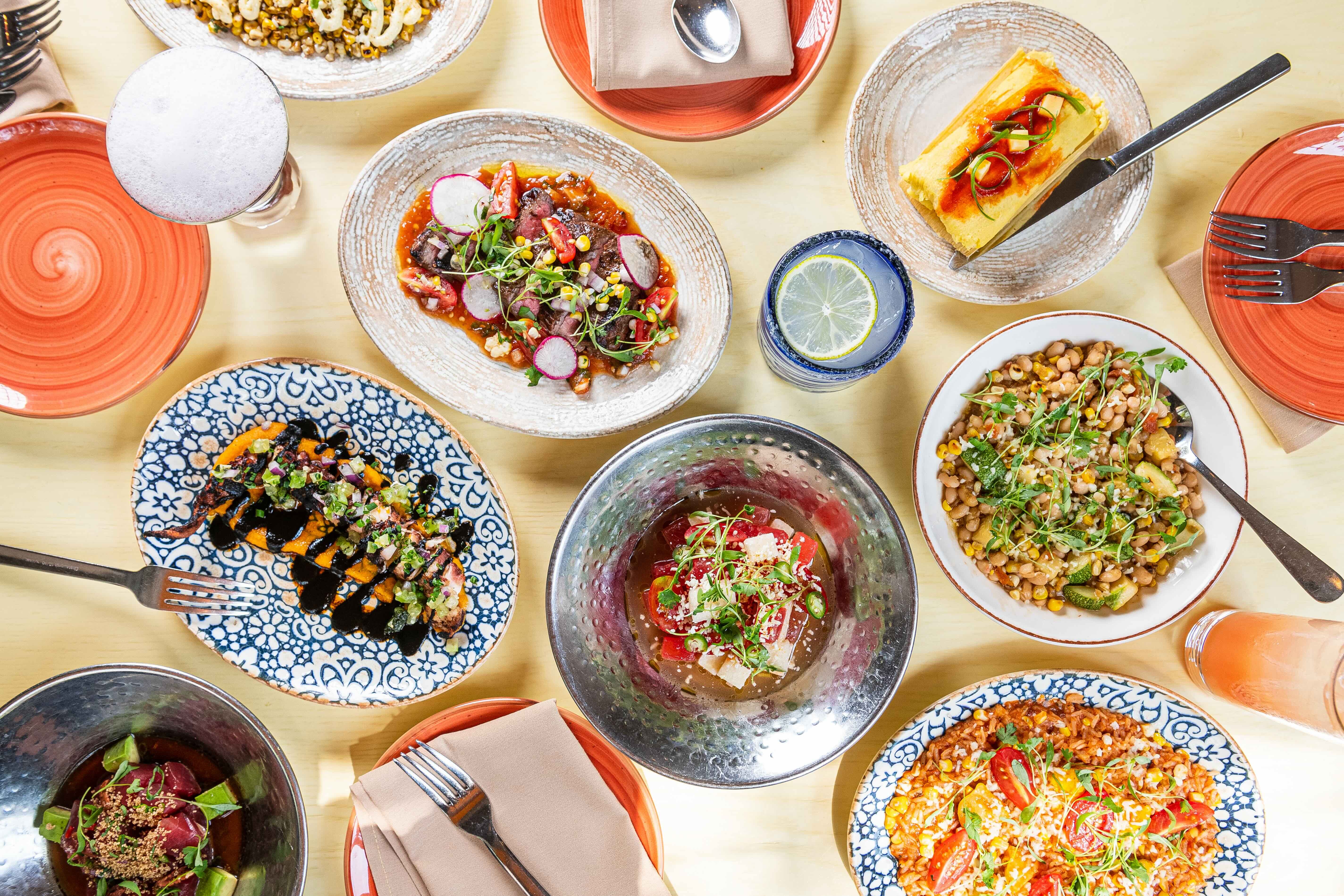
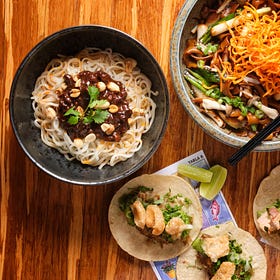
Antojitos in Spanish translates to “little cravings,” which is a perfect way to describe the bite sized things we like to enjoy with our drinks! Antojitos are entirely Mexican, and their history goes way back to the indigenous civilizations that lived in Mexico and were the backbone of Mexican culinary traditions. The base of many traditional antojitos is corn masa, so foods like tamales have been around for thousands of years (about 8000…can you believe it?).
Where China meets Mexico
·
December 1, 2025
My friends! Did you have a good holiday weekend? How did you spend your time? What did you cook, and what did you drink? I hope you were able to relax and get some rest, catch up with loved ones, and get ready for the next few weeks.
Because Mexico has been such a culinary crossroads for the world, the place where spices from the East met Indigenous American ingredients and European produce and livestock from the West, there has been so much opportunity for creativity and variety in the antojitos you see today. And of course, the difference in Mexican food from region to region just means it’s an even richer way to eat your way around the country, from Baja to the Yucatan.
But the thing with antojitos is…you don’t always have to be sitting down for drinks to enjoy them! Because antojitos represent one of the amazing parts of Mexican food traditions: street food culture. Mexican street food originates from the indigenous civilizations that lived in Mexico, and the techniques for processing corn and creating masa-centered foods are still used today.
At Oyamel, Butterfly, and China Poblano, you can try many antojitos…empanadas, enchiladas, street corn, tacos, quesadillas, sopes, and tostadas (and more!!!). So, much like tapas, it’s a good idea to bring a few friends with you…how else are you going to try everything…?
Mezze
Did you know that the concept of mezze goes as far back as ancient Persia? The word “mezze’ actually comes from a Persian word, “mazzeh,” which means snack, or taste. Everyone from Mesopotamia to Greece, and even to Northern Africa, were snacking on mezze, all gathered around tables, all meant for enjoying time with each other, enjoying conversation, and enjoying life. Greece, Lebanon, and Turkey all still have strong mezze culture today, and that was a big inspiration for me when I was researching the concept for Zaytinya.
Is it all Greek to you…?
·
Apr 13
People of the world, I hope you had a good weekend! Did you watch the Masters? Did you celebrate Greek Easter and make some avgolemono? To me, that is a perfect way to welcome spring, with all its fresh flavors. We have made it!
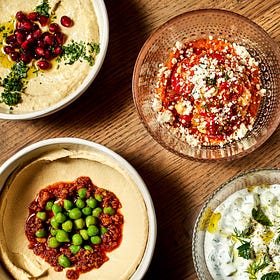
What are some mezze you might see on tables across the Eastern Mediterranean? It can be different region to region, but in Turkey you will see more vegetable and yogurt-based dishes, such as muhammara (a walnut and red pepper spread), in Lebanon, you will have lots of dishes with fresh herbs, such as fattoush, and in Greece, lots of seafood, like grilled octopus. At Zaytinya, you will find a little bit of all of that, with some creative takes thrown in from our head chefs…but still, everything is meant to be shared, passed, and enjoyed with other people.
Piqueos
Ok, we have tapas in Spain, we have pintxos in Spain, we have antojitos in Mexico, and…in other parts of Latin America, specifically in Peru, Bolivia, and Ecuador, we have piqueos. It’s a similar concept to tapas, and they can be hot or cold, but they’re meant to be something to enjoy while you’re having drinks. In Peru specifically, piqueos could be a ceviche, a tiradito (remember the difference between all of the amazing raw fish preparations?), or causa, which is a layered potato dish with aji amarillo and usually some type of protein like crab or tuna.
10 words to understand Peruvian food
·
July 21, 2025
Hola my friends…in the summertime, wherever I am traveling I try to slow down, enjoy being in the moment, cook food that makes me happy. How about you, what do you do in the long, hot days in the middle of summer?
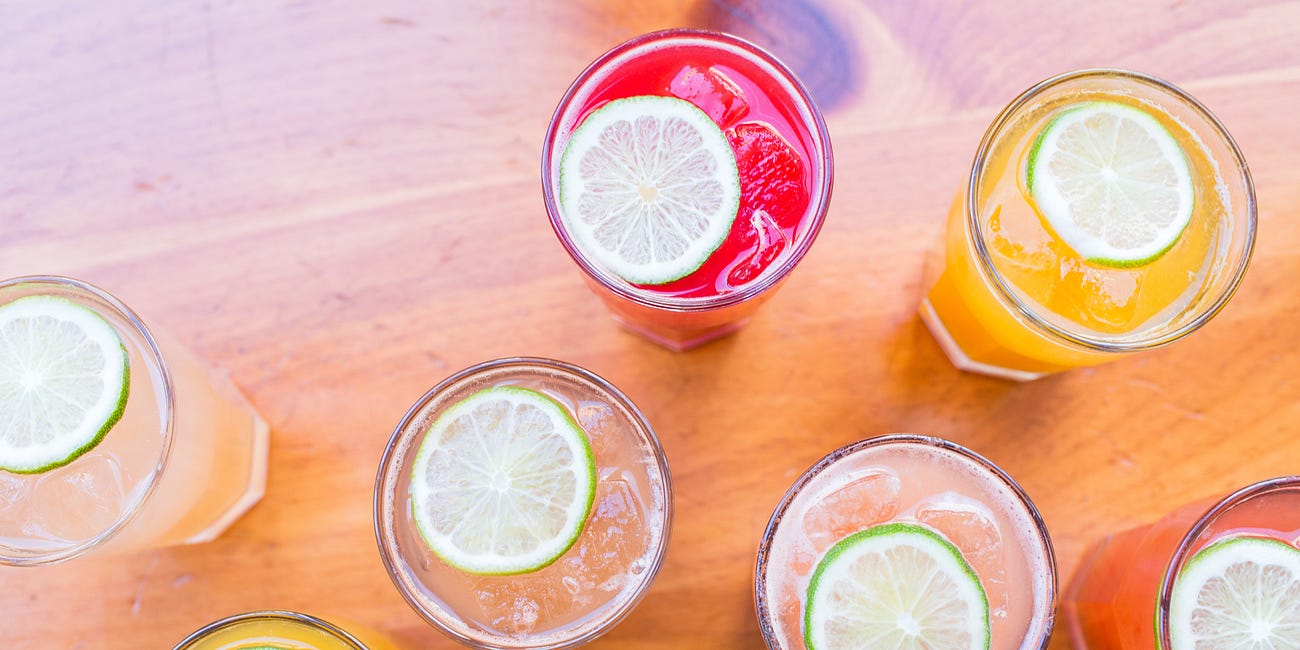
Hot piqueos could be a few bites of fried seafood—octopus, scallops, squid, or any type of fish fritter. At China Chilcano, we have a few piqueos on the menu…shishito peppers, lettuce cups with ground chicken, and some amazing yucca fries with ají amarillo mayo…you should come in and try some with a pisco sour or a chilcano!
Tell me…what are your favorite traditions…are you a tapas person? Mezze? Pintxos? Antojitos? Do you have some great memories of enjoying them on a vacation, or creating them in your own home? And of course, if you live in DC, maybe you should try a crawl of ALL the traditions with a tour around Penn Quarter…? Let me know what you think in the comments!
No posts
Comments
Nothing yet. Say the first thing.
Sign in to join the conversation.