
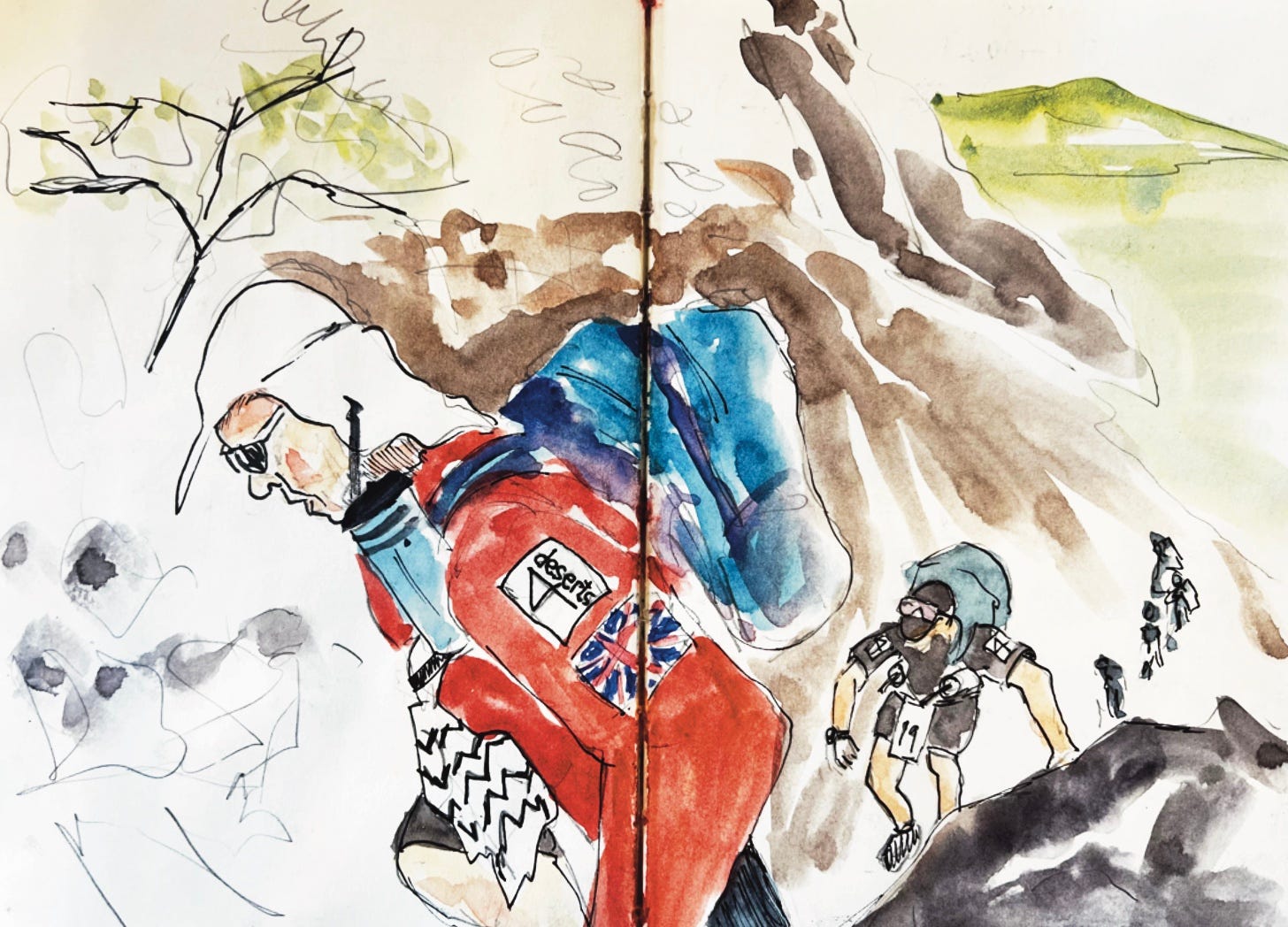
It’s 4am and I’m waking up on the floor of a tent, cosy in my sleeping bag. Dawn is just breaking. I’m an early riser at the best of times, but this week it really comes in handy.
I’m up and out of the bag quickly, dragging my kit out of the tent as quietly as possible so I don’t wake my companions. They’ll surface in the next 30 minutes or so anyway.
First stop is the “loo”, here it’s a just a hole in the ground with two wooden planks either side to steady yourself on, think composting toilet with jugs of sawdust to cover your deposits, and big black canvas windbreaks to protect your modesty. You have to have your wits about you, there are many tales of things dropping in the hole that shouldn’t (phones, shoes, people) and things being found in the holes that shouldn’t be there (toads), everything eventually being rescued but with us Brits finding all of these stories increasingly hilarious!
After a generous dose of alcohol gel and a quick teeth-clean, it’s off to the fires to wait for the kettles to boil.
A few other early risers are milling about quietly, probably still fighting jetlag, trying not to wake the rest of the camp. There’s a mix of awe-struck expressions, bleary eyes and rabbits caught in headlights. Today the race starts and with it the adventures of over 150 competitors
I grab a stool and with my morning coffee, walk off to a little spot away from everything to watch the sunrise over the distant hills. This is the only time all week I’ll get an uninterrupted 30 minutes to myself. Taking in the view and thinking about how lucky I am to be here, in this extraordinary landscape.

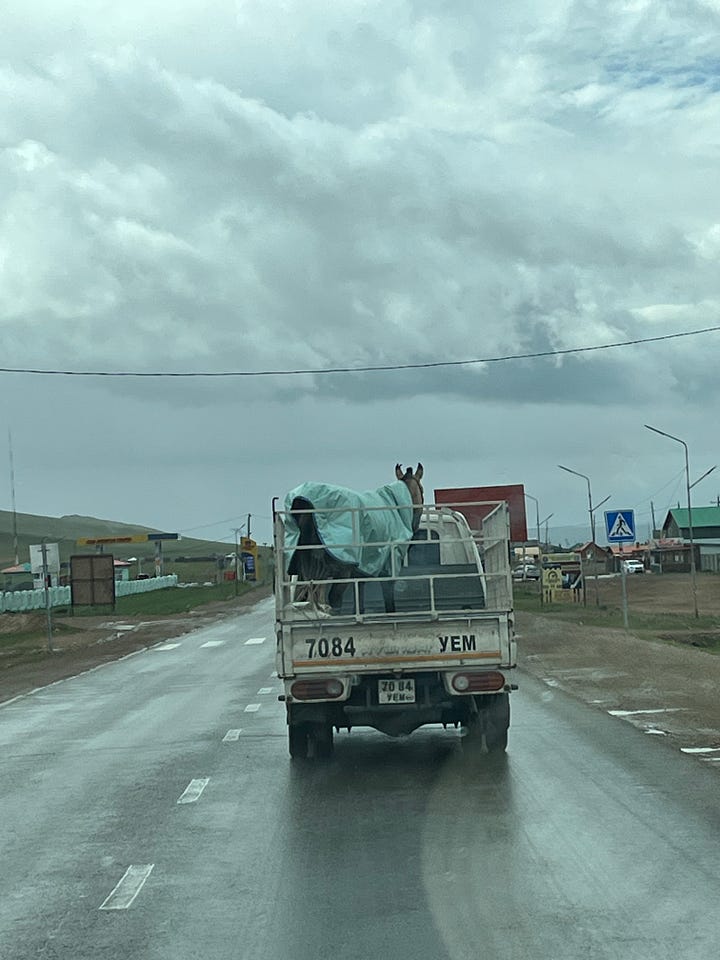
This is my third time in Mongolia, working with the wonderful team from Racing the Planet, who run an ultramarathon called the Gobi March across desert, dunes, and rolling green hills. It’s one of the most picturesque of their four desert races.
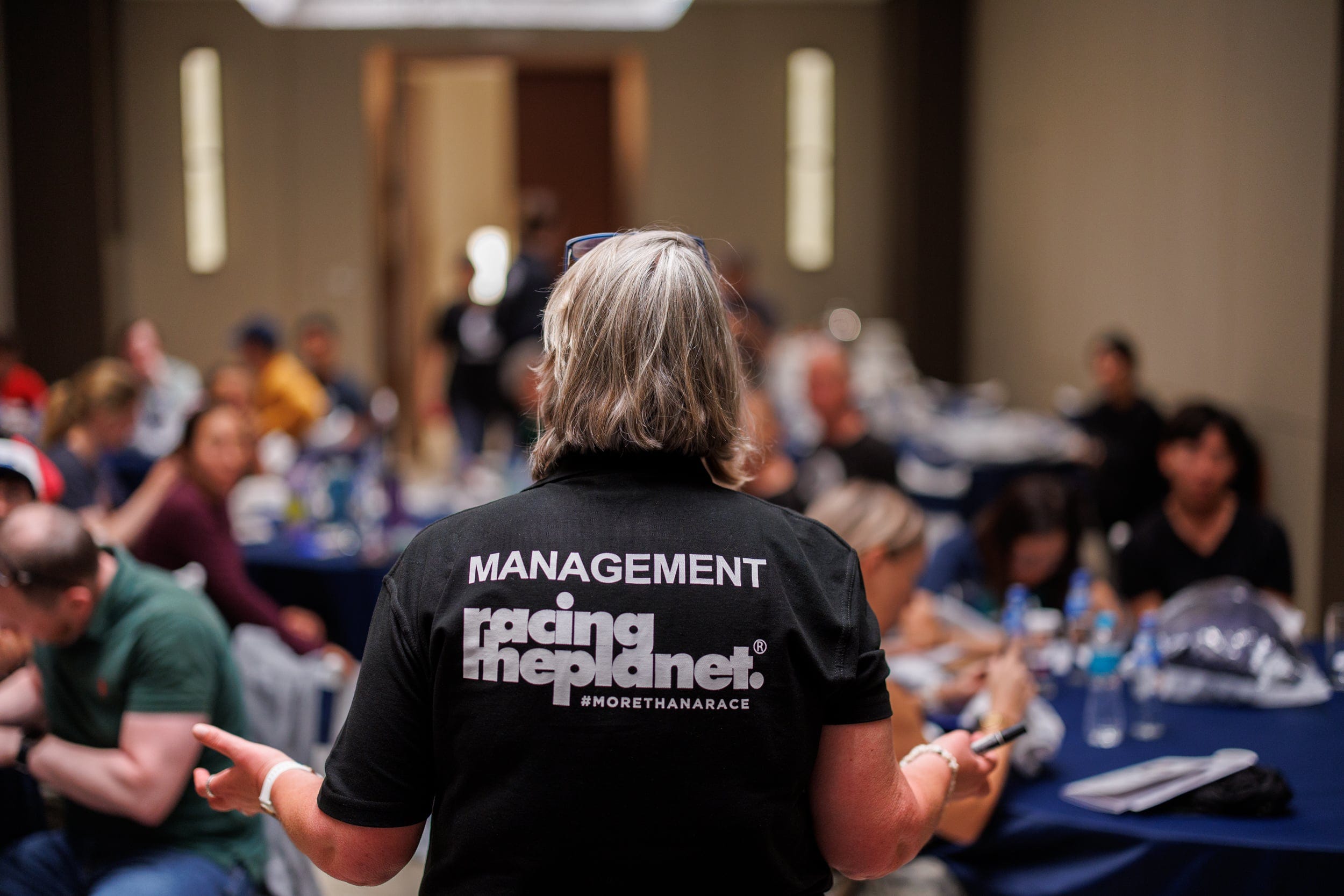
I’ve already spent two days with the volunteers by this point, one day of training and one day of competitor check-in and travel to the first camp.
Exhausting in itself: a group of strangers thrown together for the first time, meeting, learning how it all works, and immediately having to work as a team to get every competitor’s kit checked, accounted for, and onto the right bus. The journey to camp is an endurance event on its own at close to six hours’ drive, and once we arrive, all of us volunteers still have to get all the vehicle equipment, water and checkpoints ready for the following day. Late nights, early starts. That’s the blueprint for the rest of our week.
This morning we have our briefing at 5:30am. I run the volunteers through who’s doing what and which vehicle they’re in, and at 6am we head out in convoy to all of the checkpoints on Stage One.
Leaving in convoy is one of my favourite things, I think there’s something romantic about a line of brake lights all heading out into the desert together, while the runners, still bleary eyed wandering around camp, watch us go with a slightly bemused look: “where on earth are they going at this hour?”
By the end of the week they’ve clocked exactly how many hours the volunteers are putting in, and they’re VERY appreciative of it. Although I suspect there’s always some who are completely oblivious to it!
For the whole week I’m based at checkpoint three. it’s the last one before the finish line each day, which generally gives us the most time out in the wilds of the countryside. It’s with real relief that we arrive on stage one, get the checkpoint up, and settle in.
For me, this is the start of the race, all the volunteers are where they should be, they know what to do (I hope!) and all we need now are some runners. The bonus of being at CP3 is we get to sit down with a group of fascinating people, and we chat while we wait for the first runners to come through and take in the scenery. There’s no other reason any of us would be in this particular spot on earth, the race has brought us together here, it’s beautiful, and peaceful, and life-affirming just to sit, talk and take it all in.
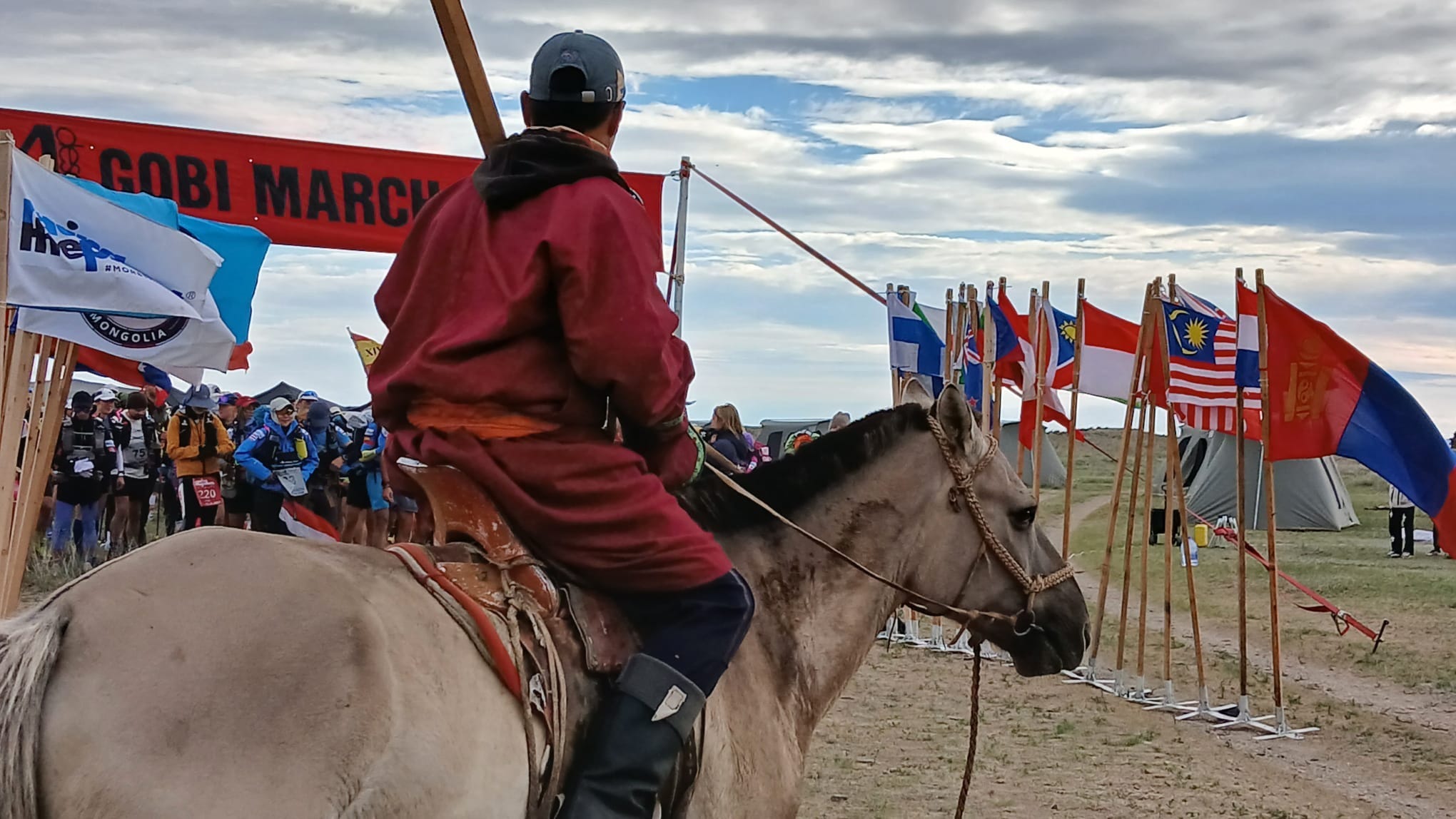
First job is to set up the checkpoint itself; two gazebos, identifying flags, flooring, stools, a table and a lot of five-litre water bottles.
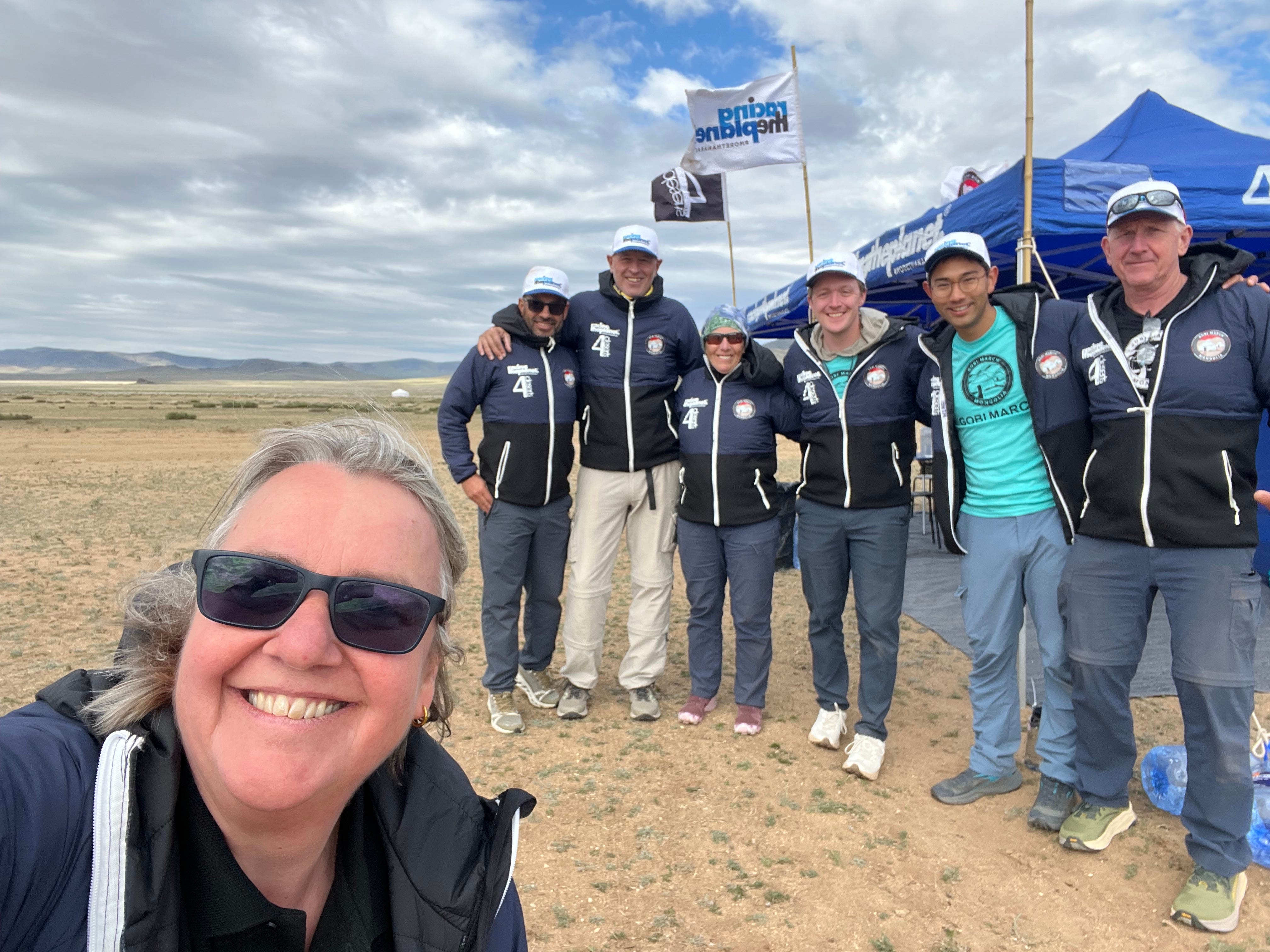
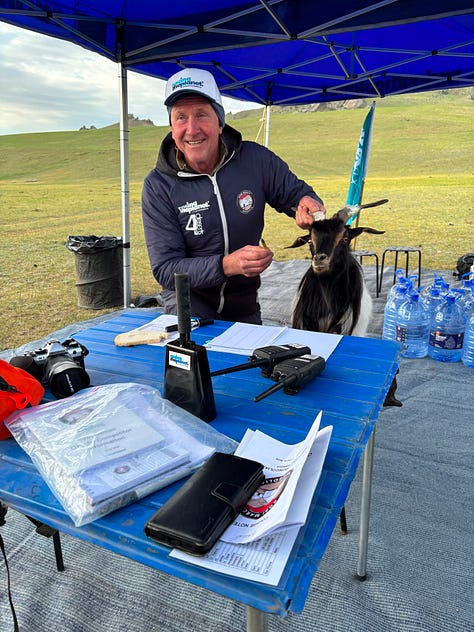
Our main job is checking every runner through, they have GPS trackers, but we check them through manually aswell (belt and braces!) We have a doctor with us for any health issues (there’s one at every CP), we hand out water, and we cheer - a lot. Having been talking non-stop for two days already, I can feel my voice going by day one, so I switch to a cowbell to welcome the runners in.
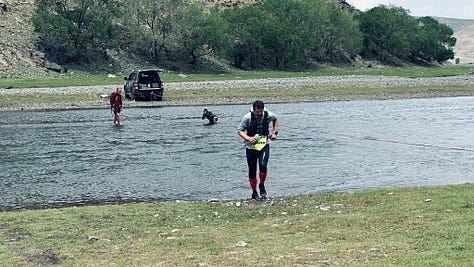
The race runs for a week across six stages, each about a marathon distance in length. Apart from stage four, the Long March, which comes in at nearly double that distance. Runners go through the night and into the following day; in some years the last of them haven’t crossed the line until close to 9am, meaning they’ve been out on the course for 26 hours. The Long March is followed by a rest day, then it’s back into stages five and six to finish. Total distance over the week, 256km
Once all the runners are through every checkpoint, we pack up and head on to the next camp.
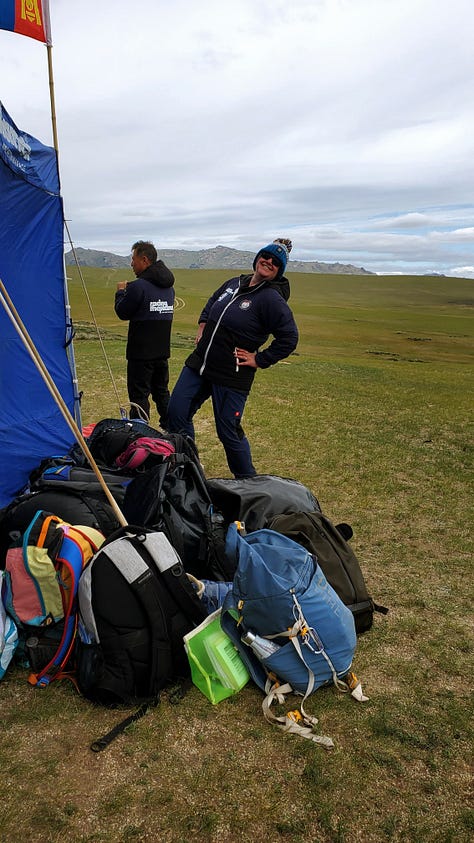
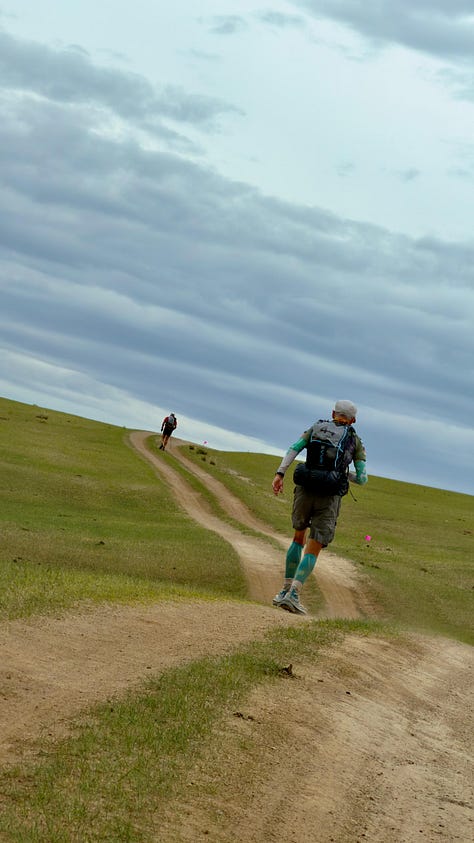
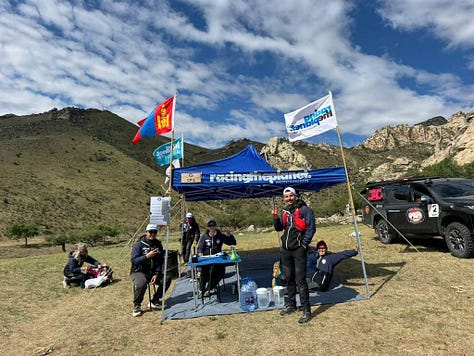
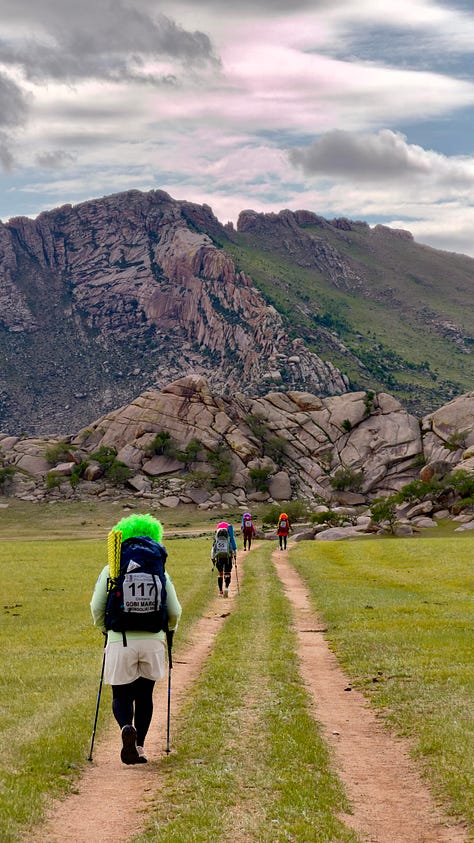
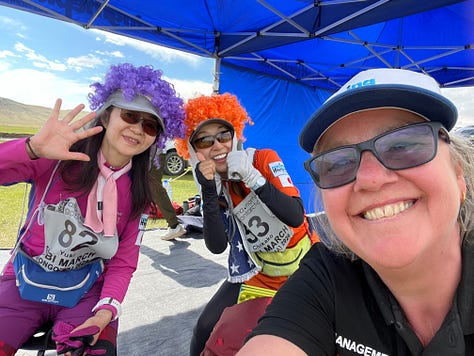
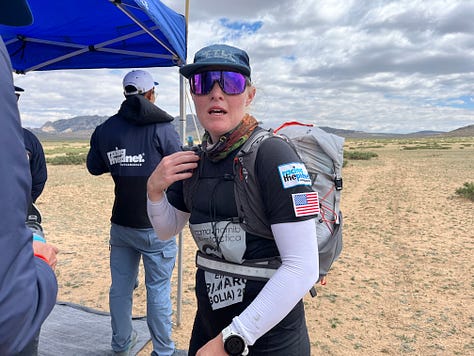
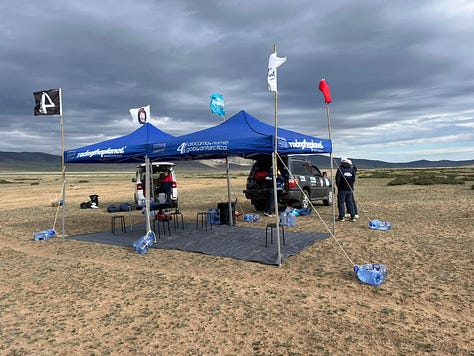
There are very different experiences to be had on this race depending on your role. This week I’m volunteer manager, working with a genuinely excellent team. There’s an application and selection process through the Racing the Planet website (links below), and the expectations are fairly clear. You can come along to support a friend or family member, or have no connection to anyone at all, but you’re expected to have some experience of, and interest in, outdoor life: hiking at the very least, running or race experience even better.
Mostly, though, volunteers are people looking for an adventure — looking to get out of their comfort zone, maybe considering doing the race themselves one day and wanting a closer look first. I volunteered for the first time almost ten years ago (I don’t plan on doing the race ever) because Mr. Dean was competing, and I’ve found myself coming back ever since. It’s addictive. It keeps me out of my comfort zone in a way I forget I need when I’m living a comfortable western life. It’s a shower-free week, basic toilets, sleeping on the ground, none of which is part of my normal day-to-day anymore, it’s a genuine delight to wash your hands with soap and running water from a tap at the race finish and coming back once a year genuinely resets something in me. I come out the other side feeling like I’ve achieved something, I’ve helped others, met some really interesting people living very different lives and I can guarantee I’ve laughed like a drain at least once a day and cried more than once!
The weather here is famously unpredictable. We’ve had partial and full evacuations of the race in past years, thunderstorms and flooding. This year, though, we were blessed it’s been a very smooth week weather-wises.
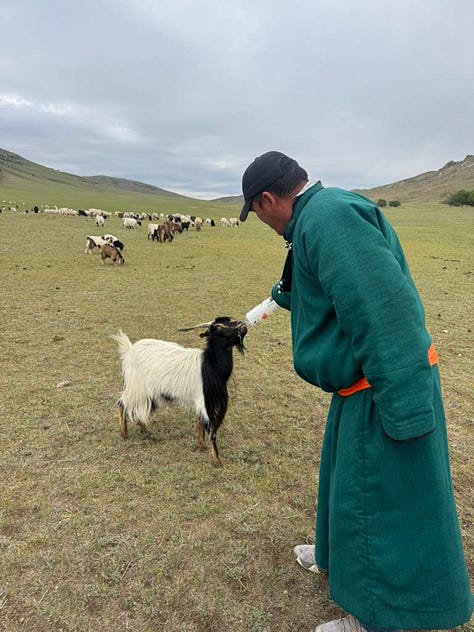
At checkpoint three on stage three, we’re joined by a baby calf. We’re not far from a Ger, the traditional home of Mongolia’s nomadic herders.
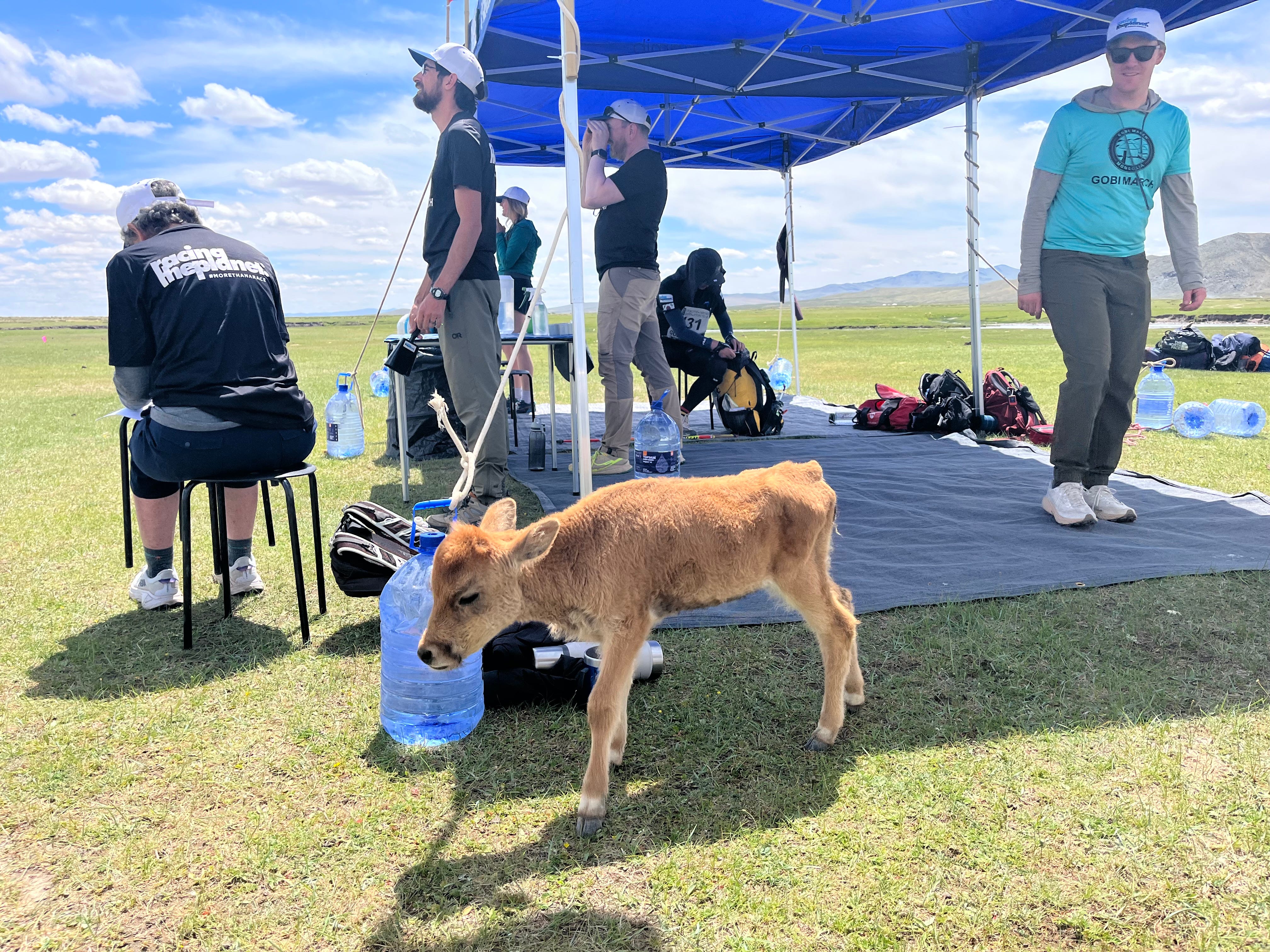
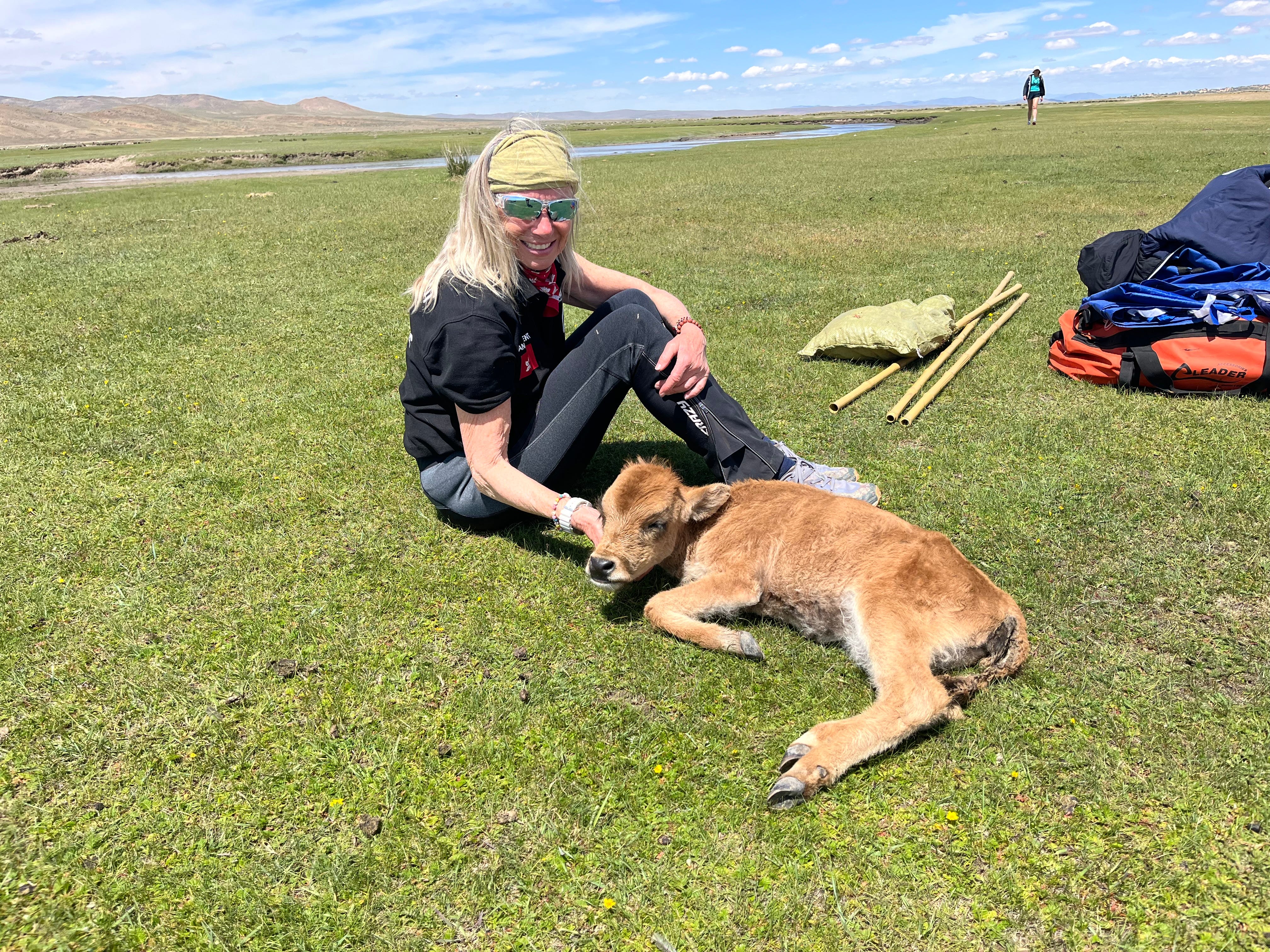
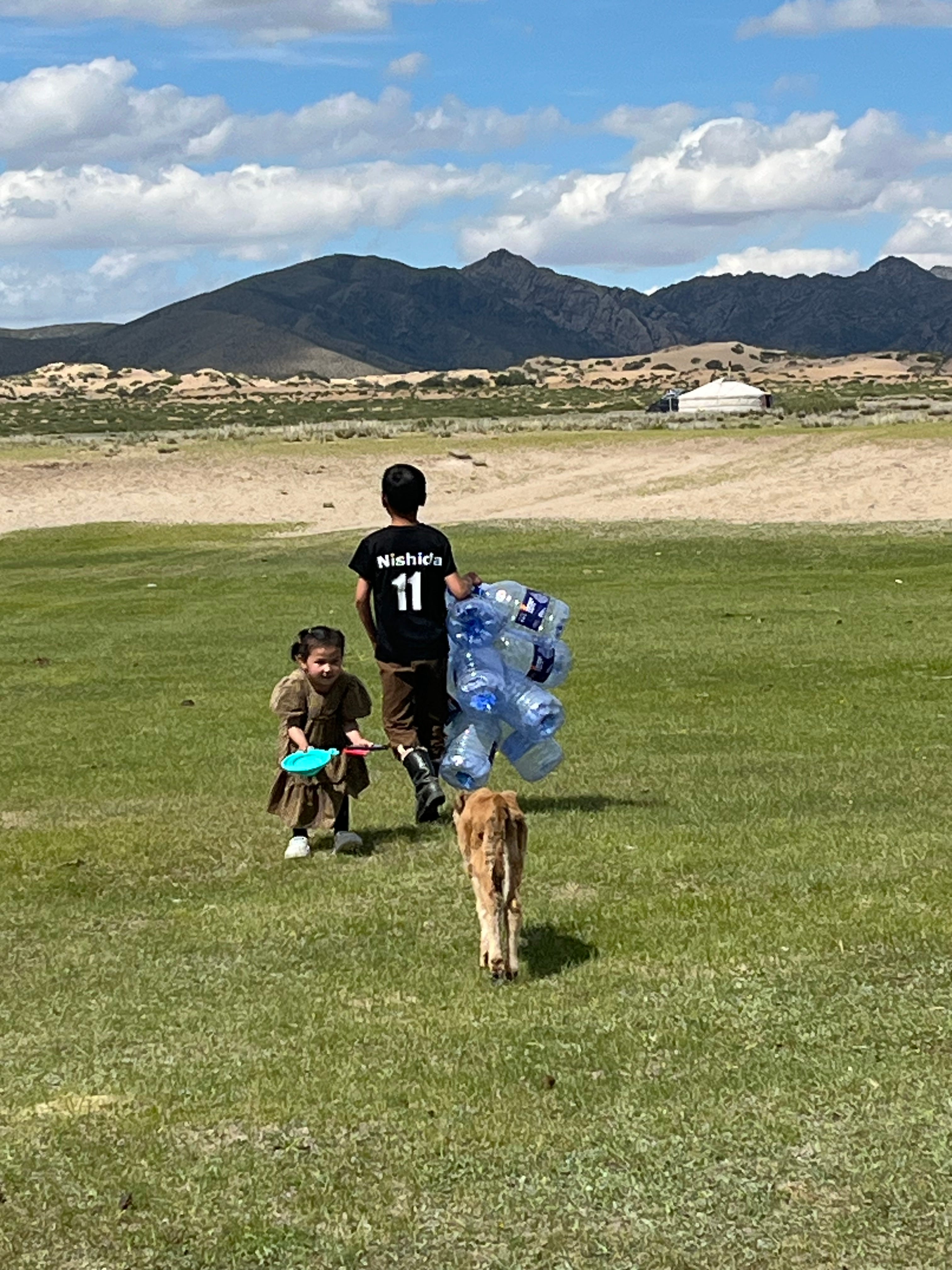
The calf belongs to them, brought down to the river near our checkpoint, and at some point the father and kids wander off, leaving it behind. It seems a little unsteady, so we give it water (for this exact reason, ok maybe not a baby calf, I was thinking of visiting dogs! I brought one of Thomasinas old bowls), and it hangs around the checkpoint, much to the mild alarm of our doctor, who’s trying to keep a reasonably clean space for any blister care. All day there’s a comic scene with us trying to move the calf out of the way and it sneaking back in. One volunteer floats the theory that it’s been deliberately abandoned, and that one of the circling eagles will swoop the moment we leave. A theory I hear repeated multiple times throughout the day.
I’m just coming around to the idea that they might be right, when, as we start packing up, the children reappear, and off it trots after them, tail-first into the sunset, completely fine. Even the empty water bottles from our checkpoint get reused here — the herders use them to collect and sell milk. Almost nothing goes to waste, and you never see litter. It’s one of the nicer things about being out here.
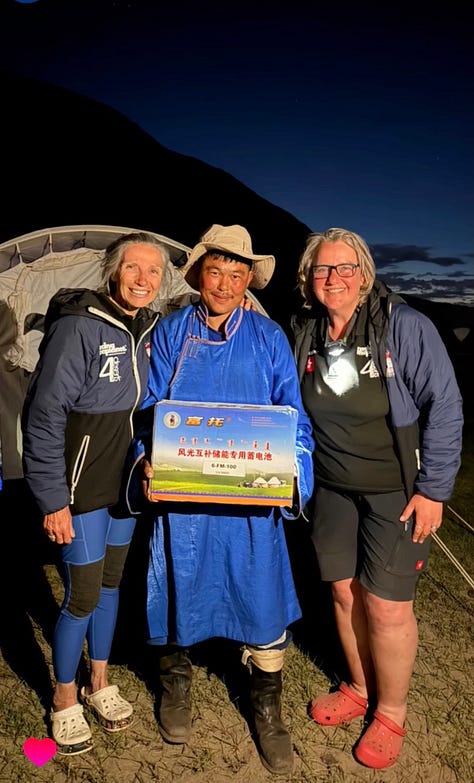
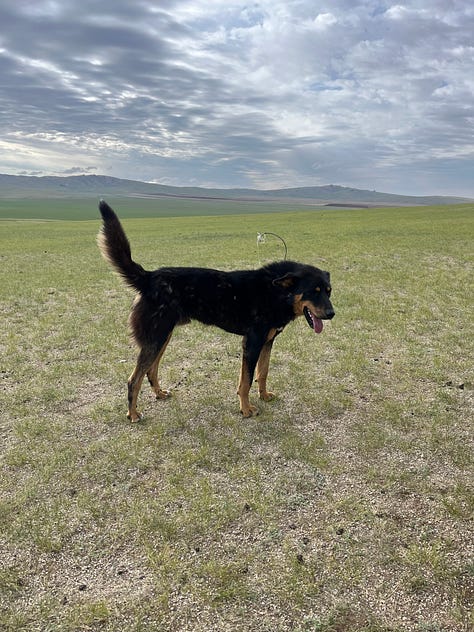
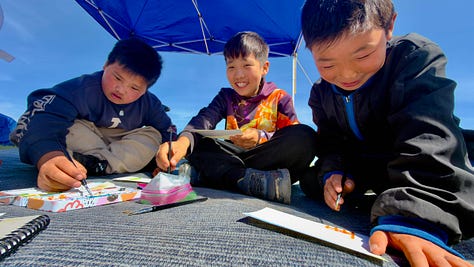
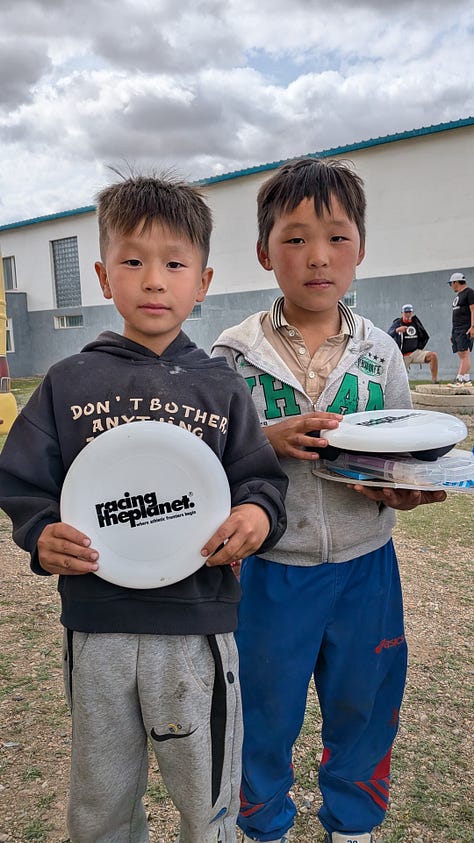
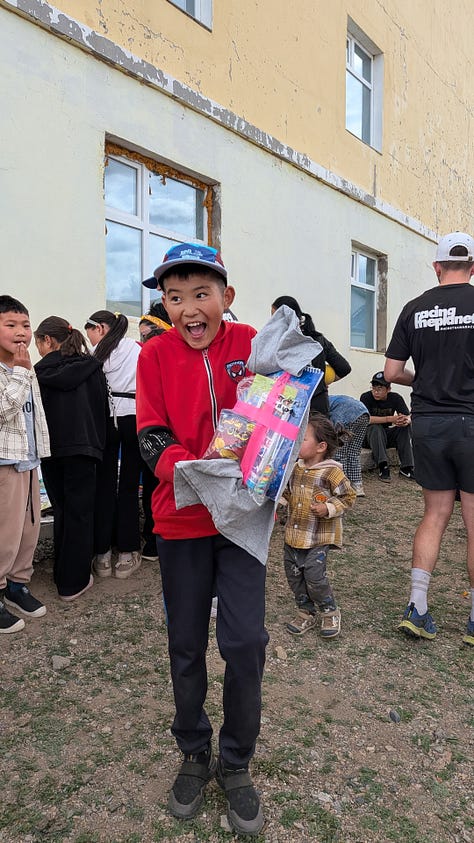
It’s not just animals who visit, we get curious locals, other animals and children. Racing the Planet runs a large donation program and it’s always a delight to give out toys to the kids, clothes or batteries to the herders and they’ve even helped put in new girls toilets in a local school
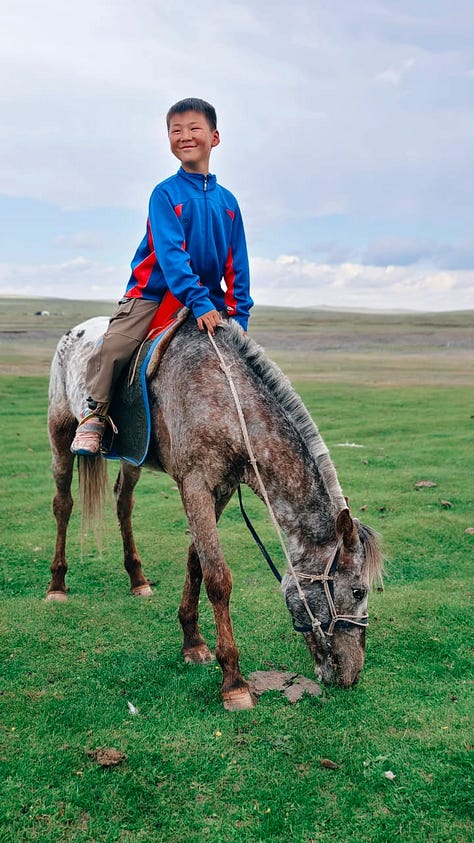
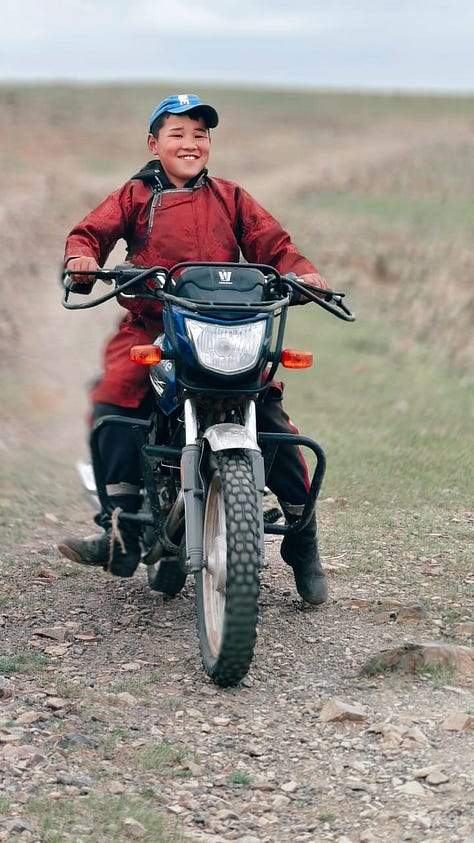
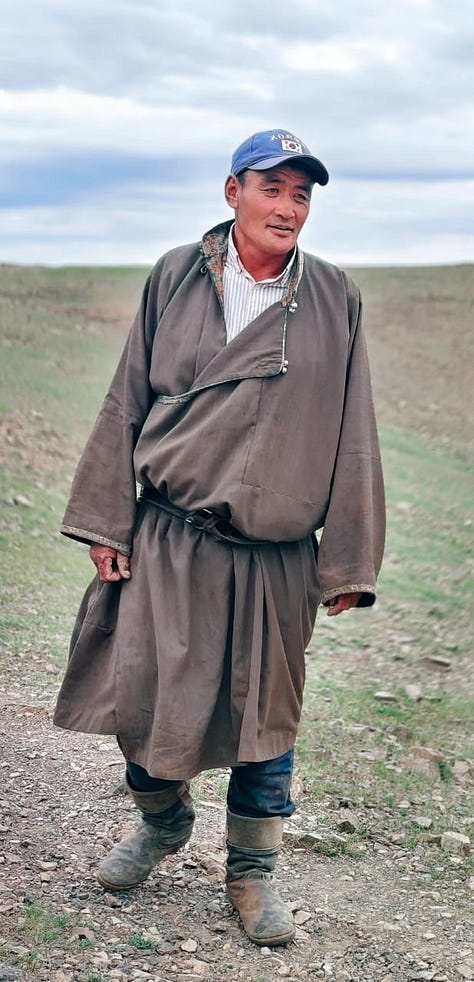
As it sounds, this is the really long one, for racers and volunteers alike. It’s always fascinating watching who’s in the top ten on day one, some hold their position, some go out too hot and fade. This year the top few men spent much of the week swapping places between second, third, and fourth, while the female frontrunner overtook the male favourite mid-race, putting her on track to become the first woman ever to win the overall race outright, in the entire history of Racing the Planets 20 plus years of staging these races.
Watching that possibility unfold as a volunteer was genuinely thrilling. There’s a parallel women’s race for second, third and fourth, plus age-group categories.
The Long March can be where some real time can be made up ot lost, swings in position as some runners fade and others push on.
This year: no extreme heat, one storm (mercifully on the rest day, disrupting nothing but our inventory count), and no evacuations or lightning. A gentle year, by Gobi standards.
I spent this year’s 24-hour Long March at checkpoint seven, the last one before the finish, joined by volunteers rotating in from earlier checkpoints once those closed.
Our doctor this year turned out to be a legend on two fronts: best snacks, and best checkpoint entertainment system. Strings of coloured lights, a projector throwing a starfield onto the back of the checkpoint tent, and a playlist (I’m still waiting for him to send me a link to) from the moment the camp team dropped off a fire for us.
We tried not to make it ‘too’ inviting, competitors still need to finish and get back to camp’ but it kept us awake, and we took turns catching a bit of sleep. I got to try the best camping mattress I’ve ever slept on (Exped Megapad) not an affiliate link but probably should be the amount of people I’ve been telling about it. Again, borrowed from our doctor.
So good, I slept straight through a rainstorm and had to be shaken awake so I didn’t get too wet!
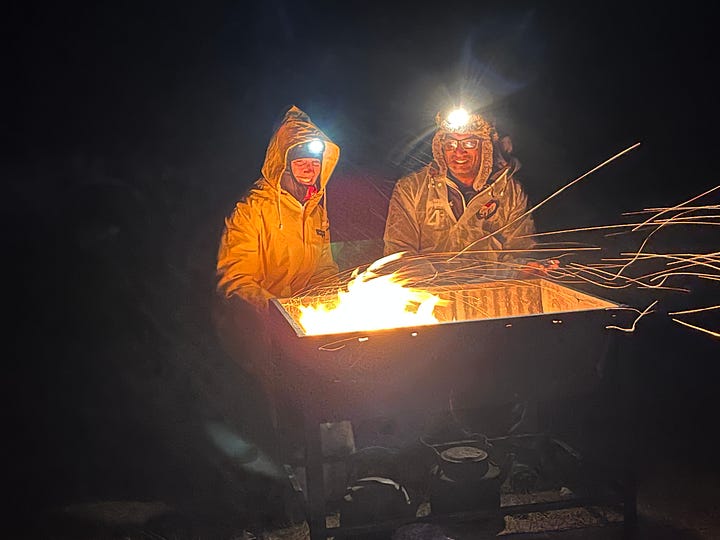
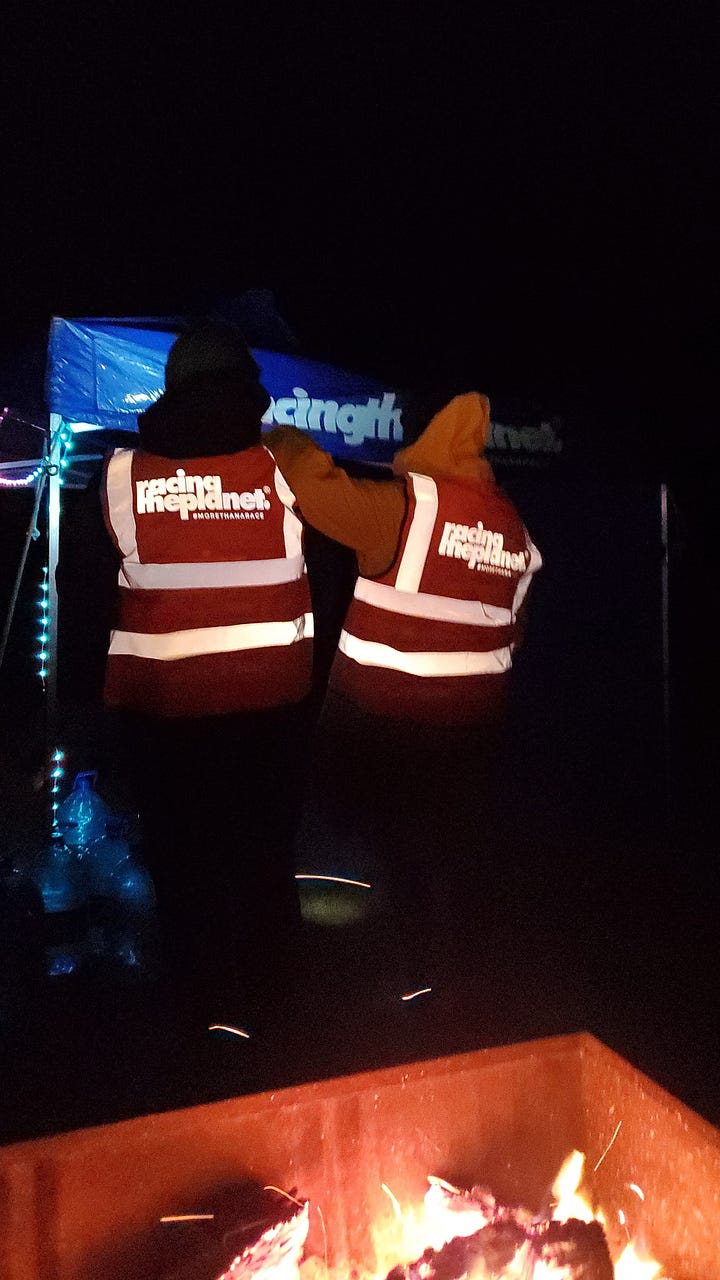
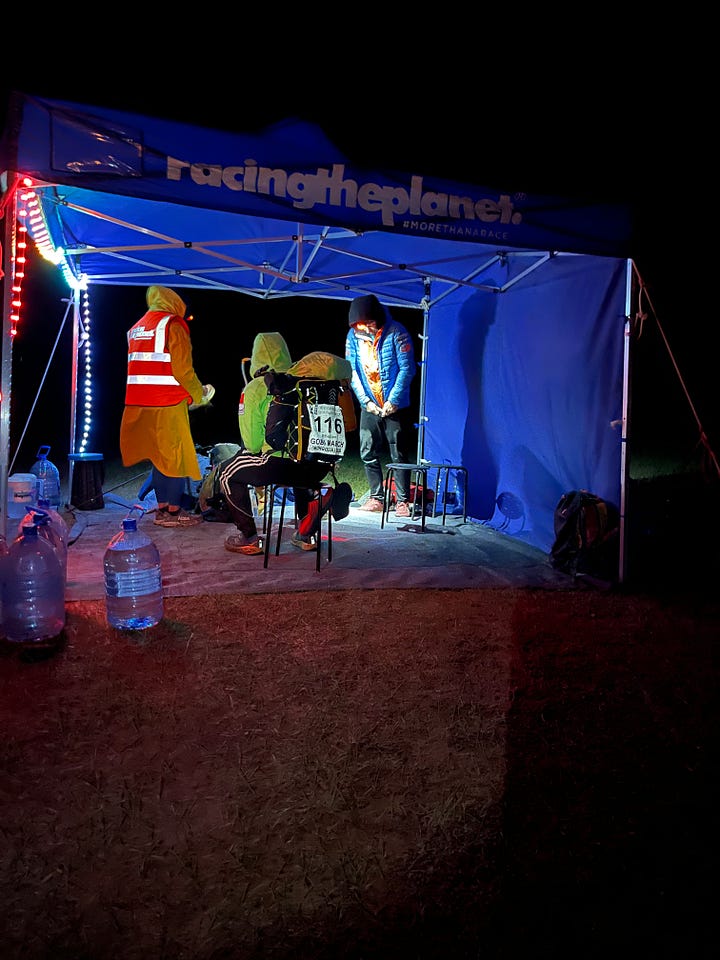
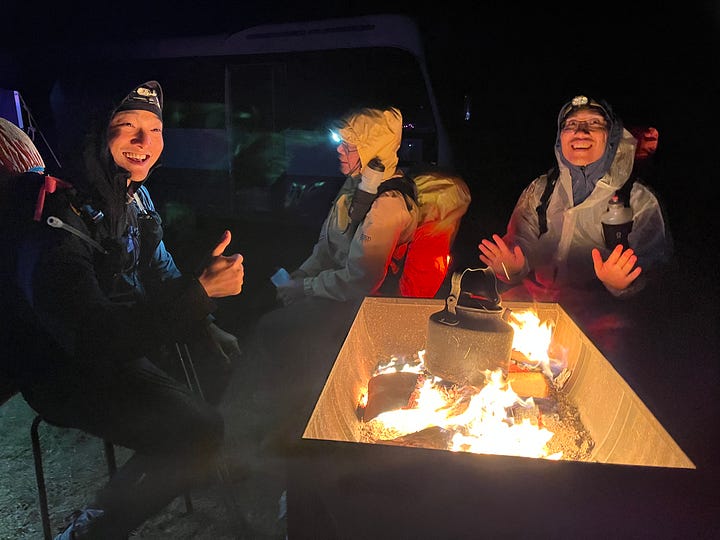
Happy volunteers make for a happy race, and even runners who came through looking pretty down seemed to brighten up seeing us. We closed the checkpoint at around 5:30am once the last runners and sweepers had come through. In past years I’ve stayed up to watch the final finishers cross the line; this year, sleep won, and by the time I woke up, everyone had finished.
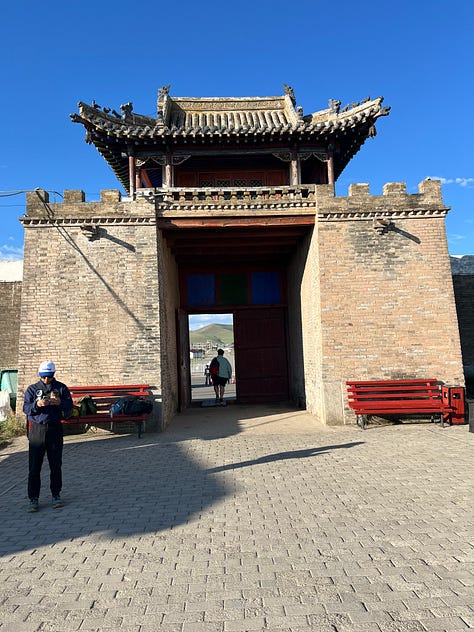
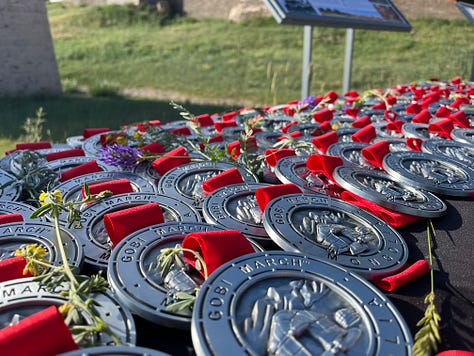
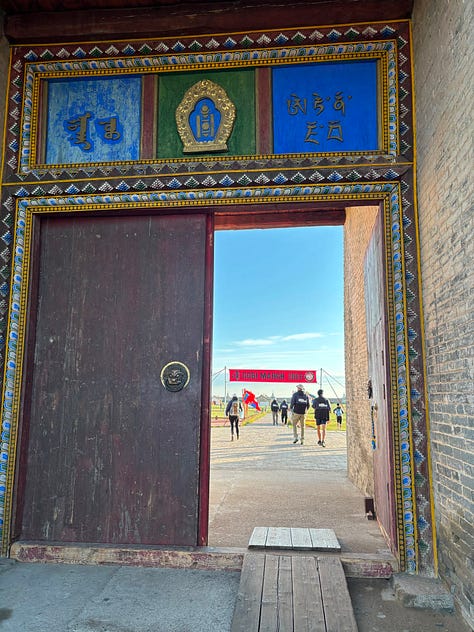
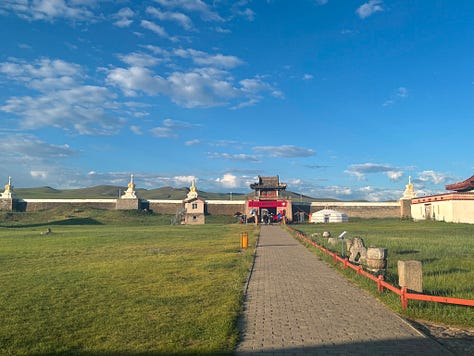
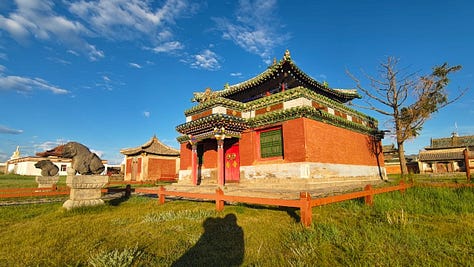
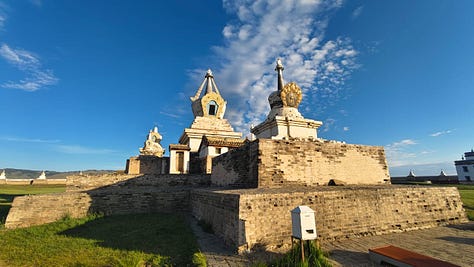
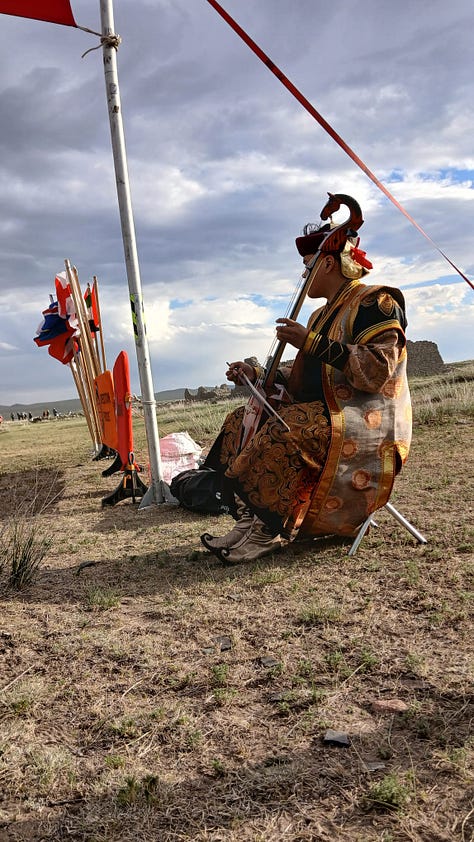
The race ends at a monastery, which is genuinely breathtaking. We pack up fast, there’s pizza and beer at the finish line, this feels slightly incongruous in a monastery setting, but our local manager Dalai explained that, as long as it’s not a special holy day then beer is fine there for celebration, marking an achievement, but not for what we’d call in the UK a “drinking session.” Medals are handed out by monks, with local musicians in traditional dress playing as runners cross the line. It’s genuinely emotional.
And yes I can confirm, this year’s race produced the first female overall winner in the history of Racing the Planet’s entire desert race series. A proper piece of history to have witnessed from the perfect finish line.
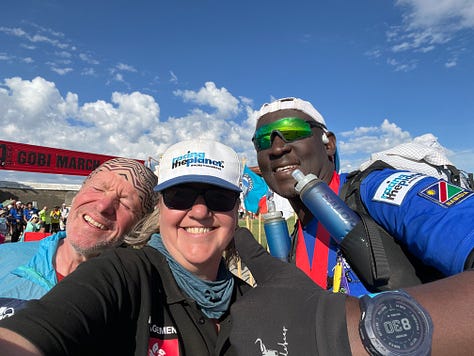
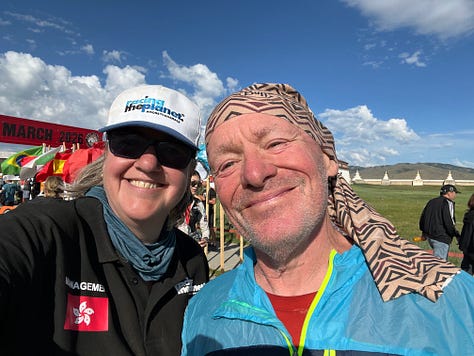
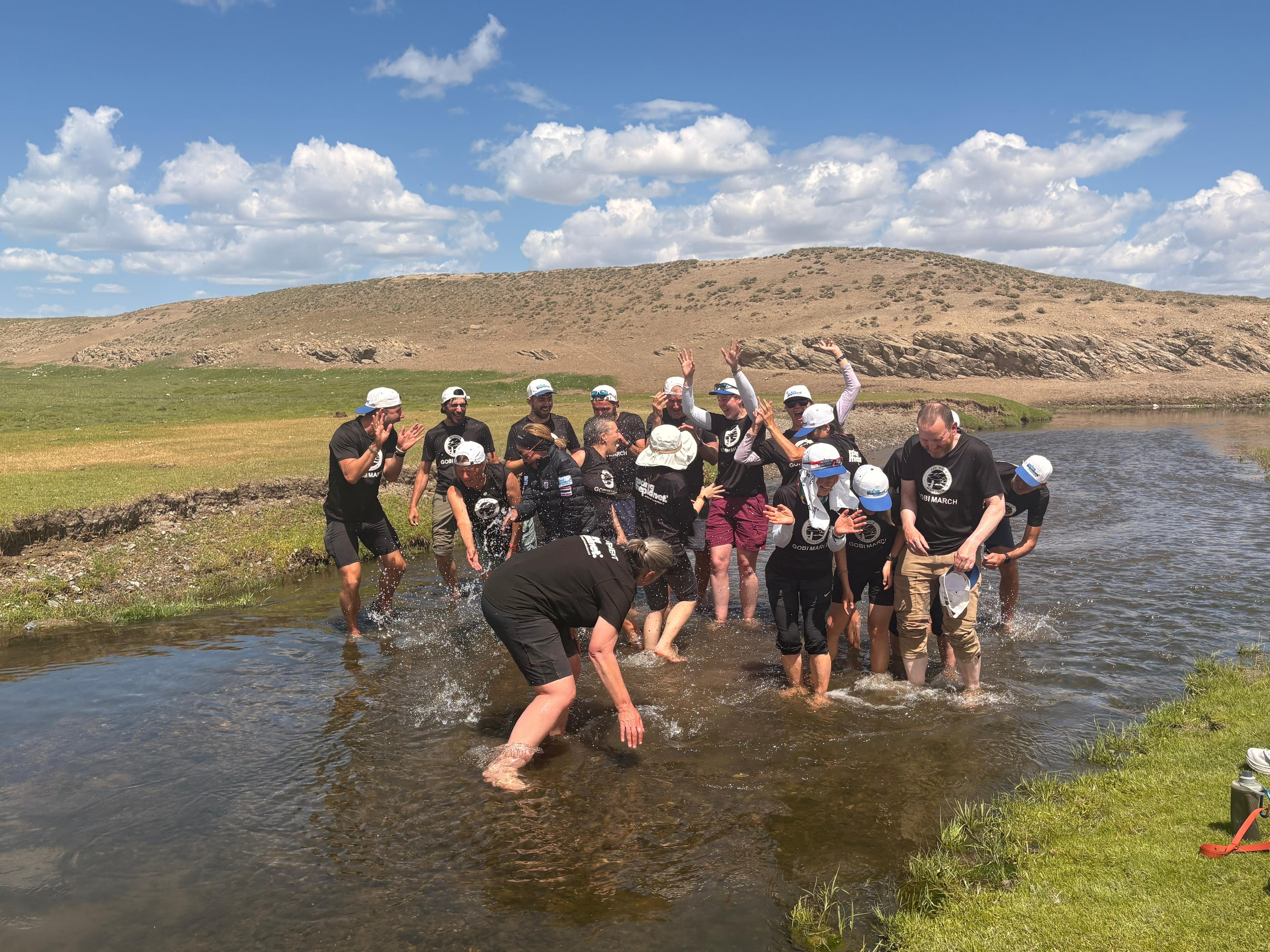
Me thanking the volunteers for all their hard work in the traditional style of a good soaking!
If you’d like to get a better idea of what the week was like, come and watch this…
Racing the Planet:
https://www.racingtheplanet.com/
Videographer: Andre Gemmer
Photographer: Gabriel Heusi
This article’s been a bit different from the usual, as you can see it’s a busy work week, there’s little time to fit in any painting or sketching, so I only managed a minimal amount but I’m back to all the painting and sketching as normal from next week!

PS If Mongolia interests you as a place to visit, and you haven’t already read this, see my last post, there’s some useful links at the end. And you can always volunteer on a race 😍
Comments
Nothing yet. Say the first thing.
Sign in to join the conversation.