
When we imagine walking into the home of a sixteenth-century merchant, we probably imagine wooden or plastered walls, a cupboard or two, and maybe a tapestry hanging on the wall for warmth. Wooden chairs and a table, a couple of stools near the fire. But thanks to the will of a Newcastle merchant called William Jenison, we know the truth was often far more colourful and opulent.
William was a member of the close-knit mercantile community of the city, and owner of a number of properties and farms. His father in law, Ralph Carre, was also a local merchant, and William’s son (also named William) continued in the family business. Jenison’s wife was named Barbara and from what we know of other Tudor women she would have actively assisted in her husband’s work delivering messages, following up on payments and chasing deliveries of goods. William was certainly confident in his wife’s abilities as an administrator and appointed her the sole executor of his long and complex will. This is another indication that she carried out paperwork and handled negotiations in the marriage and in business. The couple lived during the reign of Elizabeth I, and like other merchants of the period, grew rich from the city’s lucrative coal industry, along with dealing in shipments of other goods such as cloth, skins and food ingredients. The family mined coal in at least 19 mines in and around Newcastle.
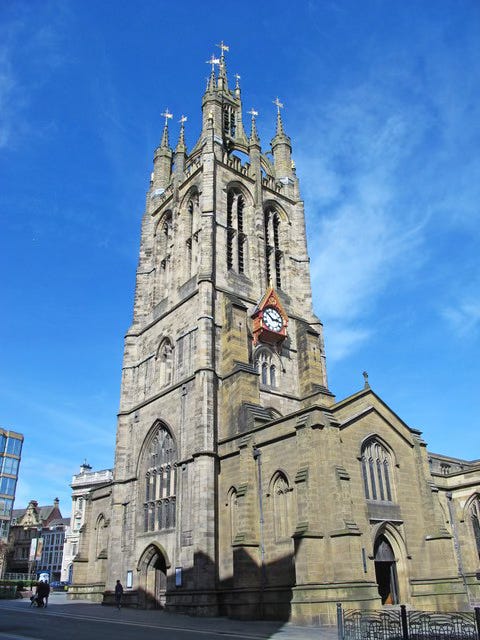
Most of the information we have about their lives comes from William’s will, written on 28 June 1587. At the time of writing, the country had been recently shaken by the execution of Mary, Queen of Scots that February, and as a result Elizabeth found herself even more threatened by the Catholic forces of Europe. Soon, Philip II of Spain, Elizabeth’s former brother-in-law, would mount a bid to invade England by sending a fleet of ships to take the country in the name of the Pope. For William and Barbara, daily life was a cycle of prayer, work and family commitments. Illness was cured with herbs, prayers and bleeding, and the family sat around a wooden table with an ornamental salt cellar at William’s place as head of the family. William rode on a gelding as he conducted business in and out of the town, and wore a black damask jacket, a sure sign of his wealth and influence. The couple worshipped at the church of St Nicholas, now Newcastle Cathedral, and it was there that William chose to be buried after his death.
An inventory made on 24 July 1587 is attached to the will. It reveals that the couple owned an impressive portfolio of property, including farms, manor houses and townhouses. They owned a tenement in The Side, which they let out to their daughter Isabel and her husband George Simpson. A farm, ‘Woodcroft’ contained a variety of cattle, including 407 ‘olde sheipe’, along with lambs, oxen, calves, cows and also many horses. There was a large field of corn, and various ploughing and farming tools, all indicating that the Jenisons supplemented their mercantile income, with other farms named ‘Woodeham’ and ‘Thorpe’.
A family home at Thorpe had a buttery, three chambers, a laundry, stables, a barn and a kitchen. William, when in residence, had a his own private chamber containing a bed with red and green hangings, a stool, chair and a chest, likely used for storing valuable documents or bedlinen. The couple’s kitchen contained all the tools expected of a wealthy Elizabeth family, including brass vessels, a pestle and mortar, a ‘flesh crook’ and a ‘cleaving knife’. They also ate with silver spoons, pewter vessels and earthen pots, their dinner lit with candles placed into wooden candlesticks.
Another of their homes, named ‘Haswell’, had a hall, buttery, parlour, and a ‘loft over the hall’. The usually diligent writer of the inventory must have flicked his eyes over a jumble of possessions in the ‘inner roof’, as it was recorded as ‘so much of one thing and other’. There was also an upper roof loft that contained a bed, some sheep skins and blankets.
But the real eye-opener was William and Barbara’s home in Newcastle itself. The inventory shows that it was especially sumptuous and would have been where they entertained business associates and family. They would have propped themselves up on red velvet or ‘tapestry’ cushions, and walked on green carpets. A pair of virginals (a keyboard instrument also favoured by Elizabeth I) was placed in the hall, which also contained a quantity of books including a Bible ‘and four chronicles’. They also owned a new piece of Tudor technology - a clock worth twenty shillings; and a spice coffer, a household item reserved for the rich, who could afford expensive spices with which to flavour their food. The windows were hung with red and green curtains, and the couple slept on featherbeds decorated with yellow, red and blue hangings, resting their weary heads on pillows and bolsters, with one set of pillows made out of black silk. Other parts of the home were furnished with ‘six great tapestry cushions’ along with six smaller ones, a red silk cushion and a silk covering lined with fur. There were also some more silk cushions scattered around the house, and one room even had silk curtains.
The town house was a large property, and as well as the hall, consisted of a buttery, a new parlour, an old parlour, a great chamber, the servants’ chamber, a kitchen, a ‘little counting house’, a brewhouse, a loft, a pantry, a shop and a napery. The napery was where tablecloths and napkins were stored ready to be conveyed to the hall and laid out for the family’s dinners.
In total, there were a staggering ten featherbeds in the home, including in the servants’ chamber, so they slept in style too. There was also a kitchen equipped for entertaining, its cupboards filled with saucers, 35 banqueting dishes, trenchers, chargers, platters and goblets. They ate off wooden tables covered with damask tablecloths and dabbed their lips with napkins also of damask cloth. Food would have been served in gilt bowls, and they sipped claret wine from gilt goblets. Inside the home were six sugar loaves, a large quantity of ginger, some pepper, cloves, mace and more sugar. The family also had 12lbs of cinnamon confits, some salt beef and fifty cheeses. Many of these items were found in the shop, and were likely not only for the family’s use but purchased to sell to local residents or customers further away via their ships. Similarly, in many properties were large stores of sheepskins, most likely ready to be bundled up and sold, or conveyed on ships.
Inside William’s closet were gowns trimmed with furs and velvet, a velvet jacket, a jacket made of black damask and another black taffeta jacket. William liked to wear black, an expensive dye of the period, although he also owned a leather jerkin and a satin doublet.
William and Barbara lived extravagantly for the time, and would have been well-known figures in the Newcastle community. Evidence suggests that they attained their wealth from not only their coal merchant business, but from sheep farming, property rents and selling food and spices from the shop attached to their home. They therefore relied on a varied income, and a mixture of passive and active income. Their story shows that homes in the Elizabethan period did not consist of just dingy brown wooden chambers, but could be colourful, textured and comfortable. Their tables glittered with goblets and plates, and the scent of cinnamon, cloves and roasted beef would have trailed from their kitchens.
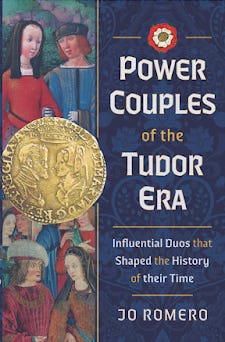
Interested in Tudor history? You might also like my book, Power Couples of the Tudor Era, published by Pen and Sword Books, which explores the contributions couples made to their own times as well as how they influenced our own. Order your copy here.
Also: posts from the blog you might have missed: The Warrior Women of the Wars of the Roses, What It Was Really Like at a Georgian Ball in the 1700s, the grim story of the tomb of Edward I, and the Saxon History of Beverley Minster in Yorkshire.
Source: Will of William Jenison, 1587. Wills and Inventories from the Registry at Durham, Edinburgh, 1860.
No posts
Comments
Nothing yet. Say the first thing.
Sign in to join the conversation.