
Why does someone drown when they could have put out a hand and saved themselves?
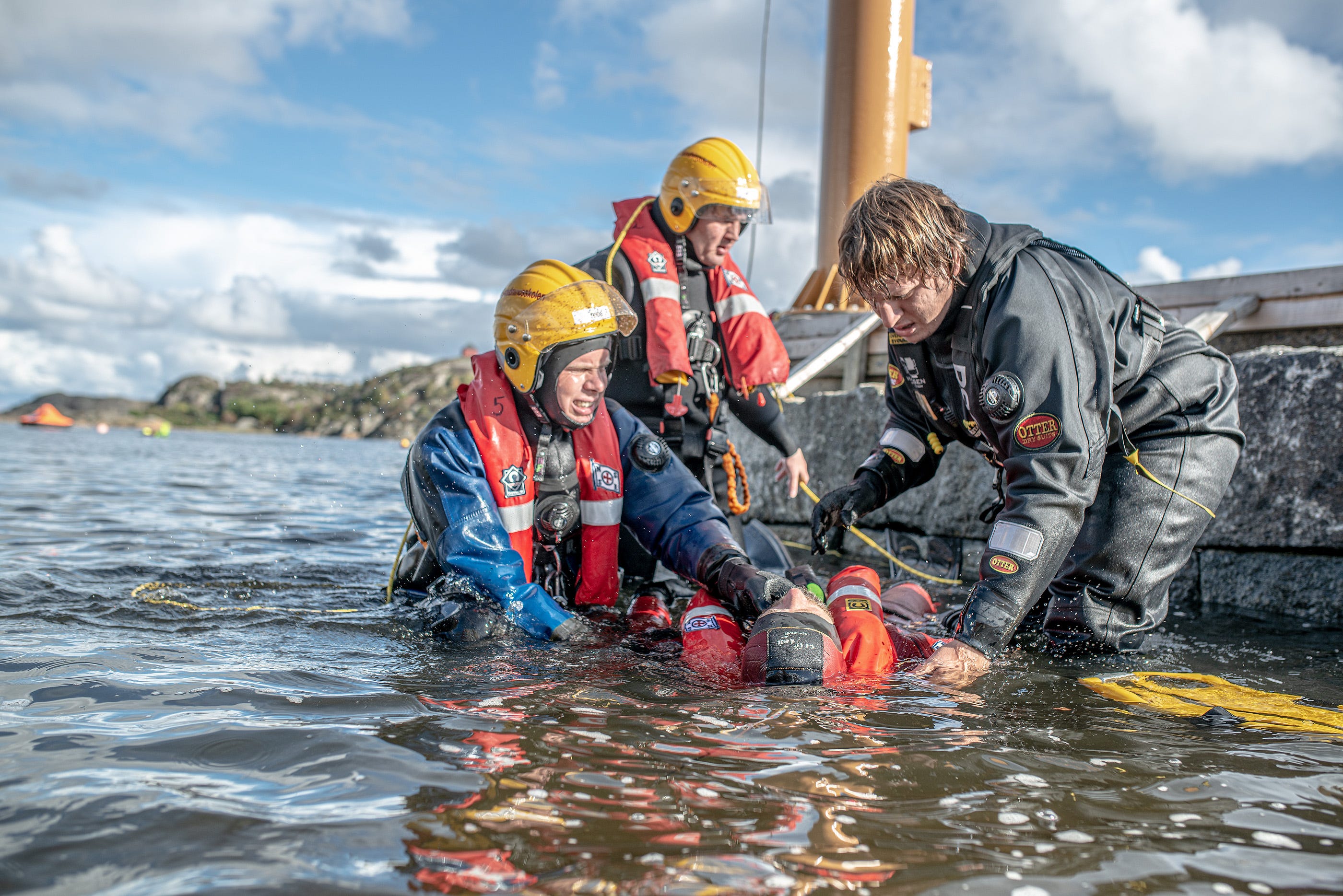
(The picture is from a training exercise with Redningsselskapet)
It sounds like a rhetorical question. It isn’t. The UK’s Water Incident Database recorded more than 3,100 water-related deaths between 2019 and 2023, and among accidental open-water deaths, roughly 55% occurred within three metres of safe refuge. Two out of three victims were regarded as competent swimmers.
Three metres. A ladder, the side of a boat, a rock. People who knew how to swim, dying close enough to touch the thing that would have saved them.
That is not a slow slide into hypothermia, and it is not exhaustion — a moderately intoxicated competent swimmer will usually retain enough motor function to cover three metres. Something took them out fast, and took them out while they were still warm. Answering why is the single most useful thing we know about cold water.
I’ve just co-authored a narrative review in the Journal of Applied Physiology with Laura Leuci, Luca Carenzo and Antonio Messina in Milan, and Mike Tipton in Portsmouth. We went back through the four-stage model of cold water immersion and looked hard at where the evidence actually sits. Three things came out of it that I think matter for anyone who might have to pull someone out of cold water. I’ll take them in order.
Around 60% of immersion deaths in the UK occur in the first two stages — cold shock and swimming failure — without the casualty ever becoming hypothermic.
Cold shock arrives within seconds. An involuntary gasp of two to three litres, then hyperventilation running two to three times resting minute ventilation for a minute or more. If the airway is under water when the gasp fires, aspiration starts there. If it isn’t, the hyperventilation that follows drives PaCO₂ down, cerebral perfusion with it, and the casualty becomes disorientated in water they could otherwise have handled. Breath-hold time collapses from around sixty seconds to a few. Even motivated, experienced people cannot reliably override it in that first minute.
Then comes swimming failure, and this is the one that gets missed clinically. Peripheral nerve conduction slows linearly with tissue temperature. Muscle contractile function degrades — force development, peak force, relaxation rate, all of it. Manual dexterity falls off sharply once finger skin temperature drops below about 15 °C, and tactile sensitivity is essentially gone below 8 °C. In near-freezing water those thresholds are crossed in minutes.
The clinical consequence: a person can lose the ability to grip a rescue line, hold a gunwale, or swim three metres while their core temperature is still entirely normal. Which means a drowning victim recovered from cold water may present at post-mortem with a near-normal core temperature — and cold water gets written off as irrelevant to the death. It wasn’t.
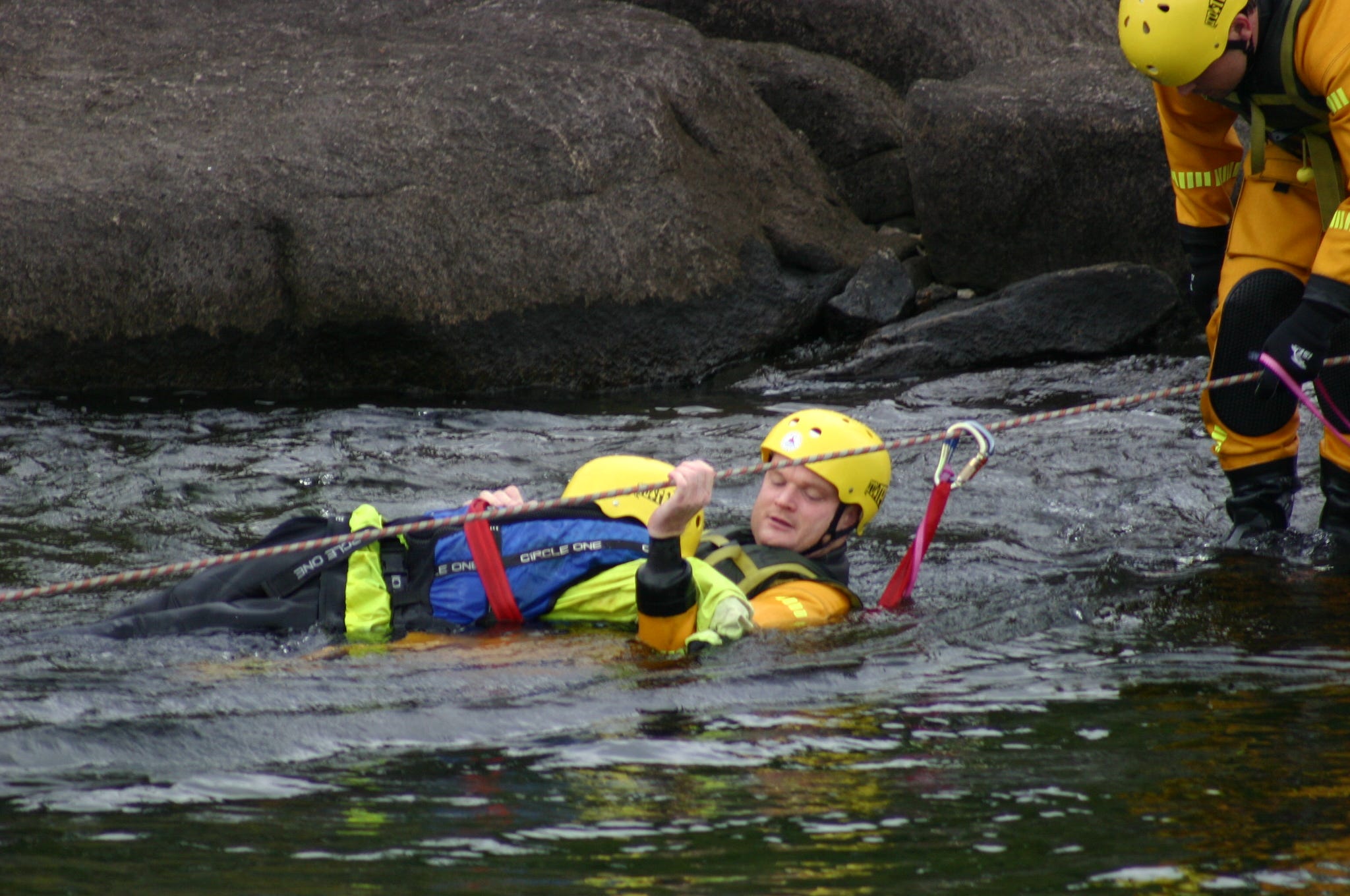
Cold water does something odd to the heart. Skin cooling drives sympathetic outflow — tachycardia, vasoconstriction, a systolic rise of 30–50 mmHg. Facial immersion simultaneously triggers the trigeminal-vagal diving response — bradycardia, apnoea. The heart receives both at once, and the resulting electrical instability is a candidate mechanism for sudden arrhythmic death without any core cooling at all.
The supporting evidence is real but indirect. Supraventricular arrhythmias have been documented during breath-hold submersion in healthy volunteers, and during helicopter underwater escape training in healthy military personnel. An animal model showed that simultaneous vagal and sympathetic stimulation worsened long-QT-associated ventricular arrhythmias.
But the same group found that concomitant vagal and adrenergic stimulation did not precipitate arrhythmias in a structurally normal rabbit heart. That is the honest state of the field: autonomic conflict appears to need a substrate — an inherited channelopathy, structural disease, or drug-induced repolarisation abnormality — before it turns lethal. Congenital long QT affects roughly 1 in 2,000. Molecular autopsy series have found pathogenic or likely pathogenic cardiac channel mutations in about a third of unexplained drownings.
I’d rather we taught it as a plausible mechanism with a named evidence gap than as established fact. It leaves no signature at autopsy. It can only ever be inferred by exclusion.
Most of us were taught to fear afterdrop at rescue: cold peripheral blood returning to the core, dropping the temperature further, tipping a marginal heart into VF.
Golden’s original observation was a fall in rectal temperature when subjects moved from cold to warm water. No equivalent fall was recorded at the heart. The rectum is a slow site, not a window onto the myocardium. Later work showed an afterdrop still appears when peripheral venous return is occluded, which points to conductive equilibration between cold tissue and warmer core rather than a bolus of cold blood. The magnitude is typically 0.5–1.5 °C. In a mildly hypothermic patient, that is not going to hurt them. Near the VF threshold it might. But it is no longer the main event.
The mechanism that probably deserves the fear is mechanical. Immersion shifts something like 500–700 mL of blood centrally. Lift a cold, cold-diuresed, relatively hypovolaemic casualty vertically out of the water and that squeeze disappears in seconds, into a peripheral vasculature that is compliant and no longer vasomotor-responsive. Cardiac output falls off a cliff. That is why people collapse on the winch wire.
Extract horizontally if the lift is any distance — high-sided vessel, helicopter winch. Worth saying: a brief vertical lift over the sponson of a RIB is not what this warns against, and manoeuvring a casualty horizontal in the water to achieve it can cost you the airway.
A shockable rhythm is a red flag, not a relief. Over 90% of drowning arrests present as PEA or asystole — the expected trajectory of hypoxic arrest. VF/pVT is atypical. When you see it, defibrillate, but treat it as evidence of a primary cardiac event that put them in the water rather than one that resulted from it, and make sure it triggers toxicology, molecular autopsy and family screening downstream.
Ventilate first. Drowning is a suffocation problem. ABC, not CAB; compression-only CPR is not appropriate here.
Don’t rub the limbs in a severely hypothermic patient. Peripheral vasodilation in someone already volume-depleted by cold diuresis and the loss of hydrostatic squeeze is how you produce rewarming collapse. Insulate, handle gently, evacuate to a centre that can do extracorporeal rewarming.
Watch the thermometry. Oesophageal is the gold standard with a secured airway, though probe insertion can mechanically irritate a profoundly cold myocardium. Epitympanic thermistors are reasonable in the spontaneously breathing patient. Infrared tympanic and peripheral measurements are not.
Hypothermia is real, and it is a genuine threat on prolonged immersion. But it is rarely the first threat, and in most cold-water drownings the cooling follows the arrest rather than causing it. The clinical question is almost never how cold is this patient. It is which came first, the cold or the hypoxia.
And for anyone who ends up in the water unexpectedly: don’t swim. Roll onto your back and float for sixty to ninety seconds until the breathing settles. Your clothes will help you float, not sink you. It remains one of the very few interventions in this field with real evidence behind it.
Here is the link to our new paper. I am really proud of beeing a part of it.
Leuci L, Melau J, Messina A, Tipton M, Carenzo L. Beyond hypothermia: mechanisms of death, rescue, and prevention in cold water immersion — a narrative review. J Appl Physiol. 2026. doi:10.1152/japplphysiol.00578.2026
This blog post represents my personal views and does not necessarily reflect the opinions of my employer or any organizations. I have no affiliations with any companies relevant to this.
I’d love for you to join my Substack blog!
If you find this interesting and want to support my work, consider selecting the monthly paid option.
If any of it caught your interest, I have written some short, science-based book you might enjoy.
Cold Water Swimming: A Mini Book is a friendly, short guide to enjoying cold water safely, confidently, and with a big smile. It draws on years at the Norseman Xtreme Triathlon, research with elite military swimmers, and my published work in cold-water physiology. Calm, clear, trustworthy guidance for anyone curious about stepping in.
No posts
Comments
Nothing yet. Say the first thing.
Sign in to join the conversation.