
Reading time: 9 minutes
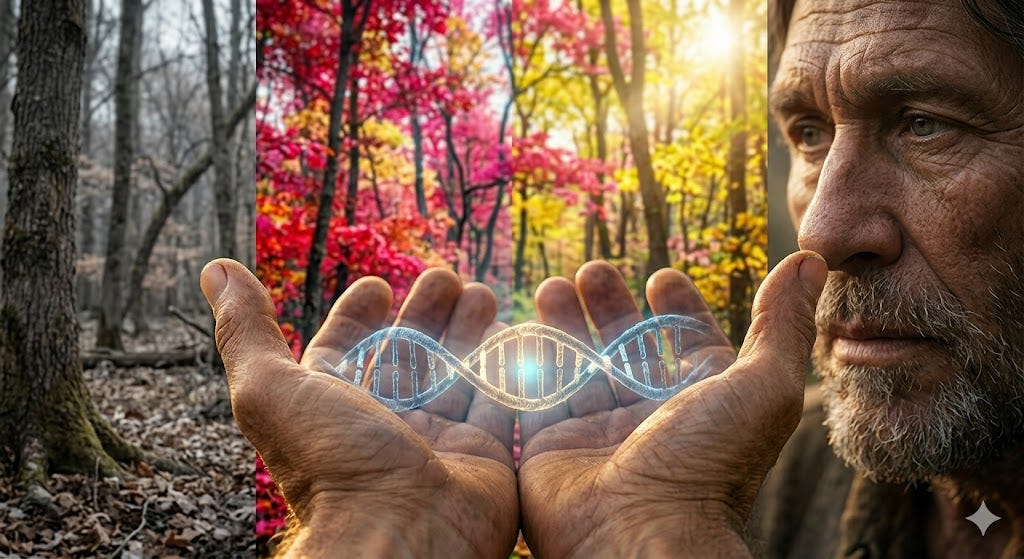
We know how to have the experience.
We do not know yet fully how to become it.
Heroic doses. Breakthrough journeys. Carefully curated retreats.
We have become experts at Autumn—planting powerful seeds.
And then we expect Summer—clarity, integration, a new life—to arrive almost immediately.
But in our rush to harvest results, we tend to skip the two seasons that actually grow them: Winter and Spring.
That is why integration has become the central challenge of the contemporary psychedelic movement. Not because the experiences fail to work, but because we often misunderstand the organic rhythms through which transformation unfolds.
When integration falters, the consequecnes are rarely neutral. We do not simply lose insights. More often, we encounter:
• ego inflation and spiritual bypassing
• ontological shock and pyschological destabilization
• compulsive pursuit of experiential highs
While individual predispositions certainly play a role, they do not fully explain these issues. The deeper problem lies less in the medicines themselves than in our integrative approaches.
We have been treating integration like a task to be checked off.
It is not a task.
It is a life process—one that unfolds in seasons.
We are not detached observers standing outside natural processes.
We are participants within them.
Biomimetics—the practice of learning from living systems—has already reshaped entire industries. Architects have modeled buildings on termite mounds to regulate temperature without air conditioning. Engineers have studied birds to redesign high-speed trains, reducing noise and energy consumption while increasing speed.

What if psychedelic integration required the same humility?
Nature never rushes transformation.
It cycles it—season after season.
Integration, too, is a seasonal process. And each season invites a different aspect of our being—the body, the vital world (instinct and life-force), the heart, and the mind—to take the developmental lead.
In nature, Autumn is the season of labor.
The soil is turned. Old roots are cleared. Seeds are planted in faith, long before any visible fruit appears.
It is the season of preparation, structure, and action.
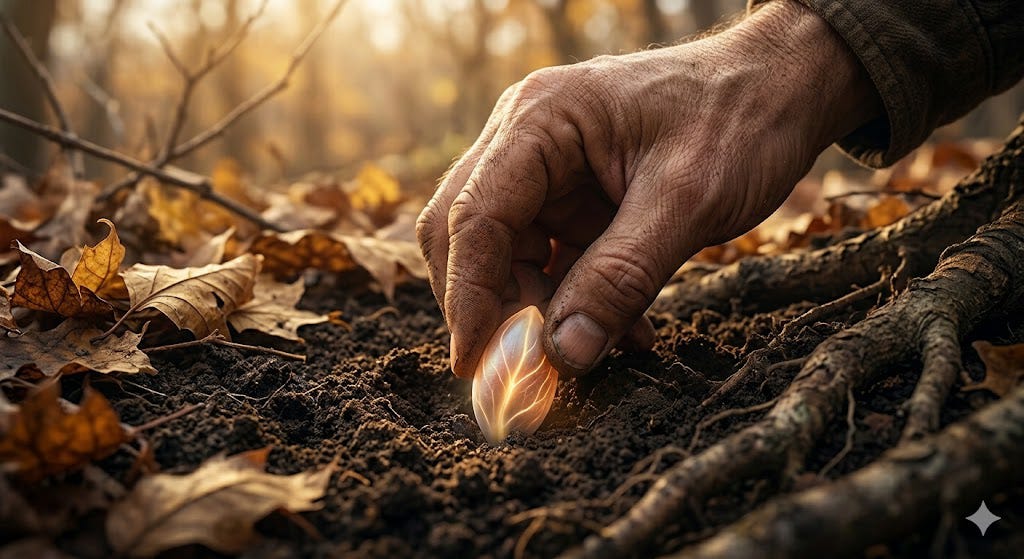
In psychedelic work, Autumn includes both the preparation phase and the session or ceremony itself. It is the moment when the ground of the body and the wider field of one’s life are readied to receive the seed of transformation.
Integration begins before the medicine touches your lips.
Preparation is itself already a form of participation. The way we arrive shapes, in part, the world that becomes available to us.
We can support this season through:
Somatic Grounding: Nourish the body through diet, rest, movement, and nervous system regulation.
Environmental Alignment: Prepare your home space as a sanctuary capable of supporting your transformation when you return.
Energetic Readiness: Reduce noise—digital, emotional, relational—so the organism can become more receptive, coherent, and available to change.
Psychological Orientation: Hold your intentions lightly. The mind’s role is not to control the journey, but to support and then gracefully step into the background.
The ceremony itself is the act of planting—or perhaps more accurately, awakening—latent life-seeds. It can be approached as a kind of energetic conception: the activation of potentials already present within us.
As with any seed, what matters most is not the moment of planting, but the conditions that allow it to unfold over time
Autumn is decisive. But no seed becomes a tree without first passing through the hidden work of Winter.
In nature, Winter appears as stillness.
Fields look barren. Growth seems absent. Yet beneath the frozen surface, unseen processes continue in silence.
It is the season of darkness, gestation, and hidden transformation.
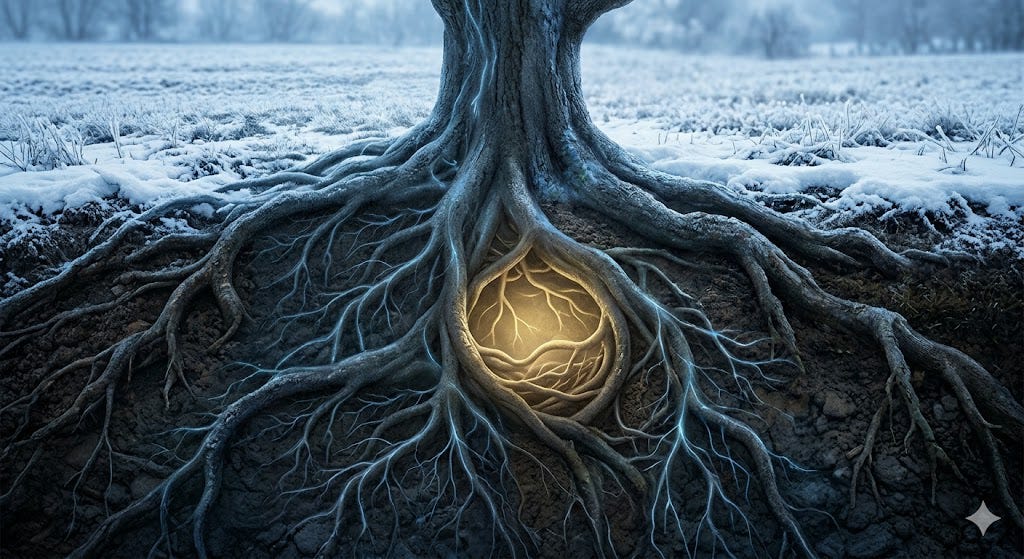
After a powerful psychedelic experience, our modern instinct is to demand immediate understanding: We need to process this. Or we begin speaking before the experience has found its deeper place within us.
But Winter asks something different: silence before interpretation.
Not every experience must immediately become a story. Some revelations deepen precisely because they are allowed to remain wordless for a time. Shared too soon, the experience can lose its transformative depth—like a seed exposed before it has taken root.
Indigenous traditions such as the Huichol remind us that hasty articulation can dissipate—or even distort—the visionary potency of an experience. Expression before maturation risks flattening a living process that has not yet completed its work.
The seed first grows downward. Roots take shape in darkness before anything reaches toward the light. What has been activated now turns inward—deepening, reorganizing, and slowly assuming form.
We might think of this as a kind of energetic pregnancy: a period of gestation in which the medicine is no longer an external event, but a living process quietly unfolding within.
Integration in this season means learning to trust what is still becoming.
We can support this gestation through:
Somatic Listening: Rest the hands on the belly (the vital hara), cultivating deep bodily receptivity and inward attention, much as pregnancy itself invites profound listening to the unseen growth.
Dream and Symbolic Awareness: Attend dreams, synchronicities, and subtle imaginal movements without forcing immediate interpretation
Receptive Stillness: Practice non-doing, deep rest, and contemplative forms of meditation.
Contact with the Earth: Spend time in nature, attuning to the soil, roots, and stones as reminders of slow, unseen transformation.
In Winter, nothing appears to happen—yet everything is already underway.
To force clarity now is like digging up a seed to check whether it is growing. The very interruption becomes the injury, and may itself abort the process.
Winter asks for humility.
Trust life—and the unknown.
In nature, Spring is a season of fragile emergence.
Tender shoots break through the soil. Blossoms appear before fruit. Everything is vibrant, vulnerable, and not yet stable.
It is the season of first expressions.
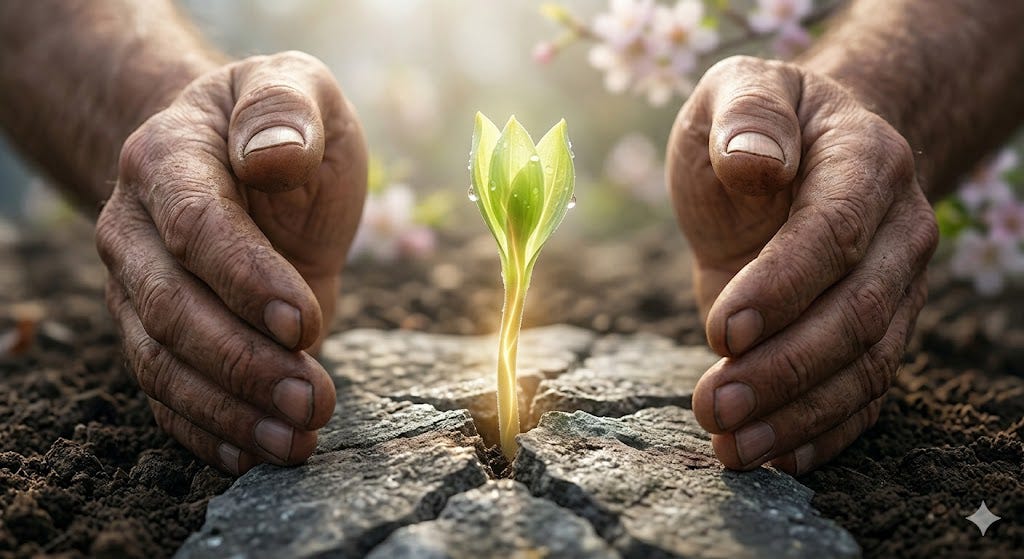
In psychedelic integration, what was gestating in darkness begins to take emotional and relational form.
A new feeling.
A shift in perception.
An unexpected tenderness.
A burst of creative insight.
Something is being born into experience.
These are the blossoms of integration. They are precious precisely because they remain unfinished.
The task is not to decide too quickly what they mean, but to discern which are passing Spring flowers and which may eventually ripen into the more enduring fruits of Summer.
We can support this blooming through:
Heart-Centered Awareness: Rather than trying to intellectually determine your next steps, breathe into feeling and allow emotions to reveal their own intelligence.
Creative Expression: Use nonlinear forms such as music, movement, free-flow writing, or visual art to allow the experience to begin taking tangible shape before asking it to translate into clear behavioral action.
Erotic Intelligence: Honor eros, desire, vitality, and sexuality as primordial expressions of life-force and creative becoming.
Relational Reflection: Share your experience within trustworthy, non-judgmental relationships capable of holding vulnerability without the pressure to prematurely define exactly what everything means.
Here, the mind becomes less an analyst than a gentle gardener.
Too much interpretation, too soon, and the bloom can collapse. This is not the season for evaluation or major life-decisions.
It is the season of curiosity, expression, and careful tending.
Not every blossom becomes fruit, yet every fruit begins as a blossom.
In nature, Summer is the season of ripening.
What survived the storms, rooted itself in darkness, and bloomed in Spring now matures into fruit.
It is the season of harvest, shared abundance, and fruition.
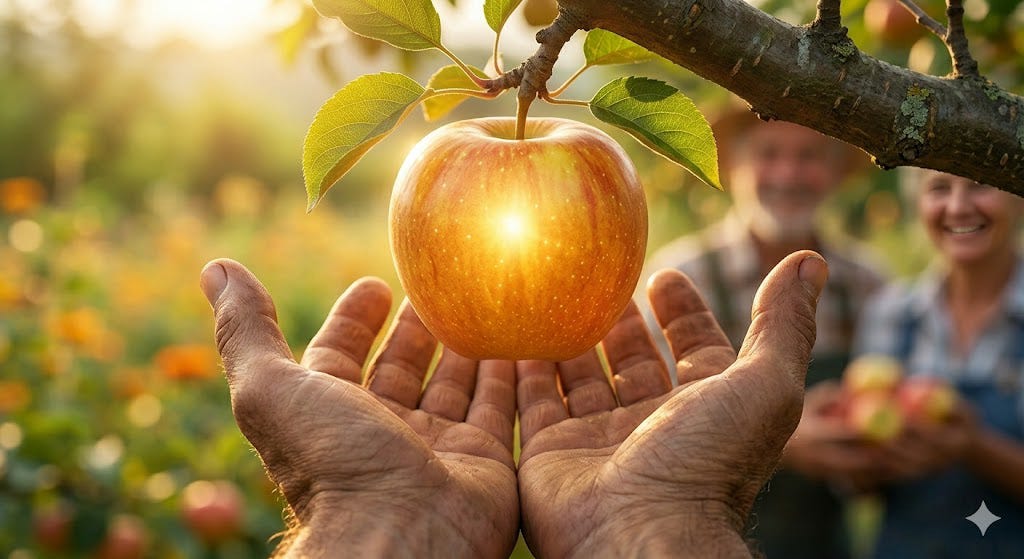
In the integrative process, Summer is the season in which insight ripens into embodiment—when the fruits of the journey are translated into words, choices, commitments, and ways of being. What was conceived, gestated, and gradually born now seeks to find enduring expression in everyday life.
Only after the blossoms of Spring have been given the time and curiosity they need to ripen can the mind step in to discern which have matured into the more enduring fruits of Summer.
We can support the harvest through:
Insight Articulation: Give language to what has genuinely become known—through writing, conversation, or other forms of expression.
Translation into Action: Establish new habits, make decisions, and initiate projects that anchor transformation in lived reality.
Offering to the World: Share what has been learned with humility and gratitude, recognizing that no transformation is ever the achievement of an isolated self.
Celebration and Rest: Pause to inhabit the fulfillment of the journey with joy and ease, allowing the organism to rest before the next seasonal cycle begins.
Here we recognize that we have been both the gardener and the garden of a profoundly participatory process. The harvest is not simply something we produce. It is also something that has been producing us.
Like every living process, transformation unfolds through the collaboration of multiple dimensions of being: body, instinct, heart, mind, and consciousness; personal history and collective inheritance; relational worlds and wider communities; and the mysterious depths of creativity that exceed our capacity to plan or control.
This is where transformation becomes visible.
Not as insight—but as a way of life we embody.
And within every fruit, another seed is already waiting.
The cycle does not end. It only deepens.
Modern culture is structurally imbalanced.
It rewards:
Autumn (action)
Summer (results)
And tends to overlook:
Winter (gestation)
Spring (birth)
In other words, we are trained to produce rather than to become.
In a psychedelic context, this bypass creates what produces what I have called integrative arrest: the attempt to extract lasting change before the cycle that sustains it has fully matured.
A balanced integration requires both:
the “masculine” drive to act and build
the “feminine” capacity to hold, gestate, and give birth
That said, there are exceptional moments when the process appears to compress.
Certain psychedelic experiences can catalyze such a complete death-and-rebirth that one appears to move directly from Autumn to Summer—embodying a new way of being almost immediately.
Even then, however, what appears to be an immediate arrival is rarely the end of the journey. It marks the beginning of a deeper phase of stabilization in lived reality. The new way of being must still become embodied in action, relationship, and time.
Without Winter and Spring, there is no sutsainable Summer.
Only the appearance of transformation before it has become fully embodied.
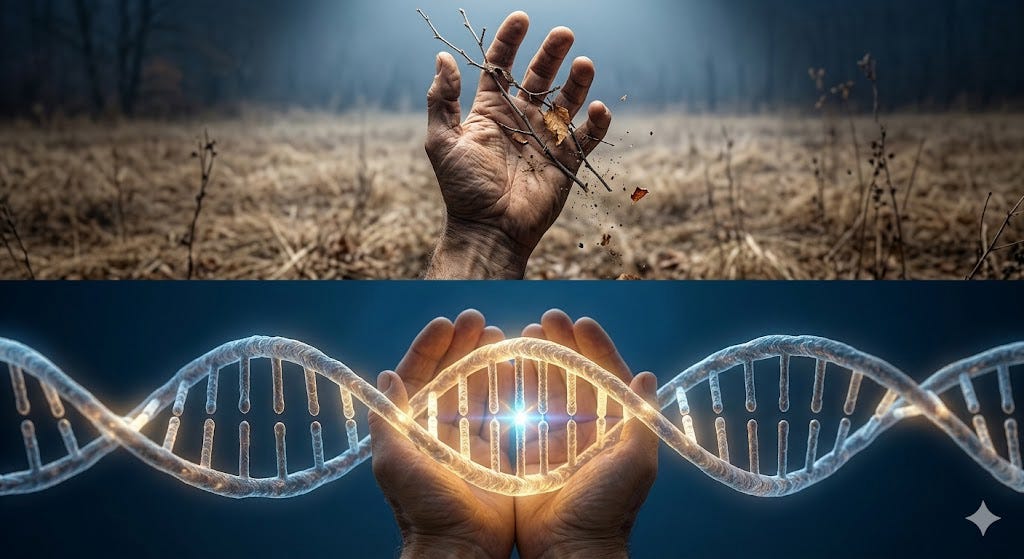
Even the smallest shift matters.
A profound transformation does not need to look like a new career or identity. It can be as subtle as:
a deeper breath,
a slightly different bodily tone,
a new way of inhabiting a single moment.
Some of the greatest evolutionary innovations began with microscopic variations—like the minuscule duplication of a gene that shifted our ancestors from two-color to three-color vision.
That seemingly modest change transformed perception, enabling our ancestors to better recognize ripe fruits and detect subtle changes in facial coloration. This enriched the biological foundations of empathy, emotional attunement, and romantic love.
Transformation works the same way.
Small, repeated shifts, when sustained over time, gradually reshape our lives from within—without requiring any abrupt change in external form.
Not thought.
Not even felt.
Lived.
We cannot simply think our way into a new life.
Transformation is not something we extract from an experience.
It is something we gradually grow into.
And genuine growth cannot be rushed.
The problem is not that our experience was not powerful enough. It is that we attempt to convert an unfolding realization into a fixed result too quickly. Transformation does not happen at the peak. It unfolds in the seasons that follow.
So let us stop chasing the next breakthrough.
We do not need another Autumn.
We need to stay with your Winter,
nurture our Spring,
and allow our Summer to emerge organically.
The invitation is simple, but not easy:
Plant the seeds.
Trust the darkness.
Protect the bloom.
Then—only then—harvest.
This is how nature works.
This is how we work.
And when we finally stop chasing the next experience,
we may discover something quieter—and far more radical:
Our life itself has become the place of integration.
Because in the end, integration is not what we understand.
It is what we become.
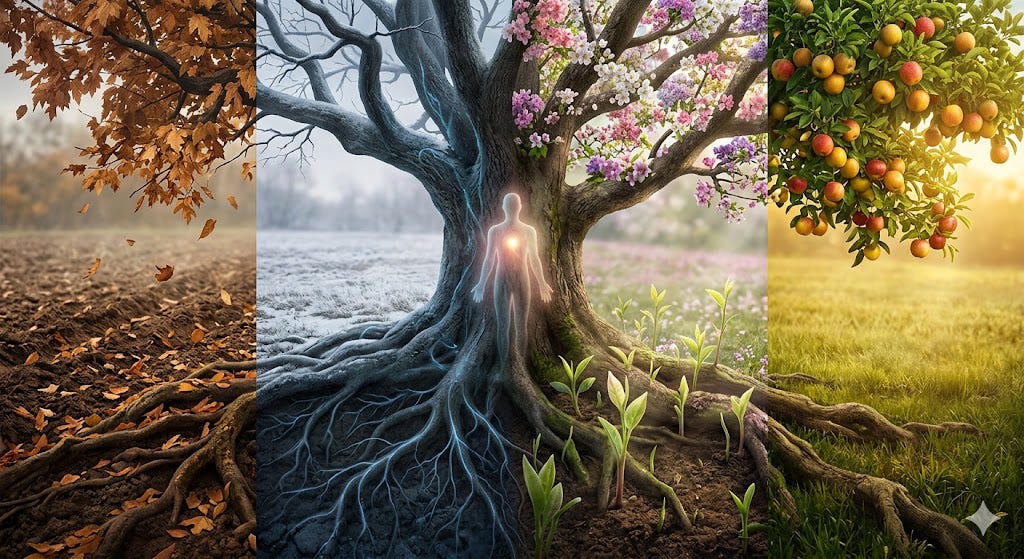
If this way of seeing resonates, I would be curious to hear which season are you in at this moment
And perhaps more importantly—are you allowing it to unfold?
This seasonal framework is a heuristic, not a rigid sequence. Integrative processes vary widely across individuals, medicines, and contexts. The seasons may overlap, repeat, or unfold at different rhythms depending on factors such as the type of medicine, the developmental timing of the individual, and broader archetypal or contextual dynamics.
The four-season cycle is likewise not intended as a universal ecological template. Many regions of the world organize life through different climatic rhythms—such as wet and dry seasons, monsoon cycles, or other locally meaningful patterns of growth and renewal. The present model simply draws upon the temperate seasonal cycle as one particularly accessible illustration of a more general developmental principle: living systems tend to move through recurring rhythms of preparation, gestation, emergence, and fruition.
Most fundamentally, human beings are not linear systems, but self-organizing ecologies in continuous transformation. All dimensions of the human being—body, vital world, heart, and mind—remain active throughout the entire process. Accordingly, although the model reflects recurring patterns observed in both natural systems and human development, it is best understood as an orienting map—not a schedule to be followed, but a field to be attuned to. It invites to participate in the living rhythms of transformation rather than conform to fixed stages or prescribed timelines.
I am deeply grateful to the late Ramon V. Albareda for his pioneering application of the “four seasons” to human growth, and to Marina T. Romero, with whom I collaborated in extending this model into the field of integral transformative education. I also wish to extend my appreciation to Marc Aixalà, Jules Evans, Jakub Greń, and the other scholars and practitioners listed below for their important contributions to mapping psychedelic integration and developing frameworks and resources aimed at minimizing harm.
Argyri, Eirini K., Evans, Jules, Luke, David, et al. (2025). Navigating Groundlessness: An Interview Study on Dealing with Ontological Shock and Existential Distress Following Psychedelic Experiences. PloS one, 20(5).
Evans, Jules, et al. (2023–2024). Challenging Psychedelic Experiences Project. https://challengingpsychedelicexperiences.com/
Osterhold, Helge M., & Fernandes-Osterhold, Gisele. (2023). Chasing the Numinous: Hungry Ghosts in the Shadow of the Psychedelic Renaissance. The Journal of Analytical Psychology, 68(4).
Robinson, Oliver, Evans, Jules, Luke, David, et al. (2024). Coming Back Together: A Qualitative Survey Study of Coping and Support Strategies Used by People to Cope with Extended Difficulties After the Use of Psychedelic Drugs. Frontiers in Psychology, 15.
Aixalà, Mark. B. (2022). Psychedelic Integration: Psychotherapy for Non-Ordinary States of Consciousness. Synergetic Press.
Bathje, Geoff. J., et al. (2022). Psychedelic Integration: An Analysis of the Concept and Its Practice. Frontiers in Psychology, 13.
Bourzat, Francoise, & Hunter, Kristina. (2019). Consciousness Medicine: Indigenous Wisdom, Entheogens, and Expanded States of Consciousness for Healing and Growth. North Atlantic Books.
Coder, Katherine. (2017). After the Ceremony Ends: A Companion Guide to Help You Integrate Visionary Plant Medicine Experiences. Casa de Raices y Alas Books.
Gorman, Ingmar, et al. (2021). Psychedelic Harm Reduction and Integration: A Transtheoretical Model for Clinical Practice. Frontiers in Psychology, 12.
Greń Jakub, et al. (2023). Back From the Rabbit Hole. Theoretical Considerations and Practical Guidelines on Psychedelic Integration for Mental Health Specialists. Frontiers of Psychology, 14.
Dicks, Henry. (2023). The Biomimicry Revolution: Learning from Nature How to Inhabit the Earth. Columbia University Press.
Ferrer, Jorge, Romero, Marina T. & Albareda, Ramón V. (2005). Integral Transformative Education: A Participatory Proposal. The Journal of Transformative Education, 3(4).
Lane, Nick. (2015). The Vital Question: Energy, Evolution, and the Origins of Complex Life. W. W. Norton & Company.
Comments
Nothing yet. Say the first thing.
Sign in to join the conversation.