
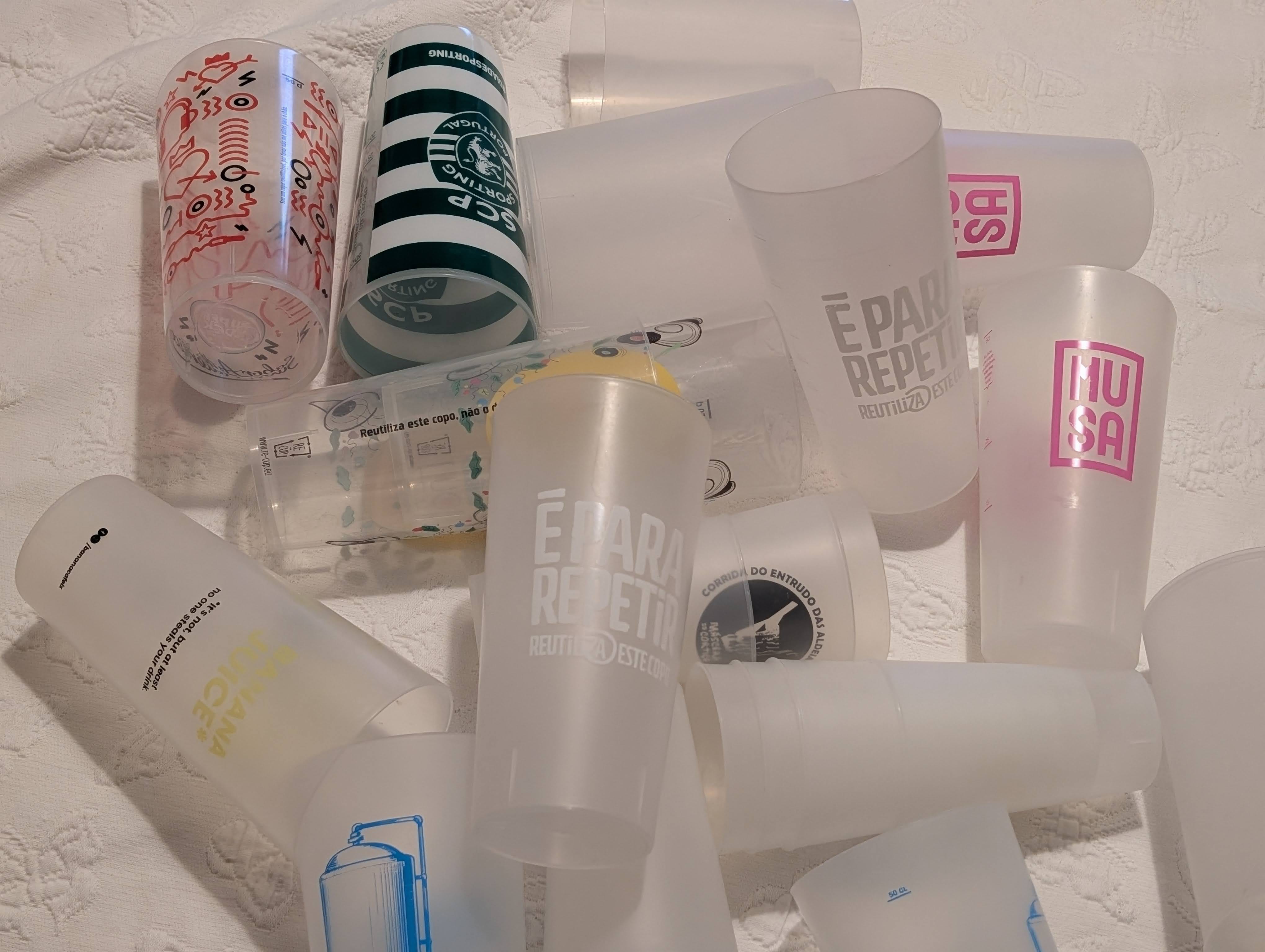
At first glance, the cups look reusable but in practice they’re just stacking up in homes or being abandoned on the streets, Expresso reports. A system that’s meant to reduce urban waste is often instead creating it, while feeding a parallel business that has nothing to do with protecting the environment. Six years after Lisbon banned disposable cups, the replacements are widely used but cost the drinker a “deposit” of between €0.50 and €2, usually without any ability to return them and get the money back at the end of the night. Lisbon City Council estimates 25,000 cups are used on a busy night in Bairro Alto, Cais do Sodré and Santos. Circular Economy Portugal president Ana Almeida said the system often created new consumption rather than reducing it, adding that it wasn’t enough to just say the cups are reusable if people weren’t given a clear way to return them. “Without effective returns, the deposit loses its incentive function and becomes an additional cost or source of revenue for operators,” she said. Susana Fonseca, vice-president of environment association ZERO, said in practice the reusable cups were used like disposable ones but with a greater environmental impact because they contained more plastic.
The council admitted this month’s Santo António festivities would be a “particularly demanding context” and it wasn’t expecting systems to return cups everywhere. It said it was working with parishes, local businesses and organisers to improve the logistics. The CopoMais recycling system has machines in Bairro Alto, Príncipe Real and Miradouro de São Pedro de Alcântara but it requires a specific bar code on cups so it is reliant on businesses participating. There are six machines, with nine more to come by the end of June and 34 establishments taking part.
In other recycling news, Público has issued a reminder that crumpled or squashed containers can’t be returned using the new Volta system, which has machines at thousands of supermarkets. Manager SDR Portugal said it was to ensure the code could be read and the container analysed to ensure it was covered by the scheme. The machines only accept plastic or metal bottles and cans with the Volta symbol, which should be returned empty in good condition and with the lid if applicable. Glass, TetraPak and drinks with more than 25% dairy aren’t covered.
Portuguese Association of Distribution Companies (APED) director-general Gonçalo Lobo Xavier told Radio Renascença that in its first month, the scheme recovered 400,000 containers. He said despite criticism on social media Volta was being well supported, adding that the figures compared well with the introduction of similar models in Austria and Ireland. Preparations are being made to launch a new entity responsible for an integrated system to manage furniture and mattress waste, with a decision on who runs it coming in November, Público reports.
Comments
Nothing yet. Say the first thing.
Sign in to join the conversation.