
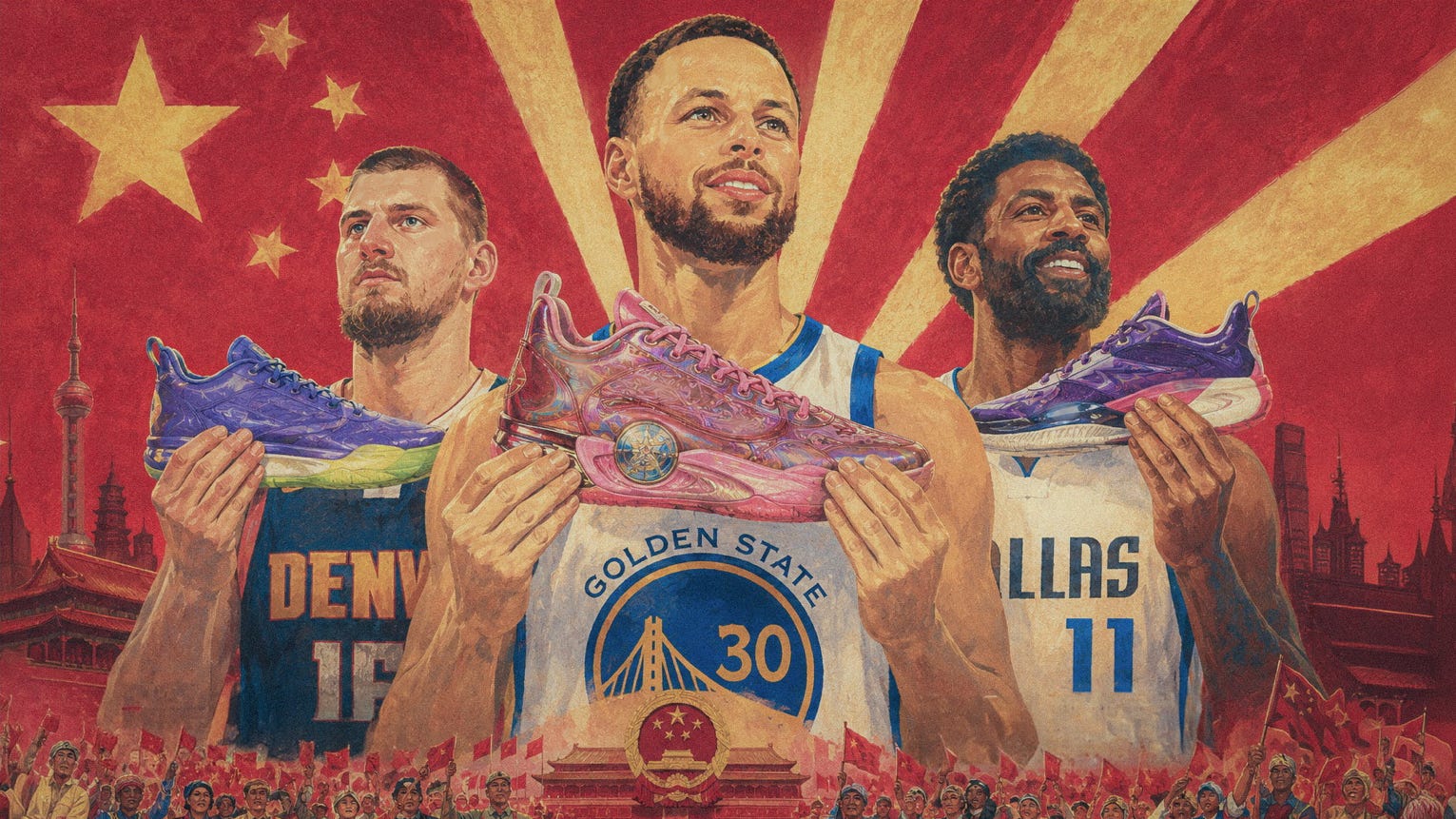
For nearly two decades, Stephen Curry was one of the most important athletes in the American sneaker business. He changed how basketball is played, built Under Armour into a real basketball brand, and reportedly turned down a fortune to stay loyal to it. So when he finally left, the safe money said Nike. Maybe Adidas.
Instead, the greatest shooter who ever lived signed with a Chinese company called Li-Ning — and left money on the table to do it. If you don’t follow sneakers closely, that sounds insane. My new video is about why it wasn’t.
Because for most of our lives, “Made in China” evoked one thing: cheap, disposable, a knockoff. The strange part is that China was already making the shoes Americans worshipped — at the peak, more than sixty percent of Nike’s. The factory was Chinese the whole time. The only thing it had never done was put its own name on top. This is the story of the twenty years it took to change that, told through the people who’d know first: the reviewers who test these shoes for a living, and the sneaker boutique buyers who decide what goes on the shelf.
In 2005, the first Chinese basketball shoe on an NBA floor belonged to a benchwarmer most people have forgotten, and it dropped from $119 to $9.99 because no one would buy it. Then Klay Thompson. Then Kyrie Irving — Nike’s best-selling signature athlete. Each rung is a better player, and each one is an American admitting a little more out loud. The video traces every step, with a performance reviewer who watched the product get good in real time and couldn’t believe what he was holding.
But the shoes are just the version you can see on television every night. The same thing is happening across the whole economy at once — the cars Elon Musk laughed at in 2011 now outsell Tesla, the drones America tried to ban instead of out-building, the AI model that erased six hundred billion dollars from a single American company in a day. The country the world wrote off as the cheap factory has quietly started out-building the companies it used to build for. Basketball is simply where you can watch it land, on the feet of the best players alive.
What makes “Hurricane” feel timeless is that it’s built on the one thing you can’t fake or replicate in a studio: four siblings who learned to sing against each other before they ever had a deal. The Boyds came up busking, and that apprenticeship is still the whole foundation — voices first, the band a half-step behind. Their harmonies don’t sound engineered so much as lived-in, and they pull from a lineage of family-blend acts, the Staple Singers and Fleetwood Mac, where melody and vulnerability carried real weight. So even on their most propulsive song, the thing anchoring it is the oldest trick in American music: people who are related singing close.
What makes it feel of this moment is what they did around that blend. “Hurricane” unleashes the bass and pushes the drums into something urgent and danceable, a syncopated, body-shoving groove that’s a real departure from the dreamy soft rock that first earned them attention.
I think like many people my age, Punisher by Phoebe Bridgers was one of my defining albums of the pandemic. It truly met the moment in a way Bridgers certainly could not have predicted, but Chinese Satellite will be one of those songs that will always transport me back to lying in my bed, staring at the ceiling and wondering when the world might return back to something resembling normal. Naturally, her tour was the first concert I attended once the vaccine dropped.
All of this to say, this is one of my most anticipated comebacks of the year. Bridgers puts together an incredibly cheeky music video that accompanies arguably one of her happiest songs ever. This single leans more folk than Punisher, and I am highly anticipating her forthcoming album and how her sound evolves.
Thanks for reading.
Joon
No posts
Comments
Nothing yet. Say the first thing.
Sign in to join the conversation.