
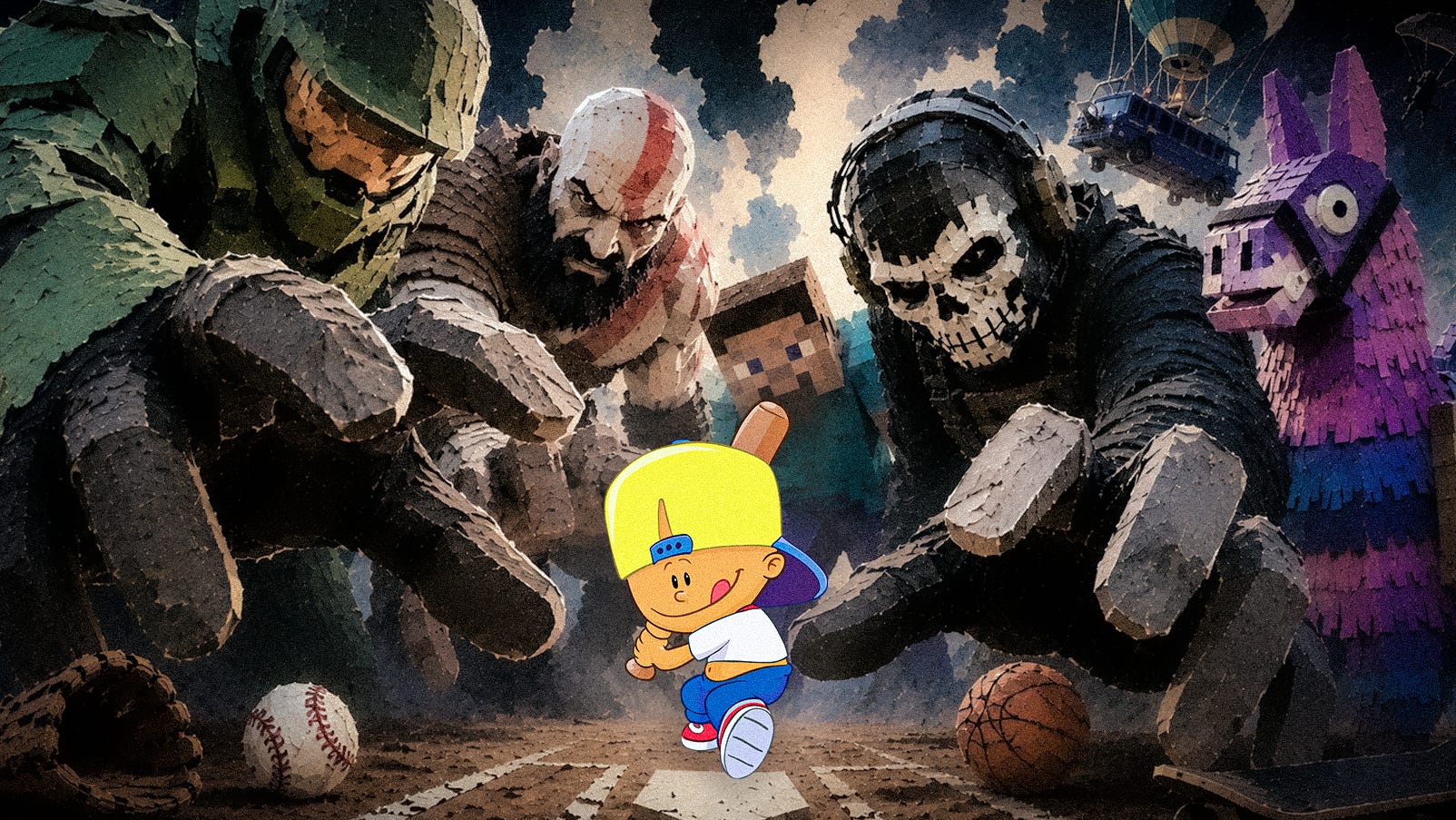
For a lot of kids, Backyard Sports was the first time sports felt like it belonged to them. Not to billion dollar leagues or broadcast companies or betting apps, but to them. And then one day it disappeared — not dramatically, but the way things do when they get bought and sold and optimized until nothing remains of what made them matter.
So when I heard someone was trying to bring it back, my first reaction was skepticism. We’ve all seen how this story ends. A beloved franchise returns, the original magic is gone, and what’s left is nostalgia dressed up as a business plan.
What I found in Pittsburgh wasn’t that. It was a school teacher who spent two and a half years hiring a private investigator to track down who owned a dormant childhood video game franchise. A team that spent a literal year on Pablo Sanchez’s design alone because his head makes no anatomical sense in three dimensions and they refused to compromise on getting it right. And a philosophy about what kids between five and eleven deserve from the media made for them that felt more radical than anything I’ve encountered in sports media in a long time.
This is the video is sponsored by Backyard Sports, who invited me to Pittsburgh and gave me full access to document what they’re building. I want to be transparent about that because it matters — and because the reason I said yes to this particular deal is the same reason I’ve said no to every sports gambling sponsor who has approached this channel. I’ve had a Pablo Sanchez plush sitting on my couch in the background of my videos for months. My relationship with these games existed long before any commercial arrangement did. When the right sponsor finally came along, it turned out to be the one that had already been there.
The question I brought to Pittsburgh was simple: how do you bring something back without ruining it?
Eric is a unicorn in the modern entertainment landscape as a singer and personality who’s able to straddle the line between appealing to audiences in America, while also maintaining a massive presence in South Korea. I’ve admired Eric’s commitment to his artistic and business independence, and what he and his brothers, Eddie and Brian, have built at DIVE Studios is incredibly impressive and inspiring.
There’s a version of Eric’s career that could have gone a very different direction. The kind of artist who gets discovered, gets signed, gets optimized for a specific market, and slowly becomes a product of whatever the industry decided he should be. Instead he built something genuinely his own — a studio, a podcast empire, a creative infrastructure that lets him make music on his own terms while maintaining real cultural fluency in two of the most different entertainment markets in the world.
Miss Me More is Eric’s latest single, and has been in my rotation for the last few weeks — the songs I listen to when I’m coming up with ideas for videos and piecing together scripts. It’s Eric doing what Eric does, which is come up with great hooks highlighted by his wonderful voice. But what I keep coming back to is how effortless it sounds without being lightweight. There’s craft underneath the ease. The kind of song that reveals itself a little more each time you listen to it, which is exactly what I want from something in heavy rotation during a creative stretch.
There’s a specific kind of YouTube channel that only exists because someone loved something too much to keep it to themselves. Wonder Looper is that channel for T-shirts. Two fashion nerds going deep on the granularities of how they make their cult-favorite basics — the cotton sourcing, the fabric weight, the garment construction, the decisions that most brands make by committee and Wonder Looper makes by obsession. It’s the kind of content that shouldn’t work as broadly as it does, except that genuine expertise communicated with genuine enthusiasm turns out to be one of the most watchable things on the internet regardless of subject matter.
They’re not explaining T-shirts to people who don’t care about T-shirts. They’re talking to each other about something they’ve spent years caring about, and the camera happens to be there. The sourcing conversations — where the cotton comes from, why it matters, what gets lost when you optimize for cost instead of quality — land as a philosophy about making things rather than a product explainer. Which is exactly what the best brand content does without ever feeling like brand content at all.
I’ve done some interviews recently if you’re curious! Here are some profiles written about me from Awful Announcing and Barrett Media.
And an interview with fellow independent sports journalist Brodie Brazil.
Thanks so much for your support.
Joon
No posts
Comments
Nothing yet. Say the first thing.
Sign in to join the conversation.