
Hello! I want to introduce you to a very interesting and little known mental disorder called Scrupulosity. It’s a kind of OCD, where the sufferer has an obsessive concern with religious or moral matters. Ignatius of Loyola, the founder of the Jesuits, apparently had it. One time he accidentally stood on two bits of straw in the shape of a cross and it tormented him for ages. Martin Luther apparently had it too. He once accidently omitted the word ‘for’ during the Eucharist and he later said he might has well have murdered his parents. That’s why Lutheranism was so stringent - it came from his Scrupulosity. All those poor Lutherans, being forced to be super religious because of their leader’s mental disorder. And look at Trump - a different mental disorder but we all still have to live inside it. Plus ca change.
Anyway, I mention it because I think I briefly had a touch of Scrupulosity when I was making my podcast The Last Days of August. I want to write a little about that, and about journalistic ethics in general – about when we don’t worry enough, and when we worry too much.
The Last Days of August was about the death of a porn star named August Ames. She took her life on the same day she’d been piled in on on Twitter for making a comment that was considered homophobic. A few weeks later her husband Kevin told me he was releasing a statement naming the porn stars he held responsible. After that, a bunch of porn stars told me her death was far murkier than Kevin was letting on, and maybe I should investigate him. And so it began.
In the end, The Last Days of August is basically a nonfiction An Inspector Calls where everyone bears some responsibility for mistreating August in the months before she died. But the difference between my podcast and the JB Priestley play was that his was fiction and mine was nonfiction. I was digging around inside August’s real life world just weeks after her death, asking her loved ones difficult questions.
I became so obsessed with getting the ethical balance exactly right I started having panic attacks. It kind of did me in for a year. I had to stop working. Now, when I look back on it, I think I succumbed to a kind of Scrupulosity. And if you’re a journalist with Scrupulosity, you should probably avoid true crime podcasting.
To be totally honest, most journalists are hard bastards who don’t care about morality or people’s feelings. They care about getting the story. In that sense, most journalists are like the police, only interested in getting an arrest. So when I started to worry too much about ethics, I was really straying very far from what’s considered appropriate journalistic behavior.
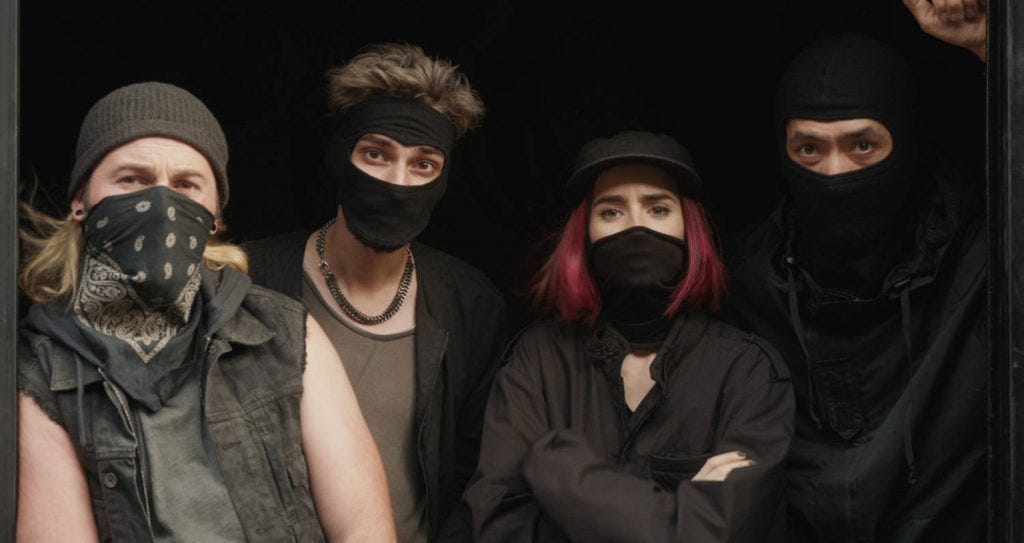
One good thing came from my Scrupulosity, though. When I was working on the screenplay for the movie Okja I decided - in the spirit of writing what you know - to give one of the characters Scrupulosity. He was Silver, a member of the Animal Liberation Front:
Jay turns at the sound of something falling and sees Silver barely being held up by Blond. He looks pale, sickly.
JAY: Are you okay, Silver? (To Blond) He didn't eat anything even today?
BLOND: He's still trying to leave the smallest footprint he can on the planet.
SILVER (weakly): All food production is exploitative.
BLOND (exasperated): What about tomatoes?
SILVER: Ripened with ethylene gas. Transported in trucks.
JAY: I admire your conviction, Silver, but your pallid complexion worries me.
In the midst of that weird period of my life, I had a meeting at This American Life. I was making an episode about the conspiracy broadcaster Alex Jones’s teenage years. I’d heard a rumor that Alex had been the worst bully at his high school, once beating a classmate almost to death. The other kids got so sick of it that, in retaliation, they lured him to a party in the countryside and beat him up very badly. And that’s why the Jones family left Dallas and started afresh in Austin.
Whenever I’m setting out on a story I always try and think in advance of its very worst version, so I know which pitfalls to avoid. Often, the worst version of a story is one with too many experts, too many boring talking heads, and not enough movement or adventure. With the Alex story, I got very worried about the ethics of digging around his high school years. Shouldn’t a person’s childhood be off limits? I certainly wouldn’t anyone to investigate me at Cardiff High at 13 or 14. Yes, this was Alex Jones, who hounds the parents of children killed in school shootings. But even so: was this really a story I should be telling?
Anyway, I brought those worries to my meeting at This American Life. I said, “I think we should only do this story if Alex is willing to be interviewed for it.” One of the producers look annoyed at me and said, “Yes, but what about his victims?”
I’ve thought a lot about that exchange since. He was right. I’d got myself so worked up about the ethics of being fair to Alex, I forgot about the people he’d hurt. Last week I alluded to a similar situation unfolding in my next book. Maybe the answer is for us to ask ourselves a question whenever we’re undertaking a story: If someone has been hurt, who’s been hurt the most?
In The Last Days of August, the person hurt the most was, obviously, August herself. In my Alex Jones high school story, the person hurt the most was the boy beaten almost to death by Alex. His name was Bubba. Also, everyone else Alex has hurt – the parents of the children murdered at Sandy Hook, and the rest of us who have to endure all the lies spread by public figure narcissists like him. And at the end comes Alex himself, who was very badly beaten up at that party, but in retaliation for his own bullying. I’m sure he doesn’t want to have a narcissistic disorder that leads him to such destructive behavior, so that has to figure into it too.
I think this is a very good way to keep anything approaching Scrupulosity at bay. Our stories serve many purposes: We have to be fair to the characters in it, but also fair to anyone they’ve hurt. But we have to be fair to ourselves and our readers too. Our aim is to tell very great stories that shed interesting new light on the way the world works. And we shouldn’t let some obsessive concern with scruples stop us from that.
A good book about all of this is Janet Malcolm’s The Journalist And The Murderer.
By the way, I managed to see You Me Bum Bum Train and I loved it so much I went back to volunteer the next night. If you’re in London and you want to volunteer, I recommend it highly. I’d go back every night if I could. It’s kind of lifechanging.
As always please keep the conversation going in the comments if you fancy it. Okay thanks! Bye!
No posts
Comments
Nothing yet. Say the first thing.
Sign in to join the conversation.